 Get Guardian on Google
…REA says projects record 97.7 per cent uptime across connected communities
Nigeria has approved 13,438 mesh-grid connections for grants in 2026, with another 98,000 in the pipeline, as the Federal Government expands electricity access to remote communities through decentralised renewable energy.
The Rural Electrification Agency (REA) said the connections were part of efforts to scale up mesh-grids under the $750 million Distributed Access through Renewable Energy Scale-up (DARES) programme, which targets new or improved electricity access for 17.5 million Nigerians.
Speaking at a roundtable hosted by Okra Solar and GET.invest during the Global Off-Grid Solar Forum and Expo in Kigali, Rwanda, the Managing Director of REA, Abba Abubakar Aliyu, said mesh-grids were providing an alternative for communities where conventional mini-grids could be difficult or expensive to deploy.
According to the agency, DARES has reached 7.6 million people, with more than $582 million committed to the programme.
“DARES, our programme to expand renewable energy access, builds on the core activities of the Nigeria Electrification Project. We are improving those activities through lessons learned and expanding them in line with our strategic priorities. Mesh-grids are helping us forge ahead by giving us another option for communities where other solutions may be difficult or costly to deploy,” he said

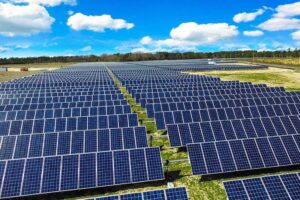
Mesh-grids combine solar generation, battery storage and smart controls to connect homes and businesses through a shared electricity network. The model is designed to serve small and dispersed communities where standalone solar systems may not provide sufficient power for productive activities, while conventional mini-grids could be costly.
REA said Nigeria had become the first national programme to treat mesh-grids as a distinct technology under its electrification programme, providing a $300 results-based grant per connection, lower than the cost of a mini-grid connection.
The programme also uses remote verification before grant payments are made.
The agency said connected communities recorded 97.7 per cent electricity uptime, while the top 10 per cent of households consumed more than 1,400 watt-hours daily.
It said the level of electricity supply could support household appliances and small businesses, including sewing machines, freezers, fans, television sets and lighting.
At the roundtable, which brought together more than 20 representatives of governments, the World Bank, financiers and project developers, participants discussed the policy and financing requirements for expanding mesh-grid deployment across sub-Saharan Africa.
The meeting also launched a policy brief by GET.invest, titled Scaling the Adoption of Mesh-grids in Sub-Saharan Africa, developed with input from CrossBoundary Access, GET.transform, Okra Solar and REA.
Participants called for developers and local energy companies to have the flexibility to select technologies capable of delivering electricity access at the lowest cost. They also identified the need to complement results-based grants with debt financing to enable local developers to fund project construction.
The group committed to developing a policy playbook to help countries establish regulatory frameworks for mesh-grids, drawing on Nigeria’s experience.
Aliyu also invited policymakers and energy professionals to visit communities in Nigeria where mesh-grids are operating and engage with the agency’s technical teams.
Speaking on the initiative, Chief Executive Officer of Okra Solar, Afnan Hannan, said the technology could accelerate electricity access in communities that were difficult to reach.
“Mission 300’s success will be determined by how fast we can energise the hardest-to-reach communities. Our promise is that mesh-grids get power there quickly and at least cost, with enough energy to run a business, not just light a home. With GET.invest’s policy brief we have a starting point to turn Nigeria’s experience into an actionable plan to connect more communities!” Hannan said.