 Follow Us on Google News



 Follow Us on Google Discover
A follow-up to “Telesurgery in Nigeria: Ready or Not?”, published on Page 18 of The Guardian of July 7, 2025.
IN July last year, I told readers of this newspaper about a girl named Amina. She was seven, from Zamfara, and her grandmother had carried her for days across Nigeria in search of a surgeon. I invented Amina. I did not invent the distance. In our country, where you live still determines, far too often, whether a surgeon can reach you in time.
I asked readers to imagine a surgeon in Lagos operating on a patient hundreds of kilometres away through a robot. The real question was never whether the machine could do it, but whether Nigeria could assemble the skills, institutions and discipline required to do it safely. Sixteen months later, I can tell you that it has been done. I can also tell you that doing it was the easy part. Too often, new medical technologies are proven and perfected in wealthy countries before reaching Africa twenty years later, second-hand and already outdated. Our patients pay for that delay with their lives. We do not have to accept it. We can participate while the technology is still being developed, train our people and help write the rules. Telesurgery is the test of whether we mean it.
On September 19, 2026, I sat at a robotic console at Redeemer’s Health Village in Mowe, Ogun State. About 500 kilometres away, at Nisa Premier Hospital in Abuja, a patient with a kidney tumour lay on the operating table. For parts of that operation, my hands moved the instruments inside the patient from Mowe. At the bedside in Abuja were Dr Wesley Ekeruo, a seasoned robotic surgeon based in the United States, and DrLemuchNabasu, consultant urologist, who led the Nisa team alongside an experienced anaesthesia team. They remained responsible for the patient throughout and could have taken over at any moment. The operation lasted about three hours, with a satellite link carrying the signal and a mobile network available as backup. Early reports indicate that the patient is doing well.
Those facts matter, but one successful operation does not establish that a technology is safe, superior or affordable. We owe the patient proper follow-up and honest answers. Did the technology make the operation safer? Did it spare the patient a journey or reduce the cost of treatment? Would conventional care have achieved the same result? These are questions for patients, not press releases. The operation was described as a first for Nigeria and West Africa, but the robot was the least remarkable thing in the room. What made the milestone possible was months of preparation: selecting the right patient, training the local team, repeatedly testing the connection, defining responsibilities and planning for failure. RoboMed Global, Redeemer’s Health Village and Nisa Premier Hospital had to work as one.
On October 21, 23 and 24, our teams performed additional robotic operations, including a prostatectomy and a pyeloplasty, using three different forms of remote assistance. The distinctions are important. Telesurgery means the distant surgeon controls the instruments; teleproctoring means a remote expert watches and guides the surgeon operating at the bedside; while telementoring involves teaching the surgeon over time until the necessary skills become theirs. One operation may involve more than one approach, but advice from afar must never be presented as control from afar. I will hold my own team to that rule publicly. Our goal is not to perform more operations from a distance, but to make the surgeon at the bedside so capable that remote assistance becomes a choice, not a crutch.

On October 25, DrVipul Patel performed a robotic prostatectomy between two hospitals in Florida, about 35 miles apart, with DrMarcioMoschovas and a trained team at the bedside. ABC News reported the development, and I congratulate them on the achievement. Nigeria’s operation took place on September 19, five weeks before the Florida procedure. We have a saying at home: Naija no carry last. This time, we did not. But this is not a race or a boast. The significance is that, for once, a Nigerian team and an American team stood on the same frontier in the same season rather than twenty years apart. The Florida procedure was conducted under a research permit from the American regulator, which allows investigation but does not amount to approval for routine use. American researchers are still measuring outcomes, network failures, cybersecurity and emergency responses. Nigeria must demonstrate the same seriousness, adapting international safety and training standards to our hospitals, networks and patients.
If Nigeria learns one lesson from these developments, it should be that telesurgery is not something you simply buy. A robot does not operate; a team does. The bedside surgeon, anaesthetist, nurses, engineers responsible for the machine and specialists maintaining the connection are not assistants to a distant star surgeon. They are the reason that surgeon can begin. We must therefore systematically document complications, readmissions, dropped connections, delays, emergency handovers, local team performance, patient experiences, journeys avoided and the full cost of treatment. These records should be independently assessed and monitored long after discharge. Failures must be reported as carefully as successes. A field that races to declare firsts risks losing public trust; one that honestly measures its mistakes will earn it.
On October 22, we opened the RoboMed Academy at Redeemer’s Health Village in partnership with the National Postgraduate Medical College of Nigeria and Redeemer’s University. The Minister of Education, DrTunjiAlausa, announced that qualified professionals would receive support through TETFund’s local scholarship programme. This commitment should be judged by funded training places, demonstrated competence and graduates capable of teaching the next generation. Africa cannot build its surgical future on visiting experts, foreign maintenance contracts and fellowships available only to those who can afford to travel abroad. Surgeons need simulation and supervised practice, theatre nurses require specialised training, and engineers must be equipped to maintain and repair the machines locally. The greatest product of remote technology should ultimately be the Nigerian team that no longer needs it.
Nigeria needs a common regulatory framework for telesurgery covering professional qualifications, informed patient consent, equipment and network checks, data protection, emergency procedures and accountability when things go wrong. These rules should be developed collectively by government, regulators, professional colleges, hospitals and patients, rather than handed down by any single company or institution, mine included. Every centre adopting the technology should document its operations, publish outcomes and costs, and submit its performance to independent assessment. Training academies should report the performance of their graduates, while hospitals should be transparent about who pays and who benefits.
Equally important, we must continue asking whether the resources committed to telesurgery might deliver greater health benefits if invested in basic surgical services where they are absent. Telesurgery cannot replace safe anaesthesia, blood supplies, electricity, sterile instruments or a surgeon at the bedside.
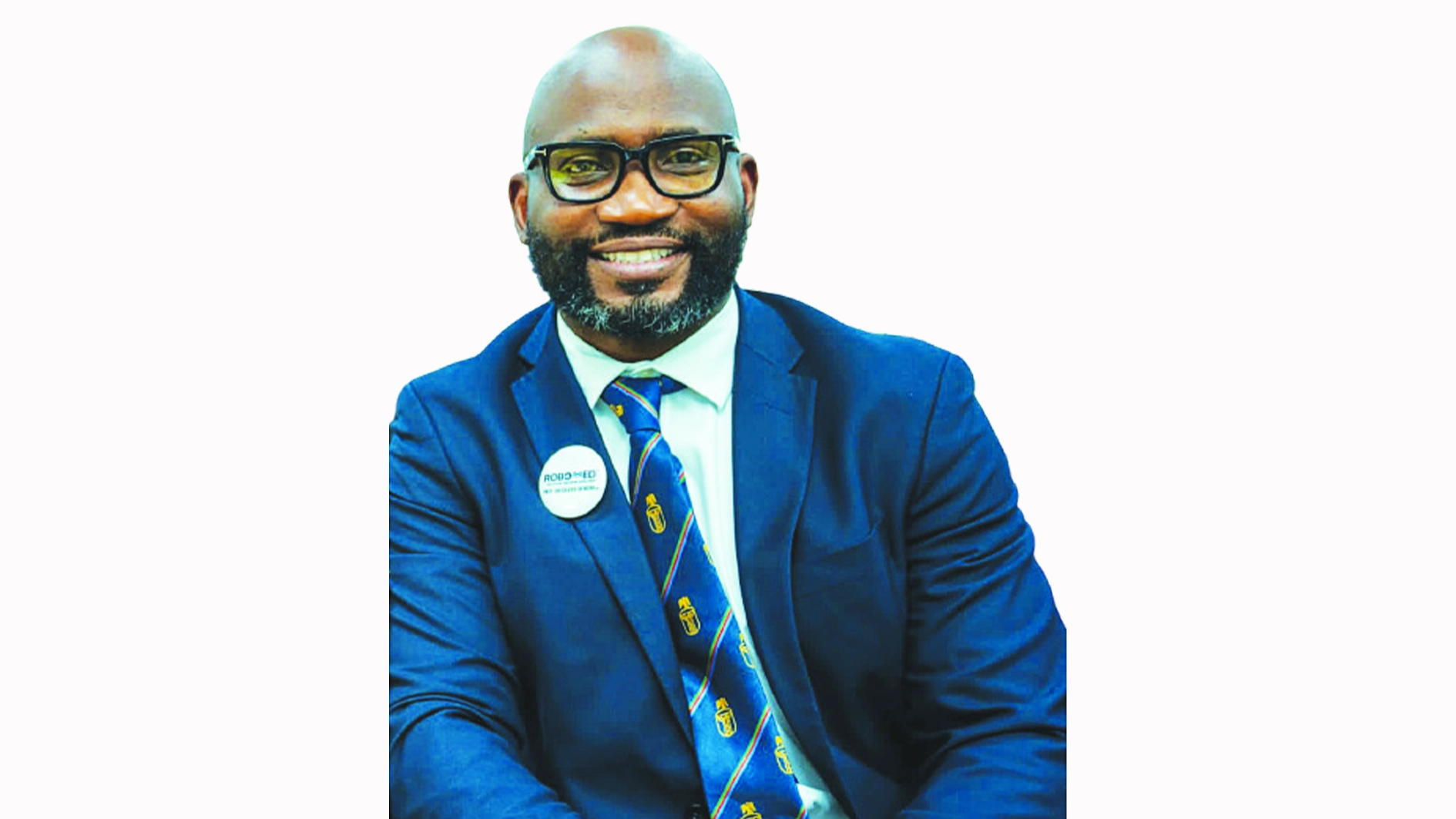
•Obi Davies-Ekwenna, MD, FACS, is Professor of Urology and Transplantation; Founding Partner, President and CEO of RoboMed Global; and an internationally recognised robotic and transplant surgeon. His work focuses on surgical education, equitable access and strengthening surgical capacity in low-income and underserved settings. He leads RoboMed Global, a developer of robotic surgical programmes, telesurgery initiatives and surgical training in Africa.
It should expand access where it proves its value, never compete with these essentials. Keeping pace with the world and keeping faith with our poorest patients must go hand in hand.
In 2025, I imagined a child to make distance visible. In September 2026, a real Nigerian patient underwent an operation connecting two cities. In October, the work continued, the Academy opened and colleagues in Florida reported a milestone of their own. These are beginnings, not verdicts. Last year, I asked whether Nigeria was ready. This year, we answered, and we answered first. The harder question is whether we can make this technology safe, sustainable and accessible beyond the few who can already afford it, and whether we will continue measuring outcomes after the cameras leave.
Amina’s journey was fictional. The millions who need safe surgery in time are not. Closing the distance between them and quality healthcare, without compromising safety or fairness, is the work that remains. It is the only work that matters.
• Obi Davies-Ekwenna, MD, FACS, is Professor of Urology and Transplantation; Founding Partner, President and CEO of RoboMed Global; and an internationally recognised robotic and transplant surgeon. His work focuses on surgical education, equitable access and strengthening surgical capacity in low-income and underserved settings. He leads RoboMed Global, a developer of robotic surgical programmes, telesurgery initiatives and surgical training in Africa.

