GDN SIDEBAR
Some brands make modest fashion feel like an afterthought: longer hems, higher necklines, and a lot of compromise. House of Anaum flips the script. Founded in 2015 by creative director Lateefat Odunuga and serving clients across Nigeria, the UK, and beyond through worldwide delivery, the label has built its reputation on one clear promise: women should be able to dress modestly and still feel elevated, current, and unmistakably themselves.
Odunuga calls it a luxury of self-expression: clothes that empower without shouting, and craftsmanship that makes “covered” feel intentional, not restrictive. “Modesty is foundational, not as a constraint, but as a design principle,” she says.
That intention is the through-line in its new collection: fluid gowns and abaya silhouettes finished with embroidery, appliqué, and volume where it matters. The palette moves from deep black to champagne, peach, burgundy, and cream: soft, wearable tones that still photograph like occasion wear, without forcing the wearer into a “special day” box.
And with Ramadan beginning and Eid just around the corner, the timing makes sense: these are the kind of pieces that can carry you from iftar to tarawih, from family visits to Eid lunch, without needing a second outfit or a costume-level commitment.
The black embroidered abaya
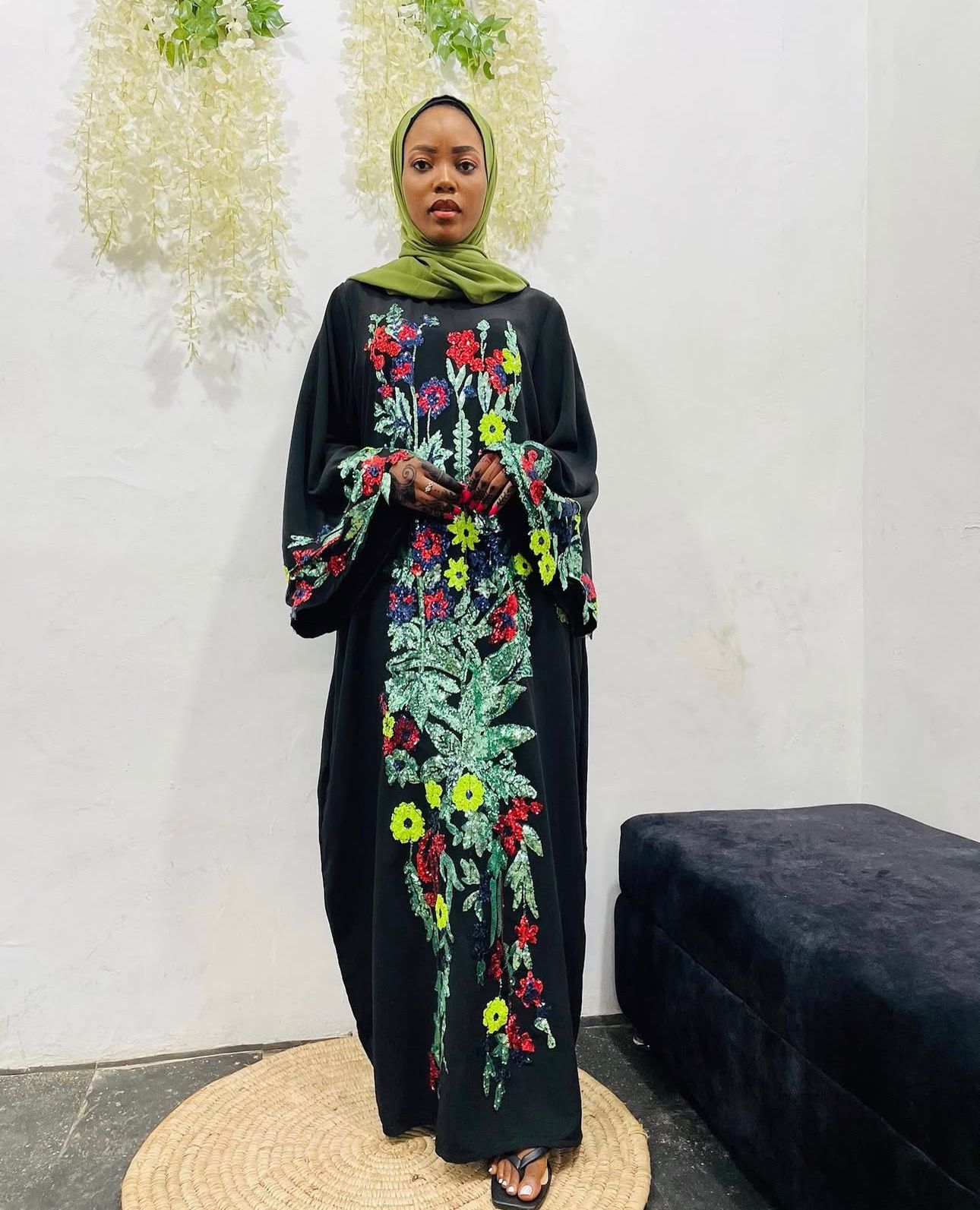
This is the strongest opening statement in the set: a black, floor-length abaya with a garden of dense embroidery running down the front and blooming across the sleeves.
In crepe, the base is quiet, but the surface work does the talking: high-contrast florals that read ceremonial, yet restrained because the silhouette stays clean. It’s exactly what Odunuga means by elegance that “feels timeless and elevated,” without leaning on exposure or gimmicks.

The champagne gown with organza sleeves
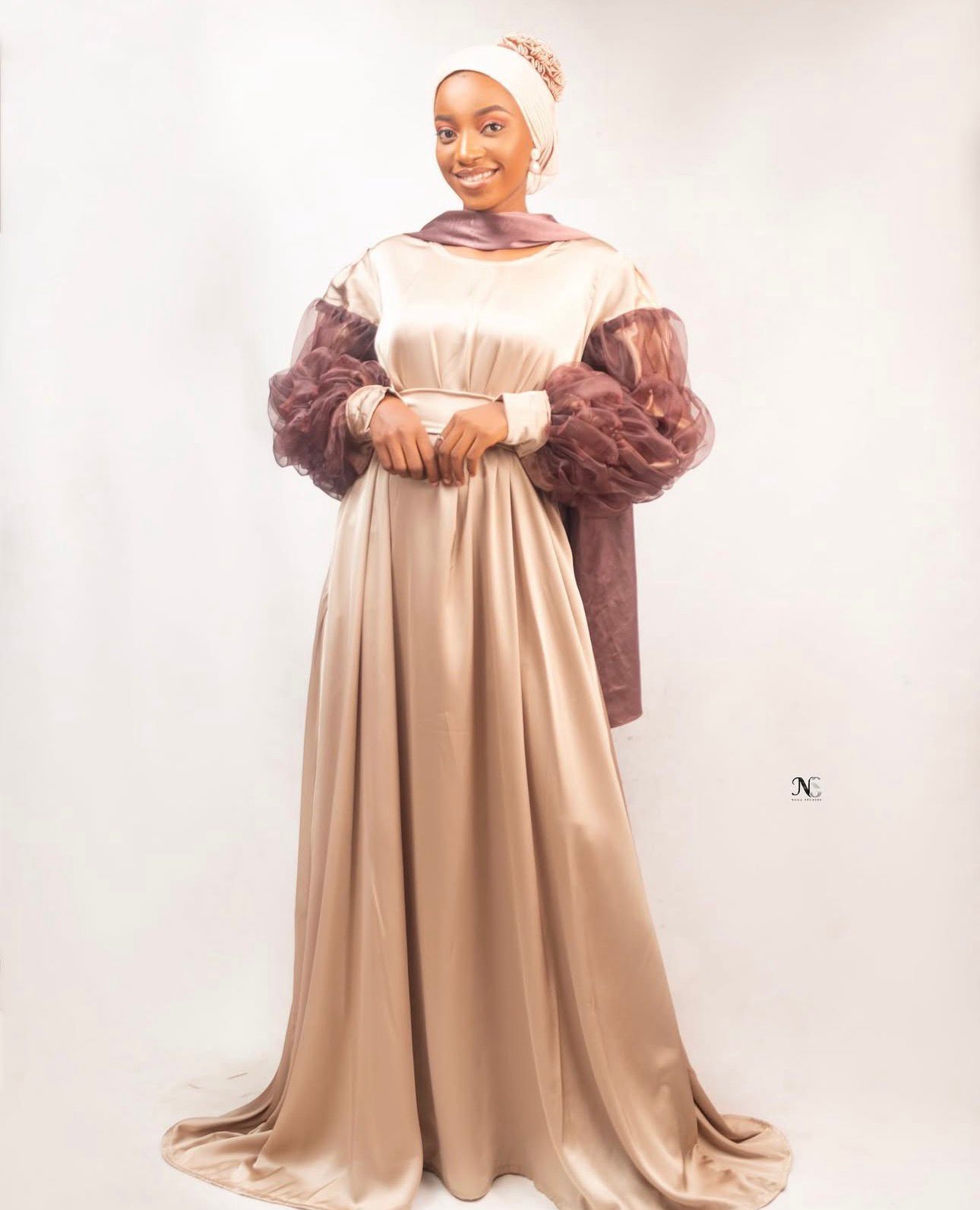
There’s something intentionally soft about this one: a champagne-toned gown with sheer, cloud-like sleeves that add drama without heaviness.
The fabric has a satin-like sheen, the drape is generous, and the styling (hijab scarf included) keeps it cohesive. It’s a good example of the brand’s promise to create pieces that feel “modern and refined” while staying fully covered.
The peach lace-up front gown
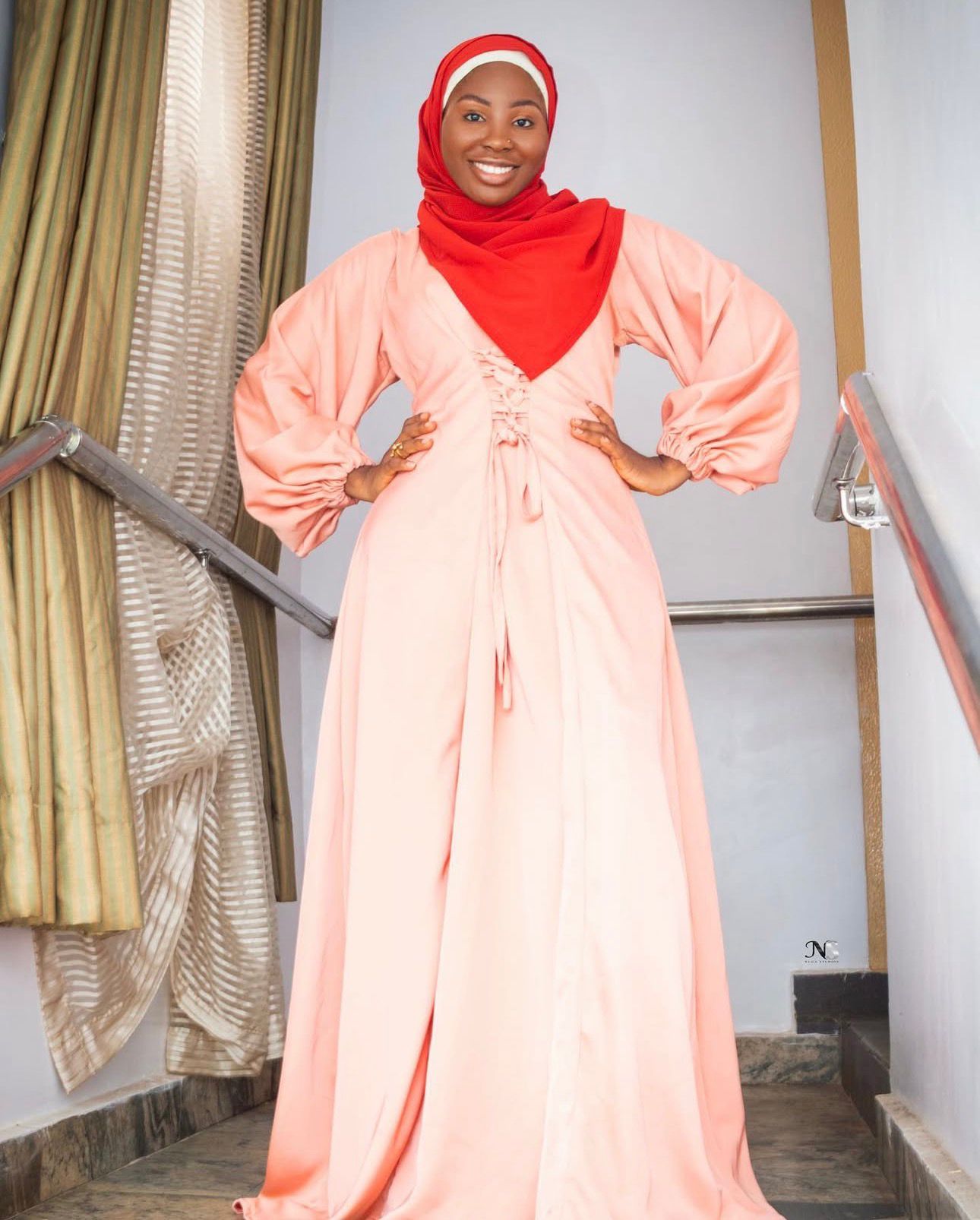
This is where House of Anaum’s collection leans younger. The lace-up detail at the bodice gives structure and adjustability, while the puffed sleeves keep it playful.
It’s modest, but not stiff, more “I’m dressed” than “I’m restricted.” And that matters, because Odunuga’s origin story is rooted in frustration with modest options that were “boring” or simply not designed with elegance in mind.
The burgundy gown with bold appliqué
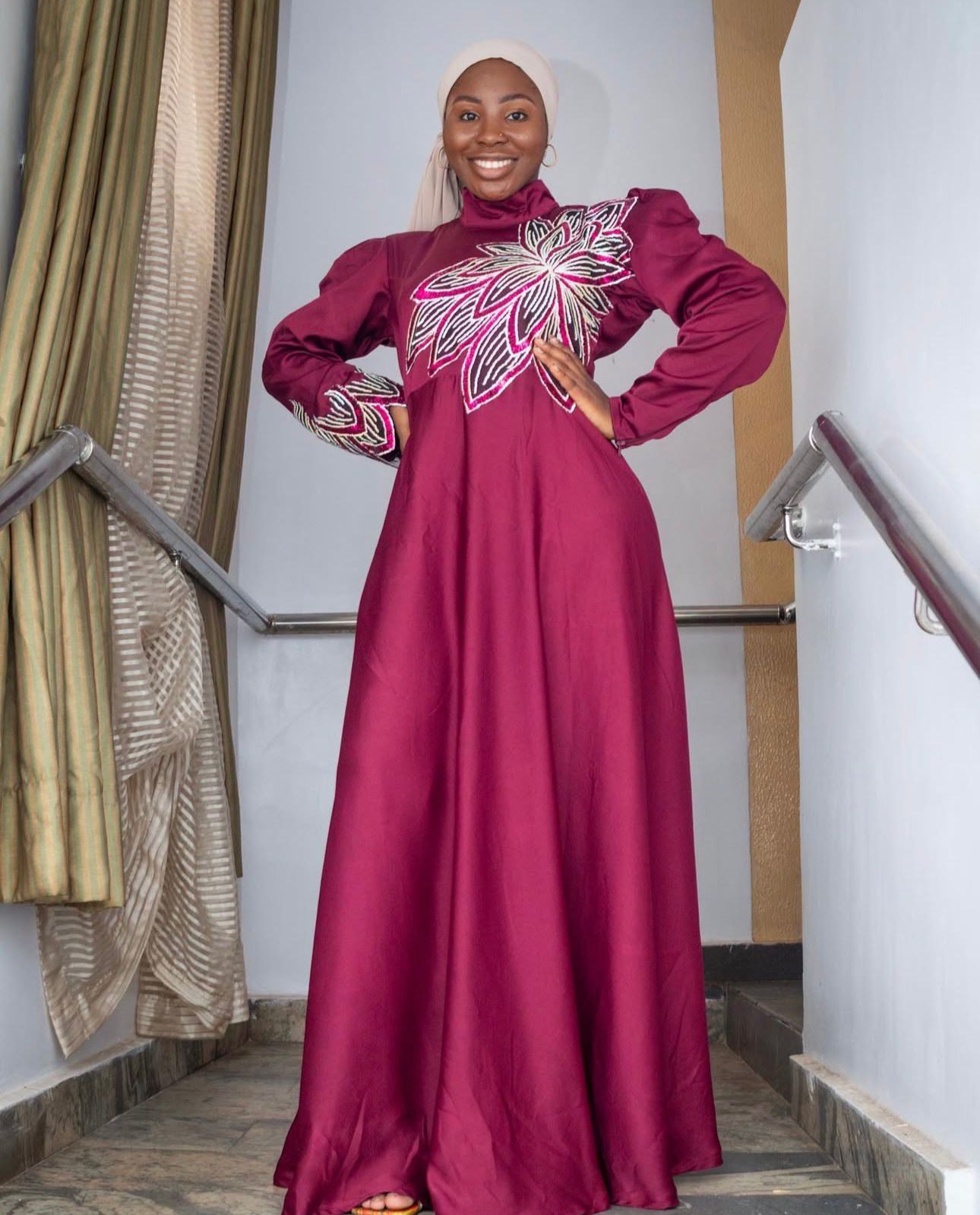
If the champagne look is softness, this one is presence. The rich burgundy base carries a large, high-contrast appliqué motif across the chest and sleeve. It is graphic, confident, and very intentional.
It’s the clearest “event” dress of the set, but still wearable because the silhouette stays uncomplicated. This is where House of Anaum’s “intentional design” shows up best: one strong focal idea, executed cleanly.
The cream gown with blue-gold floral embellishment
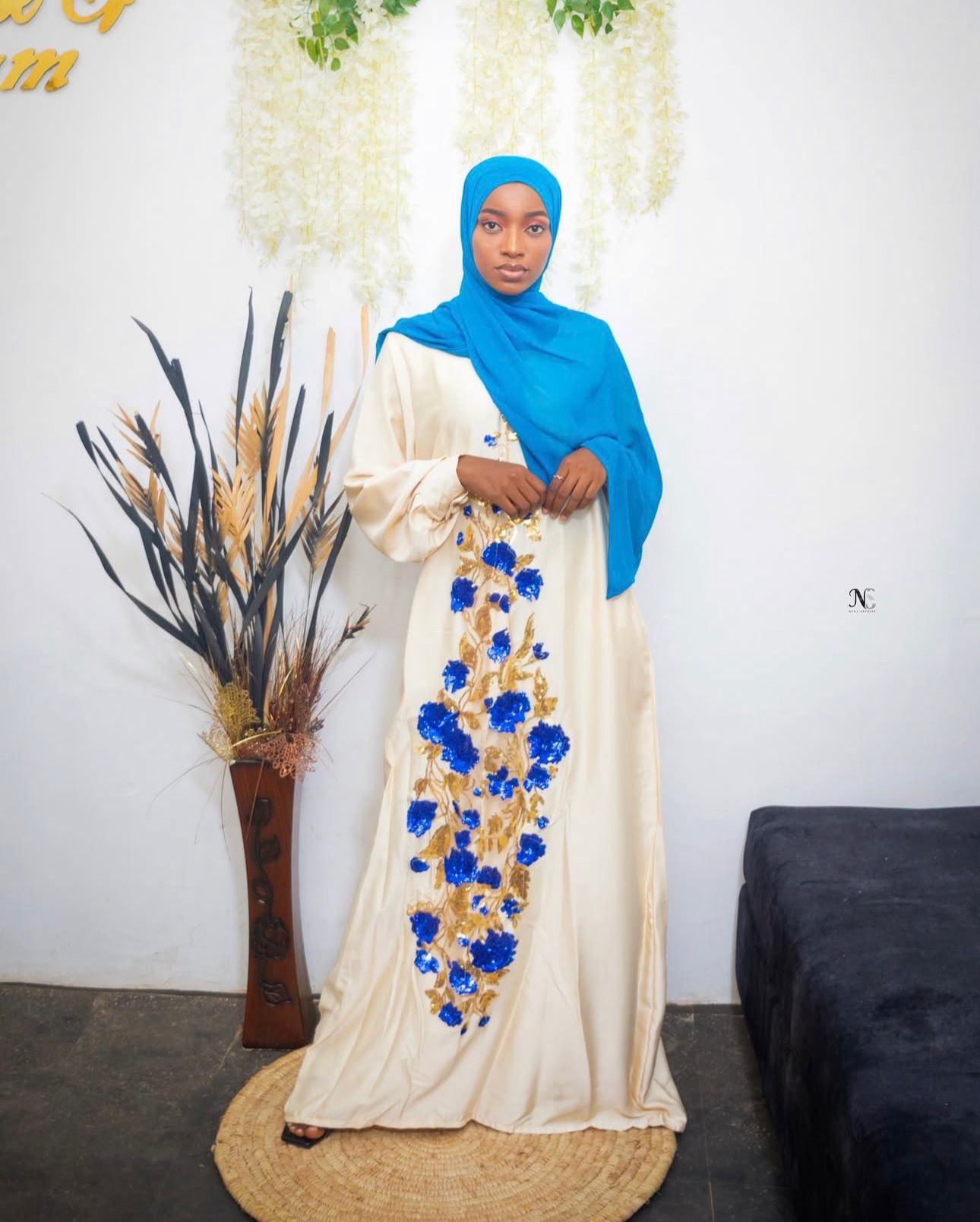
This look sits in the middle of classic and contemporary: a cream, liquid-drape gown punctuated by a vertical trail of blue floral embellishment. The colour contrast is striking without becoming costume-like, and the placement elongates the body.
This is also the piece that best signals the brand’s “African identity” approach, less about literal traditional fabric here, and more about storytelling through craft and surface detail.
What works, and what I’d push further
The strength of House of Anaum’s collection is clarity. The brand knows its non-negotiables, with modesty, elegance, intentional design, and quality craftsmanship on full display, and you can feel that discipline in how the looks are finished and styled.
What I would like to see next is more risk in silhouette architecture. The detailing is doing a lot of the differentiation right now (embroidery, appliqué, sleeves). However, the base shapes mostly stay within safe, familiar lines. A sharper play with proportion — more unexpected hems, layering, or structured outerwear — would push the brand from “beautiful” to “unmistakable,” especially as modest fashion grows more competitive globally.