 Follow Us on Google News


 Follow Us on Google Discover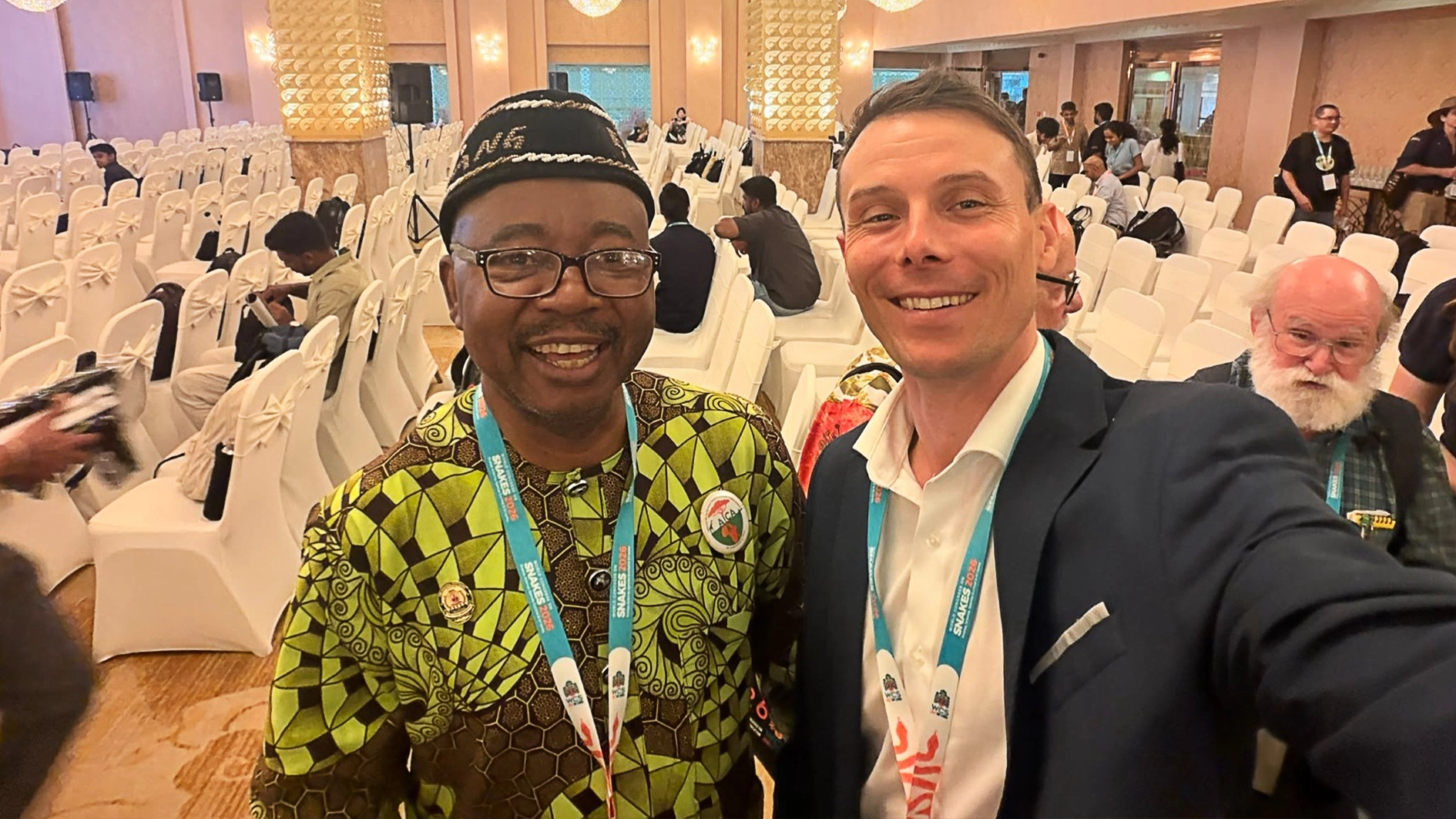
As at least 184 snake species face extinction globally, scientists and conservationists from 25 countries are gathering in Sri Lanka for the first international congress dedicated exclusively to the conservation, biology and public health challenges surrounding the increasingly threatened reptiles.
Nigeria is represented at the historic gathering by the Executive Director, Biodiversity Preservation Center (BPC), Uyo, Prof. Edem Eniang, the only Nigerian and the only African attending the World Congress on Snakes, holding from October 1 to 4 in Kandy, Sri Lanka.
Eniang is a Professor of Wildlife Resources Management and Herpetology in the Department of Forestry and Wildlife, University of Uyo, Akwa Ibom State.
His participation places Nigeria and Africa within a global scientific conversation on snake conservation, biodiversity protection, human-snake conflict and the public health challenges associated with snakebite.
The congress comes amid growing concerns over the conservation of snakes, with a 2026 report submitted to the Convention on International Trade in Endangered Species (CITES) revealing that 184 of 1,679 globally assessed snake species, representing 11 per cent, are threatened with extinction.
The figures highlight the growing conservation challenges confronting snakes, although scientists warn that the global assessment remains incomplete and does not provide a definitive picture of population declines across all species.

A landmark global reptile assessment published in the journal Nature in 2022 had earlier established that at least 1,829 of 10,196 reptile species assessed worldwide, or 21.1 per cent, were threatened with extinction.
The assessment identified agriculture, logging, urban development and invasive species among the major threats to reptiles, raising concerns about the future of snakes and other wildlife as natural habitats continue to face pressure.
Against this backdrop, more than 500 researchers, conservationists and medical experts are expected to participate in the four-day congress, which will bring together international scientists, ophiologists and public health specialists to explore strategies for protecting snake populations while addressing the dangers of snakebite.
Eniang’s participation places Nigeria within a global scientific conversation with significant implications for the country’s biodiversity, wildlife protection and human-snake conflict.
In Nigeria, snakes play important ecological roles, particularly in regulating rodent populations and maintaining the balance of natural ecosystems. Yet encounters with humans frequently result in the killing of snakes, driven by fear, misconceptions, habitat encroachment and concerns about venomous species.
The Nigerian conservationist’s presence at the congress also draws attention to the importance of strengthening local research, monitoring snake populations and improving public awareness about the ecological value of reptiles.
While the global figures provide evidence of extinction risks, the absence of comprehensive population monitoring makes it difficult to establish the scale of snake declines in Nigeria and identify the species facing the greatest pressure.
Congress chairman and renowned Sri Lankan herpetologist, Anslem de Silva, said the meeting would help move the global conversation about snakes away from fear and folklore towards scientific research and conservation.
“This congress establishes Sri Lanka as the epicenter of global snake research and conservation policy,” de Silva said.
He described the inaugural international gathering as an opportunity to advance research into snake biology, conservation and human-snake conflict while promoting greater international collaboration.
Sri Lanka was selected to host the congress because of its exceptional reptilian diversity. The island is home to about 112 snake species, more than 63 of which are endemic and found nowhere else on Earth.
The congress will feature plenaries, symposia, workshops and special events covering 12 themes, including snake diversity and evolution, behaviour, ecology, conservation, human-snake coexistence, captive management, toxicology and snakebite treatment.
Researchers will also examine the application of artificial intelligence, citizen science, conservation genomics and other emerging technologies to improve snake population monitoring and conservation.
The Guardian reports that the meeting will also address the global public health burden of snakebite, which kills more than 100,000 people annually and leaves thousands with permanent disabilities.
Leading researchers, including advisers to the World Health Organisation (WHO), are expected to discuss improved snakebite management, toxicology research and the development of more effective antivenoms.
Organisers maintain that protecting snakes and saving human lives are complementary objectives, stressing the importance of scientific research in reducing snakebite fatalities while safeguarding threatened species.
The congress will also feature field excursions into Sri Lanka’s rainforests and dry zones, allowing participants to observe endemic snake species in their natural habitats.
For Nigeria, Eniang’s participation presents an opportunity to connect local conservation concerns with international scientific research and discussions on protecting threatened species.
As the global gathering places snakes under an unprecedented international spotlight, the challenge for countries such as Nigeria is to translate scientific knowledge into stronger habitat protection, better population data and public education that encourages coexistence rather than indiscriminate killing.

