 Follow Us on Google News
 Follow Us on Google Discover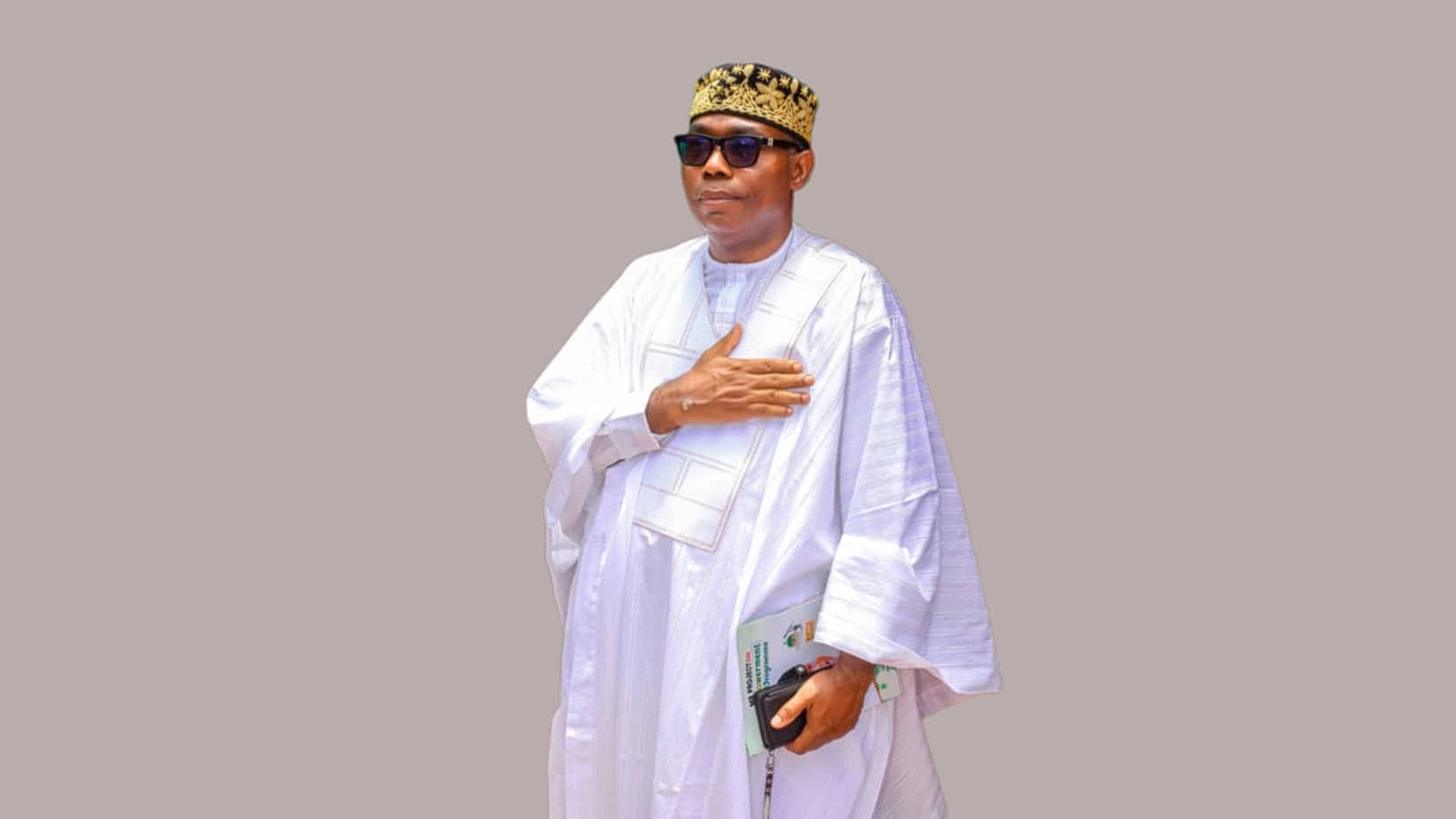
The Social Democratic Party (SDP) presidential candidate, Prince Adewole Adebayo, has unveiled an ambitious economic blueprint aimed at ending Nigeria’s dependence on imports and transforming the country into a self-reliant production economy by 2031.
Adebayo, in his economic blueprint, Farewell to Poverty and Insecurity, outlined a five-point economic strategy anchored on self-reliance and import substitution, full employment and poverty elimination, balanced regional development, speedy implementation and strategic state intervention where private investment falls short.
He said Nigeria must move away from policies that merely manage poverty through palliatives and focus instead on building productive capacity and creating sustainable wealth.
“Nigeria cannot permanently subsist on consumption and handouts, the country must build productive capacity and generate real wealth, not simply cushion the pain of not having any,” he said.
According to the SDP candidate, agriculture would form the foundation of the proposed economic transformation, while manufacturing would serve as the industrial engine for converting raw materials into finished products, creating higher-paying jobs and generating export earnings.
His agricultural strategy includes expanded irrigation, mechanisation, improved seeds, fertiliser access, credit facilities and extension services, alongside the establishment of agro-processing hubs across the six geopolitical zones.

“Agriculture must provide the foundation, while manufacturing must become the engine that converts what we produce into value, jobs and export earnings.”
Adebayo also proposed the establishment of regional industrial clusters based on the comparative strengths of different parts of the country.
The clusters would focus on agro-processing, textiles, pharmaceuticals, automobile assembly, electronics and building materials, while small and medium enterprises would receive greater access to affordable credit, guarantee schemes and technical support.
One of the most notable proposals in the blueprint is the establishment of a “Bank of Electricity”, a dedicated financing institution that would provide long-term, single-digit-interest loans for distributed power generation and local manufacturing of electricity equipment.
The proposed bank would support the domestic production of transformers, meters, cables, solar panels, batteries and other equipment required to strengthen the power sector.
“The Bank of Electricity will provide long-term, single-digit-interest financing for distributed power generation and the local manufacturing of transformers, meters, cables, solar panels, batteries and other electricity equipment.”
The strategy would combine expansion of the national grid with mini-grids and embedded power generation in an effort to address the country’s electricity crisis while developing local capacity to manufacture power infrastructure.
The SDP candidate also proposed a homegrown automobile industry, arguing that Nigeria’s import-substitution strategy should extend beyond food to sectors responsible for significant foreign exchange outflows.
“We have concentrated on food imports while ignoring one of the biggest sources of foreign exchange demand, automobiles. Building our own automobile industry will reduce our dependence on imports, conserve foreign exchange and create jobs.”
Adebayo also placed employment at the centre of his economic programme, with dedicated initiatives targeting small and medium enterprises, young people and women.
He proposed cheaper credit, stronger development-finance institutions, expanded credit guarantees and incentives to encourage banks to lend to agriculture, manufacturing and infrastructure.
The blueprint seeks to redirect Nigeria’s financial system towards the real economy, particularly sectors capable of producing goods, creating employment and generating sustainable economic growth.
He stressed the need for a major shift from a consumption-driven model towards one centred on domestic production, industrialisation and economic self-reliance.

