
 Get Guardian on Google
…Says slogan threatens safety of election officials, voters
The Independent National Electoral Commission (INEC) has warned that the growing use of the slogan “rig and die” ahead of the 2027 general elections could endanger the lives of electoral officials, voters, party agents and election observers.
The commission said inflammatory political rhetoric, particularly language linking electoral offences to death, could create an atmosphere of hostility and trigger violence at polling units.
National Commissioner and Chairman of INEC’s Information and Voter Education Committee (IVEC), Mohammed Kudu Haruna, gave the warning on Monday in Abuja at a forum, organised for the Nigeria Union of Journalists (NUJ), Nigerian Institute of Social Media Analysts (NISMA), Newspaper Proprietors Association of Nigeria (NPAN) and media executives.
The forum was themed, “Ethical and Professional Standards in Election Reporting Ahead of the 2027 General Election”.
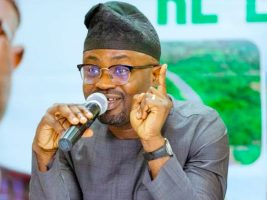
Haruna, represented by Deputy Director, Information and Publicity, Wilfred Ifogah,
said that although some proponents of the slogan claimed it was directed only at those involved in election rigging, its implications could extend to innocent Nigerians working at polling units.
He identified presiding officers, assistant presiding officers, collation officers and other ad hoc staff, alongside voters, party agents and observers, as those most exposed to the consequences of election-related violence.
Haruna said: “Consider the phrase “rig and die”, now widely repeated. Whatever its originators intend, and some insist it is aimed only at those who rig, a slogan that links an electoral offence to death is dangerous.
“At the polling unit, the people most exposed are not powerful politicians but ordinary Nigerians serving as presiding officers, assistant presiding officers, collation officers and other ad hoc staff, alongside voters, party agents and observers.
“A charged crowd can easily mistake a delayed result, a technical difficulty or a rumour for rigging, and a mistake of that kind can never be undone. Rigging is a crime, and the Electoral Act 2026 prescribes penalties for it.
“The remedy lies in the law: vigilant observation, transparent results on IReV, formal complaints to the Commission and the security agencies and, where necessary, the courts. The right to life is guaranteed by Section 33 of the Constitution, and no one may take it on suspicion.”
Haruna urged political leaders and their supporters to abandon the slogan, while cautioning journalists against amplifying it through sensational headlines, hashtags and trending topics.
“I appeal to you in the media not to amplify it as a headline, a hashtag or a trending topic. Report it where it is news, but with its context, the legal position and the safety of electoral officials in view,” he said.
The INEC commissioner also raised concern over the circulation of false information on social media suggesting that Nigerians could vote in the 2027 elections without their Permanent Voter Cards (PVCs).
He described the claims, which suggested that the Bimodal Voter Accreditation System (BVAS) had made PVCs unnecessary, as false.
“Section 47(1) of the Electoral Act 2026 requires every person intending to vote to present a valid PVC for accreditation at the polling unit where he or she is registered.
“The BVAS then verifies the card and the biometrics of the person presenting it. It confirms the voter; it does not replace the card. No PVC, no accreditation; no accreditation, no ballot paper,” he said.
Haruna warned that voters who believed the false claims might fail to collect their PVCs or arrive at polling units without them, potentially disenfranchising themselves.
He urged media organisations to guard against misinformation, disinformation, fake accounts and artificial intelligence-generated content ahead of the elections.
He said journalists should verify viral posts, screenshots, audio clips and videos before publication and seek clarification from INEC whenever they were uncertain about information concerning the commission.
The commissioner urged journalists to distinguish between polling unit results and final election outcomes, warning against premature reporting of results and presenting projections as official declarations.
On preparations for the elections, Haruna disclosed that INEC would conduct a nationwide mock accreditation and voting exercise on Saturday, November 28, across the 36 states and the Federal Capital Territory.
He said the exercise would take place in two polling units per Registration Area to test BVAS and the uploading of results to IReV.
According to him, polling units will open at 8:30 a.m., while accreditation will run from 8:30 a.m. to 2:30 p.m.
He urged voters in the selected polling units to participate in the exercise with their PVCs, stressing that it was a test rather than an election and would not produce winners or losers.
Haruna also expressed concern over low voter turnout, recalling that only 26.72 per cent of registered voters participated in the 2023 presidential election.
Earlier, the Resident Electoral Commissioner (REC) for the FCT, Dr Gabriel Hale Longpet, described the media as an indispensable partner in delivering credible elections.
Longpet, who was represented by the INEC FCT Administrative Secretary, Bimbo Oladunjoye, said the media played a critical role in shaping public opinion, promoting civic awareness, holding institutions accountable and building citizens’ confidence in the electoral process.
He said the growing intersection between traditional and digital media had increased the responsibility of journalists, particularly in tackling misinformation, hate speech and politically motivated narratives.
Speaking, the President of the NUJ, Comrade Yahya Alhassan, urged journalists to uphold professionalism and ethical standards ahead of the 2027 elections.
Alhassan, represented by the union’s Zonal Vice-President D, Hadeiza Momoh, said accurate information must take precedence over sensationalism, while calling on INEC to sustain its relationship with the media through timely and credible information dissemination.
The National Coordinator of NISMA, Dr Christian Eze, said social media had fundamentally changed how Nigerian voters received and reacted to electoral information.
He warned that anyone who created, shared or amplified political content had a responsibility towards the integrity of the 2027 elections.
Eze said unlike traditional media, which operated through editorial processes, social media content could go viral within minutes without verification.
In his presentation on the objectives and expectations of the forum, Ifogah, speaking on behalf of the Director of Voter Education and Publicity, Victoria Eta-Messi, said the engagement was designed to strengthen collaboration between INEC and media practitioners ahead of the elections.
He urged media organisations to establish dedicated election desks, strengthen editorial guidelines and introduce fact-checking mechanisms to improve the quality of election reporting.