 Follow Us on Google News


 Follow Us on Google Discover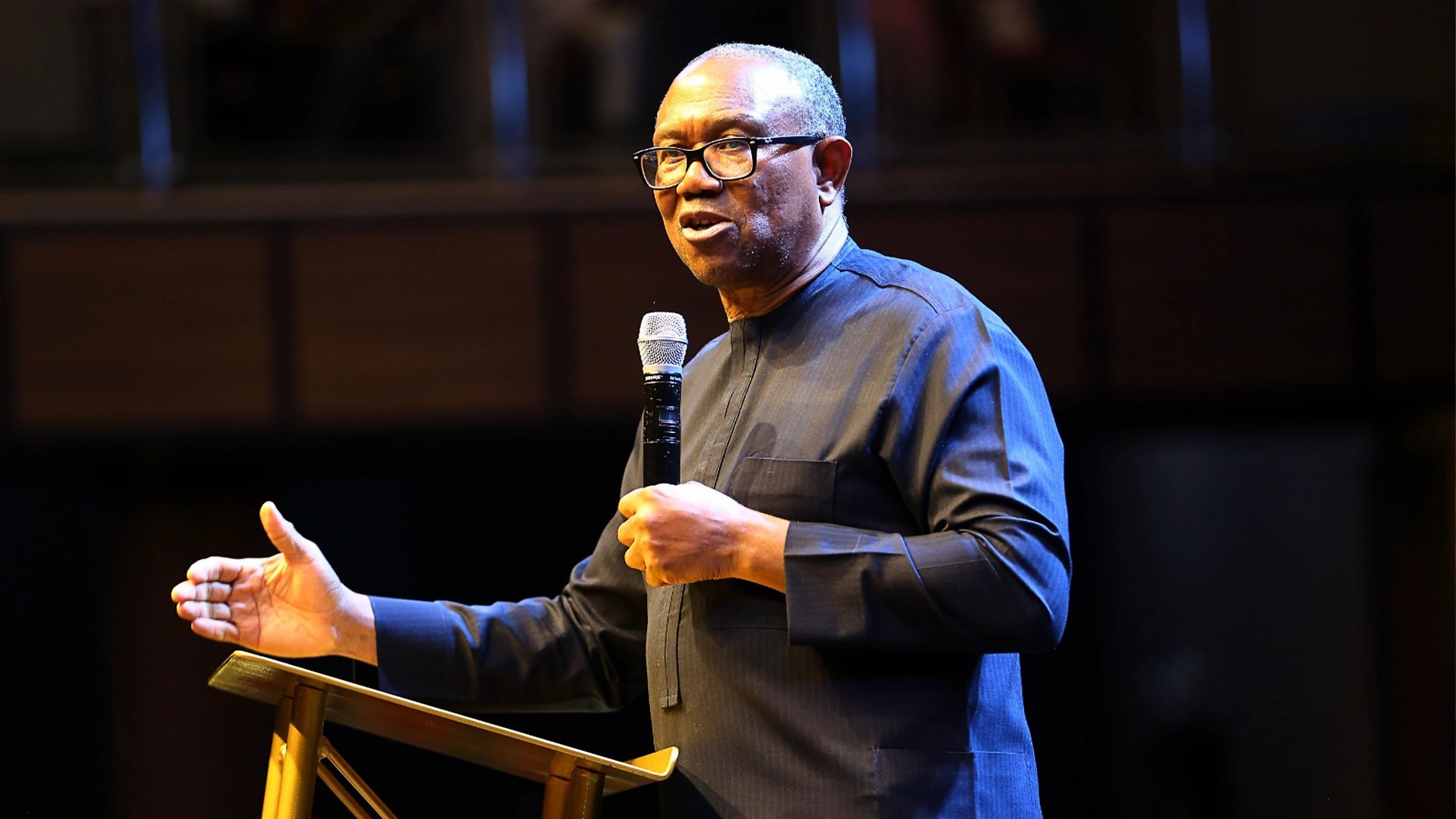
The emerging rapprochement between former Labour Party presidential candidate, Peter Obi, and Oyo State Governor, Seyi Makinde, may yet evolve into a broader opposition alliance ahead of the 2027 presidential election, but four major obstacles could frustrate the move, a Presidential aide, Tunde Rahman, has said.
Rahman, Senior Special Assistant to President Bola Tinubu on Media and Special Duties, identified personal ambition, zoning, political structure and trust deficit as the critical hurdles that opposition leaders must overcome if they are to forge a credible coalition against the President.
His assessment followed renewed speculation about an opposition realignment after Obi and Makinde, who were on opposing political trajectories during the 2023 election, recently met privately in Ibadan and subsequently appeared together at public events.
The most striking of the appearances was Obi’s presence at the inauguration of Makinde’s Allied People’s Movement (APM) Presidential Campaign Office in Abuja last Monday.
Makinde is seeking the presidency on the APM platform, while Obi retains a substantial support base through the “Obidient” movement and has not ruled out another presidential bid.
Rahman described Obi’s appearance at the campaign office of another presidential aspirant as unusual, saying it had naturally heightened speculation about a possible political understanding between the two men.

He said, however, that the development should be regarded as “a signal, not yet a coalition.”
Sources close to both camps have indicated that their discussions centred on “national interest, governance and 2027 permutations,” against the backdrop of renewed efforts by opposition stakeholders under the G-100 to build a united front for the election.
According to Rahman, the first and most difficult hurdle is the competing presidential ambitions of the leading opposition figures.
“Obi, Atiku and now possibly Makinde all have presidential ambitions. Who steps down for whom? Who gets the vice-president’s slot?” he asked.
He said the ability of the opposition to answer those questions would determine whether its current consultations could mature into a workable political alliance.
Rahman said zoning could pose an equally serious challenge.
While political interests in the South are expected to argue that the region should retain the presidency for another four-year term after former President Muhammadu Buhari’s eight years in office, northern political forces are unlikely to accept indefinite exclusion from the presidency.
He said any opposition ticket would therefore have to reconcile the competing regional interests or risk being undermined before the campaign gains momentum.
Rahman also identified political structure as a major advantage currently enjoyed by the ruling All Progressives Congress (APC).
The party, he said, controls 31 states and has a formidable nationwide grassroots network, giving President Tinubu a substantial organisational advantage going into 2027.
He also noted that some governors outside the APC have expressed support for Tinubu’s re-election.
While acknowledging that elections are ultimately decided by voters, he said the political influence of governors could not be discounted.
“Governors do not vote for the people, but their influence on political structures and mobilisation cannot be wished away,” he said.
The fourth hurdle, according to Rahman, is trust.
He questioned whether political structures that fought bitterly against one another in the 2023 election could quickly integrate into a disciplined nationwide opposition machinery.
“The issue is not just getting the leaders to shake hands. Can their party structures at the state and grassroots levels actually work together?” he asked.
Rahman also challenged the opposition’s emerging electoral arithmetic, which is based on the argument that President Tinubu won the 2023 election with 37 per cent of the vote and could therefore be defeated if the votes previously secured by Atiku Abubakar, Obi, Rabiu Kwankwaso, Makinde and other opposition figures were consolidated.
He cautioned, however, that votes secured by different candidates in one election could not automatically be added together in another.
“Yes, in 2023, the opposition parties ran separately, splitting the anti-APC vote. In 2027, they must run together if they hope to pull any surprise. This is easier said than done,” he said.
He cited the 2015 election as evidence that a united opposition could defeat an incumbent president.
In that election, Muhammadu Buhari, backed by a broad opposition coalition that included Tinubu, defeated incumbent President Goodluck Jonathan.
Jonathan remains the only Nigerian incumbent president to have lost a re-election bid.
But Rahman said the 2015 experience could not simply be replicated without resolving the leadership, structural and strategic differences within the current opposition.
According to Rahman, President Tinubu will also enter the 2027 contest with the considerable advantage of incumbency, control of the federal political machinery and a record that the administration intends to present to voters.
He cited the administration’s economic reforms, infrastructure projects, student-loan scheme, CrediCorp initiative and compressed natural gas programme as key components of the Renewed Hope Agenda.
Rahman said the administration’s campaign narrative would increasingly focus on the transition from economic reforms to prosperity as the benefits of the reforms become more evident.
He nevertheless acknowledged that the cost of living would remain a critical determinant of the 2027 contest.
Food prices, transportation costs and electricity, he said, would be among the key “kitchen-table” issues that could influence voters’ decisions.
Security would also remain crucial, particularly in the North and Middle Belt.
Any major deterioration in the security situation, he warned, could become a potent campaign issue and be exploited by the opposition.
Rahman said the Obi-Makinde rapprochement was important because it suggested that opposition leaders were beginning to recognise the consequences of their failure to unite in 2023.
But he stressed that meetings and handshakes alone could not produce an election-winning coalition.
“If they can agree on a framework and bring in more governors, the coalition becomes serious. If not, it remains mere optics,” he said.
According to him, a credible opposition challenge would require the emergence of a consensus presidential candidate early enough to build a coherent nationwide campaign.
It would also require substantial gubernatorial backing and a formidable grassroots structure capable of converting political agreements into votes.
He suggested that an alliance capable of attracting between eight and 10 governors would significantly alter the political equation.
Without such developments, he said, the opposition would remain fragmented, giving Tinubu a substantial advantage.
“The 2027 election will not be won on personalities alone,” Rahman said. “It will also be won on structure, strategy, economic conditions, security and the ability to mobilise voters.”
In his assessment, the Obi-Makinde rapprochement has therefore become a test of whether opposition leaders can learn from the central lesson of 2023, that division can cost them the presidency.
Whether the emerging consultations develop into a genuine political threat, he said, will depend on the willingness of Obi, Makinde, Atiku and other opposition figures to place collective strategy above individual presidential ambitions.
“For now, President Tinubu is the favourite,” Rahman said. “But for the first time since 2023, the APC may now have something to worry about.”

