 Follow Us on Google News


 Follow Us on Google Discover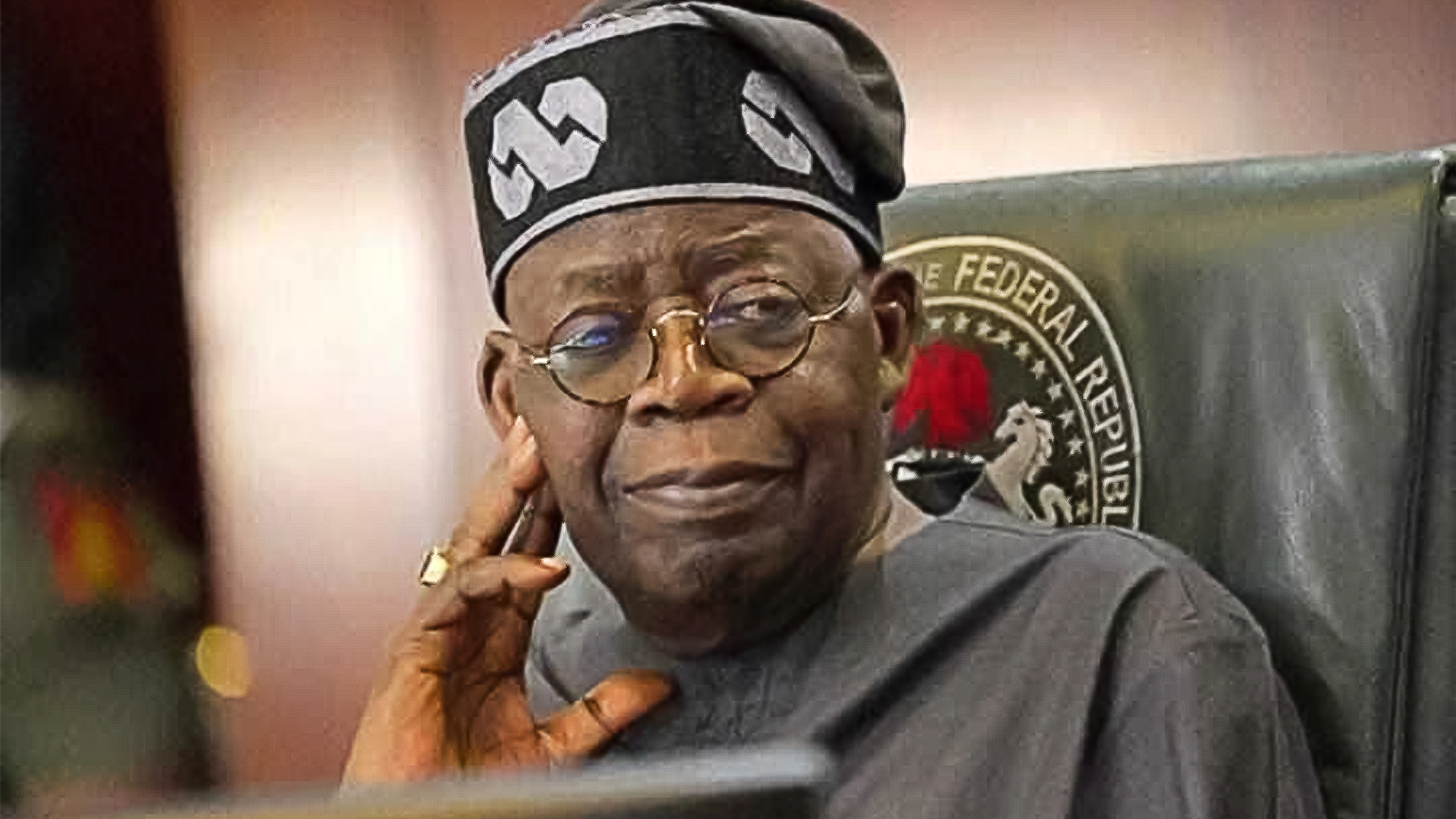
The Charismatic Bishops Conference of Nigeria (CBCN) has endorsed President Bola Ahmed Tinubu for a second term in 2027.
The bishops cited his handling of religious diversity, government appointments and efforts to tackle insecurity as reasons for their decision.
The President-General of CBCN, Archbishop Leonard Bature Kawas, announced the endorsement on Wednesday at the grand finale of the 2026 Synod of the CBCN and International Communion of Charismatic Archbishops, Bishops and Apostles (ICCABA) in Abuja.
Kawas said the conference had initially expressed concern over Tinubu’s Muslim-Muslim ticket in the 2023 presidential election but changed its perception following his appointments.
He cited the appointment of Senator George Akume as Secretary to the Government of the Federation and other Christians to strategic positions as evidence of what he described as religious balance.
Kawas also commended the administration’s security efforts and its collaboration with the United States, saying the bishops had earlier advocated stronger international cooperation against terrorism.

He said the conference had resolved to support Tinubu going into the 2027 election.
“We support him now. We support him today. We support him tomorrow. And we support him for as long as he’s willing to be our president,” Kawas said.
He added, “Even come 2027, we will still be standing with him. And so it is safe to say that this house has endorsed him for 2027 president.”
Kawas, however, called for greater inclusion of religious leaders in governance, noting that churches often serve as the first point of contact for Nigerians facing economic and social difficulties.
In his remarks, President Tinubu urged religious leaders to use their influence to promote peace and responsible participation as Nigeria approaches the 2027 general elections.
The President, represented at the event by the SGF, Senator George Akume, said the country was undergoing difficult but necessary economic reforms aimed at correcting structural weaknesses and creating a more sustainable economy.
He acknowledged the hardship caused by the reforms, but said government remained committed to ensuring that they ultimately delivered jobs, affordable food, infrastructure, healthcare and improved living standards.
On security, Tinubu said the government had recorded intelligence-led breakthroughs, including the rescue of 308 abducted citizens from Kwara and Niger states in August.
He stressed that security could not be left to security agencies alone, urging religious leaders to support peacebuilding, social cohesion and early-warning mechanisms.
“Religious leaders occupy a very important intersection in the prevention and management of these issues because they are recognized influential social mobilizers and actors in peace building,” he said.
Tinubu charged the bishops to discourage extremist recruitment, hate speech, vote buying and the weaponisation of ethnicity and religion ahead of the elections.
“Elections will come and go, but Nigeria must remain,” he said.
He further urged them to demand issue-based campaigns and ensure that political ambitions did not override national peace and interest.
“An election is a contest for office. It must never become a war for survival,” the President said.
Earlier in his keynote address, the Minister of Information and National Orientation, Mohammed Idris, similarly urged religious leaders to protect national unity ahead of 2027.
Idris said Nigerians had a constitutional right to freedom of religion and warned against presenting the country’s security challenges as a religious war.
He noted that terrorists and criminal groups had attacked Nigerians across religious and ethnic lines.
The minister said government had strengthened intelligence, military operations and international cooperation, while citing the reported elimination of about 1,000 terrorist elements in the North-East during the first quarter of 2026.
He also urged churches to support national development through education, healthcare, skills acquisition and humanitarian services.
Idris cautioned religious leaders against misinformation and inflammatory messages, stressing that their influence could either calm communities or worsen tensions.
He urged Nigerians to assess candidates based on their records and programmes, vote according to their conscience and accept legitimate electoral outcomes.
Idris said elections were only moments in the life of a nation, urging stakeholders to protect Nigeria’s peace, unity and future beyond political contests.

