The Ogun State Government has proposed a total expenditure of ₦1,668,997,993,125.44 for the 2026 fiscal year, representing a 63 percent increase from the 2025 budget of ₦1.054 trillion.
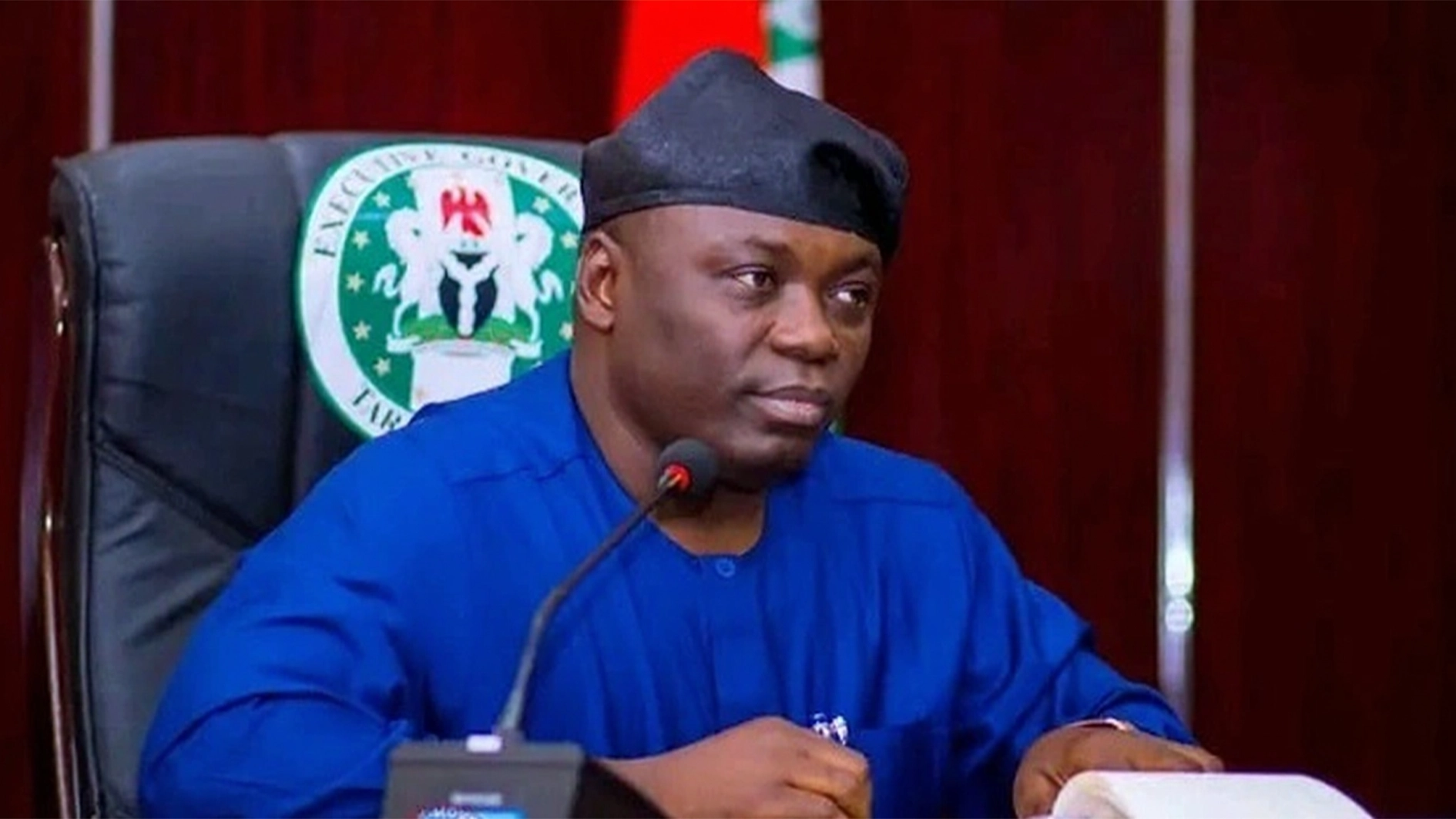
Presenting the Appropriation Bill, tagged Budget of Sustainable Legacy, before the State House of Assembly in Abeokuta, Governor Dapo Abiodun said the proposal allocates ₦624.76 billion (37 percent) to recurrent expenditure and ₦1.044 trillion (63 percent) to capital projects.
He listed key components of the spending plan as: Personnel Costs, ₦167.92 billion; Consolidated Revenue Charges, ₦65.80 billion; Public Debt Charges, ₦99.98 billion; Overhead Costs, ₦291.06 billion; and Capital Expenditure, ₦1.044 trillion.
On funding sources, the governor projected ₦509.88 billion from Internally Generated Revenue, with ₦250 billion expected from the Ogun State Internal Revenue Service and ₦259.80 billion from MDAs. Statutory allocation from the Federal Government is estimated at ₦554.81 billion, while capital receipts of ₦518.90 billion — from internal and external loans and grants — are anticipated.
Sectoral allocations include Education, ₦275.40 billion (17 percent); Health, ₦210.59 billion (13 percent); Housing and Community Development, ₦199.96 billion (10 percent); Agriculture and Industry, ₦40.54 billion (2 percent); and Infrastructure, which takes the largest share with ₦526.15 billion (32 percent).
Others are Social Protection, ₦72.82 billion (4 percent); Recreation, Culture and Religion, ₦42.24 billion (3 percent); General Public Service — Executive Organ, ₦55.65 billion (3 percent); General Public Service — Financial and Fiscal Affairs, ₦52.30 billion (3 percent); Personnel Service, ₦3.86 billion (0.2 percent); Public Order and Safety, ₦36 billion (2 percent); Economic Affairs, ₦7.45 billion (0.4 percent); Judiciary, ₦15.70 billion (1 percent); Legislature, ₦33.67 billion (2 percent); and Statewide Expenditure, ₦129.68 billion (8 percent).
Abiodun said the 2026 budget would prioritise completion of major projects under the ISEYA development pillars. He emphasised projects with strong revenue potential, employment prospects, alignment with the State Economic Development Plan, and consistency with the Medium-Term National Development Plan and the Federal Government’s Renewed Hope Agenda.
Reviewing the 2025 budget performance, he said Ogun achieved 60 percent of its pro-rata expenditure target and 53 percent of its revenue target as of September 30, 2025.
The 2025 spending plan, he noted, was designed to drive inclusive growth, reduce inequality, and improve living standards.
The governor described the 2026 budget as timely, coming amid improved economic performance, rising investor confidence, and notable expansion across key sectors.
He said Ogun’s economy has grown to an estimated GDP of ₦17 trillion, while IGR increased from ₦52 billion in 2020 to nearly ₦192 billion in 2024, with a projection of ₦250 billion for 2025.
He highlighted infrastructure development as a major driver of growth, noting that the Gateway International Airport is now fully certified and has commenced commercial flights between Ogun and Abuja.
He also said construction of the Kajola and Ijebu-Ode Inland Dry Ports would boost exports, reduce logistics costs, and support industrial expansion.
Abiodun added that his administration has built or rehabilitated over 1,500km of roads in six years, enhancing connectivity across the state.
He urged lawmakers to give the Appropriation Bill accelerated consideration. He also announced upcoming events, including the Gateway Afrobeat Drum Festival and the state’s 50th anniversary celebration scheduled for 2026.
Welcoming the governor, Speaker of the House, Rt. Hon. Oludaisi Elemide, said the Assembly considered 19 bills during the legislative year, passing 11 into law. He said 56 resolutions were also approved on issues ranging from security to education and infrastructure.
Elemide called for the establishment of a special court to enforce the Anti-Land Grabbing Law, noting that the House resolved over 100 disputes in the past year involving land, chieftaincy matters, environmental issues, and transport unions.
He commended the governor for prompt payment of constituency allowances and renovation of the Assembly Complex, while appealing for more electronic office equipment and additional legislative staff to boost productivity.