 Follow Us on Google News
 Follow Us on Google Discover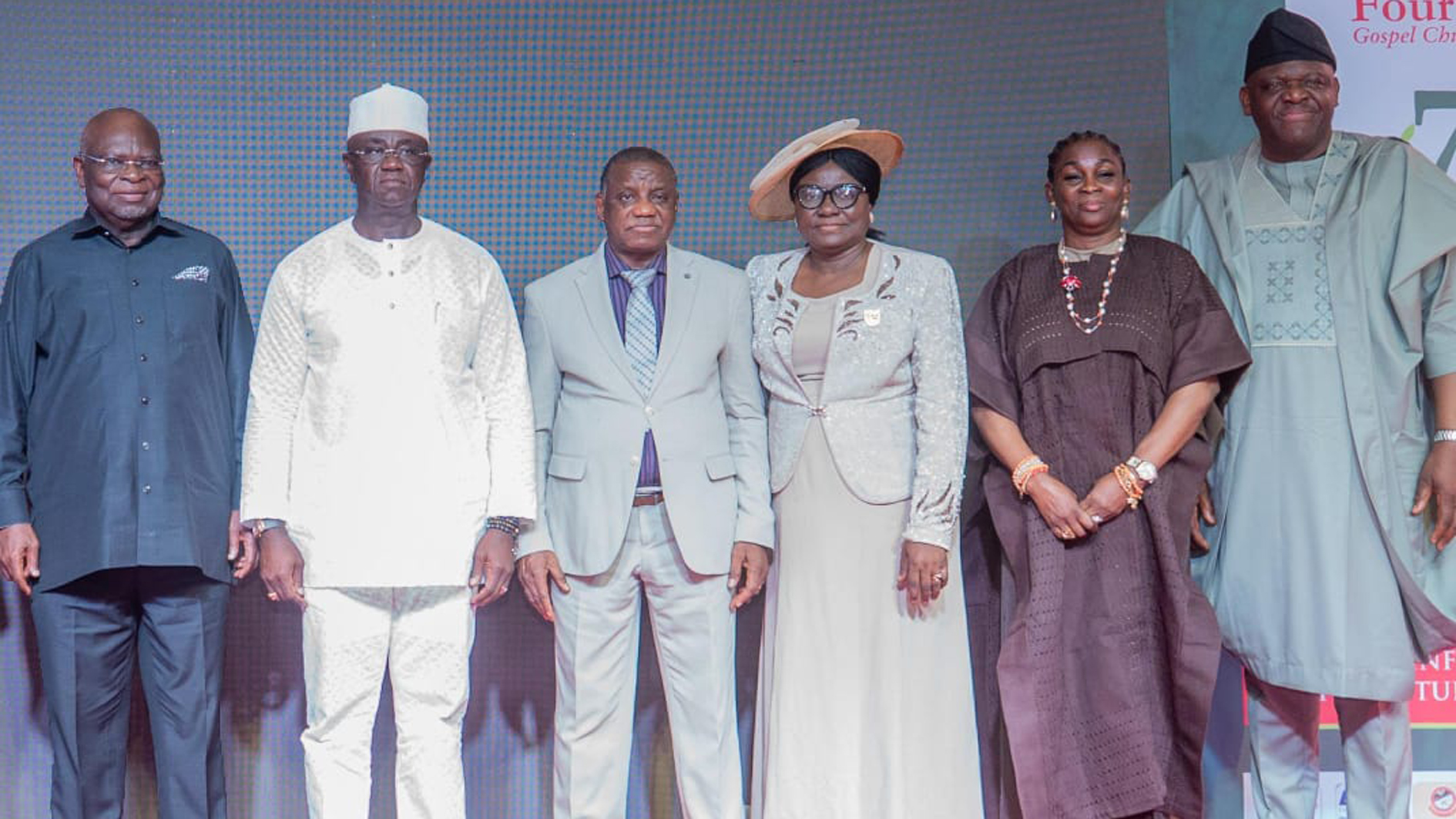
The General Overseer, Foursquare Gospel Church in Nigeria, Rev. Sam Aboyeji has called on the Federal Government and other stakeholders to priorotise sustainable infrastructure, strong institutions and value-driven leadership as foundation for national development.
He made the call at its 13th Annual Public Lecture, held as part of activities marking its 71st Annual Convention which took place at The Marquee Harbour Point, Victoria Island, Lagos with speakers stressing the need for long-term planning, responsible leadership and investments capable of improving citizens’ welfare.
Aboyeji, said Nigeria’s abundant human and natural resources could only translate into lasting prosperity through visionary leadership, competence, integrity and deliberate investment in infrastructure.
The General Overseer said the theme of the lecture, “Building to Last: Faith, Infrastructure and the Future of a Nation,” was timely, noting that national development should not be reduced to the construction of roads, bridges, railways, airports, schools and hospitals.
According to him, sustainable development requires people and institutions capable of maintaining infrastructure, strengthening governance and creating opportunities for future generations.
The cleric said the church, which has maintained an active presence across Nigeria for 71 years, considered it part of its responsibility to contribute to national development through intellectual discourse, constructive engagement and prayers for the country.

He stressed the need to deliberately prepare the next generation of leaders, declaring that “success without a successor is failure.”
Aboyeji urged participants to ensure that the lecture and subsequent panel discussions produced practical recommendations capable of promoting inclusive growth, economic stability and shared prosperity.
He charged Nigerians to “raise up the foundations of many generations,” saying rebuilding the country required collective action and a commitment to restoring infrastructure for the benefit of future generations.
The Chairman of the occasion and former Minister of State for Budget and National Planning, Prince Clem Agba, urged political leaders and citizens to rethink how they measure development, warning that excessive focus on short-term political gains could undermine Nigeria’s long-term prosperity.
Agba said governments should prioritise data-driven policymaking and investments that directly reduce deprivation rather than projects selected mainly for their visibility.
He cited Nigeria’s 2022 Multidimensional Poverty Index, which showed that about 133 million Nigerians were multidimensionally poor, with rural communities and children carrying a disproportionate burden.
According to him, multidimensional poverty goes beyond income to encompass access to healthcare, education, clean water, sanitation, housing, food security and electricity.
Agba argued that infrastructure projects should be evaluated by their ability to reduce deprivation and improve the quality of life of citizens.
He also called for stronger collaboration among government, the private sector, churches, civil society and citizens to build a more equitable and sustainable Nigeria.
The Guest Speaker, former Chairman of Odua Investment Company and Fintech Grandmaster, Dr. Segun Aina, also called for a fundamental shift in Nigeria’s approach to nation-building.
Aina argued that infrastructure development must be matched by character, competence and institutional integrity, stressing that Nigeria’s challenge was not a lack of human and natural resources but the failure to deploy them responsibly.
He introduced the concept of “character infrastructure,” describing it as the ethical and behavioural foundation required to manage physical infrastructure and public institutions effectively.
Aina warned that corruption, incompetence, negligence and indiscipline could undermine even the best infrastructure, urging religious institutions to translate faith into integrity, accountability, justice and responsible citizenship.
He said Nigeria’s future depended on building both infrastructure and people capable of sustaining the country’s development gains.
In his welcome address, the 71st Anniversary Convention Chairman, Rev. Charles Fashola said the future of a nation must be built on strong values, strong leadership, reasonable citizenship, quality infrastructure and shared commitment for the common goal of all.

