 Follow Us on Google News



 Follow Us on Google Discover
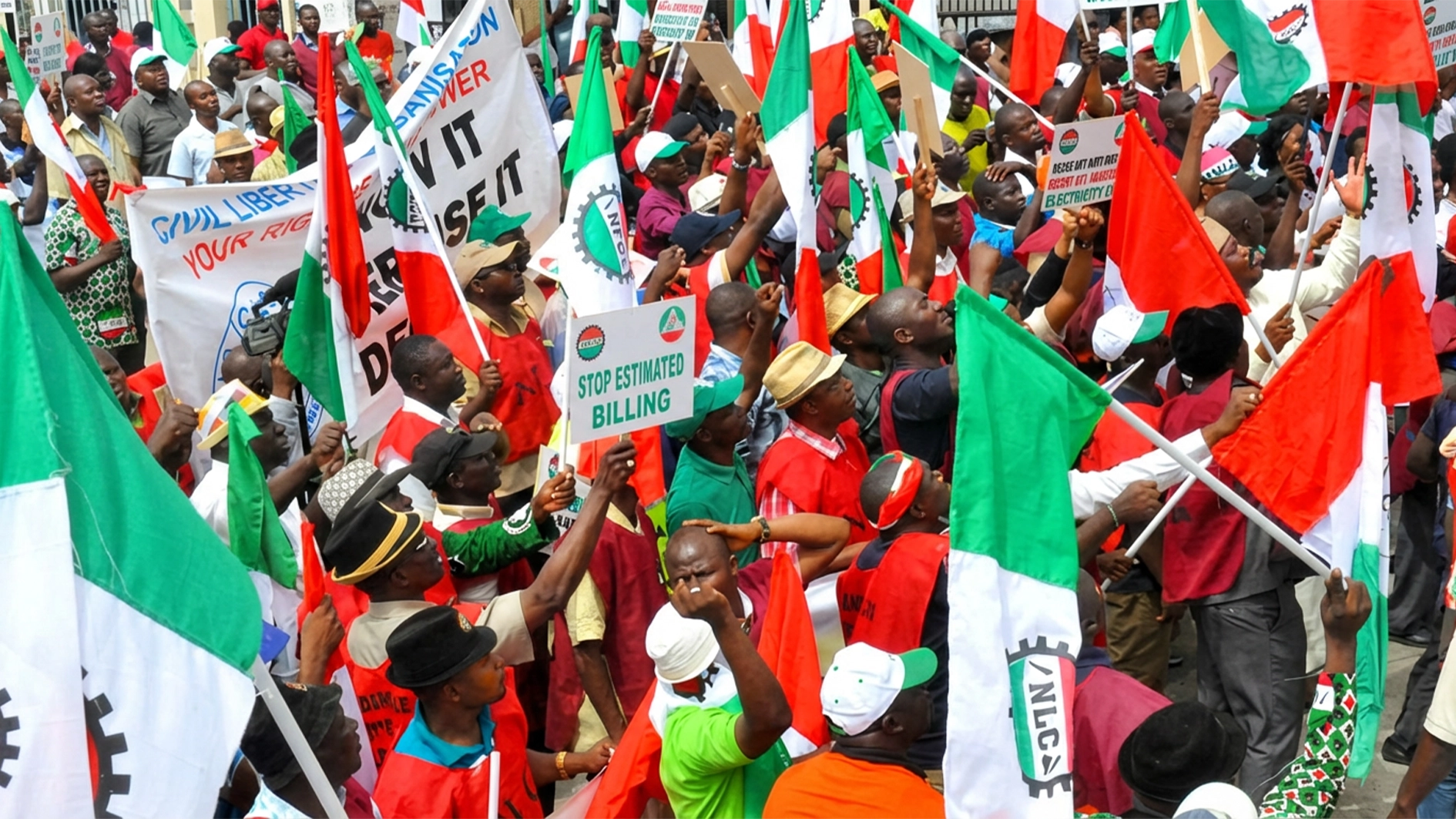
ActionAid Nigeria and the Nigeria Labour Congress (NLC) have decried poor implementation of the N70,000 national minimum wage in some states, with a recent assessment putting compliance at 67 per cent at the state level and 48 per cent at the local government level.
The organisations also called for immediate negotiations for a new minimum wage and a minimum pension, warning that rising inflation, fuel prices and the declining value of the naira have continued to erode workers’ purchasing power.
The findings were contained in a study on minimum wage and pension payment compliance in Nigeria, presented by the organisations in Abuja.
The report indicated that although several states had fully implemented or exceeded the N70,000 minimum wage, Zamfara and Yobe had yet to achieve full compliance at the local government level, particularly in schools.
It also identified evidence of partial compliance in Ondo, Imo, Edo, Bauchi and Kano, noting that discrepancies persisted in some local government areas and private sector establishments, even in states where implementation had been recorded.
On pension payments, the assessment found that compliance with the Contributory Pension Scheme remained inadequate, particularly in the organised private sector and private schools.

It stated that compliance with the Pension Reform Act 2014 was fully operational in the public sector but fell below 20 per cent in the organised private sector and stood at about 70 per cent in private schools.
The report further revealed that although the 36 states and the Federal Capital Territory received N5.36 trillion in 2024, many were unable to offset their pension and gratuity liabilities, estimated at N626.8 billion.
Speaking at the presentation of the report, NLC President, Joe Ajaero, said negotiations for a new minimum wage should begin immediately to allow sufficient time for discussions before the next review becomes due in April.
He said the 2024 National Minimum Wage Act increased the minimum wage from N30,000 to N70,000 and reduced the review cycle from five years to three years without changing the implementation date.
According to him, the previous minimum wage arrangement expired in April 2023, but delays in negotiations meant that the new wage was eventually signed into law in 2024.
“The time to start negotiation, which in most cases lasts for about six months, is now,” he said.
Ajaero said the labour movement wanted to conclude negotiations early to avoid a repeat of the delays experienced during the previous wage review.
He clarified that the NLC’s position differed from that of the Trade Union Congress, which favoured commencing negotiations in August, but stressed that the difference did not indicate a division between the two labour centres.
The labour leader also dismissed allegations that opposition politicians were influencing the NLC’s agitation, insisting that the congress was focused on securing better conditions for workers.
He, however, warned that increasing the minimum wage without addressing inflation and the depreciation of the naira would provide only temporary relief.
According to him, petrol sold for between N500 and N600 per litre when the N70,000 minimum wage was approved, compared with about N1,450 in Lagos and Abuja and N1,500 in some other areas.
He said the increase in fuel prices had pushed up transportation, food and other essential living costs, making it necessary for the government to introduce measures to cushion the impact on workers.
Ajaero also called for the negotiation of a minimum pension alongside the next minimum wage, noting that some retirees received between N20,000 and N30,000 monthly.
He said many pensioners struggled to pay rent, afford transportation and meet their feeding needs, urging the government to ensure that retirement benefits provided a decent standard of living.
The NLC president further called for greater attention to workers in the informal sector, including hairdressers, bakers and other small-scale operators, noting that they constituted a significant proportion of the country’s workforce.
He said formalising the informal sector would help improve workers’ conditions and expand the reach of organised labour.
Ajaero also urged the government to deploy additional revenue from crude oil sales to support Nigerians grappling with rising living costs.
He expressed concern over the slow implementation of measures aimed at reducing dependence on petroleum products, including the conversion of vehicles to compressed natural gas (CNG) and the promotion of electric vehicles.
Earlier, ActionAid Nigeria Country Director, Andrew Mamedu, said poor implementation remained one of the major challenges associated with minimum wage adjustments in the country.
Mamedu said the organisation collaborated with the NLC to assess compliance across states and local governments and examine lessons from the 2024 wage adjustment ahead of the next negotiations.
He insisted that the N70,000 minimum wage applied to workers on Grade Level One, Step One, while consequential adjustments were expected to maintain appropriate salary differences across other grades and steps.
He decried that some states had failed to implement the adjustments properly, either by applying flat additions across salary grades or adopting arrangements that did not preserve the existing salary structure.
Mamedu said the assessment examined the history of minimum wage adjustments, living costs, inflation and the difference between nominal wages and their actual purchasing power.
He added that the findings would guide advocacy for a wage that reflected workers’ economic realities and ensure compliance across the country.
He said ActionAid would work with labour organisations and civil society groups to ensure that the report’s recommendations translated into concrete action.
Mamedu stressed that improving workers’ welfare through a decent living wage was central to the organisation’s commitment to lifting five million people out of poverty.
Both organisations called for greater accountability from federal and state governments, urging them to address implementation gaps, strengthen pension protection and ensure that workers earned wages capable of meeting their basic needs.

