
 Get Guardian on Google
Afreximbank has called for increased financing of intra-African trade, stronger regulatory compliance frameworks and greater investment in value-added production to accelerate the continent’s economic integration and industrial transformation.
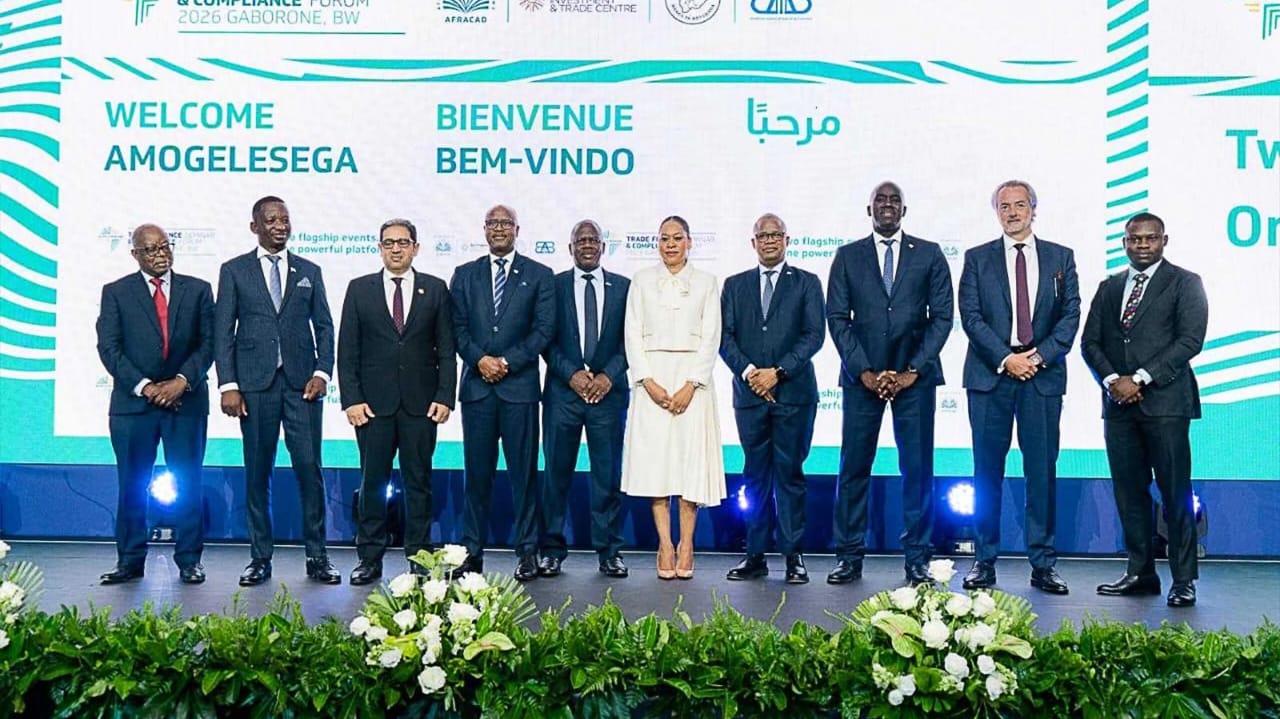
Speaking at the opening ceremony of the inaugural jointly held Afreximbank Trade Finance Seminar and Compliance Forum in Gaborone, Lesego Moseki, Governor of the Bank of Botswana, emphasised that compliance should be recognised as a strategic asset that strengthens resilience, builds trust and enhances competitiveness. He called for greater collaboration among regulators, financial institutions and development finance institutions to foster a more harmonised and efficient trading environment across Africa.
In his opening remarks at the 2026 Afreximbank Trade Finance Seminar (ATFS) and Afreximbank Compliance Forum (ACF), Haytham El Maayergi, Executive Vice President, Global Trade Bank, Afreximbank, highlighted the need for trade finance and compliance frameworks to work hand in hand to unlock the full potential of the African Continental Free Trade Area (AfCFTA) and accelerate intra-African trade.
“We cannot build an integrated African market without financing the trade that connects us, and we cannot expand that trade sustainably without the trust, transparency and compliance systems that underpin it,” said Mr El Maayergi.
El Maayergi said the changing global landscape made this imperative even more urgent, with geopolitical tensions and disrupted supply chains exposing the risks of overreliance on distant markets.
“As global markets look to diversify production beyond China, Africa must position itself as a natural partner of choice. The continent has the resources, vast land and, most importantly, its people. By 2050, one in four people globally will be African. Whether this demographic advantage becomes an asset or a liability will depend on the decisions we make today.
“To seize this opportunity, Africa must trade more with itself, and that trade must be adequately financed and underpinned by trust.”
He noted that although intra-African trade grew by 5.5 per cent in 2025, it still represents only around 14 per cent of Africa’s total trade. With 50 countries having ratified the AfCFTA but only 12 actively trading under its framework, he stressed that the priority must now be translating the agreement into tangible economic opportunities.
“We have opened the market. Our task now is to make that market work.
“It is about moving from exporting raw materials to processing, manufacturing, and creating greater value here in Africa. In other words, how can we get African resources to feed African industries and African businesses to serve African markets, while creating jobs for our people and retaining value that will support the growth and prosperity of African economies?”
Botswana’s industrial transformation presents opportunities for African trade
Highlighting Botswana’s role in advancing continental integration, Mr El Maayergi cited the country’s success in developing greater domestic participation in the diamond value chain, including the relocation of De Beers Group’s global rough-diamond sales activities from London to Gaborone.
He also highlighted the Botswana Stock Exchange’s collaboration with the Nigerian Exchange Group and other African exchanges to broaden cross-border investor access to the Dangote Petroleum Refinery IPO share offer.
Acting CEO of the Botswana Investment and Trade Centre (BITC), Anthony Sefako, said Botswana’s economic transformation agenda presents significant opportunities for trade finance, investment and regional value-chain development.
“Botswana is currently pursuing a bold productive transformation, shifting from reliance on diamond mining towards a digitally enabled, export-led and diversified high-income economy.
“Botswana is targeting an increase in manufacturing exports to reach 23 per cent by 2036. From battery metal refining, pharmaceutical biomanufacturing and industrial steel to renewable energy hubs and agricultural value chains.
“The country is actively commercialising bankable industrial projects that require the very trade finance and supply chain liquidity tools being discussed during this gathering.”
Financing, innovation and compliance to unlock Africa’s potential
El Maayergi outlined four priorities to advance Africa’s trade and industrialisation agenda: integration, value creation, conviction in African enterprise, and trust.
He further highlighted Afreximbank’s role for regional integration through the Pan-African Payment and Settlement System (PAPSS), which enables cross-border payments in local currencies across more than 30 African countries. He also pointed to the Bank’s financing for mineral processing, its Strategic Minerals Development Programme and support for major African enterprises, including the Dangote Group.
He also mentioned XTRA, Afreximbank’s trading platform for African trade confirmations, which has facilitated more than US$1.5 billion in transactions and help develop a more liquid market for African risk.
On compliance, he emphasised the importance of effective regulatory and due diligence frameworks that facilitate rather than constrain trade. Such frameworks are essential to enabling African banks to maintain correspondent banking relationships, attract capital and participate confidently in global financial markets.
The forums will also explore how digitalisation, artificial intelligence and innovative financial instruments can improve trade efficiency, reduce costs and strengthen risk management. Afreximbank’s Africa Trade Gateway, which brings together TRADAR for trade information, MANSA for due diligence and verification, ATEX for market access and PAPSS for payments, was highlighted as an important part of this effort.