 Follow Us on Google News


 Follow Us on Google Discover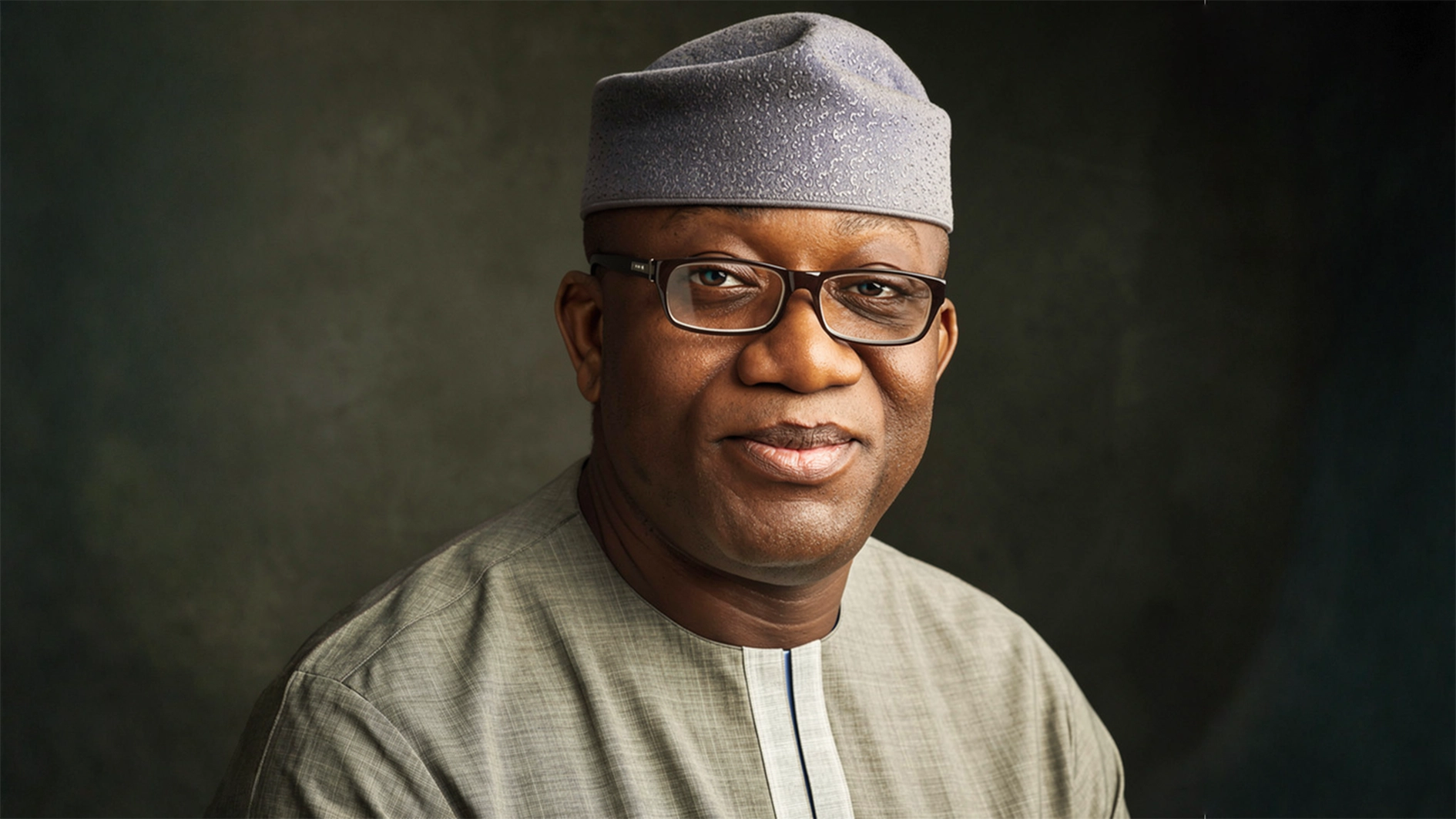
Former Ekiti State Governor and ex-Minister of Solid Minerals Development, Kayode Fayemi, has described the African Democratic Congress (ADC) presidential candidate, Atiku Abubakar’s proposal on fuel subsidy as a political strategy similar to the Muslim-Muslim presidential ticket adopted by the All Progressives Congress (APC) in the 2023 election.
Fayemi made the remark during an interview on Arise Television’s Prime Time on Monday while commenting on the ongoing debate over petrol subsidy removal and Atiku’s position on the policy.
According to him, Atiku’s proposal was not primarily an economic argument but a political strategy designed to appeal to Nigerians affected by the hardship associated with subsidy removal.
“My take on that is that Atiku’s proposal of subsidy is politically equivalent to our own Muslim-Muslim ticket in 2023. It’s a political strategy. It’s not an economic construct,” Fayemi said.
He, however, acknowledged that the proposal could resonate with vulnerable Nigerians who have been adversely affected by the removal of petrol subsidy, stressing that many citizens were more concerned about their economic wellbeing than the technical arguments surrounding subsidy policy.
“But understandably, it’s a political strategy that will sell with those who are hard done by the impact of fuel subsidy removal,” he said.

Fayemi reiterated his support for the removal of fuel subsidy, saying he had advocated the policy for several years, including during his tenure as chairman of the Nigerian Governors’ Forum (NGF).
“I was and I remain an advocate of fuel subsidy removal. As chairman of the governors’ forum, I spent four years in this battle,” he said.
He said President Bola Tinubu inherited substantial groundwork on subsidy removal from the previous administration, although he criticised the manner in which the policy was implemented.
“What President Tinubu inherited, in fairness to him, was the work that had already been completed by that administration. The only challenge I had with it was the way it was done,” Fayemi said.
The former governor explained that state governors had previously collaborated with the Federal Government and the World Bank to develop a safety-net strategy aimed at cushioning the impact of subsidy removal on vulnerable Nigerians.
“However, as I have also consistently said, because at the Nigerian Governors Forum, we actually had a committee work with the federal government and the World Bank, by the way, to develop a safety net strategy that would address what would happen to the most vulnerable segment of our population,” he said.
Fayemi said the economic hardship confronting vulnerable Nigerians was what he believed Atiku was seeking to leverage through his position on fuel subsidy.
“I believe that’s what Vice President Atiku is taking advantage of. The vulnerable segment of the population is still hard done by,” he said.
He said many Nigerians were less concerned about the technicalities surrounding subsidy removal and more focused on their ability to meet basic needs.
According to him, citizens primarily want to “live reasonably well, eke out a living, have one or two meals a day, be able to send their kids to school” and cope with health challenges without falling deeper into hardship.
Fayemi also linked poverty and inequality to insecurity, arguing that the economic difficulties confronting Nigerians were among the factors contributing to insurgency and banditry.
“They’re also at the root of the insurgency and the banditry that we’re dealing with,” he said.
The former governor’s comments come amid renewed political debate over the future of fuel subsidy ahead of the 2027 general elections, with opposition figures and other political actors continuing to criticise the impact of the subsidy removal on households and businesses.
Fayemi maintained that while subsidy removal remained necessary from an economic standpoint, adequate measures should have been put in place to protect vulnerable Nigerians from its immediate consequences.
He ultimately likened Atiku’s position on the issue to the APC’s decision to field a Muslim-Muslim ticket in the 2023 presidential election, describing both as political calculations aimed at securing electoral advantage.

