 Get Guardian on Google
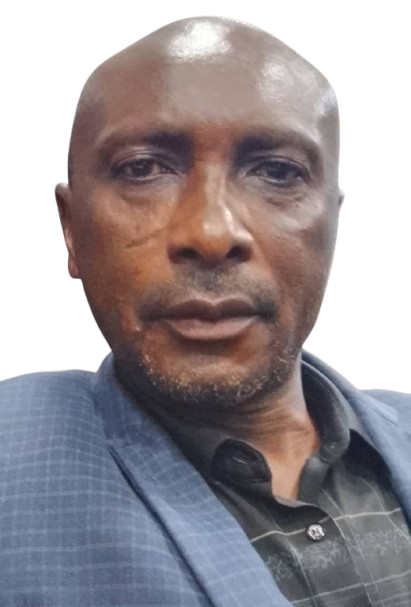
Former President of Niger Republic, Mahamadou Issoufou, has disclosed that late Nigerian President Muhammadu Buhari foresaw the dangers of foreign military interventions in the Sahel, warning that some foreign forces deployed to combat terrorism could worsen the security crisis they were meant to contain.
Issoufou said Buhari had expressed strong reservations about foreign military operations in Libya and the Sahel, describing some foreign actors as “armed missionaries” whose interventions risked spreading conflicts across the region.
The former Nigerien leader spoke on Thursday in Abuja at the public presentation of the three-volume authorised biography of Buhari, titled Muhammadu Buhari: The Authorised Biography. The ceremony was chaired by Issoufou, while former President Goodluck Jonathan was the chief presenter. Vice-President Kashim Shettima, represented by Dr Modibbo Aliyu, formally unveiled the books.
Issoufou said Buhari believed that foreign military interventions, particularly those following the crisis in Libya, risked aggravating insecurity across the Sahel and the Lake Chad Basin. “What stayed with me was that Buhari disliked what he called ‘armed missionaries’ who, in his view, after setting Libya on fire, could only fan the embers in the Sahel and the Lake Chad Basin,” he said.
He advocated stronger regional security cooperation through an expanded Nouakchott Process, with Algeria and Nigeria playing pivotal roles. According to him, the crisis of confidence among countries in the region had weakened cooperation and given terrorists strategic advantage.
Reflecting on his relationship with Buhari, Issoufou described him as a personal friend and African statesman, adding that historical, cultural and geographical ties made Nigerians and Nigeriens almost compatriots. He recalled that Buhari visited Niger on June 3, 2015, less than a week after his inauguration, accompanied by governors from Kebbi, Sokoto, Katsina, Yobe and Borno states.
He also highlighted Buhari’s commitment to regional integration, citing his decision to extend the railway from Kano to Maradi in Niger Republic without requesting financial contributions from the neighbouring country. On security, Issoufou said both leaders recognised in 2015 that the security of Nigeria and Niger was interdependent and supported regional efforts, including the Multinational Joint Task Force, against Boko Haram.
Issoufou further praised Buhari’s commitment to constitutional order, peaceful transfer of power and consultation, describing him as a leader who preferred careful reflection to flamboyant rhetoric. He recalled their differences over the proposed single West African currency and Buhari’s decision to delay Nigeria’s signing of the African Continental Free Trade Area agreement in 2018 before eventually signing it in July 2019.
Speaking on behalf of Jonathan, former Senate President Anyim Pius Anyim recounted how the former president accepted defeat in the 2015 presidential election to avert a political crisis, placing Nigeria’s unity and stability above his personal ambition.
Anyim also disclosed how Jonathan facilitated the provision of bulletproof vehicles for Buhari following a bomb attack on his convoy in Kaduna during the 2015 election campaign, despite the two leaders being presidential rivals. He said he informed Jonathan about the incident, prompting the former president to direct that a memorandum be prepared for the procurement of bulletproof vehicles to protect governors and other important public office holders.
“He called me and asked whether I had heard about the bomb incident involving General Buhari’s convoy. He directed that I should bring a memo because we had to buy bulletproof vehicles for governors so that a former Head of State would not die from any form of violent attack,” Anyim recalled.
He described the relationship between Buhari and Jonathan as an important chapter in Nigeria’s political history, demonstrating that political differences should not override national interests. Anyim also recalled that Buhari had used his residence in Abuja as his first campaign office during the period leading to the 2015 election.
In his remarks, Shettima described Buhari as a leader whose character, patriotism and personal example offered enduring lessons for successive generations. Represented by Modibbo Aliyu, he said public office holders could not afford the luxury of silence because refusing to tell their stories would allow others to narrate them, sometimes with distorted accounts and predetermined agendas.
Also speaking, Nasarawa State Governor Abdullahi Sule praised Buhari’s honesty, patriotism and uncompromising stance against corruption. Sule disclosed that Aliko Dangote pledged N100 million to procure copies of the biography while he, on behalf of Nasarawa and Borno statea acquired copies worth N100 million/ apiece. Renowned Industrialist Abdulsamad Rabiu, represented by Senator Lawal Shuaibu , among others, also donated N500 million towards the project.
Chairman of the Planning Committee, Suleiman Adamu, said Buhari personally authorised the biography while alive, participated in interviews and provided access to people, events and memories necessary for documenting his life. He explained that the three volumes covered more than six decades of Nigeria’s history, spanning military rule, the civil war, coups, detention, public service, opposition politics and Buhari’s eight years as democratically elected president.
The author, Dr Udu Yakubu, said the biography was the product of more than two and a half years of research, interviews, travels and consultations. He acknowledged Buhari’s nephew, Mamman Daura, for providing historical context, as well as Issoufou, former Head of State Yakubu Gowon and former military Head of State Abdulsalami Abubakar for their contributions. Yakubu expressed regret that Buhari did not live to witness the completion of the work but said the former president had participated in the process.