 Follow Us on Google News
 Follow Us on Google Discover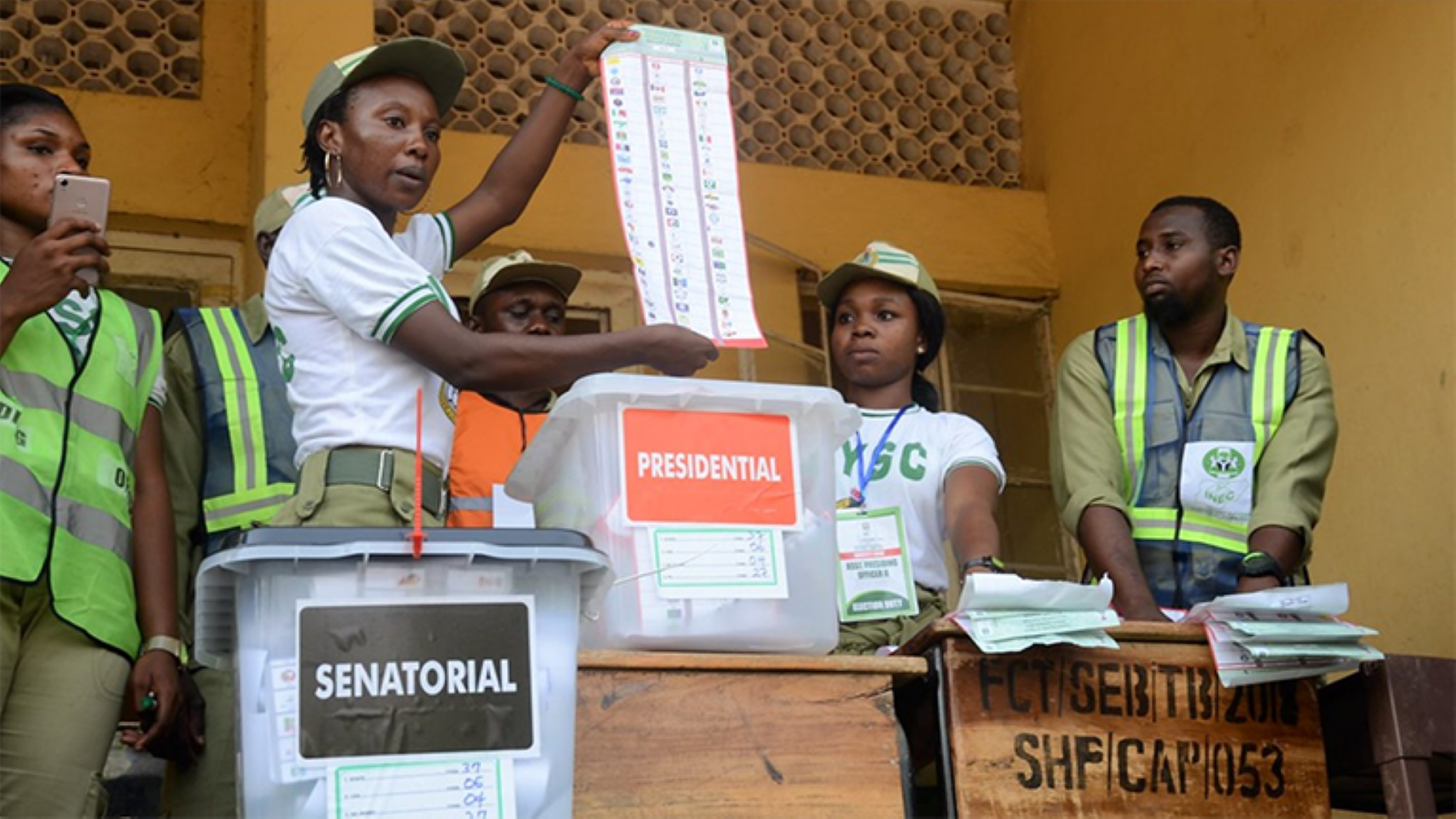
SERAP sues INEC over political donation limits, party finances
The outcome of last Saturday’s legislative by-elections across four states has raised fresh questions about the preparedness of opposition parties for the 2027 general elections, with the ruling All Progressives Congress (APC) winning four of the five seats contested.
Meanwhile, the Socio-Economic Rights and Accountability Project (SERAP) has sued the Independent National Electoral Commission (INEC) at the Federal High Court sitting in Abuja over failure to disclose the limits on political contributions under Section 91 of the Electoral Act 2026 ahead of the 2027 general elections.
In the suit, SERAP is asking the court to compel INEC to disclose whether it has prescribed limits on political contributions and, if so, the specific limits and measures taken to publish and communicate them to political parties, candidates, donors and the public.
The suit, numbered FHC/ABJ/CS/2114/2026, also seeks an order compelling INEC to disclose the systems and procedures it has put in place to monitor, investigate, and enforce compliance with prescribed limits on political contributions and campaign expenditure.
SERAP said the disclosure was necessary to promote transparency, accountability and fair electoral competition ahead of the 2027 elections
In the elections conducted by INEC in Gombe, Kano, Bauchi and Delta states, opposition parties intensified efforts to build a coalition capable of challenging the APC at the presidential and legislative levels next year.
But the results showed the APC maintaining a strong electoral foothold, while the opposition parties recorded relatively low votes.
The elections comprised one seat in the House of Representatives and four seats in the House of Assembly.
In Gombe, APC candidate, Kallamu MaiJama’a, won the Gombe/Kwami/Funakaye Federal Constituency with 41,121 votes. The Labour Party (LP) candidate came second with 3,553 votes, while the Allied Peoples Movement (APM) polled 872. The New Nigeria Democratic Party (NDP) scored 707 votes and the African People’s Party (APP) 298.
In Kano, APC candidate, Hussaini Datti, won the Dawakin Kudu State Constituency election with 22,890 votes. The Peoples Redemption Party (PRP) scored 270 votes, while the Peoples Democratic Party (PDP) polled 108 and the LP 39 votes. The APC also won the Disina State Constituency in Bauchi, where its candidate, Yakubu Ali, secured 5,846 votes. APM 5,225 votes, while the PRP scored 3,701 votes.
The opposition’s strongest showing came in the other Bauchi contest, where APM candidate, Adamu Yakubu, won the Sakwa State Constituency in Zaki Local Council with 8,515 votes. The APC candidate scored 3,771 votes, PDP 2,076 and PRP 727.
In Delta, APC candidate, Okolosi Ator, won the Udu State Constituency election with 8,724 votes, while the PDP candidate secured 214 votes.
The outcome, therefore, intensifies concerns over whether the opposition can convert its high-level coalition discussions into a coherent grassroots campaign before the general elections.
INEC itself described the elections as an important operational exercise ahead of the 2027 general elections.
Former National Chairman of the African Democratic Congress (ADC), Ralphs Nwosu, said the September 19 by-elections should serve as a wake-up call for opposition parties ahead of the 2027 general elections, particularly on the need to build stronger structures and develop a clear strategy for winning elections.
Nwosu, who spoke in response to the polls, said the opposition’s focus must shift from coalition discussions to practical electoral preparation, including grassroots mobilisation, credible candidates and effective participation in elections.

