 Follow Us on Google News
 Follow Us on Google Discover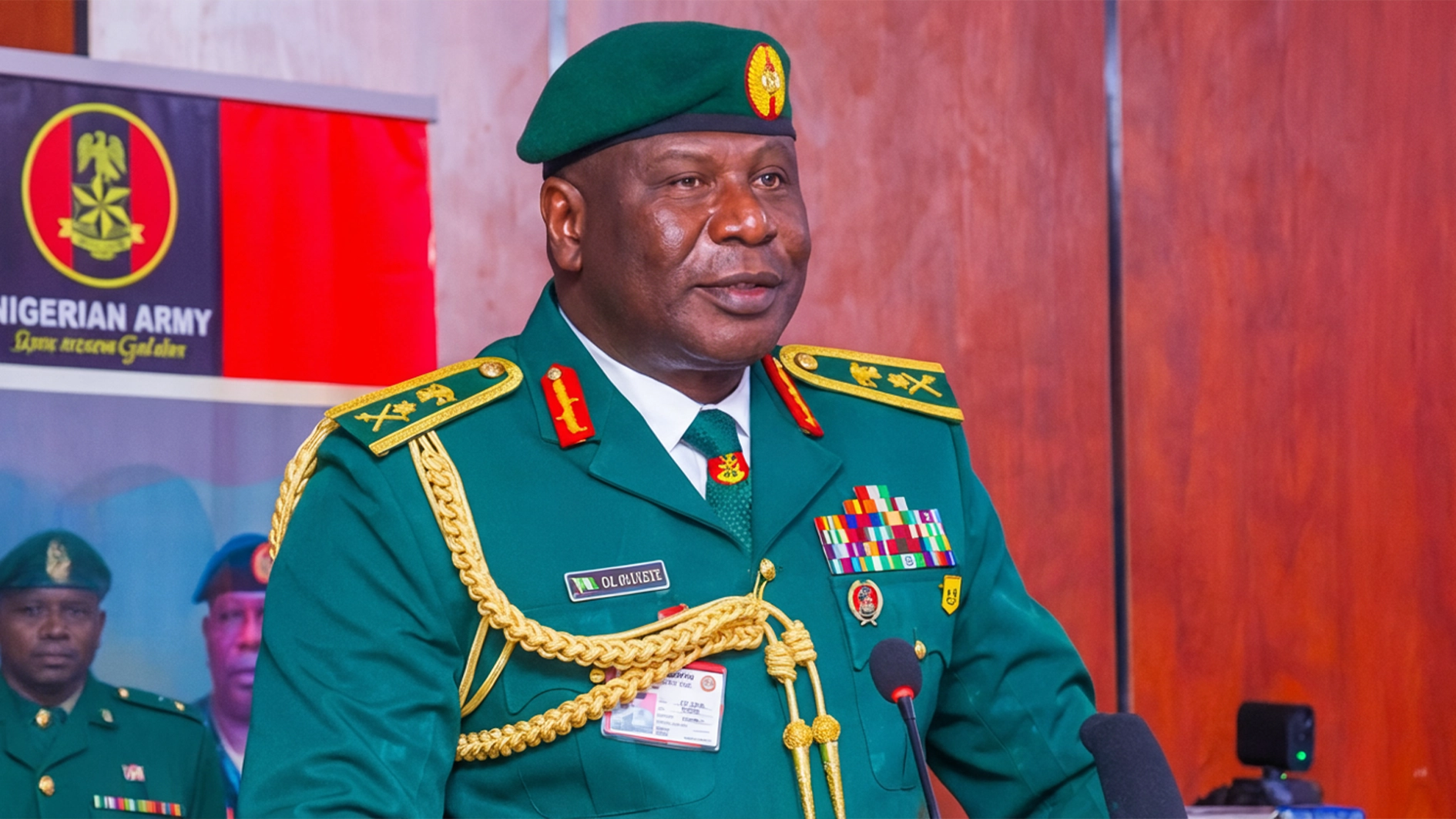
• Buratai clarifies role in $1b arms procurement controversy
The Chief of Defence Staff, Gen. Olufemi Oluyede, has warned that artificial intelligence (AI)-generated videos, manipulated images and cloned voices are increasingly being used to mislead the public, incite fear and undermine confidence in the Armed Forces.
Consequently, he called on journalists to strengthen their verification processes and work with the military to expose fabricated content, warning that deepfakes could undermine operational gains, endanger troops and trigger panic in communities.
Represented by the Director of Defence Information, Maj.-Gen. Samaila Uba, Oluyede spoke yesterday at the 2026 conference of the Defence Correspondents Association of Nigeria (DECAN) in Abuja.
He explained that modern warfare was no longer determined by firepower alone but also by superior intelligence, technological capabilities, cyber resilience and control of the information environment.
Also, the Minister of Defence, Gen. Christopher Musa (rtd), represented by his Special Adviser, Air Commodore Stephen Ogunmodede (rtd), said the theme addressed an operational reality that the Armed Forces and other security agencies must continually confront.
He noted that public understanding of security operations has been shaped largely by visible military action: troops deployed, engagements conducted, territory recovered, and arrests made.
According to him, current threats are increasingly complex, adaptive and interconnected as terrorist groups, criminal networks and other adversaries exploit information, technology, financial systems and gaps in coordination to pursue their objectives.
However, a former Chief of Army Staff, Lt.-Gen. Tukur Buratai, has clarified that the $1 billion approved by the National Economic Council (NEC) for the procurement of arms under late President Muhammadu Buhari in 2019 was released to the Federal Ministry of Defence, and not the Armed Forces.
Clarifying this yesterday in a keynote address titled: “Beyond Kinetic Warfare: Harnessing Technology and Intelligence-led Operations for Nigeria’s National Security” at the DECAN conference, Buratai said, “not a single dollar of that fund passed through my hands or through the accounts of the Nigerian Army, Navy or Air Force.”
For his part, former Senate President Ahmed Lawan has called for the budgets of the Nigerian Armed Forces and other security agencies to be placed on first-line charge, saying that predictable funding would strengthen Nigeria’s fight against insurgency, banditry and other forms of criminality.
He said at the same conference that placing defence budgets on first-line charge would help address delays in the budget releases that hinder operational effectiveness.
Lawal, who is currently the Chairman of the Senate Committee on Defence, proposed dedicating a percentage of rising national revenues to bulk procurement of platforms and weapons for the military, arguing that adequate equipment is vital to the troops’ success.
Meanwhile, the Minister of Information and National Orientation, Mohammed Idris, appealed to editors and gatekeepers to weigh public interest against potential harm.
In a message delivered by the Director-General of Voice of Nigeria, Jibrin Ndace, Idris reminded journalists that while conflict inevitably causes collateral damage, the media’s role is to convey those realities responsibly in the service of a safer, more secure Nigeria.
Earlier, the DECAN President, Odita Sunday, urged the country to prepare for the challenges of tomorrow today by investing in intelligence, technology, cybersecurity, human capital, research, and inter-agency cooperation.
According to Oluyede, the Armed Forces was investing in non-kinetic capabilities, including space-based surveillance, geospatial intelligence, AI-enabled decision support and joint intelligence fusion, to improve its ability to detect threats and protect national interests.
Moreover, the military is expanding modular earth observation outposts in operational theatres, developing human capacity through the Defence Space School and integrating advanced surveillance systems into its operations, he added.
He warned that emerging technologies could also be exploited by hostile actors to spread false narratives about military activities, adding that a single AI-generated video could undo months of operational gains, endanger troops and cause panic in affected communities.
Therefore, he urged defence correspondents to verify sensitive operational information with Defence Headquarters before publication, insisting that speed should not take precedence over accuracy.
He also called on journalists to help educate the public on identifying synthetic media and promptly debunking fabricated videos attributed to the Armed Forces.

