
 Get Guardian on Google
Africa’s growing dependence on imported solar technology, despite its vast renewable energy resources and critical mineral deposits, has raised concerns among stakeholders about the continent’s ability to capture economic value from the global energy transition.
At a virtual Pan-African policy conference co-hosted by Warwick Business School and the Circular Economy Powered Renewable Energy Centre (CEPREC), stakeholders warned that Africa risks remaining a supplier of raw materials and a consumer of finished clean-energy technologies unless it invests in local manufacturing, innovation and recycling.
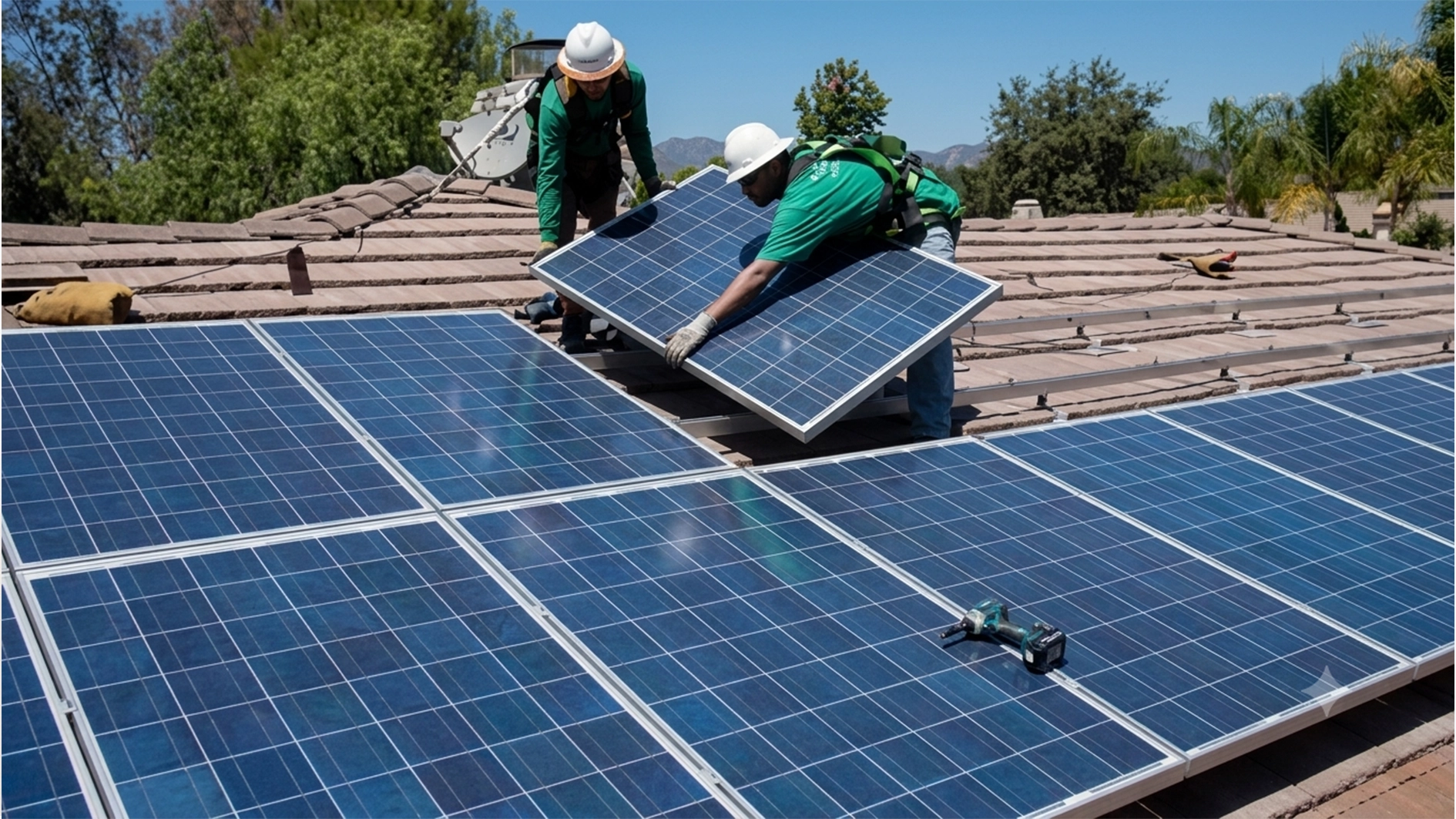
Riyad Mehdeb of the United Nations Development Programme (UNDP) disclosed that 94 per cent of solar panels installed across Africa are imported from China, with the imports costing $2.4 billion in the 12 months to June.
Speaking at the conference, themed Turning the Lights On: Unlocking Circular Value Chains for Africa’s Renewable Energy Transition, Mehdeb said the continent was increasingly manufacturing for the world’s energy transition while importing technologies for its domestic needs.
He argued that Africa must move beyond exporting critical minerals to producing the technologies required for the low-carbon economy.
According to him, developing local value chains would enable countries to retain economic benefits through manufacturing, maintenance, recycling and the circulation of skills, capital and technology within the continent.

He said Africa, which holds about 60 per cent of the world’s solar resources, has the potential to become a major clean-energy manufacturing hub if governments address infrastructure, financing and skills gaps.
Mehdeb also challenged perceptions of investment risks in Africa, noting that infrastructure loans on the continent have default rates of about two per cent, strengthening the case for greater investment in clean-energy projects.
Similarly, Giuliana Battisti, Co-Director of CEPREC and Professor of the Economics of Innovation at Warwick Business School, called for coherent national policies, centres of excellence and stronger financial ecosystems to translate local research and innovation into commercial technologies.
She said Africa should attract skilled professionals trained overseas to develop home-grown solutions rather than deepen technological dependence on foreign manufacturers.
Battisti added that the circular economy offered opportunities to develop new materials, extend the lifespan of renewable-energy equipment and create industries around repair, reuse and recycling.
Namibia’s Deputy Minister of Environment, Forestry and Tourism, Aslem Marungu, said Africa must not remain a consumer of renewable technologies but become an active creator and beneficiary of the value chains supporting them.
Also speaking, Diana Dalton, Deputy High Commissioner in Kenya, said appropriate investments and policy support could position African countries as leaders in circular innovation, sustainable manufacturing and green industrial development.