
 Get Guardian on Google
• ADC asks Nigerians to learn from Americans, reject APC
• Iran tensions push oil prices lower as energy reform gains focus
Democratic Party’s victory in the United States midterm elections has raised hopes of a shift in Washington’s trade, immigration and foreign policies, with analysts saying the change could strengthen relations with traditional allies and create new opportunities for countries such as Nigeria.
Based on the outcome, the African Democratic Congress (ADC) called on Nigerians to draw important lessons from Tuesday’s midterm elections in the U.S., where American voters delivered a ‘blue tsunami’ against the Republicans and a decisive rebuke of the ruling party’s leadership and unpopular policies.
Also, the victory of Democrats in both chambers of the U.S. Congress has raised expectations of bipartisan energy reforms to reduce electricity costs and accelerate infrastructure development, even as easing fears of a fresh confrontation with Iran sent international oil prices lower.
Director, Centre for the Promotion of Private Enterprise (CPPE), Muda Yusuf, emphasised that this is not a total change as there would still be elements of Trump’s ideas and policies for the next two years.
In terms of trade, he highlighted that America’s tariffs didn’t affect Nigeria as much, unlike what happened to some countries in Asia, Europe, and South Africa, especially because Nigeria’s exports are very limited.
“The few exports that we do are actually in oil and gas; that is the most significant and his tariffs exempted oil and gas. So, from a trade point of view in terms of bilateral trade, there may not be any significant impact,” he added.
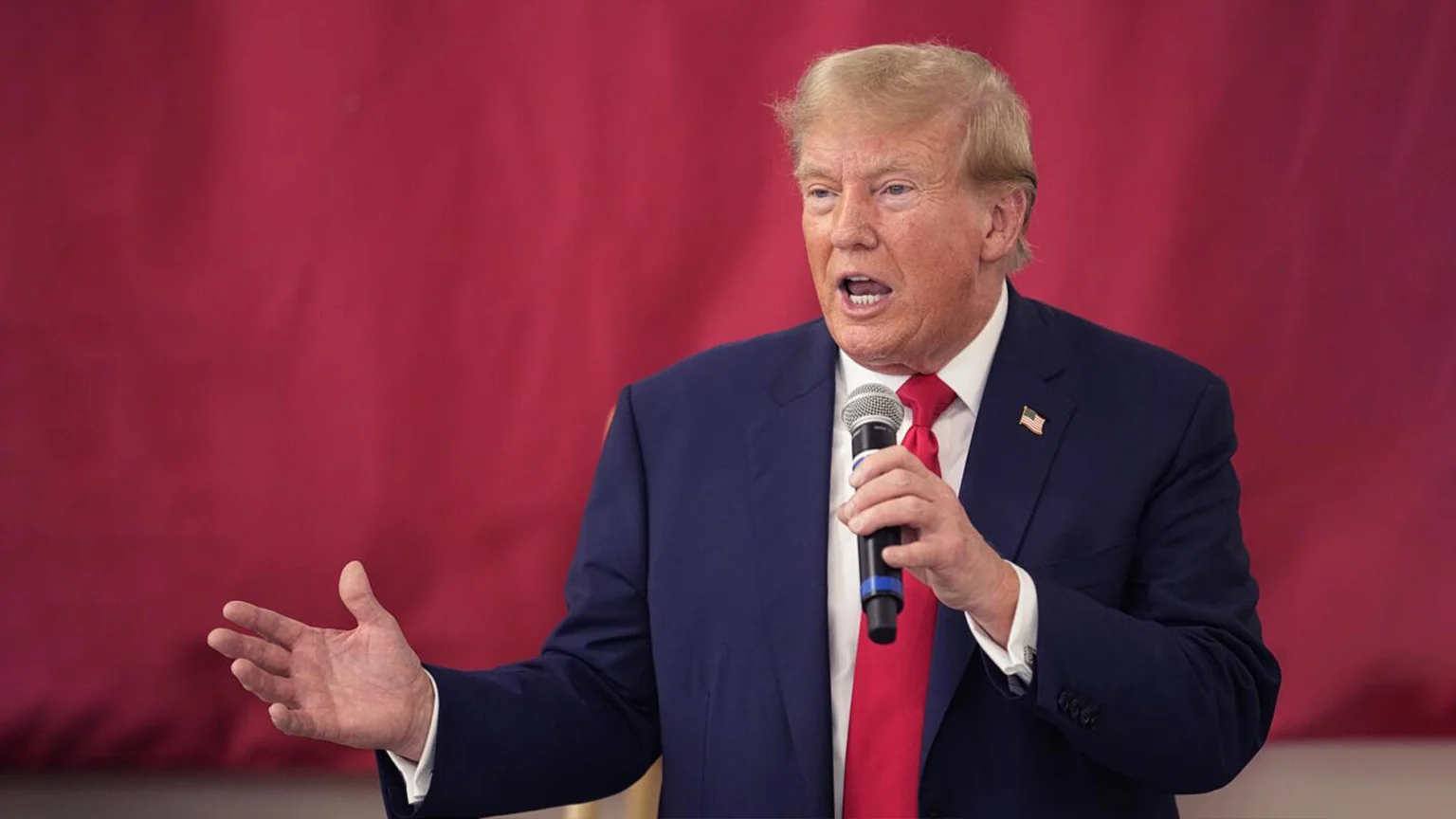
Professor of International Relations, Femi Otubanjo, said the implication of the U.S. midterm elections is that Trump’s recklessness would be curtailed, and his actions would now be scrutinised rigorously.
“There was no scrutiny of what he was doing. He had a complacent House, and Congress made up members of the Republican party, who feared him. Now those who control the two houses are the Democrats,” he said.
He noted that with this development, a lot of the freedom Trump enjoyed to impose tariffs, start a war, for instance, would be curtailed because Congress must approve any war attempts by the executive.
Head of the International Law Division, Nigerian Institute of International Affairs (NIIA), Dr Rita Agu, said some of the Trump policies would be overturned and others modified. She said the issue of immigration would be addressed by the parliament, as Trump set up so many policies that have adverse effects on both citizens and non-citizens of America.
In a statement signed by its National Publicity Secretary, ADC asserted that the outcome of the U.S. polls demonstrated that the greatest power in any democracy “belongs neither to the President nor the ruling party,” but to ordinary citizens armed with their votes.
“Americans have shown that when politicians become arrogant, when policies punish ordinary people, and when those in power mistake popularity for a permanent licence to govern, the ballot box remains the ultimate instrument of accountability.
“American voters understand something Nigerians must also learn: elections are about the welfare of the citizens, not sentiments, political loyalties or personality cults. No leader is bigger than the people, and no political party is entitled to power forever,” the ADC said.
Brent crude has fallen by $8.18 (7.90 per cent) to $95.42 per barrel as of 9:27 p.m. yesterday, extending losses for a third consecutive session. U.S. West Texas Intermediate (WTI) dropped by $7.33 (7.63 per cent) to $88.74.
The declines came amid growing market expectations of a possible diplomatic settlement between Washington and Tehran, despite renewed threats of military escalation and uncertainty surrounding oil shipments through the Strait of Hormuz.
Trump told the Financial Times that Washington had no immediate plans to strike Iran, saying the U.S. appeared to be getting everything it wanted. Vice President JD Vance also indicated that negotiations had made progress.
An Iranian senior official also reportedly said Tehran could reopen the Strait of Hormuz within two days if Washington met its demands, including lifting oil sanctions and releasing frozen assets.
However, threats of further military action continued to create uncertainty. Trump told Fox News that a heavy strike against Iran remained possible, while Iran’s Revolutionary Guard claimed four tankers had been destroyed by mines south of the Strait of Hormuz. The claim had not been independently confirmed.
Against this backdrop, Wood Mackenzie said the Democratic victory in both chambers of Congress could make energy affordability and infrastructure permitting major priorities, although President Trump retains veto powers.
Meanwhile, analysts attributed the latest oil price declines partly to profit-taking and expectations of improved global supply.
JP Morgan estimated that the global oil market recorded a surplus of 1.4 million barrels per day in October, compared with 1.1 million barrels per day in September. Middle Eastern exports reportedly recovered to about 20.7 million barrels per day from a March low of 9.8 million barrels per day.