 Follow Us on Google News
 Follow Us on Google Discover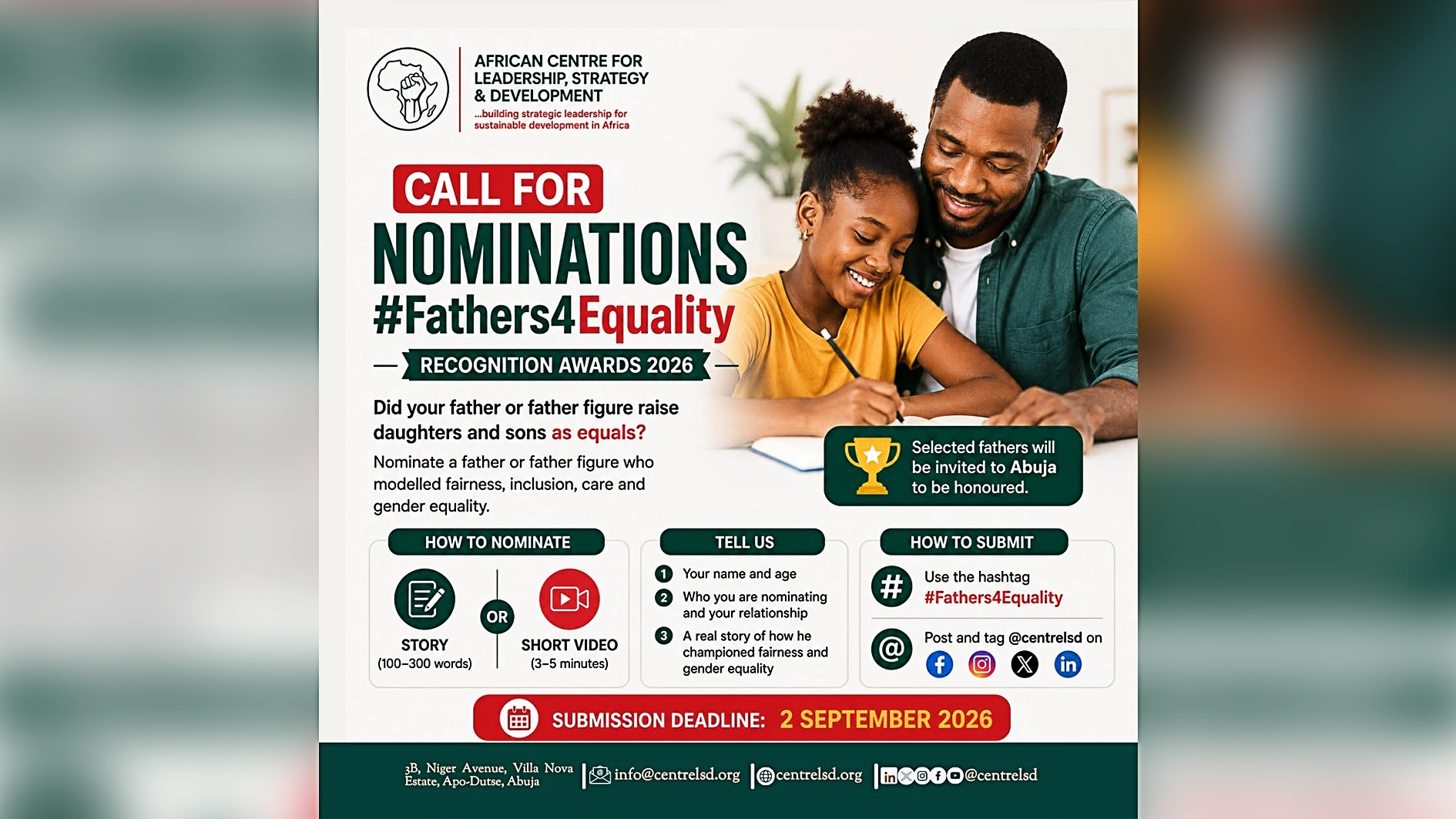
Traditional rulers and fathers have been urged to promote equal treatment of boys and girls and work to eliminate harmful cultural practices that discriminate against women and girls.
The call was made at the 2026 Fathers4Equality Recognition Awards and Traditional Leaders Conference organised by the Male Feminist Network, an initiative of the African Centre for Leadership, Strategy and Development (Centre LSD).
The conference, held on Wednesday in Abuja with the theme, “Redefining Fatherhood for Equality and Justice,” brought together traditional rulers and other stakeholders to examine the role of fathers and traditional institutions in promoting gender equality and social justice.
Speaking in a goodwill message, the Mai of Machina and 77th Emir of Machina, Dr Bashir Albishir Bukar, described the theme as timely, expressing concern over the discrimination and brutal treatment women face in some societies.
He urged participants to take the lessons from the conference back to their communities and translate them into practical action, stressing that the impact of such initiatives would be measured by what participants did after returning home.
Bukar said all human beings were created equal and should enjoy equal rights irrespective of religious or other differences.
“We should, as fathers, play the role of equality between both sexes,” he said.

The traditional ruler also called for equal educational opportunities for boys and girls, urging fathers to ensure that their daughters were not denied opportunities available to their sons.
He enjoined traditional rulers to serve as role models to children and young people in their communities, saying their conduct and decisions could influence the attitudes of their subjects.
Bukar said his emirate encouraged qualified young people to pursue university education, adding that he had ensured that those who met the requirements were given the opportunity to further their studies.
He thanked Centre LSD for the initiative and for recognising traditional rulers who were contributing to the campaign for gender equality and justice.
Also delivering a goodwill message, the Paramount Ruler of Rumuevuorlu Community in Port Harcourt, Rivers State, Eze Prof. Chris Akani, commended the organisers for recognising traditional rulers for their contributions to gender equality and justice.
Akani said the recognition was an indication that the country was moving in the direction of greater awareness and acceptance of gender equality.
He recalled his decision, years before becoming a traditional ruler, to promote the education of girls, particularly against cultural expectations that placed marriage ahead of formal education for women.
According to him, his resolve was strengthened by his mother’s experience after she was withdrawn from school.
He said the experience influenced his decision to ensure that his own children, including his two daughters, received the same encouragement to pursue higher education as his sons.
Akani disclosed that he had four children—two boys and two girls—and encouraged them to pursue doctoral degrees in commemoration of his mother.
He said his daughters were currently PhD students working towards defending their theses in fields including statistics, French and African literature.
The traditional ruler urged parents in his community to prioritise education for both boys and girls, warning against seeking substandard jobs for girls simply because they were female.
“My slogan in my community is: make sure you are well educated. Don’t look for a substandard job for girls,” he said.
Akani also urged traditional rulers to use their positions to promote positive values and provide equal opportunities for children, regardless of gender.
He expressed appreciation to Centre LSD Executive Director, Dr Otive Igbuzor, recalling a commitment made during Igbuzor’s visit to his community to promote education and gender equality.
The conference also featured a keynote address by the royal father of the day, HRM Agaba-Idu Dr Elaigwu O. John, titled “The Role of Traditional Institutions in Transforming Harmful Gender and Cultural Norms.”
The keynote examined the influence of traditional institutions in shaping community values and the need for traditional leaders to use that influence to challenge harmful practices and cultural norms that disadvantage women and girls.
The Fathers4Equality initiative is focused on encouraging men, particularly fathers and community leaders, to become advocates for gender equality, justice and inclusive opportunities within families and communities across the country.

