 Follow Us on Google News


 Follow Us on Google Discover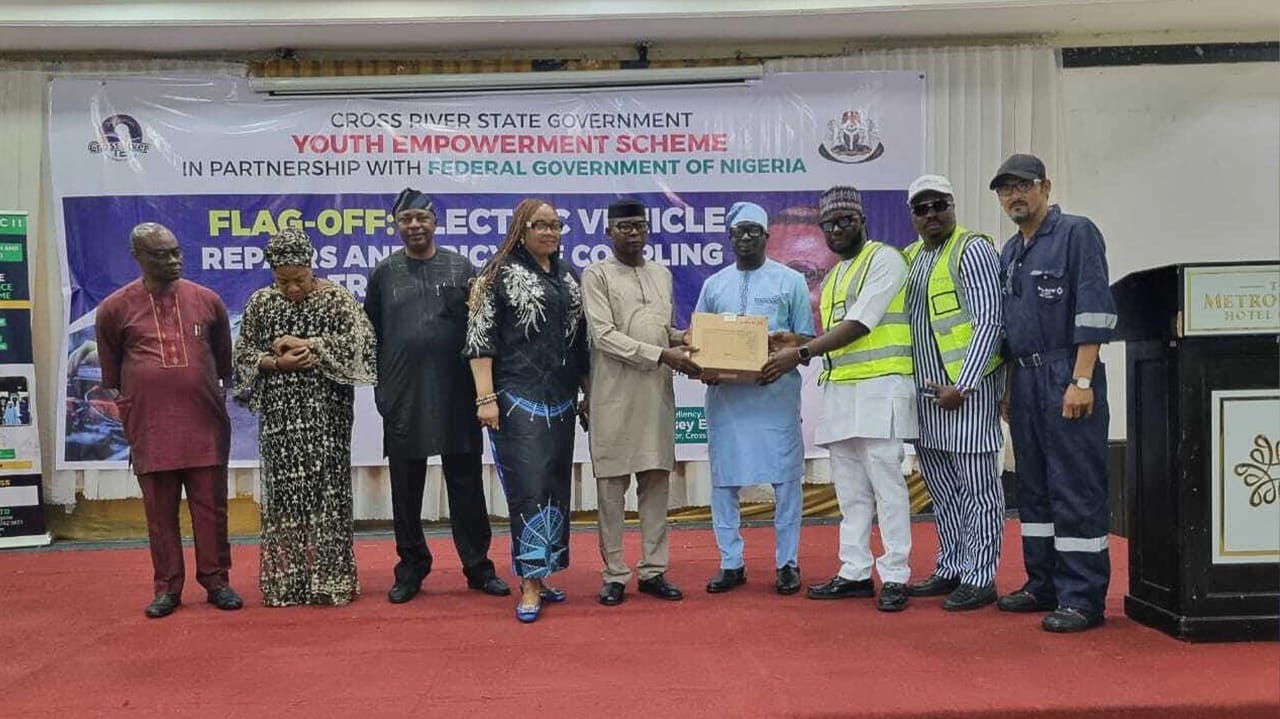
The Federal Government and the Cross River State Government have begun a six-month training programme for 1,000 youths in electric vehicle (EV) repairs and maintenance, as the state expands its investment in electric mobility.
The programme, flagged off in Calabar by the Cross River State Youth Empowerment Scheme (CRYES), is being implemented in collaboration with Shema Energy Limited to equip participants with technical skills for employment and entrepreneurship in the emerging sector.
Speaking at the ceremony, Governor Bassey Otu, represented by the Commissioner for Wealth Creation and Employment, Patrick Egbede, said the initiative was designed to prepare young people for opportunities arising from changes in transportation and energy systems.
He said the state had previously sponsored training in agriculture and information and communication technology, with some beneficiaries securing jobs in both the public and private sectors.
Otu described the EV training as an investment in human capital, noting that the growing adoption of electric vehicles would increase demand for skilled technicians capable of maintaining and repairing them.
He urged the technical partners to emphasise practical competence alongside theoretical instruction, adding that the programme would lead to certification.

The governor said the transition to cleaner energy presented opportunities for job creation and environmental sustainability, reaffirming his administration’s commitment to youth empowerment and skills development.
Chairman of CRYES, Dr Kalita Aruku, said the training was particularly important given the state’s investment in electric-powered transportation.
According to him, the state has procured 10 50-seater electric buses, 20 14-seater electric buses, 100 electric saloon cars, 500 electric tricycles and 200 electric motorcycles.
He said developing a pool of trained local technicians was necessary to support the maintenance and operation of the vehicles.
Aruku commended the state government for prioritising youth empowerment and acknowledged the support of the Federal Government, Federal Ministry of Education and Shema Energy Limited.
He urged the beneficiaries to take the training seriously, describing it as an opportunity to acquire marketable skills and achieve economic independence.
Head of Training and Strategy at Shema Energy, Dominic Usi, said the programme would consist of three months of intensive instruction followed by three months of practical experience.
He explained that participants would receive monthly stipends, subject to attendance verification through biometric capture on the programme’s online portal.
Usi added that the curriculum would include practical assignments and assessments, with diagnostics and mechatronics among the major areas of instruction.

