 Follow Us on Google News



 Follow Us on Google Discover
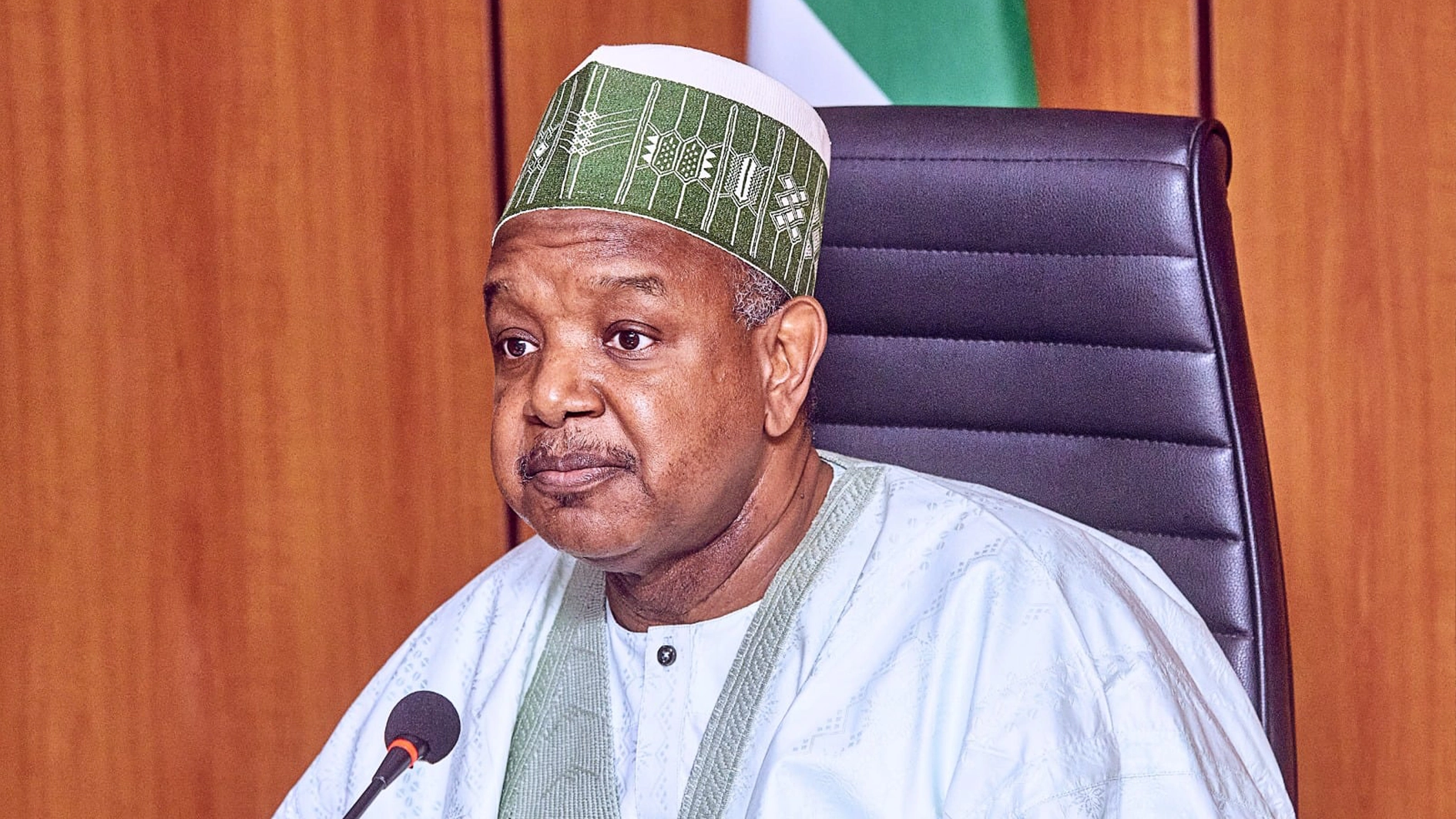
The Federal Government has ruled out a return to petrol subsidy, insisting that President Bola Tinubu’s administration will sustain its economic reforms despite mounting pressure over the rising cost of living and calls by opposition politicians for a policy reversal.
Minister of Budget and Economic Planning, Senator Abubakar Bagudu, said the administration would maintain its reform trajectory while improving implementation, strengthening domestic production and ensuring that economic growth translates into jobs, higher productivity and improved living standards.
“For those of us serving under the President and Vice President, the instruction has been clear: we must stay the course,” Bagudu declared at the 32nd Nigerian Economic Summit (NES#32), which opened in Abuja on Monday.
His position comes amid renewed political debate over fuel subsidy removal, with opposition figures, including African Democratic Congress presidential candidate Alhaji Atiku Abubakar, promising to restore the subsidy as part of efforts to ease the cost-of-living crisis.
But Bagudu warned that reversing the policy would undermine the gains of the reforms and revive economic distortions associated with the previous subsidy regime.
“There will be no return to the fuel subsidy and the economic distortions associated with the previous system,” he said.

The minister, however, acknowledged the economic pressures confronting households and businesses, stressing that sustaining reforms must go hand in hand with better implementation, responsive policy adjustments and targeted interventions to protect vulnerable Nigerians.
He said the priority was no longer merely to introduce reforms but to consolidate their gains, expand productive capacity and ensure that the benefits of economic growth reach ordinary citizens.
Bagudu recalled that Tinubu had taken deliberate steps to institutionalise the reforms, citing a memorandum presented by the President at a National Economic Council meeting in October 2025 on ensuring their sustainability.
According to him, discussions at the meeting recognised differing views on the reforms and the need for a framework to preserve policy continuity.
He maintained that policy consistency remained critical to investor confidence and long-term economic planning, while allowing adjustments needed to address emerging challenges and improve outcomes.
The minister said the administration’s ambition to build a $1 trillion economy by 2030 would depend on stronger domestic production, increased investment, higher productivity, expanded industrial capacity and a more competitive business environment.
He highlighted improvements in key macroeconomic indicators and increased revenue accruing to the federal, state and local governments, describing the additional resources available to subnational governments as an opportunity to accelerate infrastructure development, improve public services and strengthen local economies.
Bagudu said the distribution of increased revenue across the federation reflected the administration’s commitment to fiscal federalism, but warned that higher allocations must translate into measurable development outcomes.
He stressed that stronger coordination among the three tiers of government was essential to ensuring that additional public resources deliver tangible benefits to citizens.
On grassroots development, the minister highlighted the Renewed Hope Ward Development Plan, designed to identify and unlock productive opportunities across Nigeria’s 8,809 wards.
He said the initiative would support economic activities based on the comparative advantages of individual communities, including agriculture, fishing, livestock, textiles and other productive sectors.
According to him, targeted interventions at the ward level could stimulate local production, increase household incomes, generate employment and broaden the foundations of national economic growth beyond major urban centres.
Agriculture, he added, remained central to economic diversification, food security and job creation.
He called for improved access to farm inputs, agricultural financing, mechanisation and irrigation, alongside stronger value chains to improve productivity and reduce the cost of moving food from farms to markets.
Bagudu said expanding agricultural output must be accompanied by better processing, storage, transportation, distribution and market access to reduce post-harvest losses, improve food availability and affordability, and raise farmers’ incomes.
He also identified manufacturing as a critical driver of local value addition, skilled employment and reduced dependence on imported goods.
The minister cited the Nigeria Industrial Policy 2025 and the Nigeria First Policy as part of the government’s efforts to strengthen domestic production, deepen local supply chains and improve the competitiveness of Nigerian businesses.
Beyond agriculture and manufacturing, he identified digital technology, financial services and trade as sectors with significant potential to improve productivity, stimulate innovation and expand economic opportunities.
He pointed to the Federal Government’s collaboration with the European Union and the European Bank for Reconstruction and Development on a fibre-optic infrastructure initiative covering approximately 90,000 kilometres, aimed at expanding broadband connectivity and supporting business growth.
On human capital development, Bagudu said Nigeria’s long-term economic competitiveness would depend on the quality of its workforce, particularly as artificial intelligence and other emerging technologies reshape industries and labour-market demands.
He highlighted government interventions in education, healthcare, foundational learning, skills development and social protection, including the Human Capital Opportunities for Prosperity and Equity programmes and the Nigerian Education Loan Fund.
He said equipping young Nigerians with relevant digital, technical and entrepreneurial skills was essential to improving employability, encouraging innovation and positioning the country to compete more effectively in the global economy.
The minister also called for improved access to finance for micro, small and medium-sized enterprises, noting that businesses require adequate capital to invest, expand production, innovate and create jobs.
He highlighted efforts to develop financing support mechanisms, including a proposed credit guarantee framework, to address barriers preventing viable businesses from obtaining the capital needed to grow.
Bagudu urged the public and private sectors to deepen collaboration and mobilise domestic and international capital to bridge Nigeria’s development financing gap.
He said credible public-private partnerships, stronger domestic capital markets and improved access to finance were essential to expanding productive capacity, attracting investment and accelerating economic transformation.
Commending the Nigerian Economic Summit Group for sustaining a platform for engagement among government, businesses, organised labour, academia, civil society and development partners, Bagudu said the summit offered an opportunity to assess the impact of ongoing reforms and develop practical recommendations for accelerating national development.

