 Get Guardian on Google
…Says over 80% of Nigerians have never visited dentists
…Reveals two-third of children suffer untreated tooth decay
…As Noma Centre performs 457 reconstructive surgeries, seeks increased funding
The Federal Government has unveiled a five-year National Oral Health Strategic Plan requiring an estimated ₦70 billion investment over the next five years, to tackle oral diseases, strengthen primary healthcare services and combat Noma, a devastating but preventable disease that causes severe facial disfigurement and death among vulnerable children.
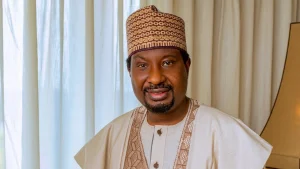
Minister of State for Health and Social Welfare, Dr. Adekunle Salako, disclosed this yesterday in Abuja while commemorating the 2026 National Noma Day and National Oral Health Day and officially launching the National Oral Health Strategic Plan 2026–2030.
Salako, who described oral health as an essential component of universal health coverage, lamented that more than 80 per cent of Nigerians had never visited a dentist, while two out of every three children were living with untreated dental caries.
He lamented the dearth of dentists in the country, stressing that Nigeria’s dentist-to-population ratio stood at approximately 1:38,000, significantly below the World Health Organisation’s recommended ratio of 1:7,500.
According to him, the situation underscores the urgent need to expand access to affordable oral healthcare, particularly through primary healthcare facilities across the country’s 774 local government areas.
The minister said the new strategic plan would prioritise preventive healthcare, access to fluoride toothpaste, school-based oral health programmes, sugar-reduction initiatives, improved dental infrastructure and the training and equitable distribution of oral health professionals.
He explained that the government would leverage the Basic Health Care Provision Fund (BHCPF) and the Sector-Wide Approach (SWAp) to integrate oral healthcare into primary healthcare delivery and reduce out-of-pocket expenditure.
Salako further disclosed that the Federal Executive Council had approved the National Centre for Oral Health Establishment Bill 2026 and forwarded it to the National Assembly for consideration.
On Noma, the minister described the disease as an unacceptable public health challenge, particularly given its devastating impact on malnourished and immunocompromised children.
He said Nigeria remained among the countries with the highest burden of the disease, especially in the North-West and North-East, warning that an ordinary gum infection could rapidly progress into severe facial destruction, disability and death if left untreated.

The minister, however, expressed optimism that stronger surveillance, community awareness and early intervention could prevent children from suffering permanent disfigurement.
He disclosed that the government had integrated Noma surveillance into the Integrated Disease Surveillance and Response system and was strengthening the capacity of primary healthcare workers to identify and refer suspected cases at the earliest stages.
According to him, frontline healthcare workers, traditional healers and traditional birth attendants have been trained across 19 states to identify Noma and other oral diseases.
Salako, while urging state and local governments to domesticate the new strategic plan, called on development partners, healthcare professionals and communities to work collectively towards eliminating Noma as a public health problem and ensuring equitable access to quality oral healthcare.
Other headline options for the front page
Also speaking, the Country Director Noma Aid Nigeria Initiative ( NANI) who is also in charge of the Noma Centre at the National Hospital, Abuja, Dr Charles Ononiwu disclosed that the facility had performed 457 reconstructive surgeries since its inception, including more than 200 procedures in 2026.
He described Noma as a disease closely associated with poverty, malnutrition, poor oral hygiene and weakened immunity, stressing that early intervention could prevent the extensive facial destruction that eventually requires complex and expensive reconstructive surgery.
He warned that a simple oral infection that could initially be treated with less than ₦3,000 could eventually require between ₦7 million and ₦10 million for facial reconstruction if neglected.
Ononiwu explained that the centre provides comprehensive, free treatment, including reconstructive surgery, nutritional rehabilitation, psychological support, physiotherapy, education and vocational training for affected children and their families.
He added that children admitted to the facility often require at least six weeks of nutritional rehabilitation before undergoing surgery, while some remain at the centre for several months because of the complexity of their conditions.
Beyond medical intervention, Ononiwu said the centre was empowering parents and caregivers with vocational skills and business support to address the poverty that often exposes children to the disease.
He appealed to Nigerians to pay attention to children, particularly those between two and six years old, who complain of persistent mouth pain, have difficulty opening their mouths or exhibit unusual gum infections, urging parents to seek immediate medical attention.
The Country Representative of Médecins Sans Frontières (MSF), Dr Aldikhari Ahmed of Médecins Sans Frontières (MSF) also called for stronger community-based surveillance, improved funding and better integration of Noma screening into routine primary healthcare services.
He disclosed that MSF’s collaboration with the Federal Ministry of Health and the Sokoto State Ministry of Health at the Noma Children’s Hospital had facilitated more than 1,759 major reconstructive surgeries for 1,174 patients through 35 surgical missions since 2014.
Ahmed noted that in 2026 alone, 114 surgeries were performed for 96 patients, while 28 Nigerian surgeons and 14 anaesthetists had received training from international specialists to strengthen local capacity for managing complex Noma cases.
He however, warned that the inclusion of Noma in Nigeria’s disease surveillance system must be supported with adequate funding, personnel, consistent reporting and effective implementation at community level.
Ahmed urged governments, development partners and civil society organisations to sustain investments in prevention, early detection, treatment and rehabilitation, stressing that no child should suffer or die from a disease that is both preventable and treatable.
In her remarks , Chair, Senate Committee on Health Senator Ipalibo Harry-Banigo noted that noma is a preventable and treatable disease that should no longer claim the lives of Nigerian children and expressed the determination of the National Assembly to provide both legislative and financial support for the campaign against noma disease .
Harry-Banigo described the Noma Children’s Hospital in Sokoto, the Intercountry Centre in Jos and the ongoing retrofitting of dental centres in federal university teaching hospitals as critical components of the national response.
She observed that legislative measures are being taken to institutionalise routine oral health screenings, early diagnosis of dental infections and specialised training in reconstructive surgery.
The lawmaker stated that the National Assembly is committed to strengthening primary healthcare delivery and ensuring that oral health became an integral part of routine healthcare services.
Harry-Banigo pointed out that the funding for the Basic Health Care Provision Fund had been increased from one to two per cent to strengthen frontline health services and community-level interventions.
In a keynote address, Dr Adebimpe Adebiyi said that the humanitarian organisation worked with the World Health Organisation and Nigerian authorities to establish treatment infrastructure, including the Noma Centre in Abuja, where several children had benefited from free reconstructive surgeries.
Adebiti commended I’ll the late founder of Hilfsaktion Noma, Mama Ute Winkler-Stumpf, for her contribution to the treatment and rehabilitation of children affected by the disease.
She said the late humanitarian’s legacy should inspire stakeholders to move beyond sympathy and isolated clinical interventions towards sustainable systems prioritising prevention, early diagnosis and community awareness
On his part, the World Health Organisation Country Representative in Nigeria, Dr Pavel Ursu, represented by Dr Victor, also called for the integration of noma prevention and comprehensive management into routine primary healthcare services.
Ursu noted that noma primarily affected malnourished children between the ages of two and six, particularly those living in impoverished communities, but stressed that early detection and treatment could prevent its devastating consequences.
He emphasised the need to strengthen the capacity of frontline health workers, improve disease surveillance and provide psychosocial support to survivors and their families.
Earlier, the Permanent Secretary of the Federal Ministry of Health and Social Welfare, Daju Kachollom, represented by her Senior Technical Assistant, Dr Dogara Okara, said severe oral diseases, including noma, continued to impose significant burdens on vulnerable individuals, families and the country’s healthcare system.