 Get Guardian on Google
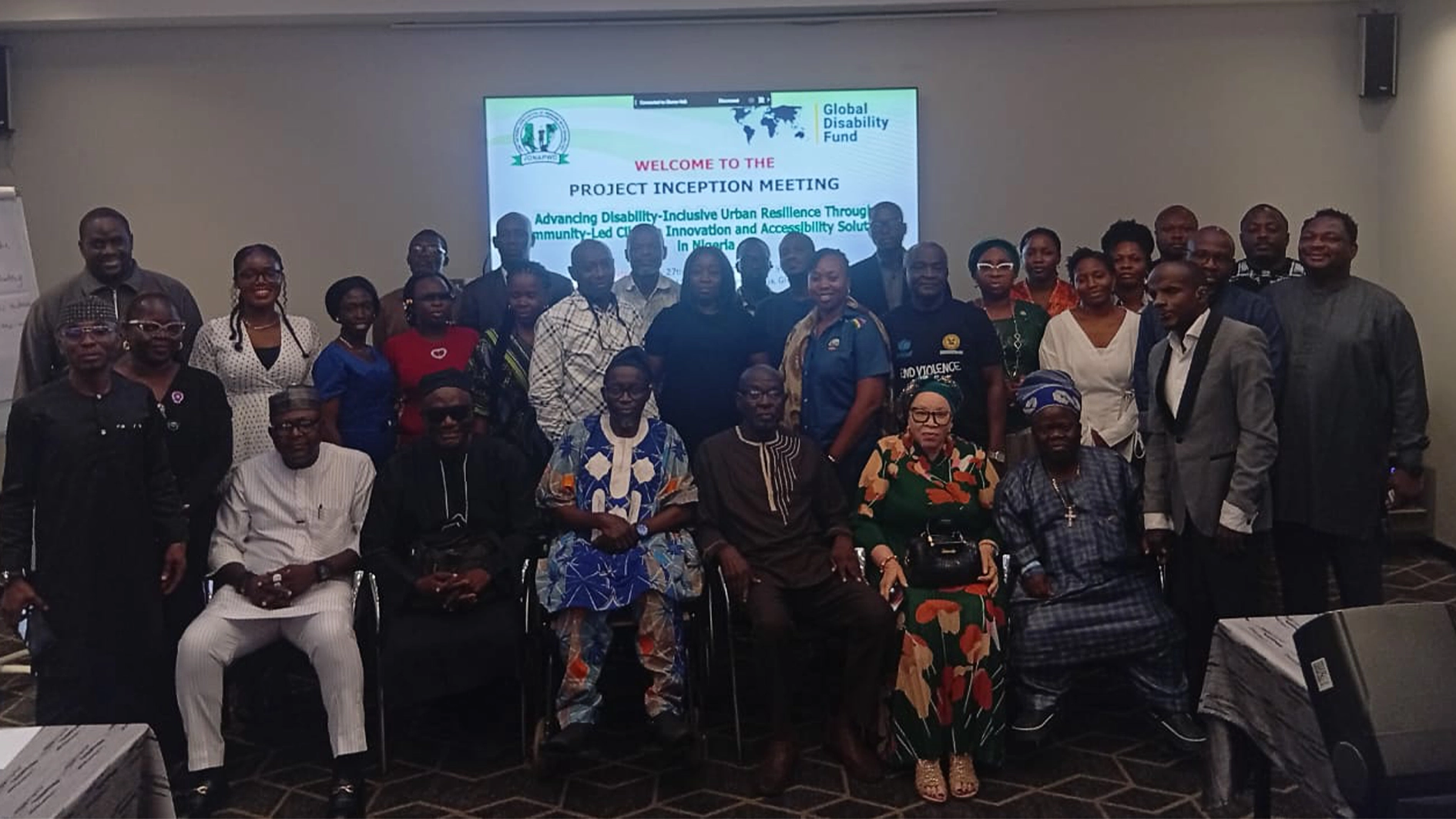
Disability groups and government agencies in Lagos have been told that flood and climate emergency systems must be redesigned so that no resident is left behind. The call came at the inception of a one-year project on disability-inclusive urban resilience.
The Joint National Association of Persons with Disabilities (JONAPWD), working with the Global Disability Fund, held the one-day inception event in Lagos on Tuesday, October 27, 2026. The project focuses on community-led climate innovation and accessible solutions to flooding, extreme heat and disaster preparedness.
Agege and Lagos Island local government areas were named as the pilot LGAs. Organisers said the whole state cannot be surveyed at once, so the pilots will be used to test accessibility audits, GIS mapping, dashboards and accessible feedback tools. By 2027 and beyond, they want improved accessibility, safety, mobility and participation for persons with disabilities, particularly women, girls, youth and older persons.
The Lagos State Chairman of JONAPWD, Mr. Lukman Salami, stressed the need for adequate representation and participation of persons with disabilities in government programmes and policy decisions. He said 26 state disability commissions currently exist and that disability interventions must be backed by budgetary provisions and built into government development plans.
Salami called for a society that recognises the rights, dignity and varying needs of persons with disabilities, with inclusion reflected in public policies and everyday interactions. He urged persons with disabilities to register with the relevant state authorities to access palliatives, employment opportunities and other support programmes. He said, “Proper registration will help government agencies identify eligible beneficiaries and ensure that available resources reach the intended recipients.”
The President of the Deafblind Association (DBIAN), Mr. Solomon Okelola, said persons with deaf-blindness and other disabilities are often excluded from disaster preparedness and response. He explained that public announcements and visual alerts are often inaccessible to people with hearing or visual impairments, and that many interpreters lack the skills to communicate with deafblind people. According to him, disability-inclusive disaster management must provide accessible information and practical support that enable affected persons to evacuate safely. He said, “Flooding is a starting point for addressing the wider challenges posed by climate change to persons with disabilities in Nigeria.”

The National President of the Albinism Association of Nigeria (AAN), Mrs. Josephine Omolola, called for targeted protection for persons with albinism against extreme heat and harmful ultraviolet radiation, warning that prolonged exposure to direct sunlight can cause severe skin damage and raise the risk of skin cancer. She urged project organisers to work directly with disability groups to develop interventions that respond to their members’ needs. She commended the Lagos State Government for funding skin cancer surgeries, including investigations and chemotherapy, through the Lagos State University Teaching Hospital (LASUTH). She said, “Rising temperatures and extreme weather conditions increase the risks faced by vulnerable groups.”
A representative of the Lagos State Office for Disability Affairs (LASODA) said the agency has inspected government buildings and is recommending that accessibility provisions be in place before construction begins. A facilitator, however, called for user-based assessments, noting that an elevator or restroom can exist but still be unusable for a wheelchair user.
Facilitators also raised the lack of data on persons with disabilities, saying planners cannot allocate resources or organise evacuations without knowing how many people live in an area and what their needs are. They warned that sending buses to evacuate a community with many wheelchair users would worsen a crisis rather than ease it. They also argued that being present at meetings is not the same as shaping decisions. One facilitator said, “You could have us in the room just to tick the box, but in terms of leadership and governance, we are nowhere to be found.”
A representative of the Lagos State Environmental Protection Agency (LASEPA) encouraged residents to sort recyclable waste and sell it through phone apps. A facilitator responded that about 80 per cent of persons with disabilities, especially in rural communities, cannot access such apps. The facilitator asked for community collection points, so that persons with disabilities do not lose out on income from the waste they generate.
The project will run on four pathways: practice, policy and financing, partnership, and knowledge and learning. Practice covers accessibility audits, GIS mapping, dashboards and accessible feedback tools. Policy and financing will turn findings into priority actions, scorecards and cost-effective recommendations. Partnership will strengthen collaboration among organisations of persons with disabilities, LGA representatives, LASODA, state agencies, urban planners and communities. Knowledge and learning will produce learning briefs, case studies and toolkits to support replication.
Participants were invited to join a project steering committee and technical working group to provide strategic oversight, validate mapping findings and help turn recommendations into government action.