 Follow Us on Google News


 Follow Us on Google Discover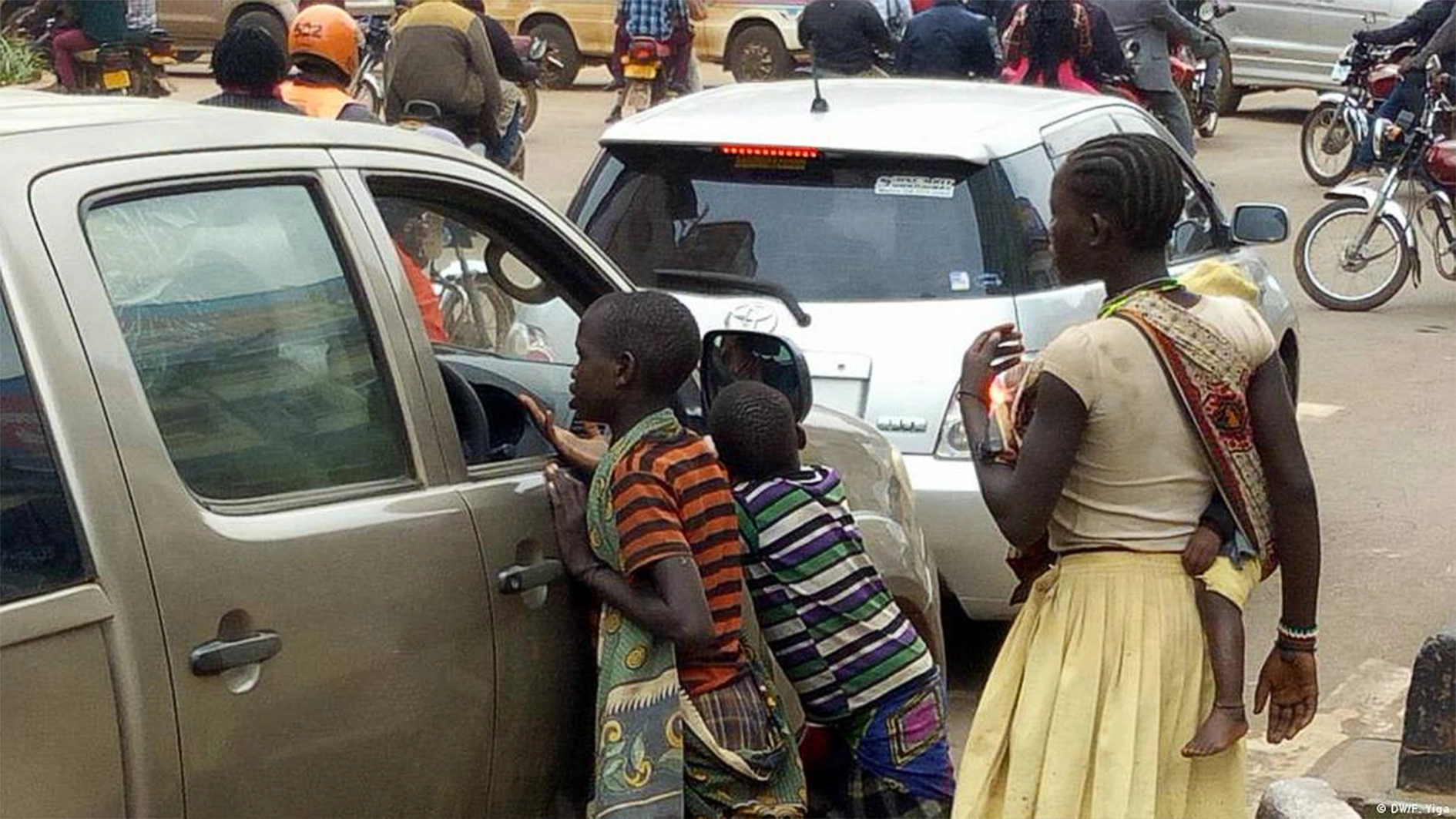
For some children in Abuja, the evening rush hour is no longer simply a time to return home from school. It has become an opportunity to make enough money to eat.
Between 5:00 p.m. and 6:30 p.m. over four days, The Guardian observed children as young as four years old moving among vehicles at major traffic points in the Federal Capital Territory (FCT), begging, hawking sachet water and snacks, cleaning windscreens and helping passengers carry luggage for small payments.
The children were sighted around Soka (Under Bridge), Lugbe Car Wash and Under Bridge bus stops, Jabi Airport Road and ECWA Junction in Wuse 2, where heavy evening traffic brings motorists and pedestrians to a standstill.
At Soka, an average of eight children were observed every hour during the four-day period. While some girls sold water and groundnuts, boys gathered around the bus stop, offering to carry passengers’ bags for a fee.
Two brothers, who declined to give their names, were among them. The younger, estimated to be about nine years old, said he still attends school. His older brother, however, had completed secondary school but could not continue his education because the family could not afford it.
Residents familiar with the family said their parents knew the boys came to the junction to make money.

A fuel vendor operating near the bridge, Maliki Adu, said the sight of children working after school hours had become increasingly common.
“Some of them still go to school and come here afterwards, while others have stopped going to school completely because their parents cannot provide for them,” he said.
The situation was even more visible around Lugbe Car Wash and Under Bridge, where between 17 and 20 children were seen every hour during peak traffic.
The busy transport hub provides the children with a steady stream of potential customers and donors.
For residents, the growing number of children on the streets is a reflection of the economic pressure confronting families.
Ugo Okoye, a resident of the area, said some of the children came from households that had lost their breadwinners and were struggling to survive.
“Many of these children are looking for their daily bread. If given the opportunity, many of them will either learn skills or return to school,” he said, calling for greater government and private-sector intervention in the education and welfare of vulnerable children.
At Jabi Airport Road, between eight and 10 children were seen hourly around bus stops and passenger drop-off points. The children appeared to understand the rhythm of the traffic. As vehicles slowed down or stopped, they moved quickly between them, approaching motorists and passengers for money or offering to help with luggage.
Four boys identified as Abubakar, Suleiman, Abdulmalik and another Abubakar, all estimated to be about 10 years old, said only one of them attended a conventional public school. The other three attended Islamic learning programmes.
For Suleiman Audu, the attraction of the streets was simple: money was available.
“If I go to school, they will not give me money there. Here, if people help me, I can buy food and other things,” he said.
Abubakar also said he preferred spending time around bus stops, where sympathetic commuters sometimes gave him cash or bought something from him.
“Sometimes, people give us money, sometimes they buy things for us. That is why I come here,” he said.
At ECWA Junction in Wuse 2, children and adults competed for motorists’ attention as vehicles waited at traffic lights. Some sold goods, others washed windscreens, while some simply stretched out their hands for alms.
One motorist, Kayode Rasaq, admitted that he often gave money to children despite knowing that doing so could encourage them to remain on the streets.
But officials say the problem goes beyond poverty and individual survival strategies.
The acting Director of Social Welfare at the FCT Social Development Secretariat (SDS), Mrs Gloria Onwuka, said street begging had increasingly become an organised business in which vulnerable children were exploited.
She said some women found begging with infants were not their biological mothers, adding that families in the children’s home states were sometimes unaware of how their children were being used.
The revelation has added another disturbing dimension to the presence of children on Abuja’s streets, raising questions about child trafficking and exploitation.
The Federal Capital Territory Administration (FCTA), in response to the growing problem, launched Operation Sweep Abuja, a multi-agency task force aimed at removing beggars, scavengers and other vulnerable or disruptive groups from major traffic corridors.
The Head of Enforcement at the SDS, Mrs Ukachi Adebayo, said 607 people had been evacuated from Abuja streets within six months. They comprised 583 beggars and 23 persons described as mentally challenged.
She said those apprehended were counselled and profiled before being taken to their respective state liaison offices for return and rehabilitation.
She, however, acknowledged that some return to Abuja because of insecurity and difficult conditions in their home states, making the enforcement exercise a continuous process.
The Secretary of the FCTA Command and Control Centre, Dr Peter Olumuji, also warned that street begging could create security concerns, with children and other vulnerable persons exposed to exploitation and criminal networks.
FCT Minister Nyesom Wike has declared a war on street begging, expressing concern about the image of the nation’s capital.
“It is embarrassing that people who come into Abuja, the first thing they see are just beggars on the road… We will not allow that,” he said.
Yet, for the children spending their evenings at Abuja’s traffic junctions, the issue is less about the city’s image and more about survival.
Their stories point to a difficult choice between the classroom and the streets, particularly for families struggling to cope with rising living costs.
Development communication experts therefore argue that enforcement alone cannot solve the problem. They advocate public awareness campaigns, educational support, community-level monitoring of child-leasing syndicates and targeted social welfare programmes to address the poverty and vulnerability pushing children into street-based activities.
With Nigeria still facing a severe out-of-school children crisis, the sight of children weaving through Abuja traffic for money is a reminder that behind the statistics are young lives increasingly being shaped by economic hardship.

