 Get Guardian on Google
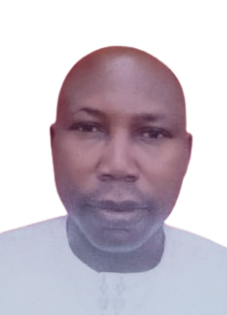
Avocats Sans Frontières France (ASF France) has called for the unconditional release of Daniel Ojukwu, a journalist with the Foundation for Investigative Journalism (FIJ), following his remand at the Kuje Correctional Centre over allegations linked to his reporting.
In a statement yesterday, the organisation expressed concern that Ojukwu was remanded on November 10, pending the hearing of his bail application, over charges of cyberstalking under the Cybercrimes Act and criminal defamation.
While acknowledging the independence of the judiciary and the presumption of innocence, ASF France maintained that pre-trial detention should remain an exception, particularly in cases involving alleged non-capital offences.
The organisation said Ojukwu’s case reflected a broader pattern in which the Cybercrimes Act, particularly Section 24, had been used to arrest, detain and prosecute journalists, bloggers and other citizens over their online publications.
It noted that although the ECOWAS Court of Justice ordered Nigeria in 2022 to amend Section 24 to bring it in line with its human rights obligations, and the provision was subsequently narrowed in 2024, its application against journalists had continued.
ASF France warned that a law intended to combat cybercrime should not become an instrument for suppressing legitimate journalism and public debate, adding that such practices could discourage the media from holding public officials accountable.
It stressed that reporting on the management of public resources was a service to society rather than a threat, noting that freedom of expression and the press was guaranteed under Section 39 of the Nigerian Constitution, Article 9 of the African Charter on Human and Peoples’ Rights and Article 19 of the International Covenant on Civil and Political Rights.
The organisation also cited Article 9 of the International Covenant on Civil and Political Rights, which guarantees the right to liberty.
According to ASF France, the African Commission on Human and Peoples’ Rights, through its Declaration of Principles on Freedom of Expression and Access to Information in Africa, has called on governments to repeal criminal defamation laws.
It argued that disputes over published reports should be addressed through civil remedies, including rights of reply, corrections or civil proceedings, rather than arrest and imprisonment.
The organisation consequently urged the Nigerian authorities to secure Ojukwu’s unconditional release, decriminalise defamation and review the Cybercrimes Act to ensure that it complies fully with the country’s human rights obligations.
ASF France said it was working to protect freedom of expression in Nigeria through its EXPRESS project, supported by the Embassy of the Netherlands in Nigeria.
Under the project, it monitors the implementation of the Cybercrimes Act in the Federal Capital Territory, Lagos and Enugu, gathering evidence on how the law is applied and its implications for human rights.
The organisation said it would continue to monitor Ojukwu’s case and expressed its readiness to work with the authorities, judiciary, media and civil society groups to ensure that laws protecting people online did not silence journalists and others who keep the public informed.