 Follow Us on Google News


 Follow Us on Google Discover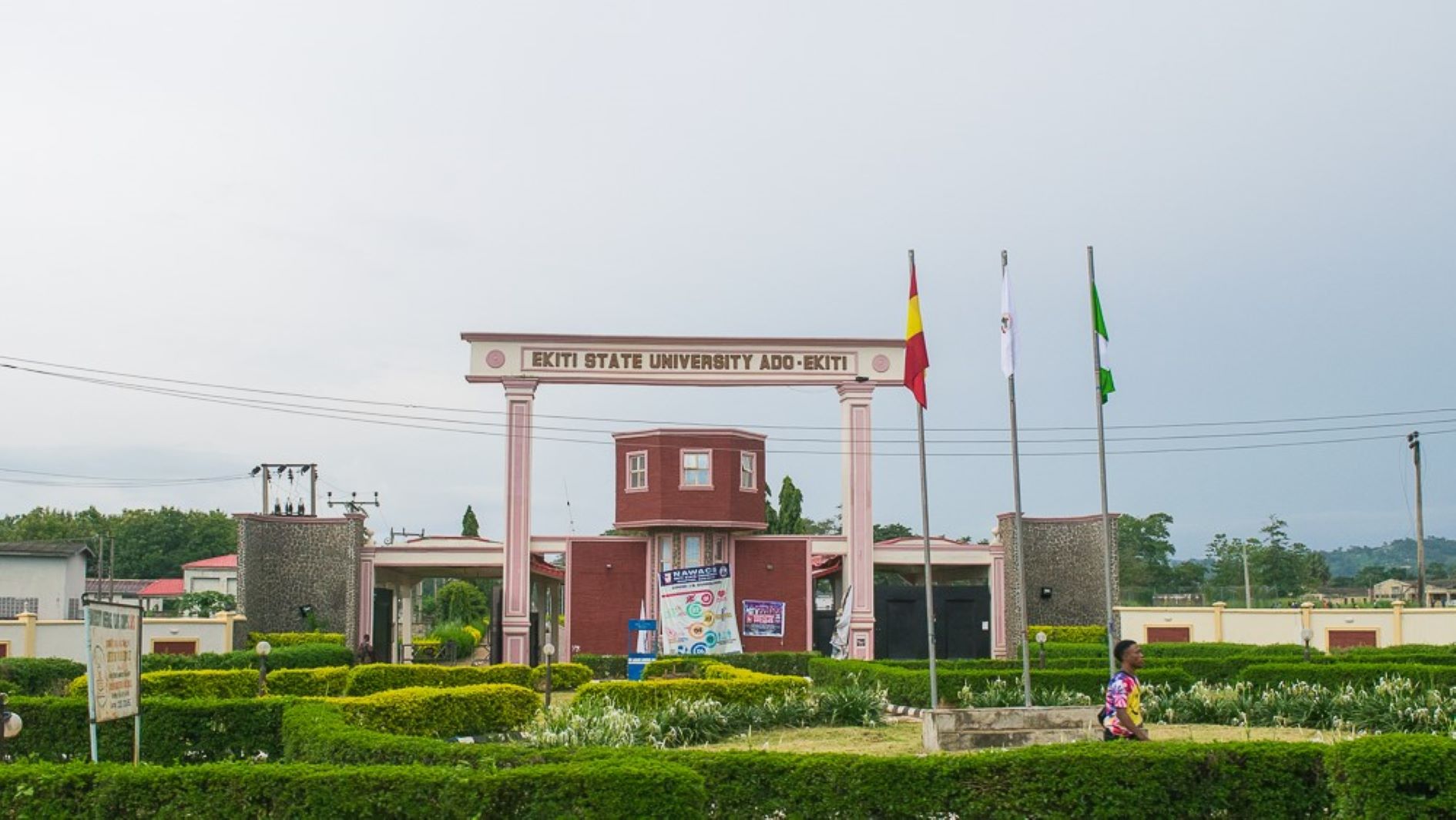
A new generation of financially-skilled graduates is emerging from Ekiti State University (EKSU), Ado-Ekiti, as the pioneer cohort of the institution’s Professional Diploma Programme in Securities Trading and Financial Markets prepares to graduate before the end of 2026.
The eight-month programme, known as the EKSU Financial Markets Training Programme (E-FMTP), is designed to equip students with practical knowledge and skills required to operate in the financial and capital markets. The programme was approved by the university’s Senate on February 25, 2026, marking a significant step in EKSU’s efforts to integrate practical financial market education into its academic curriculum.
Prof. Oke Michael Ojo of the Department of Finance confirmed that the pioneer students would complete the programme this year.
“The first cohort of the Diploma Programme will graduate before the end of the year,” Ojo disclosed.
The programme is anchored by the EKSU Trading Room, a specialised facility established through the vision of the university’s Chancellor, Dr. Tunji Olowolafe, with financial support from the Tunji Olowolafe Foundation (TOF).
The initiative is aimed at addressing the gap between conventional classroom instruction and the practical skills required in modern financial markets.

Olowolafe said the traditional approach to university education must evolve to prepare graduates for the changing demands of the global economy.
“A large percentage of recent graduates seeking finance roles lack the critical, practical skills demanded by modern capital markets,” he observed.
He said the E-FMTP was conceived to move students beyond theoretical knowledge by exposing them to practical trading and professional experiences.
“Our vision with the E-FMTP is to pioneer a fundamental paradigm shift in African higher education — moving from rote theoretical learning to real-time execution,” Olowolafe said.
“By providing students with access to a fully accredited diploma programme, live simulated dealing rooms, and global virtual work experiences, we are not just giving them a degree; we are instilling a professional instinct.”
According to him, the model could serve as a template for other Nigerian universities seeking to produce graduates with practical expertise in the financial sector.
“We are equipping our youth to command global trading desks from day one, transforming university classrooms into incubators for economic powerhouse leaders. This model must become the blueprint replicated across all Nigerian universities,” he said.
The initiative also aligns with the Federal Government’s emphasis on financial literacy and investment education as components of economic development.
President Bola Ahmed Tinubu, while receiving the leadership of the Nigerian Exchange Group (NGX) at the State House, had stressed the importance of introducing stock market education to young Nigerians.
“If we can teach this [stock market] in the classroom to our undergraduates, we can build a nation of succession and prosperity,” Tinubu said.
Ojo explained that the EKSU Trading Room was established specifically to close the gap between financial theories taught in classrooms and the realities of market operations.
“We combined theoretical instruction with practical simulations so students gain a full, hands-on understanding of risk management, investment strategies, and live trading in global markets,” he said.
The facility, supported technically by the CFA Institute, is described as the first financial dealing and trading room established in a university in Sub-Saharan Africa.
It has 20 trading stations fitted with dual monitors, a 75-inch smart television, an optimised sound system, solar inverter backup, three high-capacity air-conditioning units and high-speed internet connectivity.
The facility also uses professional trading vests for students to recreate the environment of a live dealing room.
Beyond its role in student training, the Trading Room has also become a teaching resource for lecturers, enabling them to combine academic concepts with real-time market simulations.
The foundation for the programme was laid in September 2024 when selected EKSU students visited Lagos for a financial literacy programme and study tour of FMDQ Exchange in Victoria Island.
The experience subsequently contributed to the establishment of the EKSU Investment Club (ICESU), which gives students access to CFA Institute learning resources, career opportunities, internship opportunities, examination scholarships, project grants and investment conferences.
For the General Manager of TOF, Ms. Bomo Anthony, the initiative represents an investment in human capital rather than infrastructure alone.
Anthony said the practical exposure had enabled students to progress from understanding basic financial instruments to applying their knowledge in simulated market transactions.
“I’ve watched these students grow, week by week, from learning about shares and bonds to actually placing a trade,” she said.
“That’s the moment it stops being a classroom exercise and starts being a career.”
She described Olowolafe’s vision for the programme as being in the right direction, stressing that the value of the investment would ultimately depend on how the students utilised the skills acquired.
“This investment only pays off if the students protect it and build on it,” Anthony said.
“What we’re graduating isn’t just a cohort, it’s a group of young people who already think like professionals.”
With the pioneer cohort approaching graduation, EKSU and TOF are preparing to open applications for the next intake at the beginning of the new academic year.
The expansion is expected to provide more students with access to practical financial-market education while advancing the broader objective of transforming university-based financial education into a pathway for professional development and economic empowerment.

