 Follow Us on Google News



 Follow Us on Google Discover
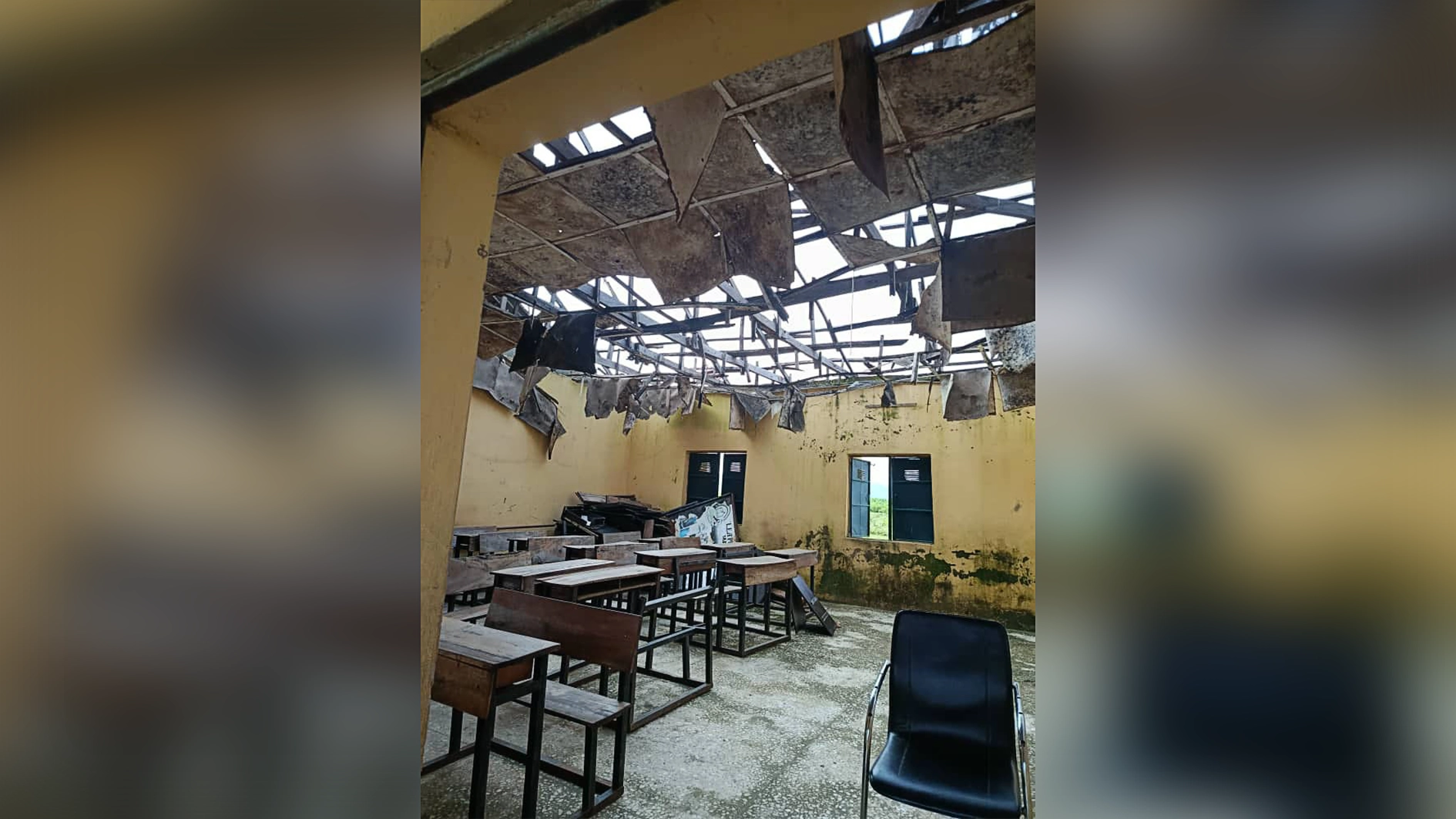
Worries as pupils learn on bare floors
Pupils in some rural communities of the Federal Capital Territory (FCT) are struggling to learn in classrooms without roofs, while others sit on bare floors or pieces of planks because their schools lack desks and chairs.
At LEA Primary School, Makanima, near Giri along Airport Road in the Abuja Municipal Area Council (AMAC), damaged roofing sheets have left the rafters exposed to the sky.
Ceiling boards, stained by rainwater, hang loosely above empty desks, leaving pupils and teachers exposed to the elements.
In Kigbe community, Yebu Ward, Kwali Area Council, the situation is equally troubling. Pupils in their school uniforms sit on bare floors, while some make do with pieces of planks in place of desks.
The deplorable conditions have raised concerns about the safety of pupils and the quality of education available to children in the affected communities.

The Grassroots Centre for Rights and Civic Orientation (GRACO), which raised the alarm, said the conditions of the schools reflected a troubling level of neglect that required urgent intervention by the FCT Administration and the relevant Area Councils.
According to the organisation, the deteriorating state of LEA Primary School, Makanima, has been brought to the attention of the authorities several times, but no meaningful action has been taken.
It also alleged that officials from the FCT Administration and the relevant Area Councils had yet to visit the school to assess the situation.
GRACO questioned why children in the affected communities should be forced to learn under such conditions, urging the authorities to address the situation rather than allow pupils to continue schooling in unsafe and poorly equipped classrooms.
In a statement signed by its Executive Director, Armsfree Ajanaku, the organisation said access to basic education was a right guaranteed to every Nigerian child under the Universal Basic Education (UBE) Act, 2004.
GRACO said the conditions in Makanima and Kigbe were inconsistent with the principle of universal basic education, stressing that primary education was fundamental to children’s development, responsible citizenship and future economic opportunities.
The organisation also questioned the impact of the FCT Administration’s school rehabilitation programme, recalling that the administration announced the approval of N30.9 billion for the rehabilitation of public schools across the territory in February 2024.
It noted that the FCT Universal Basic Education Board had also acknowledged at the time that schools in Kwali, Abaji, Gwagwalada and Kuje were struggling with increased enrolment.
Against this background, GRACO called on the authorities to account for the implementation of the rehabilitation programme by disclosing how many schools had been renovated, the projects completed and those still awaiting intervention.
It said that the conditions in Makanima and Kigbe suggested that some rural communities were yet to benefit from government’s efforts to improve public schools’ infrastructure.
While acknowledging the debate over the constitutional responsibility of Area Councils for primary education, the organisation said children should not be made to suffer because of disagreements between different tiers of government.
It urged the FCT Administration and the six Area Councils to work together to address the situation, particularly following the emergence of new Area Council administrations after elections held earlier this year.
GRACO specifically called on the FCT Administration, through the Education Secretariat and the FCT Universal Basic Education Board, to begin the immediate renovation of LEA Primary School, Makanima, and the public school in Kigbe.
It said the intervention should include providing desks and chairs for pupils currently being forced to sit on the floor, as well as repairing damaged roofs and other unsafe parts of the school’s buildings.
The organisation also urged the chairmen of AMAC and Kwali Area Councils to visit the affected communities without delay and engage with parents, teachers and community leaders to understand their needs.
Beyond the two schools, GRACO called for a comprehensive and transparent audit of public primary schools across the six Area Councils to identify dilapidated buildings and other conditions that could endanger pupils and teachers.
It further urged the FCT Administration to publish an updated report on its schools’ rehabilitation programme, detailing completed projects and schools still awaiting repairs, to enable residents to monitor progress.
With political parties and candidates expected to visit communities ahead of the 2027 general elections, GRACO urged citizens to demand specific and verifiable commitments from aspirants on improving basic education and other essential public services.
The organisation maintained that children in rural communities deserved safe classrooms and adequate learning facilities, regardless of where they lived, adding that the authorities must act urgently to ensure that dilapidated buildings and lack of basic furniture did not continue to undermine their education.

