 Follow Us on Google News


 Follow Us on Google Discover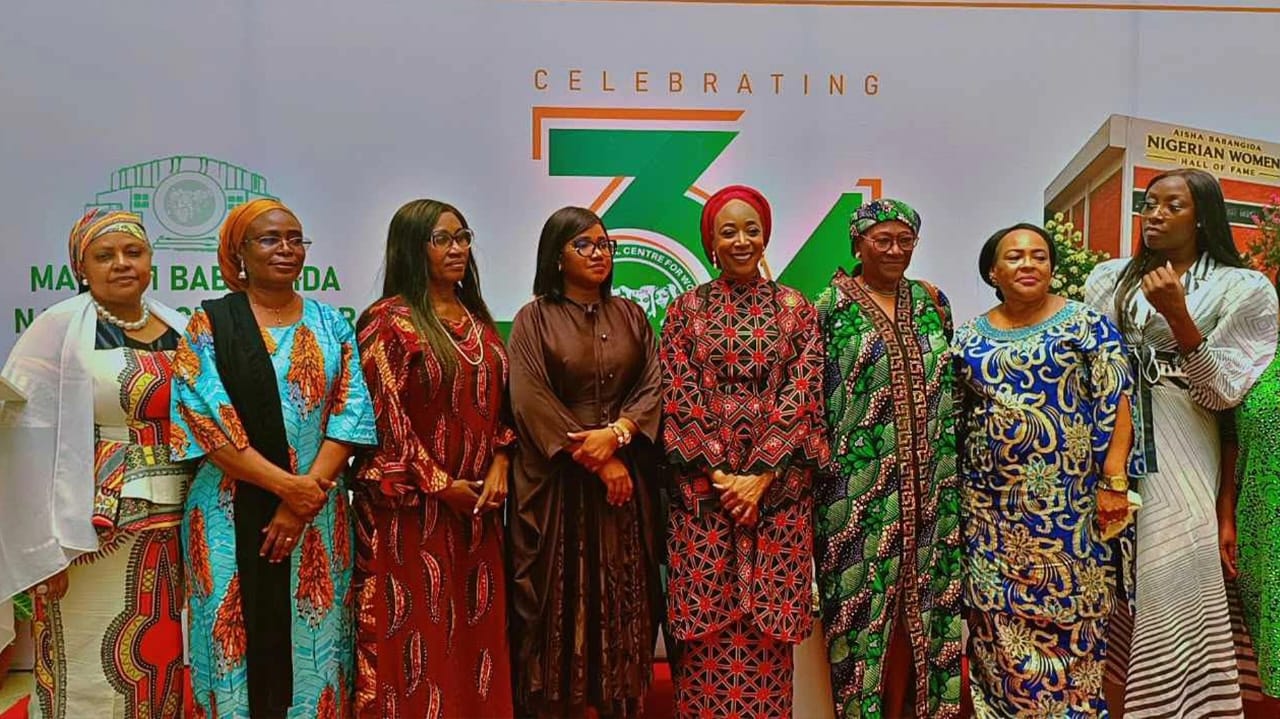
The Maryam Babangida National Centre for Women Development (MBNCWD) and the Nigerian Union of Journalists (NUJ), Federal Capital Territory (FCT) Council, have proposed a structured media partnership to strengthen women’s inclusion in governance, improve gender-sensitive reporting and hold institutions accountable for commitments to women’s development.
The Director-General of the Centre, Dr. Adedayo Benjamins-Laniyi, said the proposed collaboration would move beyond expressions of goodwill to measurable actions capable of improving the lives of Nigerian women and girls.
Speaking during a courtesy visit by the NUJ FCT Council Chairman, Comrade Grace Ike, to the Centre in Abuja on Friday, Benjamins-Laniyi called for a formal framework to guide joint advocacy, public enlightenment, capacity building and media engagement on women-focused issues.
She said the partnership should establish shared priorities, clearly defined responsibilities and measurable outcomes, with both institutions designating focal persons to coordinate activities and periodically assess progress.
“My challenge to us today is simple: let this visit produce a partnership that we can demonstrate, a programme of action that we can implement, and results that Nigerian women can experience,” the Director-General said.
She urged journalists to make women’s development a consistent national conversation rather than restricting coverage to commemorative occasions such as International Women’s Day.

According to her, the proposed collaboration would include periodic training sessions, media roundtables and knowledge-sharing engagements to strengthen journalists’ capacity to report on women’s economic empowerment, leadership, gender-based violence, education and social inclusion.
The Director-General also called for deliberate efforts to bring the experiences of rural women, young innovators, women entrepreneurs, women with disabilities and community leaders into public discourse.
She said the Centre would provide access to relevant information, technical expertise, programme updates and opportunities for engagement with women and communities, while the media would contribute its professional reach and communication platforms to advancing women’s development.
Benjamins-Laniyi stressed that the media should not merely be invited to cover the Centre’s activities but should participate in shaping public conversations and promoting accountability.
She said the success of the partnership should be assessed through tangible outcomes, including programmes implemented, women reached, stories published, public awareness raised and opportunities created.
Inclusion must go beyond policy
In her remarks, Ike said the visit was an opportunity for women journalists to collaborate with the Centre in promoting women’s development and ensuring that the experiences and achievements of women received greater public attention.
She described the Centre’s commitment top inclusion, particularly for women with disabilities, as a step towards changing the way public institutions approach women’s development.
According to her, women journalists must not only report the experiences of other people but also tell their own stories and document the contributions of women across different sectors.
She said the proposed partnership would help journalists understand government policies and programmes designed to support women in innovation, technology, security and economic advancement, enabling them to communicate such opportunities to the public.
Ike also stressed that women’s political participation should extend beyond election periods, urging sustained engagement with policies and initiatives that affect women between elections.
She said women journalists had a responsibility to amplify women’s voices, highlight their achievements and encourage greater participation in decision-making.
The NUJ FCT chairman further called for women to be recognised as active contributors to national development rather than treated merely as beneficiaries of government interventions.
Disability access raises concerns
A major issue raised during the engagement was the difficulty persons with disabilities encounter when accessing public buildings and participating in institutional activities.
Benjamins-Laniyi recounted an incident in which a woman with a disability could not access an upper floor of the Centre without being physically lifted by other people, describing the experience as a reminder that inclusion must be reflected in infrastructure and institutional practice.
She said she had declined to use the upstairs office designated for the Director-General when she assumed office, insisting that women with disabilities should first be able to access the building.
The Director-General said inclusion should encompass not only physical accessibility but also digital and information and communications technology access, gender-responsive budgeting and affirmative procurement.
She disclosed that Julius Berger had offered to provide a wheelchair-accessible ramp at no cost to the Centre, while plans were being considered to seek a special intervention budget for accessibility improvements.
She explained that the objective was to adapt the existing facility to meet accessibility requirements rather than undertake an unnecessary reconstruction of the building.
The proposed improvements, she said, should help ensure that women with disabilities can access public facilities independently and participate fully in programmes and decision-making processes.
Benjamins-Laniyi also identified the appointment of Honourable Lois Alter, a woman with a disability, as a member of the Centre’s board as an important step towards strengthening representation.
She said inclusion would remain incomplete if persons with disabilities were absent from the rooms where decisions affecting them were made.
Women’s political participation
The Director-General also called for stronger mobilisation of women across political, ethnic, religious and socioeconomic divides to advance their collective interests.
She described women’s collective voting power as an opportunity to promote greater representation, equity and inclusion in public life.
According to her, women’s participation should not be limited to supporting candidates during campaigns but should extend to sustained engagement with governance and the implementation of policies that affect their lives.
She also argued that women who contest elections contribute to advancing women’s representation even when they do not win, noting that their participation can encourage others to seek leadership positions.
The remarks underscored the need for women to support one another across political affiliations and for women in leadership to use their positions to create opportunities for others.
From partnership to accountability
The proposed collaboration comes with a call for stronger evidence-based reporting on women’s development and the implementation of public policies.
Benjamins-Laniyi urged journalists to work with the Centre’s research and statistics department and its zonal offices across Nigeria’s six geopolitical zones to obtain information on women’s needs, opportunities and development outcomes.
She said the partnership should help move reporting beyond announcements and official statements to examining whether programmes and policies were improving women’s lives.
The Centre also proposed regular conversations on women’s development and greater visibility for women whose contributions often receive limited public attention.
The engagement further highlighted the importance of documenting the history of women’s development in Nigeria and recognising the contributions of women across generations.
Benjamins-Laniyi referenced a proposed collaboration with the National Gallery of Art to recognise leading Nigerian women, describing the documentation of women’s achievements as part of the effort to preserve their contributions to national development.
She said the Centre’s mandate to empower women could be strengthened through a media partnership that combines public enlightenment, professional reporting and institutional accountability.
Both institutions are expected to work towards defining the proposed partnership’s priorities, responsibilities and schedule of activities.
The immediate challenge, however, will be translating the commitments made at the meeting into a working framework with clear timelines and measurable results.
For women and girls across Nigeria, the value of the partnership will ultimately depend on whether it improves access to information and opportunities, strengthens representation and ensures that inclusion becomes a practical reality rather than a policy aspiration.

