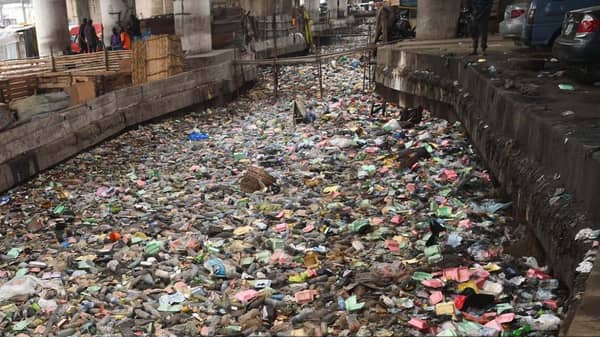
Authorities in Lagos State have introduced stricter measures to tackle the city’s deepening waste crisis, warning that violators of sanitation laws will face fines of ₦250,000 or up to three months imprisonment.
At a press briefing held on Tuesday, Commissioner for Environment and Water Resources Tokunbo Wahab said the state could no longer tolerate what he called “environmental lawlessness” and warned that enforcement would be relentless.
“People must understand the cost of their actions,” Wahab said. “We have prosecuted over 3,000 offenders already. We are arresting, prosecuting, naming, and shaming violators.”
The announcement follows growing concerns over indiscriminate waste dumping, encroachment by developers on drainages, and the continued use of banned cart pushers. The government reaffirmed its earlier directive banning these informal waste collectors, citing their central role in the city’s sanitation issues.
Wahab added that the monthly environmental sanitation exercise, suspended in 2016, would soon resume as part of broader reforms.
“We are returning to monthly sanitation. But beyond that, we must make cleanliness a daily culture,” he said during an inspection of Idi-Araba, Orile Iganmu, and Alaba Rago—areas frequently cited for environmental abuse.
He also confirmed that a long-announced ban on single-use plastics and Styrofoam containers would take effect on 1 July, following an 18-month transition period for manufacturers.
At Alaba Rago, one of the state’s busiest informal markets, the commissioner condemned traders for turning medians into dumpsites. “If this doesn’t change, the market will be sealed again,” he warned.
Lagos with over 20 million people, generates about 13,000 tonnes of waste daily, according to LAWMA. While efforts to modernise waste management are ongoing including marine waste removal and “waste-to-wealth” initiatives officials insist that public compliance is essential.
“Everyone has a role,” said LAWMA chief Muyiwa Gbadegesin. “Sort your waste, clean your drains, and stop dumping on the streets. That’s how we’ll keep Lagos liveable.”
With Eid-el-Kabir approaching, authorities urged residents to properly manage animal waste and use approved waste operators.
“No more excuses,” Wahab said. “The government has done its part. Now it’s your turn.”