 Follow Us on Google News


 Follow Us on Google Discover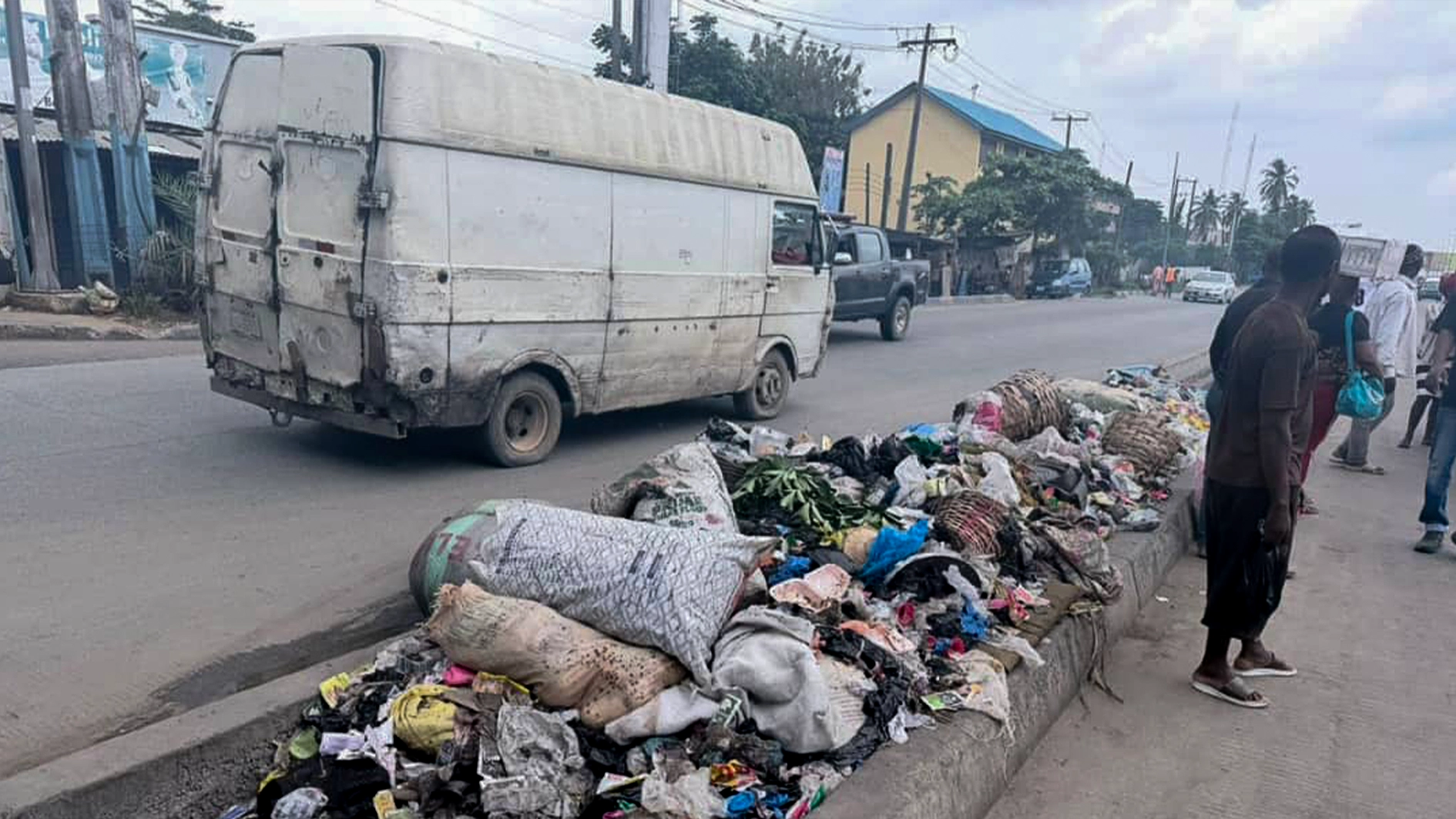
PSP operators decry state of dumpsites
Lagos residents are lamenting the growing waste burden in the metropolis, expressing fears of a disease outbreak if urgent steps are not taken to address the situation.
Many residents who spoke with The Guardian said they are overwhelmed by the stench emanating from heaps of refuse abandoned on streets and highways.
The waste crisis has spilled into the heart of everyday life in Lagos. From Mushin to Araromi, Agege to Ajah, Oshodi to Ajegunle, Iyana Ipaja, Abule Egba, Lekki, Okota and other parts of the state, expressways, markets, bus stops and even bridges have been transformed into informal dumpsites.
Beyond the offensive odour lies a growing public health threat, as uncollected waste breeds disease and clogs drainage channels, turning the sanitation lapse into a warning that the city’s growth is outpacing its capacity to protect lives.
Apart from waste littering highways, many households complained of overflowing bins left unattended by Private Sector Participants (PSPs) for weeks.

Residents also complained of illegal waste disposal in unauthorised areas and the inefficiency of PSP operators engaged by the Lagos Waste Management Authority (LAWMA).
A resident of Surulere, identified simply as Olamide, said the assigned PSP operator had not visited in three weeks despite charging N10,000 monthly for three flats.
He said the operator blamed delays on the deplorable condition of the Olusosun dumpsite, worsened by persistent rainfall, which has extended turnaround time, with trucks spending up to four days before discharging waste.
The Guardian also gathered that PSP operators are seeking an upward review of waste collection charges to offset the rising cost of vehicle maintenance, diesel and spare parts.
Like Olamide, another resident of Mushin, Mike Udom, alleged that Bauhbon Environmental Services, one of the licensed PSP operators, had failed to provide services for which payment had been made.
According to him, in several parts of Mushin Local Council where the company operates, refuse bins that ought to be emptied weekly have been cleared only three times in the last 12 weeks.
Udom said recent downpours have further compounded the problem, with refuse clogging drainage channels, overflowing onto roads and creating environmental hazards.
At the Iyana Isolo Under Bridge, along both the Apapa-Oshodi and Oshodi-Apapa expressways, as well as in Ikotun, Ilasa, Mushin Market, Ketu and even some highbrow areas of the state, massive piles of waste occupy significant portions of the roads.
Plastic bottles, nylon waste and other debris greet commuters and residents alike, underscoring the severe strain on the city’s waste management system.
When contacted at the weekend, LAWMA released its operational performance report for May 2026, highlighting efforts to improve waste collection, environmental sanitation and service delivery across Lagos State.
The Managing Director/Chief Executive Officer of LAWMA, Dr Muyiwa Gbadegesin, said the agency remained focused on improving operational efficiency, strengthening service delivery and addressing pressure points within the waste management system.
He said LAWMA and its network of licensed PSP operators evacuated a total of 418,500 tonnes of waste across the state in May, representing an average daily evacuation of 13,200 tonnes.
According to him, 442 PSP operators remained active across Lagos State, while 27 routes were under review as part of efforts to optimise service coverage and improve collection efficiency.
He added that the authority cleared 173 waste black spots during the period, covering road medians, markets, bus stops and other public spaces affected by indiscriminate waste disposal.
Gbadegesin said the agency continued to strengthen its customer engagement systems, receiving 474 complaints and service requests during the month, while efforts were ongoing to improve response times and service delivery.
He said LAWMA currently deploys 77 compactor trucks, five skip trucks and 12 other operational equipment units across the state to support waste evacuation and environmental sanitation activities.
According to him, service improvement measures include route restructuring and optimisation, enhanced monitoring of PSP operations, infrastructure upgrades, equipment deployment and sustained enforcement against environmental infractions.
He noted that Lagos operates one of the largest urban waste management systems in Africa, requiring continuous investment, infrastructure upgrades, enforcement and stakeholder collaboration to meet the demands of its rapidly growing population.
Gbadegesin stated that persistent rainfall and increased waste evacuation activities had placed considerable strain on disposal infrastructure, affecting truck movement, turnaround time and operational efficiency at some landfill and disposal sites across the state.
He said the situation had also affected evacuation logistics for PSP operators and sanitation personnel working under challenging weather conditions to sustain waste management operations statewide.
According to him, the authority was actively engaging relevant stakeholders and implementing measures aimed at improving accessibility, stabilising disposal operations and reducing pressure on critical waste infrastructure during the rainy season.
Gbadegesin urged residents to support ongoing interventions by reducing waste generation, properly bagging waste and adopting waste-sorting practices that encourage recycling and resource recovery.
He assured residents that the authority remained committed to sustaining environmental sanitation through continuous collaboration with PSP operators, operational reforms, infrastructure upgrades and strategic interventions designed to strengthen the resilience of the waste management system.
An environmentalist and Group Managing Director/Chief Executive Officer of Brightest Hope Group, Dr Omowunmi Olatunji, said LAWMA had demonstrated considerable capacity and commitment over the years, but the scale and complexity of waste generation in Lagos had grown significantly.
“Lagos, with an estimated population exceeding 20 million people, generates thousands of tonnes of waste daily. This rapid urbanisation places enormous pressure on existing waste management infrastructure.
“Challenges include insufficient waste collection coverage in some densely populated communities, inadequate waste segregation at source, illegal dumping and non-compliance by residents and businesses, ageing infrastructure and operational constraints, as well as rapid population growth outpacing service expansion.
“While LAWMA possesses substantial institutional capacity, it cannot effectively manage Lagos’ waste burden alone. Sustainable waste management requires active collaboration among government agencies, local governments, private operators, industries, communities and residents.
“To achieve a cleaner and more sustainable Lagos, the government should move beyond conventional waste collection and embrace an integrated waste management system.”
Olatunji recommended strengthening waste segregation at source by making the separation of organic, recyclable and residual waste mandatory, providing colour-coded bins and enforcing compliance through incentives and penalties.
She also called for investment in waste-to-wealth infrastructure through the establishment of more recycling facilities, compost plants and waste-to-energy projects, while encouraging circular economy initiatives that convert waste into valuable products.
Olatunji further advocated stronger monitoring and enforcement against illegal dumping and environmental violations, including the establishment of environmental courts or fast-track prosecution mechanisms for offenders.
She also called for the introduction of environmental sustainability education in schools, sustained community awareness campaigns using traditional and digital media, deployment of smart waste management technologies, GPS tracking of collection vehicles and digital reporting platforms, as well as the use of data analytics for planning and operational efficiency.
“Lagos’ waste challenge is not merely a sanitation issue; it is an environmental, public health, climate resilience and economic development issue,” Olatunji said.
“The solution lies in a combination of stronger governance, modern infrastructure, private-sector participation, public responsibility and a transition from a collect-and-dump model to a sustainable circular economy approach. As Africa’s leading megacity, Lagos has the opportunity to become a model for integrated urban waste management across the continent.”

