 Follow Us on Google News
 Follow Us on Google Discover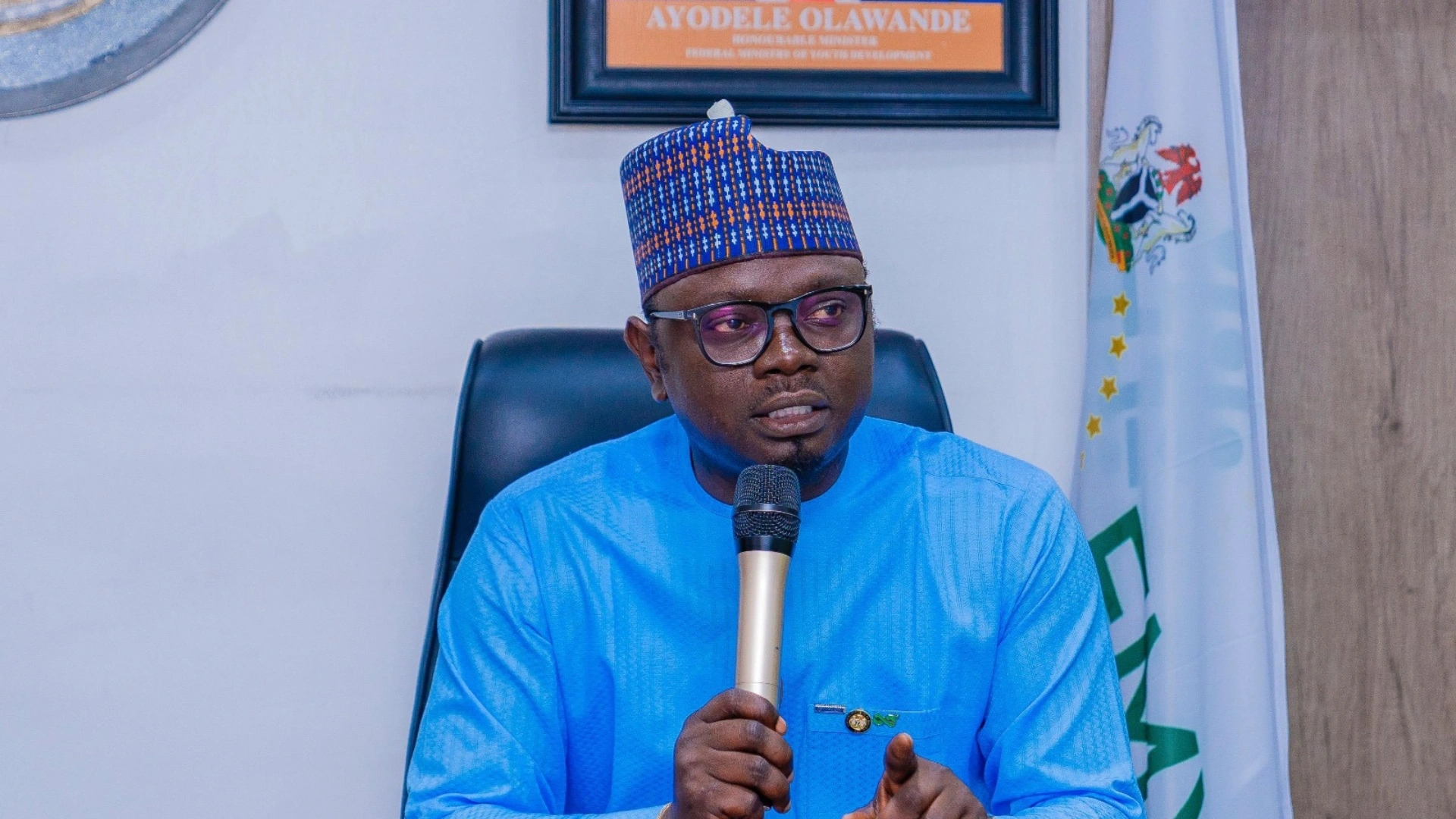
**Minister: Enough of documents, resolutions must translate to action
***Ogra, Dada assure transparency, reject political interference
The Federal Government has vowed to ensure that the forthcoming 2026 National Youth Confab produces concrete policy actions rather than another set of recommendations that end up on government shelves.
The Minister of Youth Development, Ayodele Olawande, who unveiled plans for the October conference, said the initiative was designed to move young Nigerians from passive participation in national discourse to active ownership of solutions and policy outcomes.
Speaking at the Presidential Villa, Abuja, Thursday, Olawande said the conference, themed “Next-Gen Nigerian: Crafting Solutions, Owning the Future,” would provide young Nigerians aged 18 to 35 with an opportunity to articulate their challenges, present ideas and participate directly in shaping policies affecting their future.
“This is not just another youth conference. It is not just to come and deliver speeches. It is not about ideas that are merely developed without implementation.

“Instead, this conference is an opportunity to learn, engage, cooperate and move from conversation to real action. What we are saying is enough of talking. We want to see the action,” he said.
The minister said the process would begin with about two weeks of virtual consultations, followed by a physical conference in Abuja involving delegates representing the country’s 360 federal constituencies, Nigerian youths in the diaspora and other stakeholders.
He disclosed that a dedicated portal, to be managed by the National Information Technology Development Agency (NITDA), would facilitate online participation, receive policy proposals and collate contributions ahead of the physical conference.
Olawande said the organisers would reach out to young entrepreneurs, farmers, students, artisans, technology innovators and other young Nigerians, including those who feel excluded from national conversations.
The selection process, he added, would emphasise transparency, merit, grassroots representation, gender balance, religious inclusion and participation by young people with disabilities and other marginalised groups.
The minister identified six priority areas for the deliberations: governance, leadership and political participation; economic transformation, entrepreneurship and job creation; education and skills for the future; technology, innovation and digital transformation; climate change and energy transition; and social harmony and security.
He said the conference would establish mechanisms to monitor implementation, including a multi-stakeholder Youth Confab Task Force, continued engagement with the executive and legislative arms of government, a youth policy and dialogue mechanism, and a youth-led monitoring and accountability framework.
Olawande declared: “The Nigerian youth does not need another document. Enough of documents. We need action. We need opportunities. We need measurable commitments and institutions that will listen and respond to our needs.”
He urged participants to put national interest above partisan considerations, saying: “It is Nigeria first before political party; it is Nigeria first before government; and it is Nigeria first before anybody.”
Olawande acknowledged the difficulties confronting young Nigerians and said the government was determined to rebuild confidence and strengthen its partnership with the younger generation.
He urged young Nigerians across the 36 states, the Federal Capital Territory and the diaspora to participate actively in the virtual consultations and submit practical ideas.
Speaking for the Presidency, Senior Special Assistant to the President on Digital/New Media, O’tega Ogra, said President Bola Tinubu had deliberately created greater space for young Nigerians to participate in governance and national development.
Ogra said the administration had reviewed previous youth conferences and was determined to avoid their shortcomings.
“We decided to look at the past, confirm the mistakes that were made, and how to ensure that, given this opportunity, we do not make those mistakes again,” he said.
According to him, the 360-constituency representation would promote broad participation and ensure that the country’s diversity was reflected in the process.
Ogra said the deliberations should transcend partisan, ethnic and religious divisions, noting that young Nigerians must take responsibility for shaping the country they want.
“We will always have different opinions as to how we want the country to turn out. But, at the end of the day, what matters is that we hear the voices of everybody from all over,” he said.
Also speaking, Special Assistant to the President on Social Media, Segun Dada, reinforced the government’s commitment to ensuring that the conference does not become another documentation exercise.
Dada declared: “Enough of documentation. I’ve already said that we are not going back to documentation anymore. We are not going back to putting it and coming to file it.”
He said recommendations emerging from the conference would be categorised according to the responsibilities of the executive, legislature and judiciary to facilitate implementation.
“We want the Federal Executive Council passing the things that come out of the conference. We want the National Assembly to pass a bill on most of the resolutions that concern them,” Dada said.
He added that relevant recommendations requiring judicial action would similarly be identified and presented to the appropriate authorities.
Dada said the implementation framework would extend to the sub-national level, stressing that youth development was not solely a Federal Government responsibility.
On transparency and political interference, he said the selection of physical delegates would be based on a registration and revalidation process rather than political patronage.
He described the initiative as a “non-monetary confab,” saying the arrangement would help limit financial influence over participation.
Dada said the virtual phase would allow young Nigerians across the country and in the diaspora to contribute before the physical gathering in Abuja.
The Permanent Secretary in the Ministry of Youth Development, Dr Maryam Ismaila Keshinro, said the youths would lead the process while the ministry provides institutional coordination.
“This conference is about the youth. That is why it is the youth that are taking the lead,” she said.
She disclosed that international development partners would participate as observers to assess the transparency and inclusiveness of the process.
The 2026 National Youth Confab is scheduled to commence in October, with the virtual consultations expected to generate ideas and policy proposals ahead of the physical gathering.
The Federal Government said the ultimate objective was to ensure that the conference produces implementable solutions and establishes a framework through which young Nigerians can continue to engage government beyond the event.

