 Follow Us on Google News


 Follow Us on Google Discover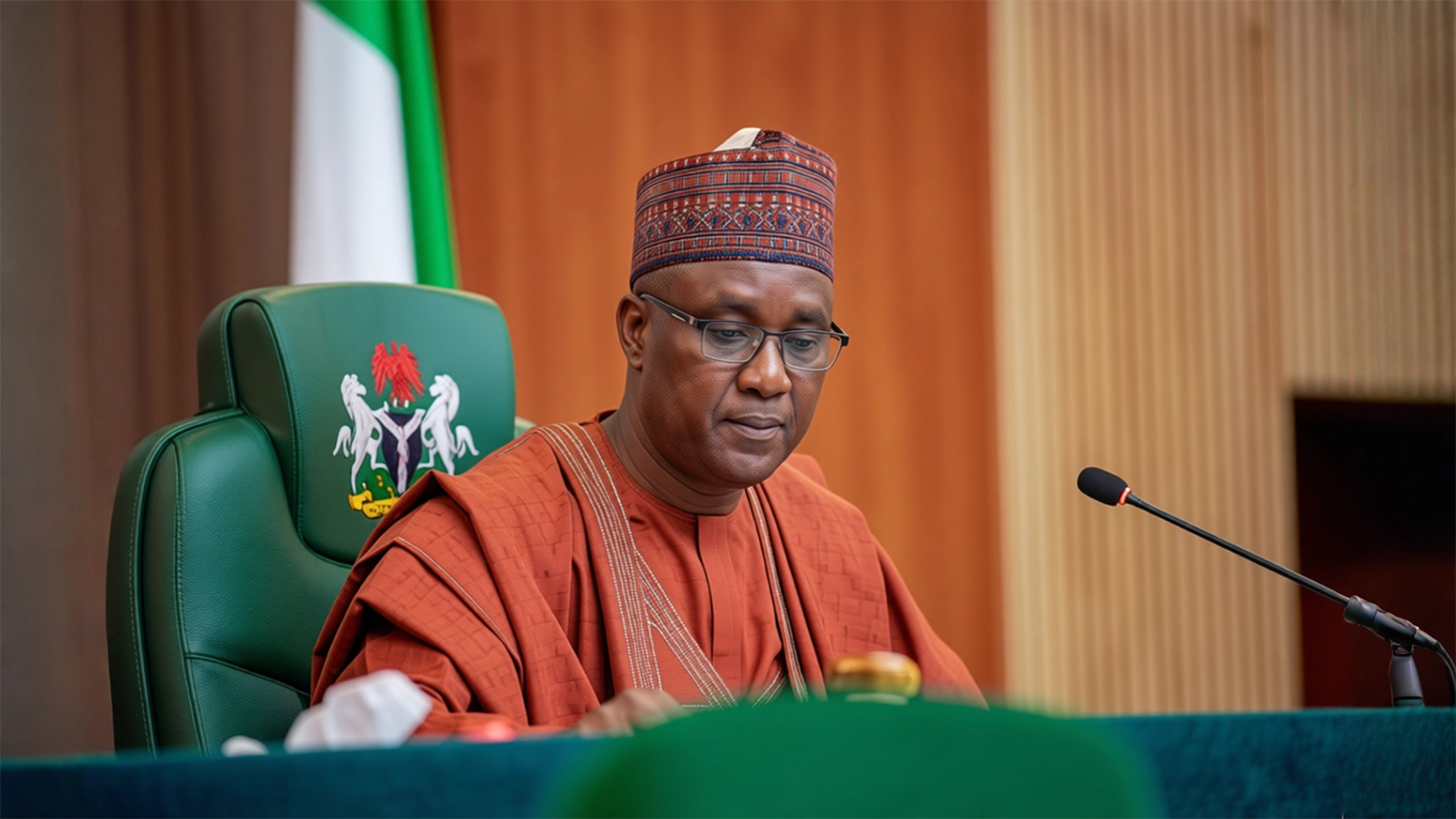
Speaker of the House of Representatives, Abbas Tajudeen, on Tuesday declared that Nigeria’s future depends on raising a generation of well-prepared, ethical and institution-minded young leaders, insisting that young people must no longer be viewed merely as the leaders of tomorrow but as active participants in shaping the country’s future today.
Abbas stated this in Abuja at the launch of the Leadership for Equity, Advocacy and Development (LEAD) Fellowship, an 18-month leadership programme organised by the Gender Mobile Initiative (GMI) to train 1,000 student leaders drawn from 10 tertiary institutions across the country.
Represented by the Chairman of the House Committee on Women Affairs and Social Development, Hon. Kafilat Ogbara, the Speaker said Nigeria must deliberately invest in preparing young people for positions of leadership by equipping them with the knowledge, ethical values, institutional exposure and leadership skills needed to transform ambition into meaningful public service.
He stressed that leadership extends beyond occupying political office, describing it as a responsibility anchored on accountability, integrity and respect for democratic institutions and the rule of law.
“It is high time we prepared young people for power. As the trustees of our tomorrow, they must understand how government works and how to use political office to change society for the better. Without this preparation, they risk squandering the opportunity to effect real, lasting good,” Abbas said.
He commended the LEAD Fellowship for targeting tertiary institution students, describing the initiative as a strategic investment in Nigeria’s democratic future.

According to him, young Nigerians are already contributing as voters, innovators, entrepreneurs and community leaders and should be empowered to influence decisions affecting their lives.
“The youths are no longer merely the leaders of tomorrow; their time has come. As voters, innovators, entrepreneurs and community leaders, they deserve the power to influence the decisions that shape their lives today,” he said.
Abbas noted that the fellowship would nurture a new generation of leaders capable of understanding public policy, questioning the exercise of power and strengthening institutions that outlive individuals.
He praised the programme’s commitment to inclusion, saying democracy can only thrive when women, persons with disabilities and other historically marginalised groups are fully represented in governance.
“The inclusion of women, persons with disabilities and historically marginalized groups is not an act of benevolence. It is a matter of basic justice, democratic legitimacy and institutional effectiveness. A democracy that excludes large sections of society cannot be said to be representative,” he stated.
The Speaker reiterated the House of Representatives’ commitment to expanding women’s participation in politics through the proposed constitutional amendment seeking the creation of special seats for women in the National Assembly and State Houses of Assembly.
He explained that the proposal was intended to remove barriers preventing capable women from participating in politics rather than lowering leadership standards.
Abbas identified inadequate campaign finance, exclusion from political party structures, cultural stereotypes and electoral violence as some of the major obstacles limiting women’s political participation.
He challenged beneficiaries of the fellowship to focus on solving societal problems rather than merely seeking political offices.
“Nigeria does not need a generation that is simply more ambitious than the one before it. Our nation needs a generation that is wiser, more ethical, more inclusive, more technologically advanced and more institutionally minded,” he added.
To sustain the programme’s impact, Abbas proposed the establishment of a LEAD Alumni Policy Network to enable fellows to continue mentoring one another, conduct policy research and collaborate on initiatives that promote national development.
He reaffirmed the House’s readiness to partner with the Gender Mobile Initiative in promoting inclusive governance, citizen engagement and constitutional reforms aimed at widening political participation.
Executive Lead of the Gender Mobile Initiative, Omowumi Ogunrotimi, said the fellowship was conceived to bridge the disconnect between student leadership and opportunities for meaningful participation in governance after graduation.
She explained that the programme was inspired by the experience of a female student leader who questioned what opportunities existed for ethical student leaders after graduation despite navigating difficult campus politics.
According to Ogunrotimi, Nigeria faces what she described as a “democratic formation deficit,” where early leadership experiences are often shaped by patronage, transactional politics and exclusion, as well as a “transition deficit” that leaves many talented student leaders without structured pathways into governance.
She said the fellowship was designed to address both challenges by providing structured leadership training, mentorship, policy education and exposure to democratic institutions.
“Our ambition is to cultivate women and men whose exercise of leadership will be defined by ethics, constitutionalism, evidence, inclusion and an unwavering commitment to service because democratic stewardship does not emerge by accident,” she said.
Speaking, the House Spokesman, Rep. Akin Rotimi, urged young Nigerians to place character, competence and service above the pursuit of political power, saying effective leadership requires deliberate mentoring and preparation.
He described the fellowship as a timely initiative that aligns with the 10th House of Representatives’ commitment to inclusion, democratic participation and institutional reforms.
Rotimi said Parliament functions best when it works closely with civil society organisations and citizens, adding that the House has continued to expand public participation in lawmaking through its Legislative Agenda and youth engagement initiatives.
Director-General of the National Institute for Legislative and Democratic Studies (NILDS), Prof. Abubakar O. Sulaiman, represented by Dr. Shuaibu Danwanka, described the fellowship as a bold national investment in ethical leadership, democratic resilience and inclusive governance.
He said Nigeria requires leaders whose competence is matched by integrity, whose ambition is guided by service and whose authority is exercised with accountability.
Sulaiman warned that unless ethical values are deliberately nurtured from the formative stages of leadership, the country risks producing future leaders who replicate the negative practices of patronage, exclusion and abuse of authority rather than reforming public institutions.

