 Follow Us on Google News


 Follow Us on Google Discover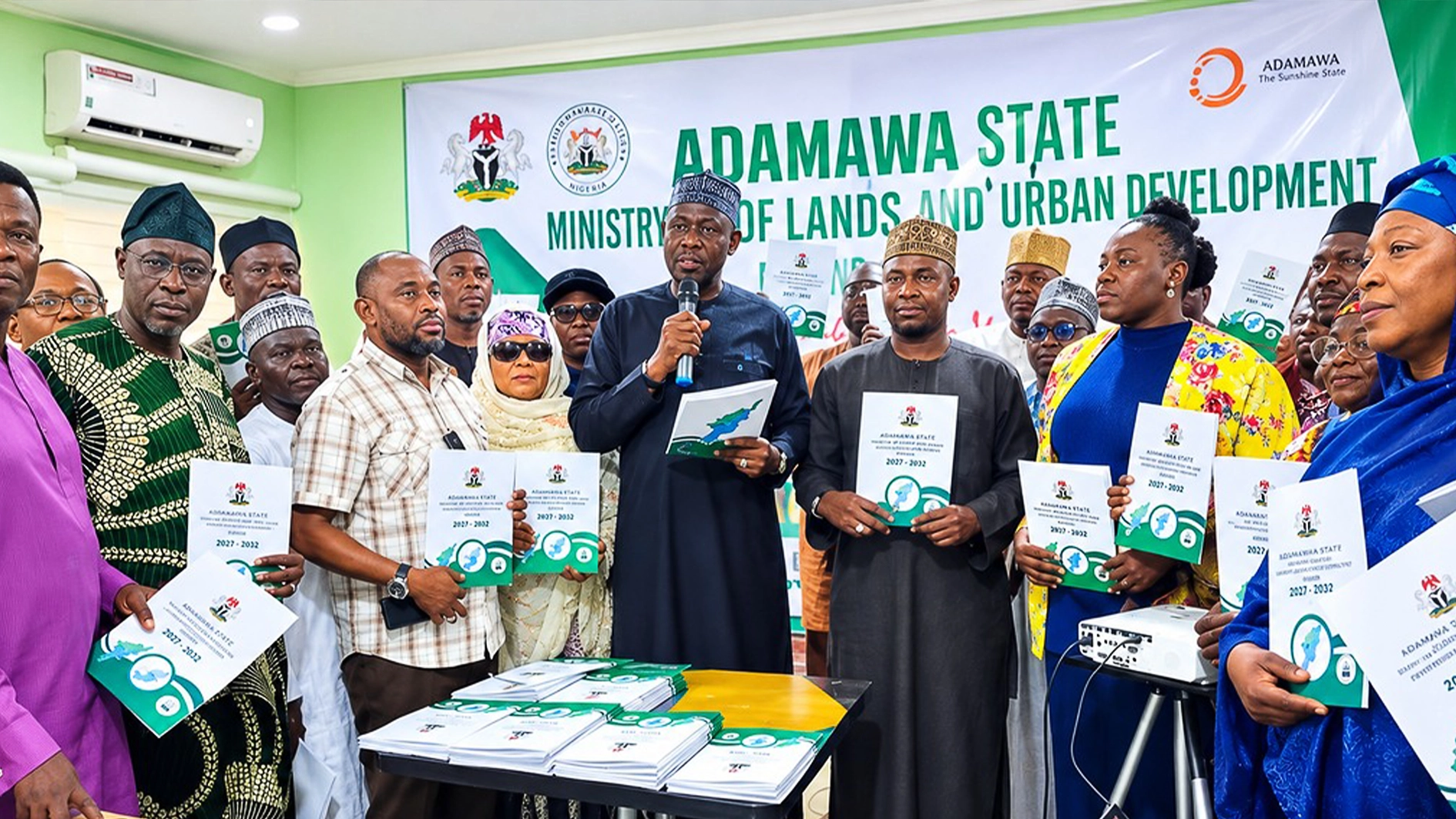
From Joy Dennis Yola
Adamawa State Government in partnership with the United Nations Children Fund UNICEF and National Institute for Educational Planning and Administration NIEPA, has unveiled a 10-year Education Sector Plan designed to tackle out-of-school children, improve learning outcomes and strengthen the education system, with stakeholders urged to translate the document into concrete action.
The state education Sector Plan SESP, supported by UNICEF with technical assistance from the National Institute for Educational Planning and Administration NIEPA, was formally disseminated yesterday in Yola as part of efforts to provide a long-term framework for the development of education in the state.
The Commissioner for Education and Human Capital Development, Garba Pella, said the dissemination marked the beginning of the implementation process, stressing that the major challenge confronting education planning was not the availability of documents but their implementation. He called on ministries, departments, agencies, development partners and other stakeholders to take responsibility for implementing the strategies contained in the plans.
Pella said the State Education Sector Plan SESP would run for 10 years and has provisions for monitoring and evaluation through measurable indicators to track progress throughout the period. He assured that the state would commence implementation and work towards ensuring that the objectives outlined in the plan are achieved.
UNICEF Education Specialist for the Bauchi Field Office, Abdulrahman Ibrahim Ado, said the plan was developed to provide Adamawa with a clear roadmap for addressing major challenges in education, particularly access to schooling and quality learning.
According to him, the framework would help the state tackle the problem of school age children who are out of school while improving learning outcomes.

He explained that the 10 year SESP had been broken down into a three-year State Education Sector Operational Plan SESOP, alongside Local Education Sector Operational Plans LESOPs, developed at the local government level.
He noted that the bottom approach would enable local governments to identify and prioritize their own education needs while aligning them with the broader priorities of the state.
He added that the plans were developed by state and local government technical teams, with UNICEF providing technical and financial support and NIEPA contributing technical expertise. Ado added that UNICEF would further train stakeholders on effective implementation, while the plans were designed to be gender-sensitive, climate-resilient and disability-inclusive.
The Director-General of NIEPA, Dr A.D. Shofoyeke represented by UNICEF Desk Officer Dr Sunday Adegbesan said the collaboration with UNICEF covered Adamawa, Enugu, Jigawa, Sokoto and Lagos states, with the process beginning in 2025 through scoping, review of existing education plans, training of education managers and development of the sector plans. He urged states to use the operational plans as the basis for preparing annual education budgets, noting that the plans address access, reduction of out-of-school children, inclusive education, infrastructure, teacher development, quality learning, stakeholder engagement and education financing.

