 Follow Us on Google News
 Follow Us on Google Discover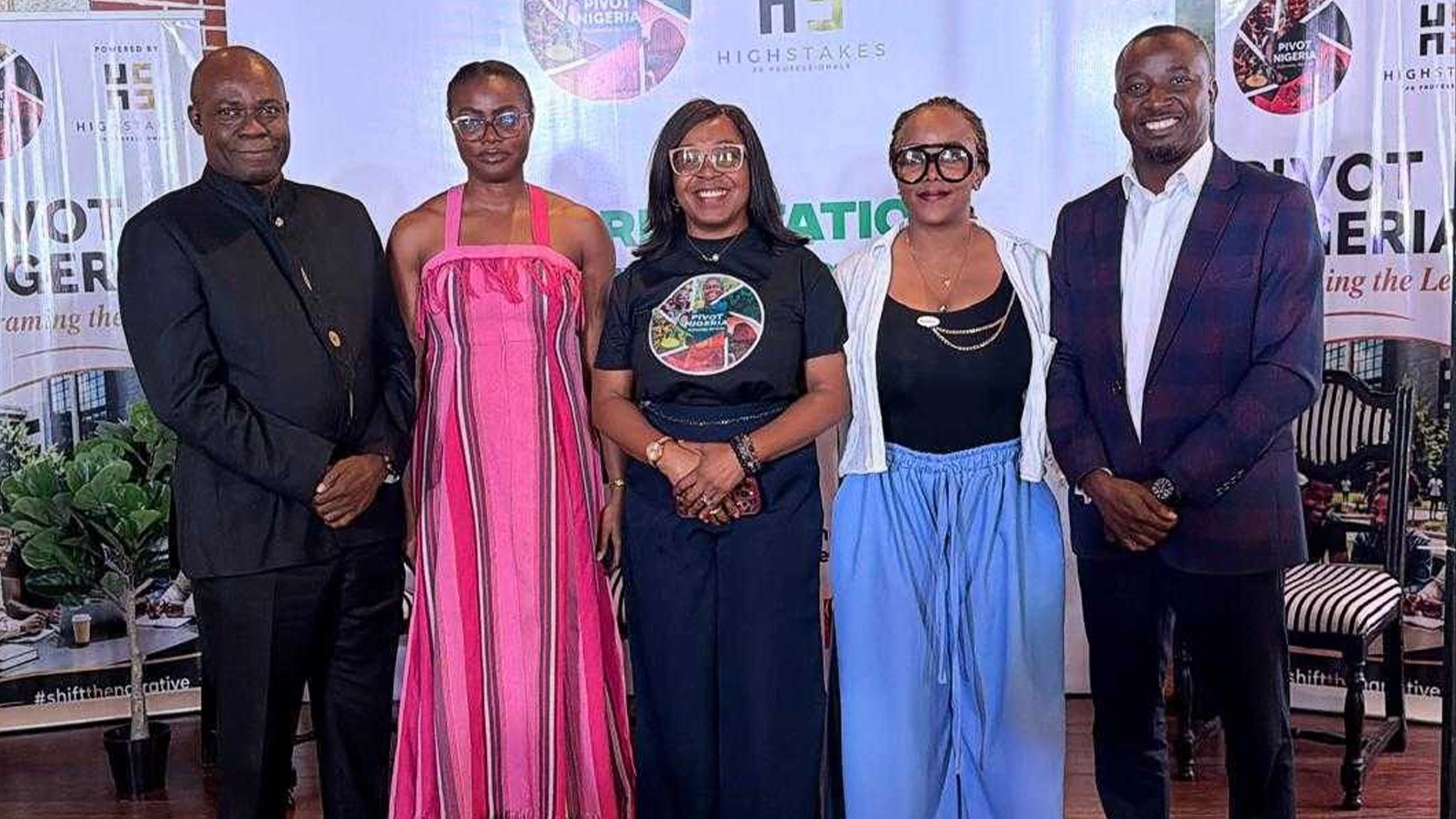
***Say Nigerians don’t hold leaders accountable enough
Stakeholders have called on Nigerians and the Nigerian government to challenge established narratives about Nigeria while amplifying authentic stories capable of influencing perceptions and strengthening the country’s reputation.
They made the call at the maiden edition of the Pivot Nigeria Conference, held at La Scala, MUSON Centre, Lagos.
The conference, with the theme, “The Reputation Dividend: Who Pays for Nigeria’s Perception?”, examined the cost of Nigeria’s global perception, the roles of government and citizens, and others.
The Convener, Pivot Nigeria, Victoria Uwadoka, said that reputation is not just a fancy word but a critical aspect of our lives and that every organisation or individual needs reputation management.
She said that reputation management is an infrastructure on which trust is built and that trust sustains businesses and individuals in the long term.

“As Nigeria approaches 66, this is a better time to talk about Nigerians, where we are and what we need to do going forward. There is a lot about us that is great. We’ve made progress in many ways. We have become more aware in the last 10 years that nobody will fight for us. We must know that we are responsible for our reputation.”
“Do our years as a country equate with our experience? No. Experience is about what you have done with what you have been through. As a nation, we’ve built the framework, we have great policies and now it’s time to start implementing them to get the gains and benefits of the dividends we look for as a nation.”
On what can be done to repair the reputation of Nigeria, she said: “It starts from inside. If we believe in ourselves, we will begin to drive the changes. I listened to the founders of some of the unicorns we have in Nigeria, and one thing stands out: they believe in themselves. They built skills in Nigeria, invested them in Nigeria, and they believe in the Nigerian market. So, what do we need to do? The government needs to create an enabling environment, develop policies, build the infrastructure, and ensure stable electricity.”
On the aim of the conference, she said: “Pivot was created to interrogate how we see ourselves as Nigerians, and, with that, to shape how others see us. This is about the collective of us as Nigerians, understanding that we are great people, we have brains and we are creators, and we need to let others know that about us. I want this platform to convince people not to trash Nigeria. People should be balanced in their storytelling about Nigeria.”
Speaking on “Engage, Challenge and Push Back,” she said: “Sometimes people disengage when it comes to elections; you choose your leader and your decision not to participate in an election is a decision in itself, and you shouldn’t complain about whoever emerges the winner. You have to challenge when something is not going the way it should go. Hold power and people accountable. Push back when things are not working the way they should; don’t just stand, push back the boundaries.”
On the misconception Nigerians need to change about themselves, former Delta State Commissioner for Culture and Tourism, Richard Mofe-Damijo (RMD), said: “We are too quick to condemn us. Reframing the lens through which we look at Nigeria is not saying there are no problems but saying that we need to fix them. Don’t stand and just criticise but proffer solutions. There is a problem, but what do we do about it?
“Remember that you are an ambassador not only for yourself or your parents but for your country. The people get the leadership they deserve. Americans built America, so Nigerians have to build Nigeria.”
On what can be done to reshape Nigeria’s reputation, he said: “We must hold leadership accountable. We don’t hold leadership accountable enough. If we do, when they come in, they will know that they are responsible for the people they represent.”
Also, Adetokunbo Modupe, who spoke on the topic, “Reputation Dividend: Who Pays for Nigeria’s Perception?”, said that every Nigerian pays for how the country is perceived and that when Nigeria’s reputation improves, all Nigerians benefit.
He said that national reputation is much more than a PR issue but an economic, investment, talent, diplomatic issue and, ultimately, an issue of national confidence.
“Reputation is an invisible asset. When it is strong, doors open faster. When it is weak, everything becomes harder. An investor asks more questions. A tourist hesitates. A Nigerian entrepreneur abroad may have to prove credibility before proving capability. Sometimes, the Nigerian passport enters the room carrying assumptions before the Nigerian does. That is the reputation tax.
“We don’t see it in the national budget. We see it in lost opportunities, additional scrutiny and diminished trust.”
Modupe, who represented the President of the Nigerian Institute of Public Relations, Dr. Ike Neliaku, added that when a country is trusted, its people enter rooms differently. Its businesses negotiate differently. Its products travel differently. Its culture commands greater attention and value.
“I believe Nigeria does not have a story problem. We have a story-management problem.
“Our stories are everywhere: Afrobeats. Nollywood. Fashion. Technology. Entrepreneurship. Sport. Literature. Science. Our young people. Our diaspora. Our creativity. Our resilience. Our diversity. And our extraordinary ability to survive and increasingly, to succeed. The challenge is that our liabilities are sometimes better organised storytellers than our assets.
“So we must become better at identifying, organising and amplifying the stories that represent the Nigeria we want the world and Nigerians themselves to experience.
“You cannot advertise your way out of a reputation problem. You cannot slogan your way out of institutional failure. You cannot communicate confidence into existence.”
He added: “National reputation sits at the intersection of performance, experience, policy and communication, and we must acknowledge another challenge.”
“National reputation cannot belong to one administration, one political party, one institution or one campaign, so we must treat national reputation not as a campaign, but as a system. First, we must measure it continuously. What do Nigerians think? What do investors and visitors think? What does the diaspora think? What are our strongest associations and our biggest liabilities?
“Second, we need a national story bank to identify and document our innovators, entrepreneurs, scientists, creatives, athletes, businesses, communities, and the Nigerians doing extraordinary things quietly every day. The Nigerian story does not belong to the government; it belongs to Nigerians.
“Third, we must understand that experience is a reputation. Every experience either deposits into or withdraws from our national reputation account. Every reform that works contributes to reputation. Every transparent institution contributes. Every successful Nigerian contributes.
“Every world-class Nigerian product contributes. Every positive experience contributes. And every story of Nigerian excellence contributes.
“So perhaps the most important question is not simply what the world thinks about Nigeria. Nigeria does not need another beautiful story that reality cannot sustain. We need a credible story supported by credible action. We don’t need to hide our weaknesses. We need to fix them.
“We don’t need to exaggerate our strengths. We need to organise them, demonstrate them and amplify them.
“A reputation is not built by one campaign. It is built by thousands of actions, repeated over time, and experienced by millions.
“That is why national reputation is everybody’s business and that is why the reputation dividend belongs to everybody.”

