 Follow Us on Google News


 Follow Us on Google Discover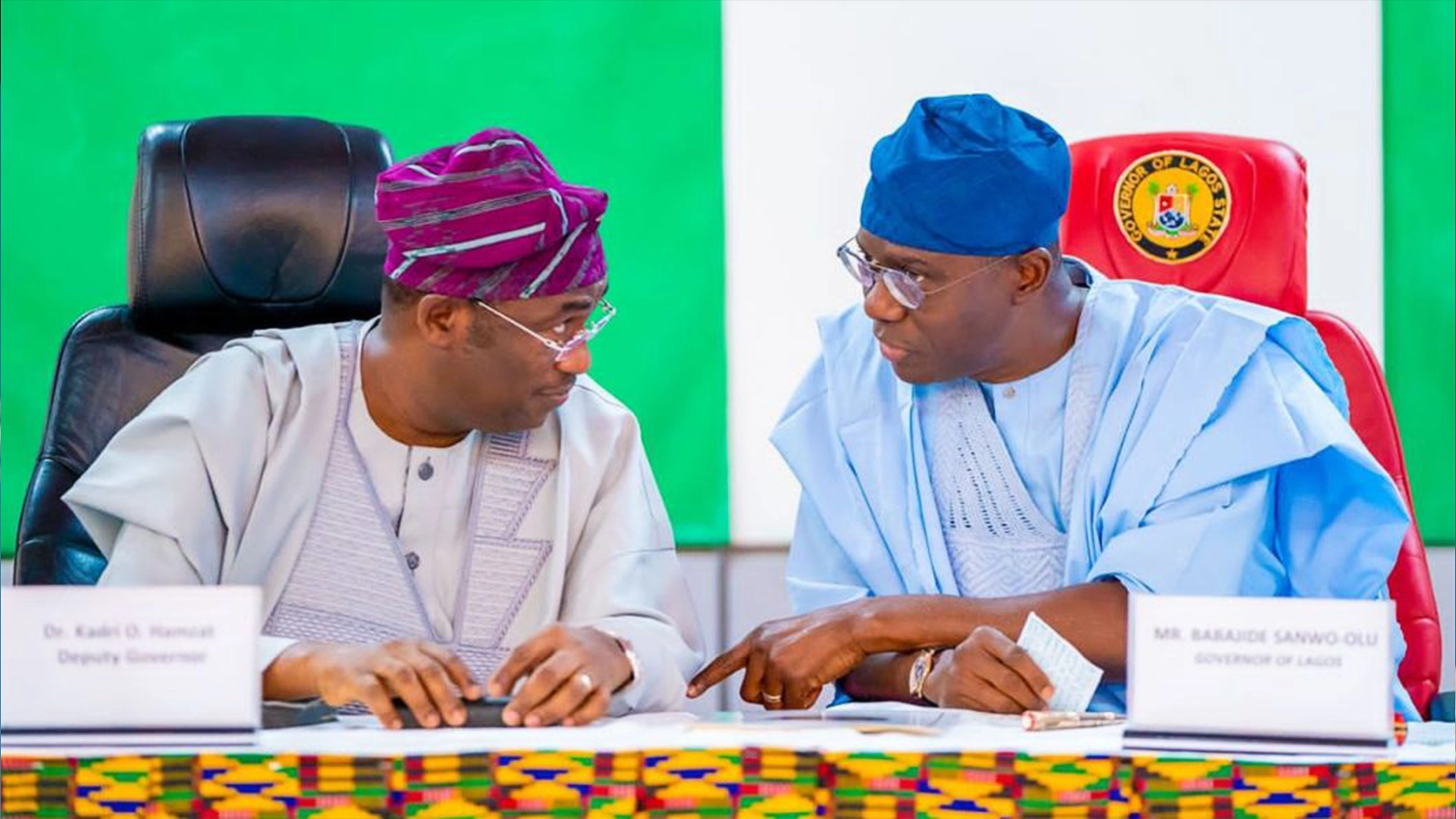
Lagos State Governor, Mr Babajide Sanwo-Olu, on Wednesday, commissioned the Mid-Level Agro-Produce Hub, Agege, as part of efforts to boost food security in the state, stating that his administration places food security at the heart of his development agenda, especially that it recognizes that the prosperity of Lagos is inseparable from the strength and efficiency of its food system.
Speaking at the commissioning programme, Sanwo-Olu, said that his administration began to rethink the food system of Lagos in 2021, and the decision was guided by a simple but fundamental reality: feeding Lagos is not a production challenge alone.
“It demands the transformation of the entire food system. Lagos is Nigeria’s largest food market and one of Africa’s fastest-growing urban centres. With a population of over 25 million people, our demand for food is enormous and grows every day. Yet over 70 per cent of that food is produced outside our borders. It travels long distances through fragmented supply chains before reaching our markets, exposing our residents to high transportation costs, post-harvest losses, poor storage, supply disruptions, and price volatility.
“We therefore understood that producing more food is not enough. We had to transform the entire chain, from production through aggregation, logistics, and processing, to the markets themselves. That understanding gave birth to the Lagos State Food Systems Transformation Agenda: our comprehensive response to the challenge of feeding Lagos sustainably, affordably, efficiently, and safely.
“At the centre of this Agenda is the Lagos Central Food Systems and Logistics Hub at Ketu-Ereyun, Epe, the flagship food infrastructure project of this Administration. Equipped with modern cold and dry storage, processing and repackaging centres, quality-control laboratories, warehouses, logistics bays, and digital trading platforms, it is designed to become the largest food logistics hub in Sub-Saharan Africa, with the capacity to service more than 1,500 food trucks daily and to handle over 1.5 million metric tonnes of food annually. I am pleased to announce that work on this project is at an advanced stage, and it will be commissioned before the end of this Administration.
“But one central facility, however large or sophisticated, cannot by itself serve the food-distribution needs of a megacity. This is why we created a network of Mid-Level Agro-Produce Hubs, beginning with the Fresh Food Hub, Mushin, commissioned in December 2023, and the Fresh Food Hub, Abijo, commissioned by His Excellency, President Bola Ahmed Tinubu, earlier this year.”

Sanwo-Olu stated that these hubs shorten supply chains, reduce unnecessary layers of intermediation, improve produce handling, and make food distribution more efficient. “The results speak for themselves. Since its commissioning, the Fresh Food Hub, Mushin, has recorded transactions valued at over ₦4 billion across 228 market days, with more than 850 registered vendors and over 7,000 direct and indirect jobs created. Well-designed market infrastructure does far more than provide a place to sell food: it improves farmers’ incomes, reduces post-harvest losses, creates jobs, and strengthens local economies.
“Today, we proudly add Agege to that network. This Hub is strategically located to serve Agege and its neighbouring communities, while strengthening the wider food-distribution network across Lagos. It represents our commitment to bringing modern food infrastructure closer to the people, to the communities where Lagosians buy, sell, and consume food every day. To the traders, farmers, and aggregators who will work here: this facility was built for you, and its success now rests in your hands.
“Supporting this infrastructure is the Produce for Lagos Programme, launched in July 2025 alongside the ₦500 billion Offtake Guarantee Fund. Produce for Lagos represents a fundamental shift from a supply-driven to a demand-driven agricultural model. Rather than producing without certainty about where their output will be sold, farmers, within Lagos and across our partner states, now produce against the organized, guaranteed demand of the Lagos market. This addresses the two critical challenges farmers face: financing and market access. It reduces distress sales, improves incomes, and encourages greater investment in agricultural production.”

