 Get Guardian on Google
Officials of the Textile Workers Union, under the umbrella of National Union of Textiles Garment and Tailoring Workers of Nigeria (NUTGTWN) have asked politicians and their political parties to account for the collapse of nation’s economy, particularly the industrial sector as they justle for power in the forthcoming 2027 general elections.
The Textiles Union leaders lamented that the country’s economy has nosedived under past and present leadership in Nigeria, even as the condition of living of workers has continued to detoliorate.
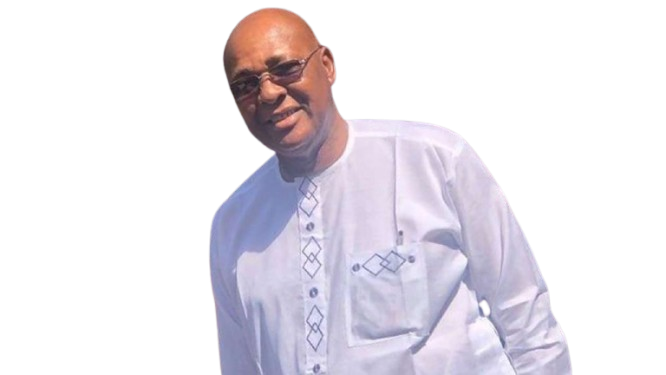
Speaking at the opening of the 38th Education Conference of NUTGTWN in Osun State, the President of Textiles Workers’ Union, Peters Godonu said in an address, “this year’s theme is both timely and strategic. Nigeria’s industrial sector particularly the textile, garment and tailoring industry continues to face enormous challenges.”
According to him, “the consequences are far-reaching. Workers have lost their jobs and livelihoods, employers have lost productive investments, communities have suffered economic decline, and thousands of self-employed tailors and garment makers continue to struggle with limited access to finance, modern equipment, affordable raw materials and organized markets. These realities make industrial revitalization an urgent national priority.”
“Equally important is the relationship between industry, labour and democratic governance. A sustainable democracy must deliver tangible improvements in the living and working conditions of citizens. It must create opportunities for productive employment, protect workers rights, promote social justice and ensure that the benefits of economic growth are broadly shared”, he said.
Godonu remarked, “as we approach the 2027 general elections, this conference provides an important platform for workers, employers, trade unions and other stakeholders to examine the relationship between democratic governance and economic development”, pointing out , “we must move beyond political promises to measurable performance and accountability; we must ask important questions about the state of our industries, the quality of jobs being created, the welfare of workers, the protection of local enterprises and the extent to which government policies are promoting productive investment”.
He explained further, “our expectation is that the conference will provide an opportunity for constructive engagement, critical reflection and the articulation of practical policy recommendations that can advance industrialisation, decent work, social dialogue and democratic consolidation in Nigeria.”
The Labour leader stressed that “our union believes that industrial development, employment generation and workers’ welfare must occupy a central place in the national political discourse”, while adding that “elections provide citizens with an opportunity to assess the performance of political officeholders and make informed decisions about the future of their country.”
He continued: “we expect political parties and candidates seeking public office to demonstrate clear and practical commitment to rebuilding Nigeria’s productivity capacity. We believe a strong industrial base is essential for a stable democracy just as a stable and accountable democratic system is necessary for sustainable industrial development.”
He added, “the relationship between industry, labour and democracy must therefore be strengthened in the interest of Nigeria and its people. Democracy must translate into economic opportunities, social protection, decent employment and improved living standards for the people.”
Besides, Godonu noted that “this year’s conference is also significant because it provides us with an opportunity to commemorate the 2026 Africa Industrialisation Day”, pointing out,
“Africa Industrialization Day is long dated. It holds on November 20 each year as declared by the AU and the United Nations General Assembly. It was first observed on November 20, 1990.”
Said he: “since 2012 our union has consistently commemorated Africa Industrialization Day (AID) through policy dialogue and stakeholder engagement on various issues relating to industrialisation and sustainable development. We particularly acknowledge the invaluable partnership of the Friedrich Ebert Stiftung (FES), whose successive Resident Representatives have supported our annual policy roundtables, bringing together government institutions, employers, organized labour, development partners and other critical stakeholders to examine the challenges of industrial development in Nigeria and make recommendations for policy action”.