 Follow Us on Google News


 Follow Us on Google Discover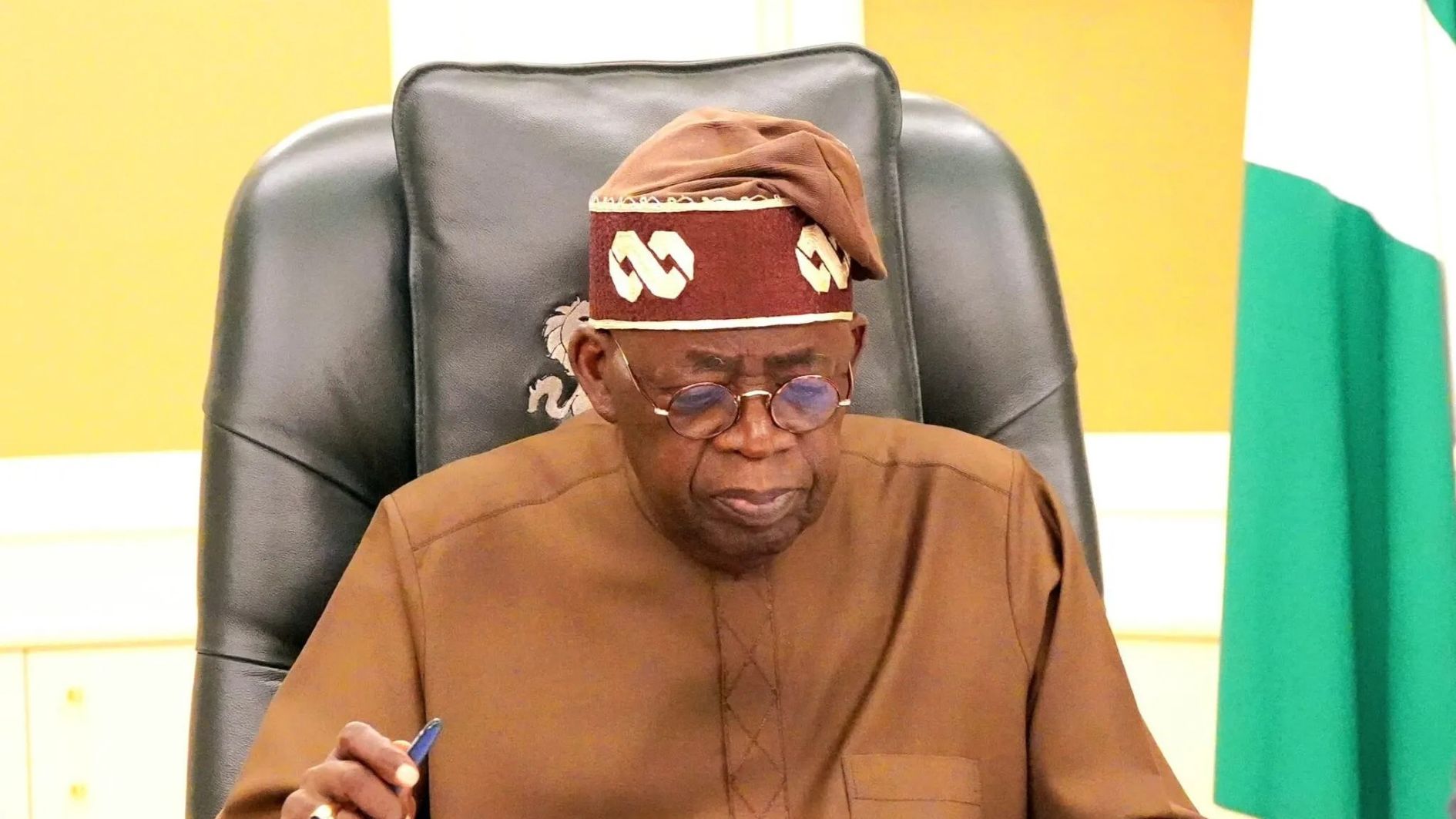
President Bola Tinubu has defended the economic reforms introduced by his administration, saying Nigeria had avoided fiscal collapse and was now showing signs of recovery after three years of “difficult but necessary decisions”.
In a nationwide address to mark the third anniversary of his administration, Tinubu acknowledged the hardship caused by the removal of fuel subsidy and foreign exchange reforms but maintained that the measures had begun to stabilise the economy and restore investor confidence.
The President said his administration inherited “profound economic and structural difficulties”, including mounting fiscal pressures, unsustainable subsidies, declining revenues, exchange-rate distortions, rising debt-servicing costs, insecurity and weakening public confidence in institutions.
“At the height of the subsidy regime, Nigeria was spending as much as N18.4 billion daily to sustain petrol subsidies—over N4 trillion in 2022 alone—resources that could have been invested in roads, healthcare, education, housing, and critical infrastructure,” he said.
He added that multiple exchange-rate windows and forex arbitrage had cost the country more than N8 trillion in three years through “rent-seeking and speculative practices”.
According to Tinubu, the situation required urgent intervention to prevent a deeper national crisis.

“Had we refused to act, our nation would have drifted toward fiscal breakdown, worsening poverty, and severe economic uncertainty. Together, we chose reform over ruin and decisiveness over hesitation.”
The President admitted that the reforms triggered a sharp rise in the cost of living and placed pressure on households and businesses across the country.
“These decisions came with sacrifice. The rising cost of living triggered by our measures placed enormous pressure on families, workers, and businesses,” he said.
“I remain deeply conscious of those sacrifices, and I assure you: your sacrifice has not been in vain.”
Tinubu said the economy was now “more competitive and better positioned for sustainable growth” than it was in 2023, adding that public finances had improved while states and local governments now had more resources to invest in development.
He also cited gains in the capital market, saying the All-Share Index had risen from 53,000 in 2023 to 250,000 in 2026, while market capitalisation increased from N30 trillion to N160 trillion.
“Companies are declaring record profits and dividends,” he said.
The President highlighted infrastructure development as one of the major achievements of his administration, stating that over 2,700 kilometres of highways and major roads were under construction, reconstruction or rehabilitation nationwide.
The projects, he said, included the Lagos-Calabar Coastal Highway, Sokoto-Badagry Super Highway, Abuja-Kaduna-Zaria-Kano Road and the East-West Road.
“Significant sections are already completed or nearing completion, improving transportation, reducing travel time, boosting regional trade, and creating thousands of jobs,” he said.
Tinubu also said rail modernisation projects were ongoing to improve connectivity and logistics across the federation.
In the oil and gas sector, the President said reforms introduced by his administration had attracted fresh investments from international oil companies.
He said the $5 billion NLNG Train 7 project was nearing completion and would boost liquefied natural gas production and exports.
“Local refining capacity has improved our energy security. With large-scale domestic and modular refineries operational, Nigeria is reducing its dependence on imported petroleum products and conserving foreign exchange,” he said.
On electricity supply, Tinubu said the government was addressing long-standing challenges in the power sector through investments in transmission infrastructure, renewable energy and grid expansion.
“Our administration is clearing legacy obligations, expanding transmission infrastructure, investing in renewable energy, and strengthening the national grid because no modern economy can grow in darkness,” he said.
The President also outlined interventions in agriculture, education, housing and healthcare.
According to him, government programmes had supported millions of farmers through improved seedlings, fertilisers, mechanisation and irrigation, while agricultural corridors were being opened to strengthen supply chains and reduce pressure on household incomes.
Tinubu said the Nigerian Education Loan Fund had provided more than 1.5 million students access to higher education, with over N282 billion disbursed in student loans.
He added that the Renewed Hope Housing Programme and projects by the Federal Housing Authority were delivering more than 10,000 housing units across 14 states and the Federal Capital Territory.
“Our consumer credit initiative, CREDICORP, is opening up new economic opportunities for workers and families,” he said.
The President said thousands of primary healthcare centres were being revitalised, while health insurance coverage for vulnerable Nigerians was being expanded.
Tinubu also spoke on telecommunications and digital development, saying steps had been taken to restore investor confidence in the telecoms sector after years of operational challenges.
“Telecom operators are expanding networks, investing in infrastructure, recruiting Nigerian talent, and widening digital access across the country,” he said.
Addressing young Nigerians, the President described youths as “the engine of Nigeria’s future” and said the government was investing in digital skills, innovation, technical education and enterprise support.
On security, Tinubu said the Armed Forces and security agencies had intensified operations against terrorists, kidnappers, bandits and oil thieves.
“While challenges remain, many communities and highways are becoming safer and more economically active,” he said.
“We continue investing in intelligence, surveillance, logistics, technology, and inter-agency coordination.”
The President, however, acknowledged that the country had not overcome all its challenges.
“We have not solved every problem, and we are not yet where we want to be. But the foundation for recovery has been laid,” he said.
He said the next phase of governance would focus on ensuring that the benefits of reforms were more directly felt by ordinary Nigerians through lower food and transportation costs, expanded enterprise opportunities and job creation.
“We shall achieve this task by continuing to ensure that food prices, which have largely come down from their peak in 2023/2024, remain low,” he said.
Tinubu called for national unity and urged Nigerians to remain hopeful despite present difficulties.
“We must choose hope over despair, unity over division, and nation-building over narrow interests,” he said.
Afenifere criticises Tinubu’s three years in office, APC chieftain defends reforms
MEANWHILE, the pan-Yoruba socio-political organisation, Afenifere, yesterday criticised the administration of President Bola Tinubu, describing the last three years as a period marked by poverty, unemployment, insecurity and weakening democratic institutions.
The group, however, faced opposition from an All Progressives Congress (APC) chieftain, Chief Jamiu Ekungba, who defended the administration, insisting that Tinubu had taken difficult decisions that previous governments had avoided for decades.
In a statement signed by its Leader and National Publicity Secretary, Oba Oladipo Olaitan and Prince Justice Faloye, Afenifere said it was worried about what it described as the current direction of Nigeria’s democracy.
The group urged the administration to abandon what it called a drift toward one-man rule by allowing credible opposition voices and parties to thrive.
The statement read: “On May 29th, formerly Democracy Day, now Inauguration Day, Afenifere is fearful of the current course of our democracy, and commiserates with Nigerian citizens following three years of the inauguration of this maladministration that has bred poverty, unemployment, mass killings and kidnappings, tampering with democratic federalism and subjugation of other arms of government.
“Across the world, citizens are motivated by their governments either with Summum Malum – fear of ultimate evil – violent death, poverty, tyranny, or Summum Bonum – promise of ultimate good – homes, prosperity, security.
“For an administration that came to power on a mantra of renewed hope, we can only dare to hope that our electoral system can do the right thing by the next Inauguration Day.”
Afenifere accused the APC-led government of failing to address insecurity and criticised the absence of state and community policing.
“The nightmare of ultimate evil has become a reality under APC administration with teachers being beheaded, children being kidnapped and villages ransacked and displaced,” the statement said.
“The ongoing kidnapping of students and teachers and gruesome murders in Kwara, Oyo and other states is a painful reminder of the Tinubu government’s culpable wilful negligence of not restructuring our security architecture, especially the failure to create state and community police.”
The group also alleged that democratic institutions were being undermined under the current administration.
“The continued institutional bullying of opposition parties, labour and student unions is a defiant march towards fascism. The independence of our electoral and judicial institutions is being compromised. Instead of our electoral system evolving to a higher state, new reforms have degraded its moral compass,” it stated.
On the economy, Afenifere faulted the administration’s economic policies, saying they had worsened poverty and hardship across the country.
However, APC chieftain Ekungba defended Tinubu’s reforms, saying the President confronted economic challenges successive administrations avoided because of political considerations.
According to him, the economy would remain the major issue ahead of the 2027 general election because Nigerians were primarily concerned about inflation, cost of living and purchasing power.
“For millions of Nigerians, the election may revolve around one question: Are we better off than we were four years ago?” he said.
Ekungba maintained that the removal of petrol subsidy was necessary despite the hardship that followed.
“The problem of economic hardship did not start today. Successive governments avoided confronting subsidies because of political fear. President Tinubu took the risk because he believed the country could no longer sustain it,” he added.
He also linked worsening insecurity to opposition from interests affected by the administration’s reforms.
According to him, some powerful groups that benefited from the previous subsidy regime might be working against the government through political and economic sabotage.
Ekungba urged the ruling party to improve engagement with citizens and communicate the long-term benefits of the administration’s reforms more effectively.
He added that developments in the next 12 months could shape the political landscape ahead of the 2027 elections.
“The next 12 months may eventually determine whether Tinubu consolidates power through improved governance and opposition disunity or whether worsening economic realities and shifting political alliances create the conditions for a major political upset in 2027,” he said.
Makinde asks FG to stop ‘deceiving Nigerians’ over state police
IN a related development, Governor Seyi Makinde of Oyo State urged the Federal Government to stop “deceiving Nigerians” over the proposed creation of state police, insisting that states already possess the legislative capacity to establish their own policing structures.
Makinde made the remarks during the governorship and legislative primary elections of the Allied Peoples Movement (APM) held at the Watershed Event Centre, Old Ife Road, Ibadan.
The governor said insecurity remained one of the major priorities of his administration and defended the establishment of the Oyo State Security Network Agency, codenamed Amotekun, as a response to security challenges in the state.
“Some people will know insecurity was one of the major pillars of this administration when we established Omitutun phase one and phase two, and it will remain a major pillar. Before this government’s emergence, there was nothing like Amotekun in Oyo State. We wanted State Police. It was because we couldn’t get the State Police that we established Amotekun as a stopgap. They should stop wasting Nigerians’ time,” he said.
Makinde maintained that state police could be created through state legislatures without waiting for what he described as prolonged bureaucracy involving the Federal Government and the Nigeria Police Force.
He said the creation of Amotekun in the South-West provided a model for how state policing structures could emerge through legislation passed by state Houses of Assembly.
“We know how we established Amotekun. The Speaker of the Oyo State House of Assembly is here. We passed a common law in the whole of the South-West. The whole Houses of Assembly in all states in the South-West passed the law, and that led to the creation of Amotekun. The only state that didn’t create Amotekun is Lagos State, and we know it is because their boss didn’t want Amotekun,” he said.
The governor called on the Federal Government to empower state assemblies and support efforts toward decentralised policing.

