 Follow Us on Google News



 Follow Us on Google Discover
By Abiodun Oluwadare
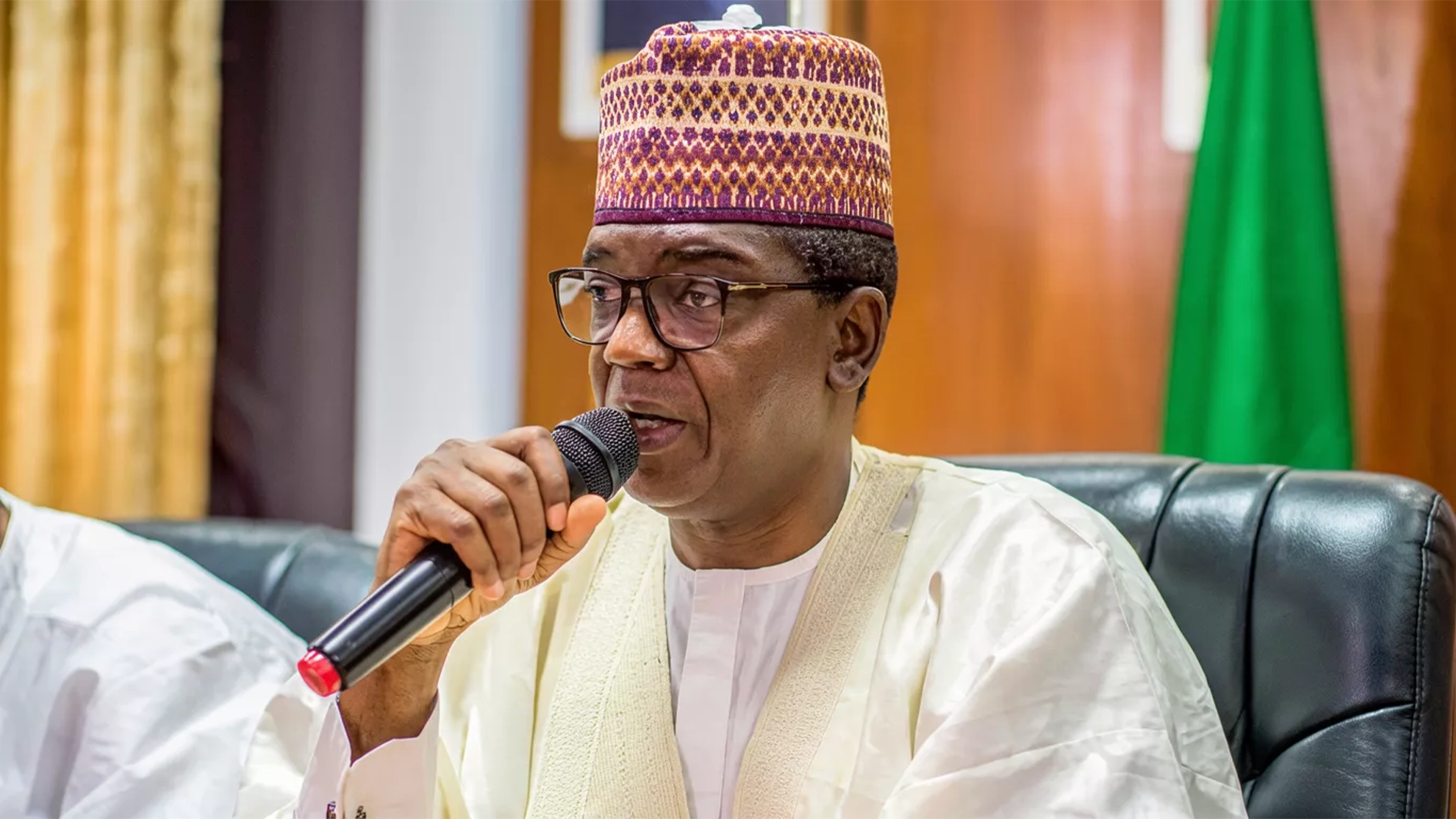
In public leadership, attention is often drawn to those who occupy the highest offices, command the largest institutions or make the loudest declarations. Yet, the effectiveness of government is not determined solely by the visibility of its principal officeholders. It also depends on the capacity of other members of the governing team to exercise restraint, sustain institutional relationships and contribute to the achievement of collective objectives without allowing differences in status or authority to become sources of discord. It is against this background that the stewardship of Dr Bello Mohammed Matawalle, Nigeria’s Minister of State for Defence, deserves closer examination.
Since assuming office in August 2023, Matawalle has served within a ministry entrusted with one of the most consequential responsibilities of the Nigerian state: the defence of the country’s territorial integrity and the protection of its citizens against an increasingly complex array of security threats. His tenure has coincided with persistent challenges involving terrorism, armed banditry, kidnapping and other forms of organised violence. These circumstances make the defence portfolio exceptionally demanding and provide an important context for assessing his contributions. His performance should neither be judged by ceremonial appearances alone nor separated from the difficult national security environment in which the ministry operates.
One of the more interesting features of Matawalle’s tenure is the continuity of his service through a change in the ministry’s substantive leadership. Appointed alongside former Minister of Defence Mohammed Badaru Abubakar in August 2023, Matawalle continued in office following the appointment of General Christopher Musa as Minister of Defence. The arrangement provides an opportunity to reflect on an often-overlooked dimension of leadership: the ability to function effectively within a hierarchy while maintaining the dignity of one’s office and respecting the responsibilities of others.
There is something instructive about the position of a minister of state. Although the office carries considerable responsibilities, it operates within a structure in which another minister holds the principal portfolio. The relationship requires an appreciation of institutional boundaries, cooperation and a willingness to contribute to a common purpose. Where such an arrangement functions constructively, it demonstrates the importance of collective responsibility in government.
Matawalle’s continued presence in the ministry may therefore be read as an occasion to examine the value of humility in public service. Humility, properly understood, is not weakness, an absence of ambition or an unwillingness to exercise authority. It is the ability to recognise that public office exists to serve institutional and national objectives rather than personal pride. It is also the willingness to work within an established order, contribute to collective decisions and recognise that leadership can be exercised without occupying the highest position in a hierarchy.

This interpretation should not be mistaken for an assumption that every aspect of the ministry’s internal relationships is known to the public. Nevertheless, institutional continuity is worth acknowledging, particularly in a political environment where differences in rank, influence and access can sometimes complicate working relationships. The relevant question is whether the arrangement translates into effective coordination, clear responsibilities and better public service. That is the standard against which the value of such continuity must ultimately be measured.
Beyond the question of institutional relationships, Matawalle’s stewardship can be examined through his involvement in the country’s security response. In March 2024, he called for intensified military operations against terrorists and bandits in the North-West and emphasised the need for greater synergy among the armed services. In January 2025, while presenting the Ministry of Defence’s budget proposal to the National Assembly, he drew attention to the need for adequate funding, modern equipment and improved operational capacity. He specifically identified the limitations imposed by insufficient military hardware, including armoured personnel carriers. These interventions reflect an understanding that the performance of the Armed Forces depends not only on the courage of personnel but also on the equipment, resources and coordination available to them.
Such advocacy is relevant because national security is not achieved by rhetoric or military deployments alone. It requires sustained investment, intelligence cooperation, effective command structures, logistics, personnel welfare and the capacity to adapt to changing threats. A minister who brings these issues before the appropriate institutions performs an important part of the policy process. The ultimate test, however, is whether advocacy leads to measurable improvements in operational readiness and the protection of communities. Public statements and official engagements are evidence of activity; they are not, by themselves, conclusive evidence of security outcomes.
Another area deserving attention is the development of Nigeria’s domestic defence industry. A country that depends excessively on foreign suppliers for essential military equipment may face challenges involving cost, availability, maintenance and strategic autonomy.
The revitalisation of the Defence Industries Corporation of Nigeria, supported by the DICON Act 2023, provides an institutional framework for expanding local production and strengthening indigenous technological capacity. Partnerships involving DICON and Nigerian or foreign industrial organisations have also been pursued as part of this broader effort.
Matawalle has publicly associated himself with this defence-industrial agenda. In July 2026, he commissioned the DICON Institute of Technology in Kaduna, an institution intended to develop the technical expertise required for a more self-reliant defence industry. This initiative is significant because modern defence capability depends on more than the acquisition of weapons. It also requires engineers, technologists, researchers, skilled technicians and a sustainable relationship between military requirements, industrial production and scientific innovation.
The importance of such developments extends beyond the immediate needs of the Armed Forces. A viable defence industry can support skilled employment, encourage research and development, strengthen domestic supply chains and reduce dependence on imported equipment where local production is feasible. Nevertheless, the long-term value of these initiatives will depend on the institution’s capacity to train competent personnel, sustain research, attract investment and translate knowledge into useful products. The commissioning of an institution marks an important beginning; its enduring contribution must be demonstrated through results.
Matawalle’s previous experience as governor of Zamfara State also gives his present assignment a distinctive dimension. Zamfara has been among the states severely affected by armed banditry, kidnapping and related forms of insecurity. His familiarity with the political and social circumstances of the North-West may offer useful insights into the relationship between military operations, local communities and the wider problem of insecurity. Yet, such experience should be treated as a potential institutional asset rather than automatic proof of effectiveness. The value of experience lies in how successfully it is translated into better policy, stronger coordination and improved outcomes.
His security-related engagements in the region, including assessment visits and calls for stronger responses to armed groups, illustrate the importance of connecting national defence policy with conditions on the ground. In November 2025, President Bola Ahmed Tinubu directed him to proceed to Kebbi State following the abduction of schoolgirls, with responsibility for monitoring security efforts to secure their release. The assignment underscored the urgency of the kidnapping crisis and the government’s expectation that senior officials should engage directly with unfolding security situations.
Such interventions demonstrate the operational and political demands placed on the ministerial office. But they also reinforce the need for a balanced assessment. Nigeria continues to face serious insecurity, and communities affected by killings, abductions and displacement are entitled to expect tangible improvements. The persistence of these threats cannot fairly be attributed to one minister alone, given the collective responsibilities of the Armed Forces, intelligence agencies, police, state governments and other institutions. Equally, collective responsibility should not become an excuse for avoiding scrutiny of individual contributions.
Indeed, a credible assessment of Matawalle’s tenure must acknowledge that the public is entitled to ask whether the country is becoming safer, whether military personnel are adequately equipped, whether vulnerable communities are better protected and whether government responses are sufficiently coordinated. These are not questions that can be settled by official assurances. They require transparent performance indicators, credible security data and evidence of sustained improvement in the lives of affected citizens.
There is also the question of military welfare and institutional morale. The Armed Forces operate under demanding conditions, often involving prolonged deployments, personal sacrifice and separation from families. The welfare of personnel, support for veterans and assistance to families affected by military service are therefore integral to the wider defence mission. The Ministry of Defence identifies veterans’ welfare and resettlement among the responsibilities associated with the minister of state’s portfolio. The effectiveness of this responsibility should be assessed through the accessibility of support programmes, the timeliness of benefits and the practical assistance available to serving personnel and veterans.
Ultimately, the significance of Matawalle’s tenure lies not in any single speech, visit or ceremony, but in the cumulative contribution he makes to the ministry’s work. His continuity in office, his participation in security-policy discussions, his advocacy for improved military resources and his involvement in defence industrialisation provide several dimensions through which that contribution can be examined. Each deserves recognition where supported by evidence, just as each must remain open to scrutiny.
The larger lesson concerns the character of leadership in a constitutional and bureaucratic system. Government requires people who can work across institutional boundaries, respect the responsibilities of colleagues and subordinate personal considerations to public objectives. In such an environment, humility can be a practical leadership quality. It can facilitate cooperation, reduce unnecessary friction and allow attention to remain on the purpose for which public institutions exist. But humility is most valuable when accompanied by competence, accountability and demonstrable results.
Matawalle’s stewardship therefore invites a discussion that goes beyond personality. It raises questions about how ministers of state contribute to collective governance, how institutional stability can be sustained during changes in leadership and how political officeholders can be assessed fairly in a demanding security environment. These questions matter not only to the Ministry of Defence but also to the wider practice of public administration in Nigeria.
As his tenure continues, the most meaningful measure of his contribution will be the extent to which the ministry becomes more effective, the defence industry more capable, military personnel better supported and citizens more secure. The ability to work constructively within a hierarchy is worthy of consideration. The ability to convert that disposition into lasting institutional and national gains is what will ultimately define the record.
In the final analysis, leadership is neither simply a matter of occupying the highest office nor a contest over who receives the greatest recognition. It is the disciplined exercise of responsibility in pursuit of a common purpose. For Matawalle, the enduring challenge is to ensure that the promise of institutional continuity, cooperation and policy engagement is matched by CG measurable progress in Nigeria’s defence and security. That is the standard by which his stewardship should be remembered and judged.
Oluwadare is a Professor of Political Science, Nigerian Defence Academy, Kaduna.