 Follow Us on Google News


 Follow Us on Google Discover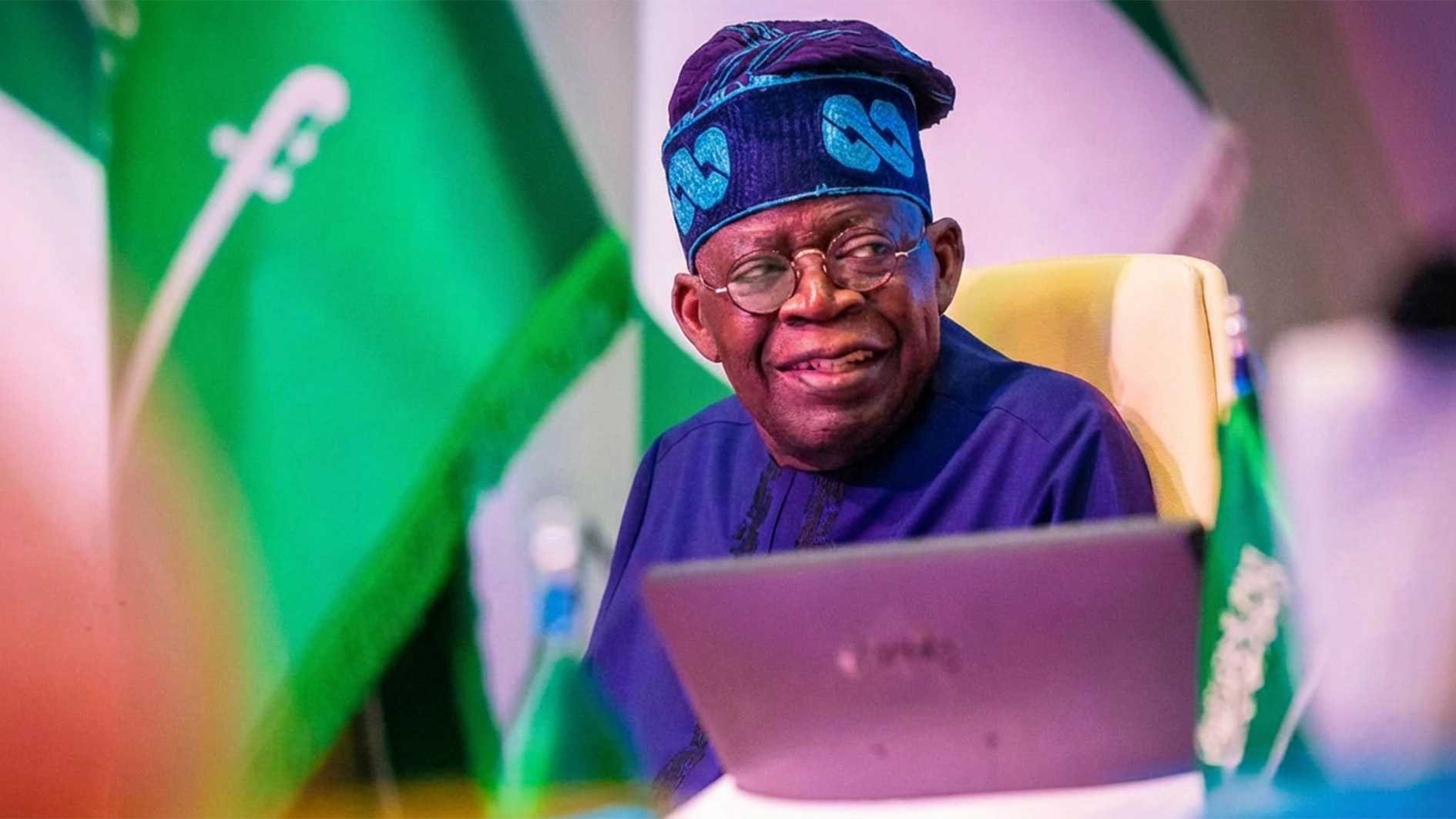
**urges Nigerians abroad to turn remittances into productive investments, build sector funds
President Bola Tinubu has launched a fresh appeal for Nigerians in the diaspora to turn their financial support for families at home into long-term investments capable of creating jobs, expanding businesses and strengthening Nigeria’s economic base.
Tinubu, who spoke at the inaugural Nigeria Diaspora Economic Conference (NIDEC) 2026 in Toronto, Canada, said the time had come for Nigerians abroad to move from simply sending money home to taking strategic stakes in the Nigerian economy.
Represented by his Chief of Staff, Femi Gbajabiamila, the President said the country’s diaspora community possessed the capital, expertise and international networks needed to play a far greater role in Nigeria’s economic transformation.
The three-day conference, organised by the Nigerians in Diaspora Commission (NiDCOM) under the theme, “Thrive Abroad, Invest in Nigeria,” brought together government officials, investors, business leaders and Nigerians living abroad to explore new channels for diaspora investment.
“Nigeria sees you. Nigeria values you. Nigeria needs you,” Tinubu told participants at the Apollo Convention Centre.

The President said remittances remained critical to millions of Nigerian households, helping families meet obligations such as school fees, medical expenses and small-business needs.
However, he said, “remittances must now become the floor of diaspora engagement, rather than its ceiling.”
He urged Nigerians abroad to invest in sectors with strong potential for job creation and economic expansion, including agro-processing, healthcare, technology, energy, housing, logistics, mining, education, creative industries and export manufacturing.
Tinubu also challenged the diaspora to embrace collective investment models rather than scattered, personality-driven transactions.
He called for the establishment of professionally managed investment clubs, sector funds, co-investment vehicles and venture networks through which Nigerians abroad could pool resources, demand audited accounts, enforce corporate governance and conduct proper due diligence.
According to him, the Federal Government recognises that diaspora capital will only flow at scale where investors have confidence in the regulatory and financial environment.
He said government was therefore working to provide predictable rules, transparent project pipelines, efficient consular services and stronger safeguards against fraud.
Tinubu highlighted the Non-Resident Nigerian Ordinary Account, Non-Resident Nigerian Investment Account and Non-Resident Bank Verification Number as measures designed to make participation in Nigeria’s financial system easier for Nigerians living abroad.
Seeking to strengthen the investment case for Nigeria, the President reeled out recent economic indicators, saying the economy grew by 3.89 per cent in real terms in the first quarter of 2026, while manufacturing expanded by 3.29 per cent.
He also said inflation had eased to 15.91 per cent, while Nigeria’s foreign reserves closed 2025 at $45.4 billion.
The International Monetary Fund, he added, had projected Nigeria’s economy to grow by 4.1 per cent in 2026.
Tinubu said the figures reflected the impact of reforms implemented by his administration over the past three years, which he said had improved macroeconomic stability and strengthened the resilience of the economy.
He also cited the World Bank’s assessment that Nigeria had made progress in restoring macroeconomic stability, improving its external and fiscal position and sustaining economic growth.
The President said the new tax architecture was designed to simplify compliance and reduce pressure on low-income earners and small businesses, while the Bank of Industry recorded its highest annual financing volume in 2025, disbursing N636 billion to businesses.
He said government was simultaneously investing in critical infrastructure, including roads, rail, ports, power, digital connectivity, healthcare, housing and agricultural value chains, to create an environment capable of attracting greater private investment.
Tinubu further linked economic participation to political influence, saying the growing economic strength of the diaspora could give Nigerians abroad greater leverage in national conversations, including the long-standing debate over diaspora voting.
He, however, urged Nigerians to protect national cohesion ahead of the 2027 general elections, stressing that political competition must not be allowed to threaten Nigeria’s stability.
Earlier, NiDCOM Chairman/Chief Executive Officer, Abike Dabiri-Erewa, said the conference was designed to move diaspora engagement beyond dialogue and harness the community’s expertise, networks and financial resources for accelerated national development.
She urged Nigerians abroad to see Nigeria not only as home but also as an investment destination.
Anambra State Governor, Charles Soludo, commended the Tinubu administration’s economic reforms, saying they offered Nigeria an opportunity to attract global capital and compete more effectively in the international investment market.
Zamfara State Governor, Dauda Lawal, said the conference would help his administration position the state to attract new investment and take advantage of emerging economic opportunities.
The Minister of Industry, Trade and Investment, Jumoke Oduwole, similarly called for a decisive shift from investment conversations to actual capital deployment.
“The best time for investment is now,” she said, urging stakeholders to translate discussions at the conference into concrete investments.
The conference featured high-level panels, fireside chats and investment pitching sessions involving government officials, business leaders, investors and members of the Nigerian diaspora.
Participants included the Minister of Interior, Olubunmi Tunji-Ojo; Minister of Foreign Affairs, Yusuf Tuggar; Executive Chairman of the Nigeria Revenue Service, Zacch Adedeji; Executive Secretary/Chief Executive Officer of the Nigeria Investment Promotion Commission, Aisha Rimi; Director-General of the Nigeria Export Promotion Council, Nonye Ayeni; Director-General of SMEDAN, Charles Odii; and Director-General of the National Orientation Agency, Lanre Issa-Onilu.
The Canadian delegation was led by Ontario Minister of Citizenship and Multiculturalism, Graham McGregor.

