 Follow Us on Google News


 Follow Us on Google Discover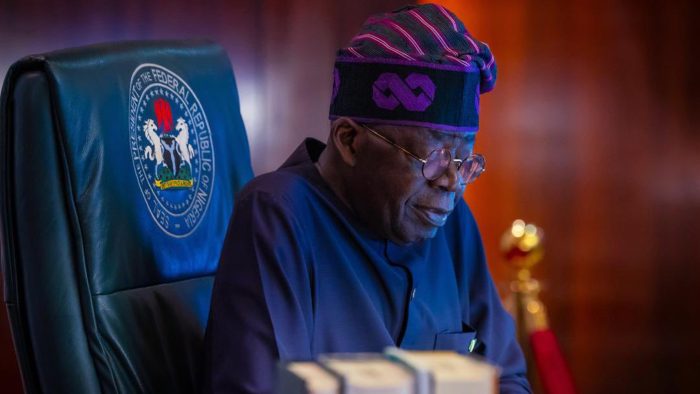
***Group activates structures nationwide
The National Coordinator of the Grassroots Mobilisation Initiative (GMI), Samaila Musa, on Friday expressed confidence that President Bola Ahmed Tinubu will secure re-election in the 2027 general election.
He argued that the administration’s economic reforms and growing political structure across the country will give the ruling All Progressives Congress (APC) a strong advantage.
Musa, who spoke in an interview with The Guardian, said although the removal of fuel subsidy and the unification of the foreign exchange market had imposed significant hardships on Nigerians, the reforms were necessary to stabilise the economy and put the country on a sustainable path.
According to him, GMI has been actively sensitising Nigerians, particularly people at the grassroots, to help them understand the rationale behind the reforms and the long-term benefits expected from them.
He said: “I believe that President Tinubu will still win significant support in the North, particularly the Northwest. That I can tell you. Atiku Abubakar is also from the Northeast, so I know that the region is going to be a battleground but the vice president is from that zone coupled with the fact that five of the six governors are all in the President’s party.

“So i see victory for the President from that zone in the long run or worst case scenario 50-50 because there are advantages associated with where political actors come from within the Nigerian political space. But by and large, I believe President Tinubu will win the 2027 general election.
“President Tinubu’s administration started on the right footing by focusing heavily on macro-fiscal reforms such as fuel subsidy removal, unifying foreign exchange rates and increasing non-oil revenue.
“We have been trying to sensitise the general public and the Nigerian populace on the economic reforms being implemented by this administration. Yes, those policies are difficult. The President did not pretend from the outset that it was going to be an easy journey.”
Musa said the administration had warned Nigerians from the beginning that sacrifices would be required to rescue the economy, adding that the first two years were inevitably difficult because of the scale of the reforms.
He, however, maintained that the country was gradually moving beyond the period of severe adjustment, adding that, “We are literally sailing above board now, and things are beginning to take shape. At the macroeconomic level, the country is now stable. It is at the microeconomic level that we are still trying to find our feet,” he said.
The GMI coordinator said one of the major challenges facing the administration was the difficulty in communicating complex economic policies to ordinary Nigerians, particularly those at the grassroots.
According to him, many Nigerians initially viewed the reforms simply from the perspective of rising living costs without understanding the economic circumstances that necessitated them.
Musa said the GMI had therefore made public enlightenment a major component of its activities, organising weekly sensitisation programmes and using radio, newspapers and social media to explain the reforms.
He identified fuel subsidy removal and the floating of the naira as two of the policies that generated the strongest public opposition.
He said GMI had been explaining to Nigerians why the government could no longer sustain the previous subsidy regime and why the foreign exchange market also required reform.
Musa said the feedback from the organisation’s grassroots engagement had been encouraging, claiming that many Nigerians who initially opposed the policies had gained a better understanding of the issues after participating in the sensitisation programmes.
He said GMI also operates a Hausa-language radio programme through which it reaches communities across northern Nigeria.
He added, “The major policies that made things difficult were the removal of fuel subsidies and the floating of the naira. These are some of the major issues that have been on the front burner. They have their implications, but the long-term dividends are what we consider most important.
“People call into our programmes and engage with us through our social media platforms, saying they never understood the issues the way we presented them.
“The student loan scheme is a major step in the right direction. We can see people from disadvantaged backgrounds who ordinarily would not have been able to afford higher education now benefiting from it.”
According to him, the organisation was helping to bridge what he described as a “vacuum in public orientation” concerning the government’s economic policies.
He argued that the reforms should be assessed from a long-term perspective rather than solely on their immediate consequences.
While acknowledging the hardship caused by the reforms, Musa said President Tinubu had also introduced measures intended to cushion their impact.
He cited the Federal Government’s intervention funds for micro, small and medium enterprises, the Nigeria Education Loan Fund (NELFUND), the new minimum wage of N70,000 and targeted cash transfers to vulnerable households.
He also identified infrastructure development, education and healthcare as areas where the administration had recorded progress.
Musa maintained that GMI’s support for the administration was based on what he described as visible achievements under the Renewed Hope Agenda.
On insecurity, Musa said the Tinubu administration had made progress in confronting terrorism and other security threats, although he acknowledged that the problem could not be solved overnight.
He noted that insecurity had persisted in Nigeria for more than two decades and had also acquired an international dimension.
Musa commended the military and other security agencies for what he described as increased offensive operations against terrorist groups.
He said the reported elimination and arrest of high-profile terrorists demonstrated that the government was taking the security challenge seriously, saying that, “What took about 20 years to infiltrate the country cannot necessarily be flushed out in three or four years. But the government is a continuum. Gradually, we are going to get there.”
On the President’s prospects in the 2027 presidential election, Musa expressed optimism that Tinubu would retain substantial support in northern Nigeria despite concerns over the cost of living and the impact of the economic reforms.
He said the political contest would be competitive, particularly in the Northwest and Northeast, but argued that the APC’s growing political structure would give Tinubu an advantage.
Musa acknowledged that some Nigerians who supported Tinubu in 2023 might have become dissatisfied with the administration, particularly those who expected political appointments but were not accommodated.
According to him, the APC’s growing influence in the states, including the movement of some governors and political leaders from opposition parties into the ruling party, would strengthen Tinubu’s chances.
He said the region could become a major battleground in 2027 but argued that the APC’s political presence could give Tinubu a strong chance.
He described Seyi’s involvement in political mobilisation as unusual in Nigeria’s political history, arguing that it demonstrated a willingness by political leaders to allow their children to participate directly in political activities rather than leaving political risks to other people’s children.
Musa said Seyi had been involved in political mobilisation since his father’s presidential primary campaign and had subsequently supported youth-focused political activities across the country.
He specifically mentioned the City Boy movement, which he said had expanded beyond its original base.
On GMI’s plans ahead of the 2027 election, Musa said the organisation had structures in all 36 states of the federation and was preparing to activate them fully.
He said the organisation would commence town hall meetings and collaborate with civil society organisations and community groups across the country.
“We are already on the ground. We have structures across all 36 states of the federation. What we are doing now is activating those structures,” he said.
According to him, the strategy would focus on public education, community engagement and persuasion rather than confrontation.
Musa maintained that the APC’s efforts to attract politicians from opposition parties were part of normal democratic competition and not evidence of coercion.
Musa also urged Nigerian youths to become more actively involved in politics and governance, saying the country needed a combination of youthful energy and the experience of the older generation.
He said the Tinubu administration had created opportunities for younger Nigerians to occupy public offices and participate in governance.
According to him, political mentorship was necessary to ensure that young people entering leadership positions receive guidance from experienced leaders.
“We need a combination of the younger and older generations. That is how leadership should work. As young people are coming up, they should receive guidance, tutoring and mentorship from the older generation before the baton is completely passed to them,” he said.
Musa said he expected youth participation in politics and governance to become more prominent ahead of and beyond the 2027 elections.
He reiterated that GMI would continue its nationwide grassroots mobilisation and public enlightenment campaign in support of the Tinubu administration, insisting that the organisation was confident that the President would secure another term in office in 2027.

