 Follow Us on Google News
 Follow Us on Google Discover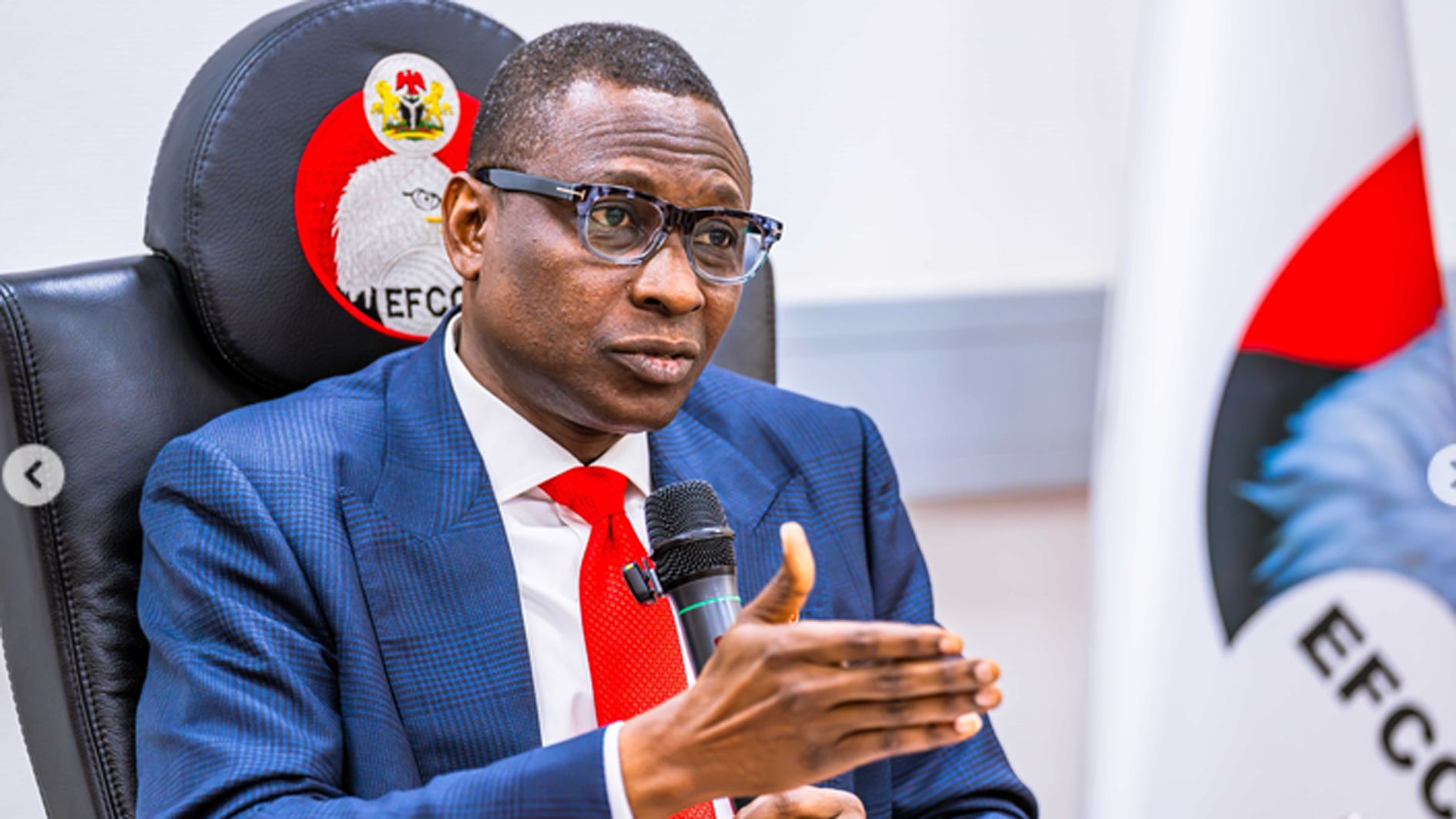
For what he described as a significant transformation in the Commission’s approach to fighting economic and financial crimes and converting recoveries into tangible national assets, the President of Global Peace Movement International, Dr Mike Uyi, has commended the Chairman of the Economic and Financial Crimes Commission (EFCC), Ola Olukoyede.
Uyi said the Federal Government’s decision to channel liquid funds recovered by the EFCC to the Nigerian Education Loan Fund (NELFUND) was a strong endorsement of the Commission’s recovery efforts under Olukoyede’s leadership, describing the policy as an investment in the future of Nigeria.
According to him, the significance of the decision lies not only in the additional funding it would provide NELFUND, but in the principle that resources recovered from financial crimes can be deliberately redirected towards building human capital and expanding opportunities for young Nigerians.
Uyi said Olukoyede had increasingly demonstrated that the anti-corruption war should not end with arrests, prosecutions and convictions, but must ultimately produce measurable benefits for society through the recovery and productive deployment of assets and funds.
He said the record of the EFCC under Olukoyede provides compelling evidence of this emerging approach.
Between October 2023 and September 2025, the Commission received more than 19,000 petitions, conducted 29,240 investigations, filed 10,525 cases in court and secured 7,503 convictions.
Within the same period, the EFCC recovered N566.3 billion, $411.5 million, £71,306.25, €182,877.10 and other foreign currencies traced to proceeds of financial and economic crimes.
The Commission also recovered 1,502 non-monetary assets, including 402 properties in 2023, 975 in 2024 and 125 in 2025.
Uyi said the figures represented more than statistics, arguing that they demonstrated the growing capacity of the EFCC to take on sophisticated financial crimes and recover assets that would otherwise have remained outside the reach of the government.
He cited the Commission’s successful legal battle over assets linked to former Central Bank of Nigeria Governor, Godwin Emefiele, as one of the major examples of the depth of the anti-corruption drive under Olukoyede.
The Supreme Court in July 2026 affirmed the final forfeiture of seven high-value properties, $2.045 million and share certificates linked to Emefiele to the Federal Government, restoring the forfeiture order earlier made by the Federal High Court after the case had passed through the Court of Appeal.
Uyi said the outcome demonstrated the Commission’s determination to pursue cases involving high-profile individuals to their logical conclusion, describing it as evidence that “no office, position or status should place anyone beyond the reach of accountability.”
He also pointed to the recent forfeiture of properties linked to former Attorney-General of the Federation and Minister of Justice, Abubakar Malami, as another major milestone.
A Federal High Court in Abuja in July 2026 ordered the final forfeiture of 48 properties linked to Malami, after the court held that the respondents had failed to dislodge the EFCC’s case that the properties were acquired through proceeds of unlawful activities.
Uyi described the case as particularly significant because of the sheer scale of the assets involved, saying the recovery demonstrated the Commission’s willingness to investigate and pursue forfeiture proceedings even where the assets were connected to highly placed former public officials.
He said such cases had helped to strengthen public confidence in the anti-corruption campaign, adding that the ultimate test of the exercise was whether assets recovered from alleged illicit activities could be preserved and deployed transparently for the benefit of Nigerians.
The activist also commended the EFCC’s intensified campaign against cybercrime, particularly its efforts to dismantle organised networks that recruit young Nigerians and foreign nationals into internet fraud.
He noted that the Commission’s major nationwide cybercrime operation led to the arrest of 792 suspects, including 193 foreign nationals, who were investigated, prosecuted and convicted, with the foreign nationals subsequently deported after serving their prison terms.
According to Uyi, the development was significant because it showed that Olukoyede’s EFCC was confronting not only traditional financial crimes but also the increasingly sophisticated cybercrime ecosystem threatening Nigeria’s international reputation and exploiting young people.
He said the significance of the operation became even clearer when recovered proceeds of crime were subsequently redirected towards education.
The EFCC in July 2026 handed over 1,452 recovered hostel items, comprising 501 double-step bunk beds, 939 mattresses and 12 wooden beds with mattresses, to the Federal Ministry of Education for use in schools across the country. Olukoyede said the items were recovered during Operation Eagle Flush, which he described as the Commission’s largest single operation.
Uyi said the development provided a practical illustration of how anti-corruption enforcement could translate directly into social development.
He said: “There is something particularly significant about taking money or assets recovered from crime and using them to educate young Nigerians. It means that what was taken away from society through corruption is being returned to society in the form of opportunity.
“This is where I believe Olukoyede’s leadership deserves special commendation. He has helped to demonstrate that the success of an anti-corruption agency should not be measured only by the number of people arrested or convicted, but also by what happens to the resources recovered.
“When a recovered asset becomes a school facility, when recovered funds support a student to remain in university, or when a forfeited property becomes a public asset, Nigerians can physically see the dividends of the fight against corruption.”

