 Follow Us on Google News
 Follow Us on Google Discover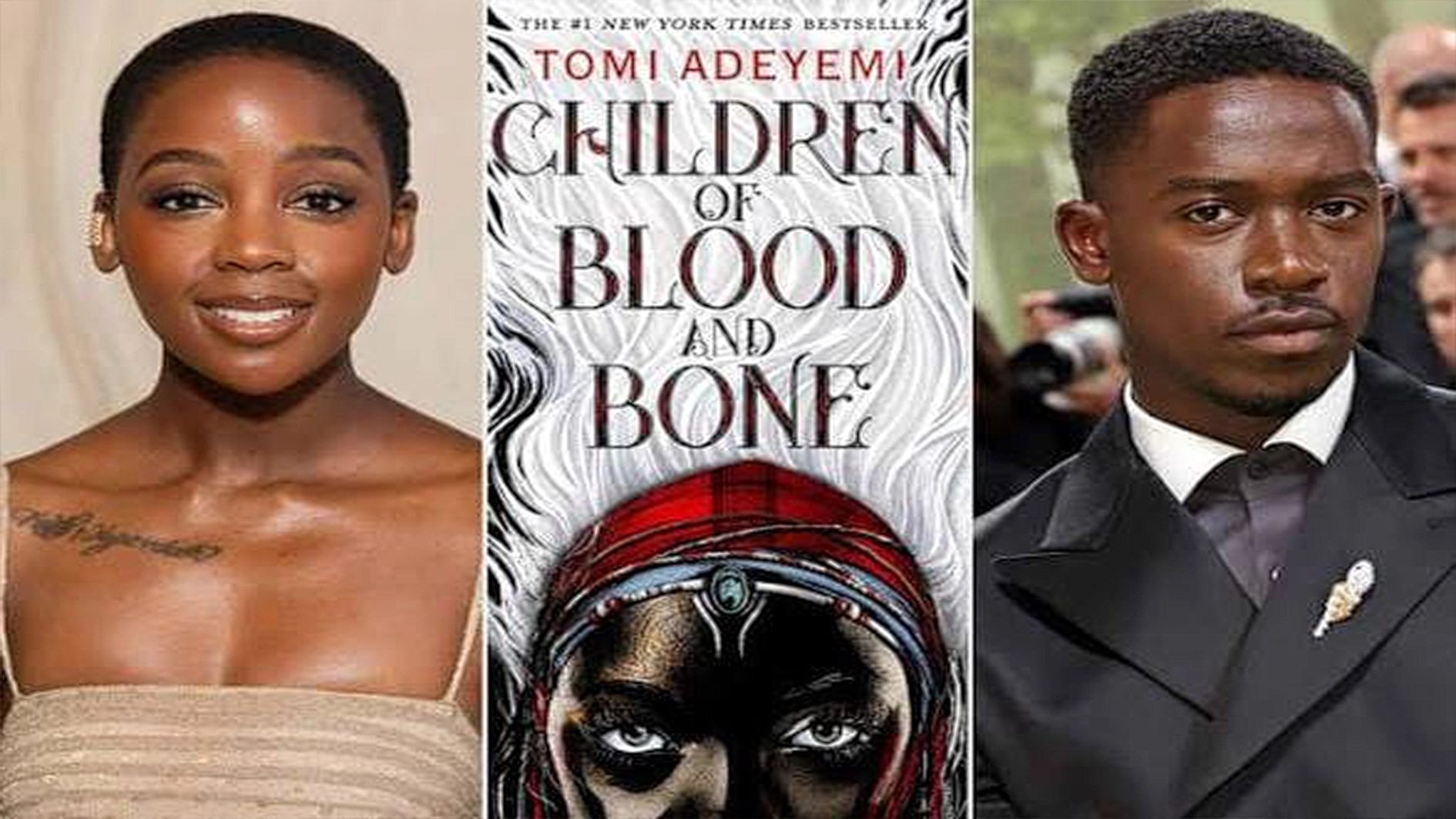
Long before Children of Blood and Bone arrives in cinemas in January 2027, the adaptation has already become the centre of a conversation far larger than the film itself. At issue is a question that has become increasingly urgent as African stories attract global attention: when a narrative is deeply rooted in a people’s history, mythology and language, who should determine how it is brought to the screen?
The release of the first trailer has generated excitement for what promises to be one of Hollywood’s most ambitious fantasy productions inspired by African culture. Boasting an impressive cast and high production values, the film appears poised to introduce the fictional kingdom of Orïsha to a global audience. Yet, beneath the anticipation lies a growing unease among many Nigerians, particularly Yoruba speakers, who believe that cultural authenticity has been compromised in the pursuit of international appeal.
Much of the criticism has focused on the pronunciation of Yoruba-inspired names and dialogue, which many native speakers argue lack the tonal precision that gives the language its meaning. Others have questioned why a story inspired by Yoruba cosmology was largely produced in South Africa and the Canary Islands rather than Nigeria, while still others have expressed disappointment that more of Nollywood’s creative workforce was not engaged beyond a handful of Nigerian actors.
Individually, these may appear to be production decisions. Collectively, however, they have evolved into a broader debate about cultural ownership, creative authenticity and who ultimately benefits from the global commercialisation of African intellectual property.
To be sure, Children of Blood and Bone is not a historical account of the Yoruba people. Tomi Adeyemi’s bestselling novel is a work of fantasy that draws inspiration from Yoruba spirituality, folklore and symbolism without attempting to recreate them literally. Like every adaptation, the filmmakers are entitled to creative interpretation.
Yet language occupies a unique place within culture. Yoruba is a tonal language in which pronunciation is inseparable from meaning. A subtle change in tone can alter the meaning of a word entirely. For many Nigerians, therefore, the concern is not simply about accents but about preserving the integrity of a language that serves as one of the story’s cultural foundations.

The controversy also reflects the rising expectations of African audiences. Representation alone is no longer enough. As African stories increasingly secure Hollywood budgets and global distribution, viewers are demanding greater authenticity—not only in casting, but also in language, production design, cultural consultation and creative decision-making.
The choice of production location has similarly become part of that conversation.
From an industry standpoint, the decision to film extensively in South Africa is hardly surprising. Over the past two decades, the country has established itself as Africa’s leading destination for large-scale international productions through sustained investment in infrastructure, skilled technical crews, studio facilities and attractive production incentives.
Commercially, the decision makes sense.
Culturally, however, it has prompted difficult questions. If Orïsha is fundamentally inspired by Yoruba civilisation, should more of the production ecosystem have been rooted in Nigeria? Could more Nigerian cinematographers, production designers, language consultants, costume specialists and visual artists have participated in shaping the film’s interpretation of Yoruba culture?
These questions extend beyond national pride. They touch on the economics of Africa’s creative industries.
As African intellectual property becomes increasingly valuable, the countries supplying the stories are beginning to ask whether they are also benefiting from the accompanying investments, technical development and employment opportunities. Cultural influence alone is no longer viewed as sufficient. Increasingly, there is an expectation that economic value should accompany creative ownership.
That expectation inevitably draws attention to Nollywood itself.
Nigeria remains one of the world’s most prolific film-producing nations and has, over the past decade, developed internationally recognised talent across directing, cinematography, costume design, production design and visual effects. Although the adaptation features notable Nigerian actors, including Richard Mofe-Damijo, Ayra Starr, Temi Fagbenle and Zackary Momoh, critics argue that a story so closely connected to Yoruba heritage presented an opportunity for deeper collaboration with Nigeria’s broader creative ecosystem.
The debate acquired another dimension when the film’s creator, Tomi Adeyemi, publicly distanced herself from the adaptation.
Despite serving as co-screenwriter and originally being attached as an executive producer, Adeyemi announced earlier this month that she would neither watch nor promote the completed film, revealing that painful experiences during production had led her to step away from the project before its release.
Her decision does not necessarily diminish the quality of the finished film. Nor does it invalidate the work of its cast and crew. It does, however, remove one of the adaptation’s most important sources of creative legitimacy. When the author who imagined Orïsha is no longer publicly standing behind its cinematic interpretation, audiences inevitably become more attentive to the choices that shaped the final product.
Perhaps that is the most significant legacy of the controversy.
For decades, African creatives sought greater visibility within global entertainment. That objective has largely been achieved. The conversation has now evolved. Audiences are asking more sophisticated questions about authorship, authenticity and economic participation. Who controls African narratives once they enter the global marketplace? Who profits from them? Whose voices shape them? And whose cultures are being interpreted?
These are not questions directed solely at Children of Blood and Bone. They are questions that will increasingly confront every major international adaptation of African stories.
Hollywood’s engagement with Africa should not be viewed as a competition between Nigeria and South Africa. Both countries have made indispensable contributions to the continent’s screen industries. South Africa has built technical capacity that attracts international productions, while Nigeria has demonstrated the global appeal of African storytelling through Nollywood’s remarkable growth.
The challenge is no longer whether Africa’s stories should be told globally. It is whether future collaborations can better balance international production expertise with meaningful local participation in the cultures from which those stories emerge.
Whether Children of Blood and Bone ultimately succeeds or disappoints at the box office may prove less consequential than the conversation it has already sparked. African audiences are no longer content with seeing themselves represented on screen. Increasingly, they want their languages, traditions, creative institutions and professional expertise to occupy the centre of stories that draw their inspiration from the continent.
That expectation is unlikely to fade. If anything, it may become the defining standard by which future global adaptations of African stories are judged.

