 Follow Us on Google News



 Follow Us on Google Discover
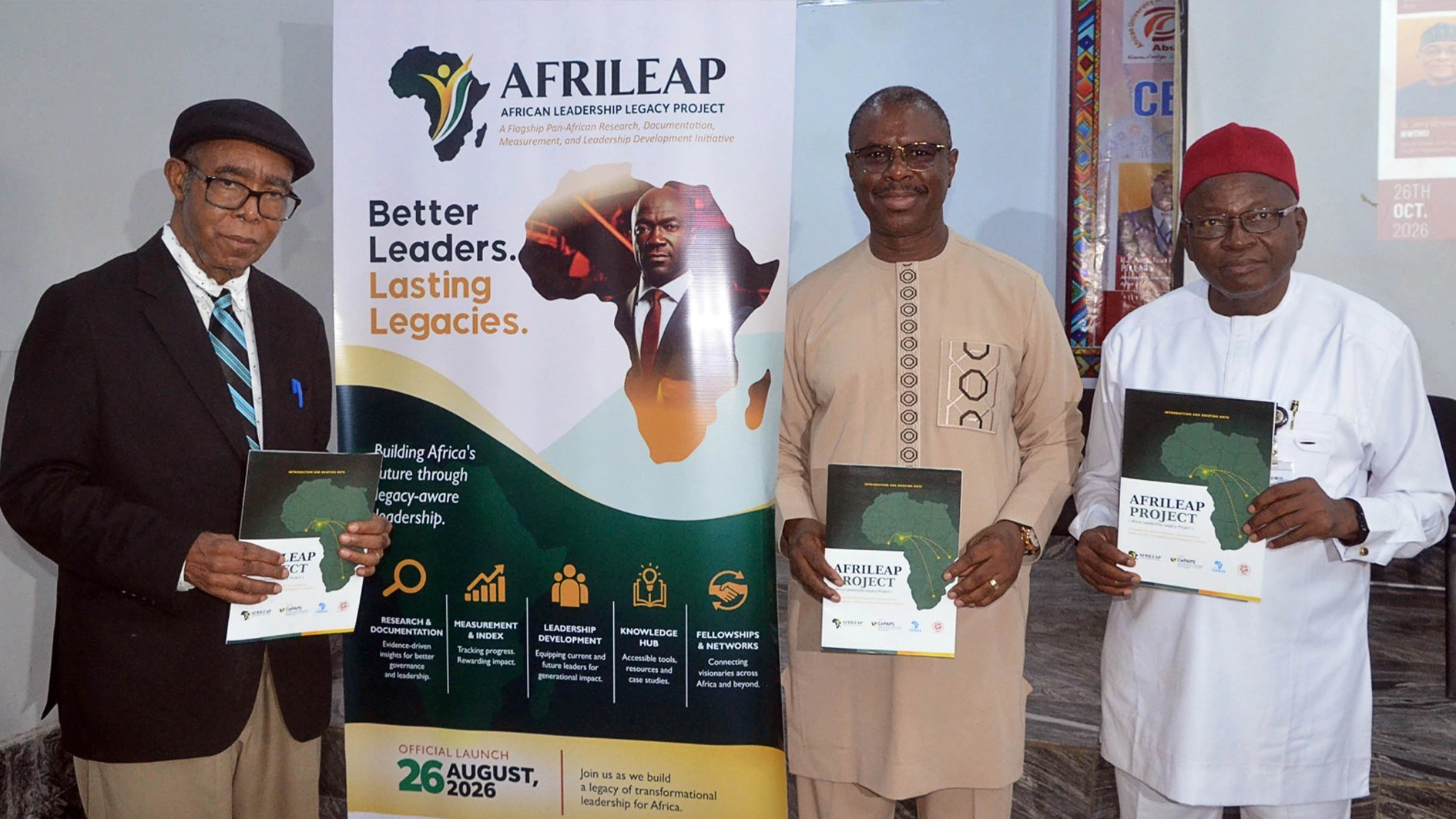
The African University of Science and Technology (AUST), Abuja, has launched a research and leadership development initiative to address policy discontinuity in Africa, with the appointment of former Director-General of the Nigerian Maritime Administration and Safety Agency (NIMASA), Dr. Dakuku Peterside, as its director.
The initiative, known as the African Leadership Legacy Project (AFRILEAP), seeks to strengthen institutional continuity, promote accountable governance and ensure that development policies and reforms deliver sustainable results beyond the tenure of individual leaders.
Launched through the university’s Centre for Pan-African and Peace Studies (CePAPS), the project will assess leadership impact across Africa through research, evidence-based evaluation and leadership development programmes.
Speaking at the launch, Peterside said the initiative would encourage leaders to consider the long-term consequences of their decisions and the legacies they intend to leave behind.
“AFRILEAP asks every leader one fundamental question: What do you want to be remembered for long after you are gone?” he said.
Peterside, a leadership and public policy expert, will lead the project, while Dr. Bosco Chukwudumebi Okolo-Obi, Centre Leader of CePAPS, will serve as Programme Manager.

Commissioning the initiative, President of AUST, Professor Azikiwe Peter Onwualu, pledged the university’s full support, assuring that it would provide an enabling environment for researchers and senior fellows to achieve the project’s objectives.
Onwualu commended the initiative, noting that its vision aligned with the university’s founding ideals and its commitment to advancing Africa’s development through research, innovation and human capacity development.
Also speaking, Director of CePAPS, Professor Chudi Uwazurike, pledged the centre’s commitment to ensuring the project’s success and promoting its adoption and impact across the continent.
AFRILEAP seeks to address a persistent governance challenge in Africa, where policies, reforms and development programmes are often discontinued or weakened following changes in political leadership.
Its research framework will evaluate leadership legacies across five dimensions: values transmission, institutionalisation of systems, human capacity development, socioeconomic impact, and public and organisational memory.
The project will examine the records of historical figures, contemporary public-sector leaders and private-sector executives to identify the factors that enable leaders to build resilient institutions and sustain development outcomes.
Nigeria will serve as the starting point for its fieldwork, with comparative studies planned in Ghana, Kenya, South Africa, Egypt and Rwanda.
The multidisciplinary research team comprises scholars and practitioners based in Africa and the United Kingdom, with expertise in governance, technology, sustainability, peacebuilding, communications and leadership development.
Members include Dr. Aminu Bello Usman, a computer science and cybersecurity specialist; Dr. Mohammed Dahiru Aminu, an expert in sustainability, governance and public policy; Richard Ali, a peacebuilding and institutional resilience specialist; Dr. Jeff Ukachukwu, a communications and management strategist; and Dr. Sam Danso, an artificial intelligence researcher and strategic research leader.
Others are Professor Olalekan Adekola, an expert in geography, environmental systems and climate adaptation; Dr. David Molapo, a South African leadership strategist and human capital development specialist; and Mrs. ZohAkiy Mbi-njifor Mbapeh, an expert in governance, executive leadership and organisational development.
Over the next 18 months, AFRILEAP will prioritise the development of mathematical, psychometric and qualitative indicators for an African Leadership Legacy Index.
The proposed index is expected to provide a structured basis for measuring leadership impact beyond immediate achievements and short-term performance, helping policymakers and institutions assess the sustainability of leaders’ contributions.
Other planned outputs include an African Leadership Legacy Framework, an open-access knowledge hub, policy briefs, Executive Legacy Masterclasses and a 12-month Future Legacy Leaders Fellowship.
The programmes are designed to strengthen leadership capacity, promote institutional learning and equip emerging leaders with the skills and knowledge required to build sustainable institutions.
AFRILEAP has invited development institutions, philanthropic foundations, corporate organisations and strategic partners to support its research, policy engagement and leadership development programmes.
Through the initiative, AUST aims to advance a culture of accountable leadership, institutional resilience and long-term development across Africa.

