 Follow Us on Google News



 Follow Us on Google Discover
Welcome, and thank you for stopping by. Tomorrow, 31 October, marks 67 years since sub-Saharan Africa’s first television station went on air in Ibadan, and I can think of no better excuse to answer the question I hear more often than any other: what are some unique facts about Nigeria? This piece is the conclusion of months of research and years of experience writing about this country, arguing about it at owambes and quietly checking the “facts” that land in my family WhatsApp group every Sunday morning.
Some of those forwarded facts are true. Some are half true. A few are pure invention dressed in green and white (you know the ones, usually ending with “Share if you are proud to be Nigerian!”).
So I set myself a simple rule for this article. Every fact had to be traceable to a named source, preferably an official one, and anything shaky would be labelled as shaky. What follows is the list I wish someone had handed me when my niece came home from JSS2 with a project titled “Twenty Things You Didn’t Know About Your Country” and a deadline of the following morning.
Shall we begin?
What Are Some Key Facts About Nigeria Everyone Should Know?
Let me start with the basics, because even the basics hold a surprise or two.
Our full official name is the Federal Republic of Nigeria. The capital is Abuja, not Lagos, and has been since 12 December 1991, when the seat of government formally moved from the lagoon to the centre of the country. The land area is about 923,768 square kilometres, which makes Nigeria roughly the 32nd largest country on earth and the 14th largest in Africa. We have 36 states plus the Federal Capital Territory, carved into 774 local government areas, and English is the official language even though hundreds of others are spoken at home.

None of this is new, of course. In fact, it is rather charming to compare today’s figures with a 1963 booklet of one hundred facts from the Federal Ministry of Information, which the National Library has digitised. It covers everything from geography and religion to harbours, radio, sport and the first federal cabinet, written for a country barely three years old. Reading it feels rather like opening your parents’ wedding album: same family, very different hairstyles.
Now for the first genuinely unusual fact.
Nigeria does not actually know how many people it has. The last national census was held in November 2006, and it counted 140,431,790 people. Next month that count turns twenty years old, and a planned 2023 census was postponed with no new date fixed since. Every population figure you see today, usually somewhere between 230 and 240 million, is an estimate projected forward from 2006. We are almost certainly the sixth most populous country in the world and the largest Black nation on earth, but the precise number is an educated guess, and I think it is healthier to say so plainly.
Here is a second one that surprises people.
Nigeria is famous for oil, yet it is only the second largest holder of oil reserves in Africa, behind Libya. Where we lead the continent is gas. According to the upstream regulator’s January 2026 reserves declaration, Nigeria holds 37.01 billion barrels of oil and condensate and 215.19 trillion cubic feet of gas, with a reserves life of 59 years for oil and 85 years for gas. That gas figure puts us around ninth in the world, and it is the largest stock in Africa by a distance. Much of it has never been sold, a point The Guardian’s own editorial board has made with some frustration when looking at how flat those reserve numbers have stayed.
And one more practical fact for visitors: we drive on the right. That was not always so. Nigeria drove on the left like Britain until Sunday, 2 April 1972, when the whole country switched sides overnight. My late uncle, who drove a Peugeot 404 in Lagos at the time, used to say the first week was “like dancing with your left foot”.
How Old Is Nigeria, and Which of Its Facts Go Back Furthest?
This is where the question gets interesting, because the honest answer depends on what you mean by “Nigeria”.
As an independent country, Nigeria is 66 years old, counting from 1 October 1960. As a republic, it is 63, counting from 1 October 1963. As a single administrative unit, it dates to the amalgamation of the Northern and Southern Protectorates on 1 January 1914, which makes it 112. The name itself is older still: it was coined in a newspaper article on 8 January 1897, which is why your grandmother’s grandmother would have recognised the word before the country existed.
But the land and its people are far, far older than any of those dates.
The oldest human remains found anywhere in West Africa came from a rock shelter called Iho Eleru near Akure in Ondo State, and they are roughly 13,000 years old. The Nok culture of the Jos Plateau and southern Kaduna produced terracotta heads, some dated to around 900 BC, that are among the earliest known sculptures in sub-Saharan Africa. Then there are the bronzes of Igbo-Ukwu in Anambra State, discovered by a man digging a water cistern in 1938 and later radiocarbon dated to around 850 AD. They are widely described as the earliest copper-alloy art in sub-Saharan Africa, cast with a delicacy that still makes metalworkers whistle.
I remember standing in front of an Igbo-Ukwu roped pot at the National Museum in Onikan and genuinely forgetting to breathe for a moment. Somebody made that with fire and wax more than a thousand years ago, without electricity, without a YouTube tutorial, without anybody telling them it was impossible.
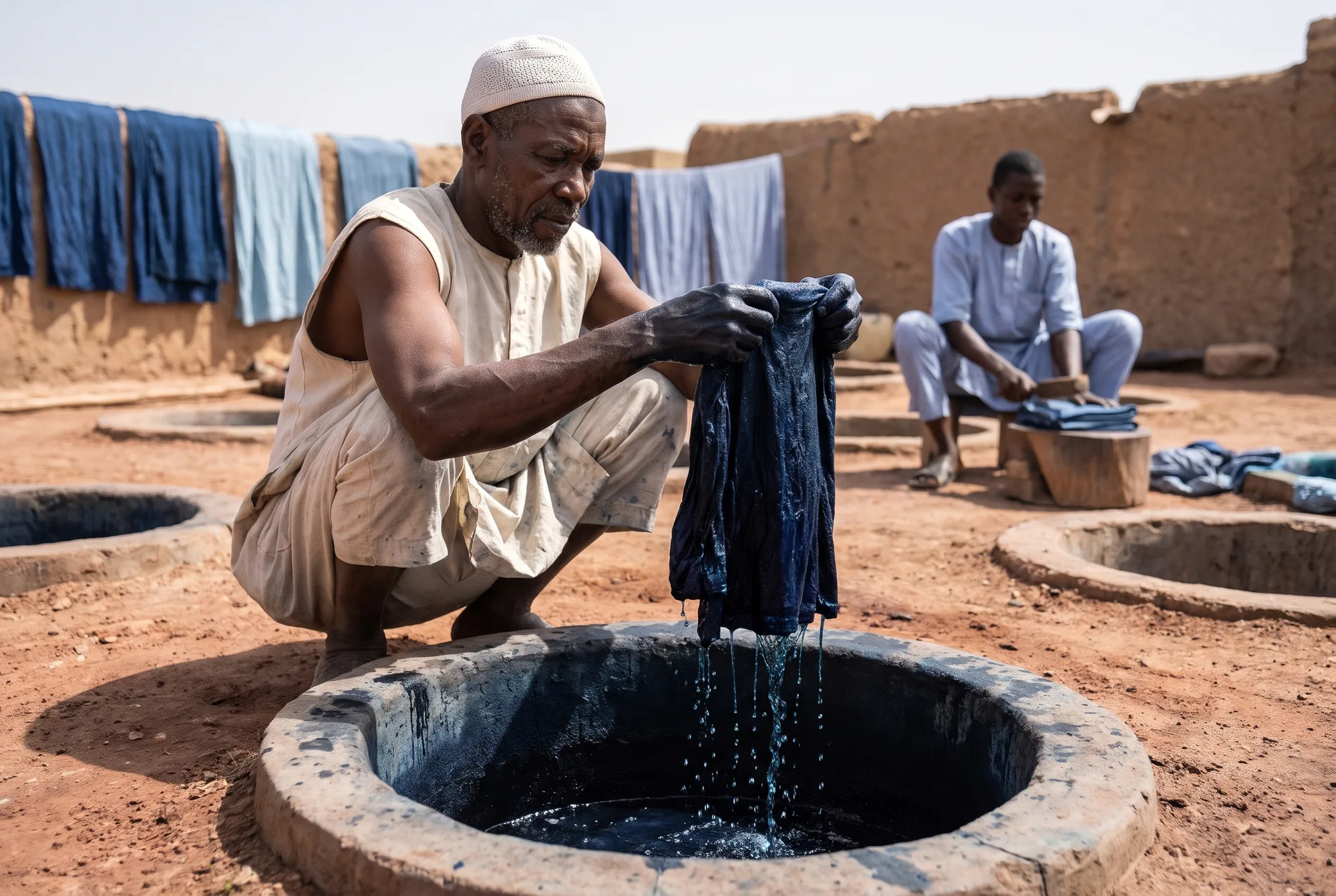
Fast forward a few centuries and you reach the Kofar Mata dye pits in Kano, founded in 1498 and widely described as the oldest working dye pits in Africa. That makes them 528 years old this year. Dyers still crouch over those circular pits, which run to around six feet deep, plunging cloth into indigo mixed with ash and potash exactly as their great-great-grandfathers did. When I visited, a dyer called out the price of a finished wrapper and I happily paid it, partly because it was beautiful and partly because haggling over five centuries of craft felt faintly ridiculous.
Nigeria also has two UNESCO World Heritage Sites, and both are older than most people assume. Sukur Cultural Landscape in Adamawa, with its stone terraces and iron-working traditions, was inscribed in 1999 as the first cultural landscape in Africa to make the list. The Osun-Osogbo Sacred Grove followed in 2005. The case for adding more, including the Kano city walls and the slave route sites at Badagry, has been argued at length in Gregory Austin Nwakunor’s review of our heritage listings, and I agree with him that two sites is an embarrassingly short list for a country this old.
Then there are our modern firsts.
Western Nigeria Television began broadcasting from Ibadan on 31 October 1959, a year before independence, and it was built in roughly three months. As the then Vice President’s sixtieth-anniversary remarks pointed out, that put Ibadan ahead of New Zealand, Ireland and Greece in getting a regular television service. One honest footnote: a short-lived station in Morocco flickered on a few years earlier, so the most precise version is “first in sub-Saharan Africa”. The broadcaster Banji Ojewale has written passionately about how Awolowo’s station became a training school for a generation, and his argument that it deserves to be preserved as a monument is one I share.
Old country, young nation. Both are true at once.
What Are Some Unique Facts About Nigeria? The Straight Answer
If you only read one paragraph of this article, make it this one.
The most unique facts about Nigeria are the ones you can verify and that no other country can match: Nigeria grows more yam and more cassava than any other nation on earth, it has around 527 living languages (third in the world after Papua New Guinea and Indonesia), it launched sub-Saharan Africa’s first television station in Ibadan in 1959, its town of Igbo-Ora is widely called the twins capital of the world, the Kofar Mata dye pits in Kano have operated since 1498, the Igbo-Ukwu bronzes are the oldest copper-alloy artworks found south of the Sahara, the Super Falcons hold a record ten Women’s Africa Cup of Nations titles, and the Dangote refinery in Lekki is the largest single-train oil refinery in the world. Add the warm and cold springs that meet at Ikogosi in Ekiti, a population that has not been counted since 2006, and the largest proven gas reserves in Africa, and you have a country that is unusual in almost every direction you look.
Here is that answer as a quick list you can screenshot:
- World’s largest producer of yam, with about 61 million tonnes a year
- World’s largest producer of cassava, with about 61 million tonnes a year
- Around 527 living languages, the third highest count on the planet
- Sub-Saharan Africa’s first television station, WNTV Ibadan, 1959
- Igbo-Ora in Oyo State, often called the twins capital of the world
- Kofar Mata dye pits in Kano, working since 1498
- Igbo-Ukwu bronzes, dated to around 850 AD
- Ten WAFCON titles for the Super Falcons, a continental record
- Dangote refinery, the world’s largest single-train refinery at 650,000 barrels a day
- Ikogosi, where a warm spring and a cold spring meet and keep their own temperatures
Notice what is not on that list.
I have left out the claims I could not stand behind, such as “Nigeria has the most butterflies in the world” or “Lagos is the biggest city in Africa”, because the evidence is either thin or genuinely disputed. A fact is only unique if it is also true.
Where Does Nigeria Rank in the World?
Rankings are the bit of any facts list that people love to quote and hate to check. So let me show my working.
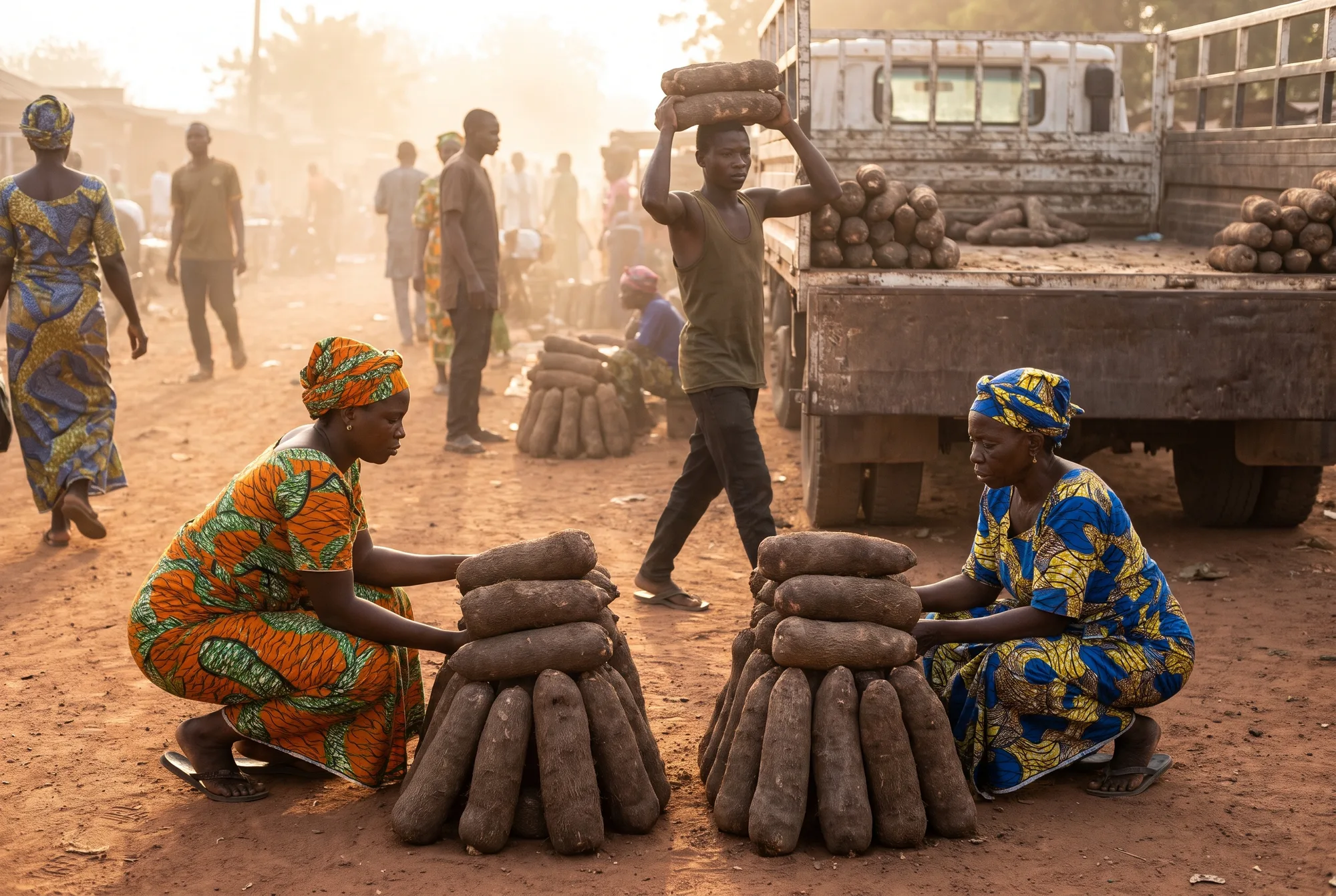
The strongest Nigerian records are agricultural. According to FAO data, Nigeria produced about 61.2 million tonnes of yam and 60.8 million tonnes of cassava in 2022, leading the world in both. Taken over the long run, Nigeria has grown roughly 64 per cent of all the yam produced on earth since 1961. Next time you buy a tuber at Bodija or Oyingbo for ₦4,000 or ₦5,000 and grumble about the price, remember that you are standing in the yam capital of the planet (which makes the price feel even more personal, I admit).
Our linguistic record is just as striking. Ethnologue counts around 527 living languages in Nigeria, placing us third behind Papua New Guinea and Indonesia, and first in Africa by a long way. If you want to see how those languages actually work in daily life, my earlier piece on the languages Nigerians actually speak at home and at work goes into much more detail.
Sport and industry add a few more crowns. The Super Falcons won their tenth Women’s Africa Cup of Nations in Rabat in July 2025, coming from two goals down to beat Morocco 3 to 2, which means Nigeria has won ten of the thirteen editions ever played. The men’s Olympic team won football gold in Atlanta in 1996, the first African side to do so. And the Dangote refinery in Lekki reached its full design capacity of 650,000 barrels a day in early 2026, the largest single-train refinery anywhere.
Of course, a ranking without a measurement is only a boast, so here are the numbers side by side.
Nigeria’s World and African Rankings at a Glance
| Measure | Nigeria’s figure | World position | Africa position | Source |
|---|---|---|---|---|
| Population | About 230 to 240 million (estimate; last census 2006) | 6th | 1st | NPC, UN estimates |
| Land area | 923,768 square kilometres | About 32nd | 14th | Federal government |
| Living languages | About 527 | 3rd | 1st | Ethnologue |
| Yam production | 61.2 million tonnes (2022) | 1st | 1st | FAO |
| Cassava production | 60.8 million tonnes (2022) | 1st | 1st | FAO |
| Proven gas reserves | 215.19 trillion cubic feet (2026) | About 9th | 1st | NUPRC |
| Oil and condensate reserves | 37.01 billion barrels (2026) | About 11th | 2nd | NUPRC |
| Film output (Nollywood) | Well over 1,000 titles a year (estimates vary) | 2nd by volume | 1st | UNESCO survey |
| Women’s AFCON titles | 10 of 13 editions | Not applicable | 1st | CAF |
| Single-train refinery capacity | 650,000 barrels a day | 1st | 1st | Dangote Group |
The pattern is clear: Nigeria’s firmest world records sit in food, language and scale, while its energy rankings are strong in Africa but more modest globally. Where a position says “about”, it is because sources disagree by a place or two, and you should quote it that way too.
One small styling tip if you are copying this table for a school project or a presentation: keep the source column. Teachers, editors and examiners trust a figure far more when it carries its source and year, rather like a jollof recipe trusted more when it comes from somebody’s mother.
What Are Some Fun Facts About Nigeria That Nobody Knows?
Now for my favourite section, the facts that make people at a dinner table put their spoons down.
Start with Ikogosi in Ekiti State. Two springs, one warm and one cold, run side by side down the same hillside and meet at a confluence where each keeps its own temperature. The Ekiti State Government puts the warm spring at about 70°C at its source and about 37°C where it meets the cold one. I put one hand in each stream the first time I visited and laughed out loud, which earned me a very patient look from the guide who must see that reaction a hundred times a week.
Then there is Igbo-Ora.
This Oyo State town, about 100 kilometres north of Lagos, calls itself the twins capital of the world, and it holds a World Twins Festival every October. The global average is around 12 twin births per 1,000, while scientific studies and hospital records quoted by AFP put Igbo-Ora closer to 50 per 1,000. You will also hear a much higher figure of 158 per 1,000 from local officials, but I have not found a published study behind it, so treat that one with care. Locals credit amala and ilasa (okra leaf) soup, and scientists still have not settled the question, which is half the fun.
A few quicker ones for your next quiz night:
The rock on the back of the ₦100 note is Zuma Rock in Niger State, a granite monolith that rises roughly 725 metres above its surroundings. Next time you hand one over for a sachet of pure water, turn it over first.
The national anthem changed in May 2024, when “Nigeria, We Hail Thee”, the anthem sung at independence, was restored in place of “Arise, O Compatriots”.
The green-white-green flag was designed by Taiwo Akinkunmi, a Nigerian student in London, whose entry won a national design competition in 1959.
And our highest point, Chappal Waddi on the Mambilla Plateau, stands at 2,419 metres; I spent a happy few weeks on the subject in my guide to the highest peak in the country and how to climb it.
Do you see the thread running through all of these? Each one sounds like folklore until you check it, and then it turns out to be quietly, stubbornly true.
How to Turn These Nigeria Facts Into a Project or Display
Every October, around Independence Day, I get the same message from parents: “Please, which facts should my child use?” So here is the method I used with my niece, adapted for school projects, office Independence displays and church bulletin boards alike.
- Choose ten facts across five categories (history, geography, people, food and achievements), two per category, so the board does not end up as ten oil statistics in a row.
- Check each fact against at least two sources, one of which should be an official page ending in .gov.ng or an international body such as UNESCO or FAO, and drop any fact you cannot confirm.
- Write the year and source under every figure in small type, because “37 billion barrels” means little without “NUPRC, January 2026” beneath it.
- Use an A1 foam board (594 by 841 millimetres), which costs roughly ₦8,000 to ₦15,000 at most stationery shops in Lagos or Abuja, and keep 30 millimetres of clear margin on every edge.
- Make your heading letters at least 50 millimetres tall and your fact text at least 24 point, so the board can be read from three metres away in a busy hall.
- Stick to a simple colour rule of roughly 60 per cent white, 30 per cent green and 10 per cent one accent colour such as indigo (a nod to Kofar Mata), and print photos at a business centre for around ₦300 to ₦500 per colour page.
- Finish with a five-question quiz in the bottom corner, with answers hidden under folded flaps, because people remember a fact far longer when they have guessed it first.
A small design note from experience. Resist the urge to fill every centimetre. A board with ten clear facts and plenty of white space looks confident, rather like a well-tied gele, while a board with forty crammed facts looks like a WhatsApp forward someone printed.
And if your child’s teacher asks where a figure came from, you will have the answer written right there in small print. That is the whole point.
Final Thoughts on the Unique Facts About Nigeria
When I started this research, I expected to find a list of fun trivia. What I found instead was a country whose most remarkable facts are hiding in plain sight: in the yam on your plate, the indigo in your wrapper, the hundreds of languages spoken on a single bus from Oshodi to Ikorodu, and the television in your parlour, whose story began in Ibadan before independence.
What struck me most was how much more interesting the true facts are than the invented ones. Nobody needs to exaggerate about a town full of twins, springs that refuse to mix, or bronzes cast a thousand years before the colonial map was drawn. We only need to get the details right and say where they came from.
If you take nothing else from this piece, try these three things this week:
- Before you forward the next “amazing Nigeria fact” in your family group, look for the year and the source, and if neither exists, reply with a polite question instead of a share.
- Visit one place mentioned here in person, whether that is the dye pits in Kano, the springs at Ikogosi or the National Museum in Onikan, and take a younger relative with you.
- Ask the oldest person in your family what they remember of the 1972 switch to driving on the right, or of the first time they watched television, and write their answer down before it is lost.
Related Articles
If the story of how our country got its name caught your attention, my earlier piece on the journalist who coined the word Nigeria in 1897 traces Flora Shaw’s article, the river behind the name, and the debate over whether 1897 or 1914 is our true birthday.
And if you want to go beyond facts and into reputation, I looked at what the wider world associates with us, from Nollywood to Afrobeats to jollof, in my piece asking whether Nigeria is famous for anything at all, which makes a lively companion to the records in this article.
Key Takeaways
- Nigeria’s most solid world records are agricultural and linguistic: the largest yam and cassava harvests on earth and around 527 living languages, the third highest count anywhere.
- Some popular claims need care, including the twin rate in Igbo-Ora, the population figure (no census since 2006) and the idea that Nigeria has Africa’s largest oil reserves, which actually belong to Libya.
- When you share or present a Nigerian fact, quote it with its year and source, because the true version is almost always more impressive than the exaggerated one.
Frequently Asked Questions: What Are Some Unique Facts About Nigeria?
What are some unique facts about Nigeria?
Nigeria is the world’s largest producer of yam and cassava, has around 527 living languages, and launched sub-Saharan Africa’s first television station in Ibadan in 1959. It is also home to Igbo-Ora, known as the twins capital of the world, the Kofar Mata dye pits that have worked since 1498, and the world’s largest single-train oil refinery.
What is so unique about Nigeria compared with other African countries?
Nigeria has the largest population in Africa, the continent’s largest proven gas reserves and the most living languages of any African country. It also holds a record ten Women’s Africa Cup of Nations titles and produces more films each year than any other African country.
What is Nigeria’s full official name?
The country’s full official name is the Federal Republic of Nigeria. Its capital is Abuja, which replaced Lagos as the seat of government on 12 December 1991.
How old is Nigeria as a country?
Nigeria became independent on 1 October 1960, so it is 66 years old as a sovereign nation in 2026. The territory was first joined as one colony on 1 January 1914, and the name itself dates from 1897.
Which Nigerian town has the most twins?
Igbo-Ora in Oyo State is widely known as the twins capital of the world and hosts a World Twins Festival every October. Studies and hospital records suggest around 50 twin births per 1,000 there, roughly four times the global average.
How many languages are spoken in Nigeria?
Ethnologue counts around 527 living languages in Nigeria, which is the third highest number of any country after Papua New Guinea and Indonesia. English is the official language, while Hausa, Yoruba, Igbo and Nigerian Pidgin are the most widely spoken.
Is Nigeria the largest producer of yam in the world?
Yes, Nigeria is the world’s largest yam producer, with about 61 million tonnes harvested in 2022 according to FAO data. Over the long run, Nigeria has grown roughly 64 per cent of all yam produced worldwide since 1961.
Was Nigeria really the first African country with television?
Western Nigeria Television in Ibadan began broadcasting on 31 October 1959 and is celebrated as the first television station in Africa. A short-lived station in Morocco aired earlier, so the most precise claim is that WNTV was the first in sub-Saharan Africa.
What are the oldest artworks found in Nigeria?
Nok terracotta sculptures from the Jos Plateau, some dated to around 900 BC, are among the oldest known sculptures in sub-Saharan Africa. The Igbo-Ukwu bronzes from Anambra State, dated to around 850 AD, are the earliest known copper-alloy artworks in the region.
How many UNESCO World Heritage Sites does Nigeria have?
Nigeria has two UNESCO World Heritage Sites, the Sukur Cultural Landscape in Adamawa State and the Osun-Osogbo Sacred Grove in Osun State. Sukur was inscribed in 1999 and Osun-Osogbo followed in 2005.
When was Nigeria’s last census?
Nigeria’s last national census was held in November 2006 and counted 140,431,790 people. A census planned for 2023 was postponed, so every current population figure is an estimate projected from the 2006 count.
What are 10 interesting facts about Nigeria for students?
Strong choices include the yam and cassava records, the 527 languages, WNTV in 1959, Igbo-Ora’s twins, the Kofar Mata dye pits, the Igbo-Ukwu bronzes, the Super Falcons’ ten titles, the Ikogosi springs, Zuma Rock on the ₦100 note and the 1972 switch to driving on the right. Students should write the year and source beside each fact so that teachers can check it quickly.

