
 Get Guardian on Google
Welcome, and thank you for stopping by. What is the most diverse country in Africa? It sounds like a quiz question with one tidy answer, but this article is the conclusion of months of research into the topic and years of experience writing about Nigeria’s peoples, and I can promise you the answer is far more interesting than a single name. I spent weeks with the economists’ league tables of ethnic fractionalisation, language databases and census estimates, and the winner changes depending on which ruler you pick up.
Uganda wins one contest. Tanzania wins another. Chad takes the cultural crown, and Nigeria wins the headcount by a distance that is almost unfair.
I first noticed how slippery this question is at a wedding in Jos, of all places. The bride’s family was Berom, the groom’s people were Tiv, the caterer was an Igbo woman from Nsukka, the DJ was Yoruba, and the drummers had come from a Ngas village up the road. Five languages were flying around the hall before the cake was cut (and the jollof, naturally, caused its own diplomatic incident). A Kenyan colleague who came with me leaned over and whispered, “Is this normal?” For most of us, yes. That is simply Saturday in Nigeria.
So why do so many international rankings not put Nigeria at number one? That puzzle is what this piece untangles.
Let me start with what our own government says. The Federal Government’s own country profile describes Nigeria as the most populous country in Africa with more than 250 ethnic groups, a wide array of religions and sophisticated visual arts. Many scholars put the figure higher, at around 370 groups, depending on where you draw the line between a dialect and a separate people.
How we manage that variety has been official policy for decades. The Federal Government’s National Cultural Policy, launched in September 1988, defines culture as the whole way of life a people develops to meet the challenges of its environment, the very thing that sets one people apart from its neighbour. Turning those differences into “Unity in Diversity”, the phrase every Nigerian schoolchild can recite in their sleep, has been the national project ever since.
And the timing of this article is no accident. The National Festival of Arts and Culture, NAFEST, returns to Enugu this month after the 2025 edition was called off at the last minute. The culture ministry’s postponement notice last November noted that more than 28 states were already in Enugu preparing to perform, and it described the festival as playing a powerful role in nation-building. If you want to see Africa’s diversity in one city, rather like a continent squeezed into a single stadium, Enugu is the place to be between 21 and 28 November 2026.
What Are the Top 5 Most Diverse Countries in Africa?
Here is the first thing to understand. Researchers do not count tribes and hand out medals. They calculate something called a fractionalisation index, which answers one deceptively simple question: if you picked two people at random from a country, how likely is it that they belong to different groups?
A score of 0 means everyone belongs to the same group. A score close to 1 means almost every random pair of strangers comes from different groups. It is rather like asking how often two passengers on a Danfo bus would share a mother tongue, rather than asking how many mother tongues exist in the whole of Lagos.
That distinction matters enormously, and it explains why Nigeria, with its hundreds of groups, does not always top the charts. Our three largest blocs, the Hausa-Fulani, Yoruba and Igbo, account for well over half the population. So when you pick two Nigerians at random, there is a decent chance they share one of those big identities. A country with fewer groups but no dominant majority can therefore score higher than we do.
The two most widely cited datasets come from the economist Alberto Alesina and colleagues (published in 2003) and from the Stanford political scientist James Fearon (also 2003). They use different methods. Alesina’s team broadly accepted the group lists in reference works such as Encyclopaedia Britannica, while Fearon tried to count only the groupings that people in each country consider socially meaningful.
By Alesina’s ethnic measure, Africa’s top five are Uganda (0.930), Liberia (0.908), Madagascar (0.879), the Democratic Republic of the Congo (0.875, tied with the Republic of the Congo) and Cameroon (0.864). By Fearon’s measure, the top five African countries are Tanzania (0.953), the DR Congo (0.933), Uganda (0.930), Liberia (0.899) and Cameroon (0.887).
Notice who keeps appearing? Uganda, Liberia, the DR Congo and Cameroon turn up in both lists, which makes them the most consistent performers on ethnic diversity.
Then there is cultural diversity, which is a different animal again. In 2013 the Washington-based Pew Research team reported on a study by the economist Erkan Gören that weighted ethnic data by how similar the languages of different groups are. The logic is that groups speaking closely related languages probably share more cultural values. On that measure the top five were Chad, Cameroon, Nigeria, Togo and the DR Congo, and Chad came first in the world, not just in Africa.
Madagascar is my favourite illustration of why the measures disagree. The island scores 0.879 for ethnicity on Alesina’s scale, because Malagasy society recognises around 18 distinct groups, yet its linguistic score is a tiny 0.020. Almost everybody speaks a form of Malagasy, so the groups are different in history and identity but share one language. Is that a diverse country? Yes and no, which is exactly the point.
Cameroon deserves a special mention because it scores highly on every single measure. With roughly 250 ethnic groups, about 275 living indigenous languages, English and French as official languages, and landscapes running from Sahel savannah to equatorial rainforest, Cameroonians proudly call their country “Africa in miniature”. I once spent a long evening in Calabar with a trader from Kumba who switched between Pidgin, French, English and his own Bakweri without seeming to notice he was doing it. Our neighbour, it turns out, gives us a serious run for our money.
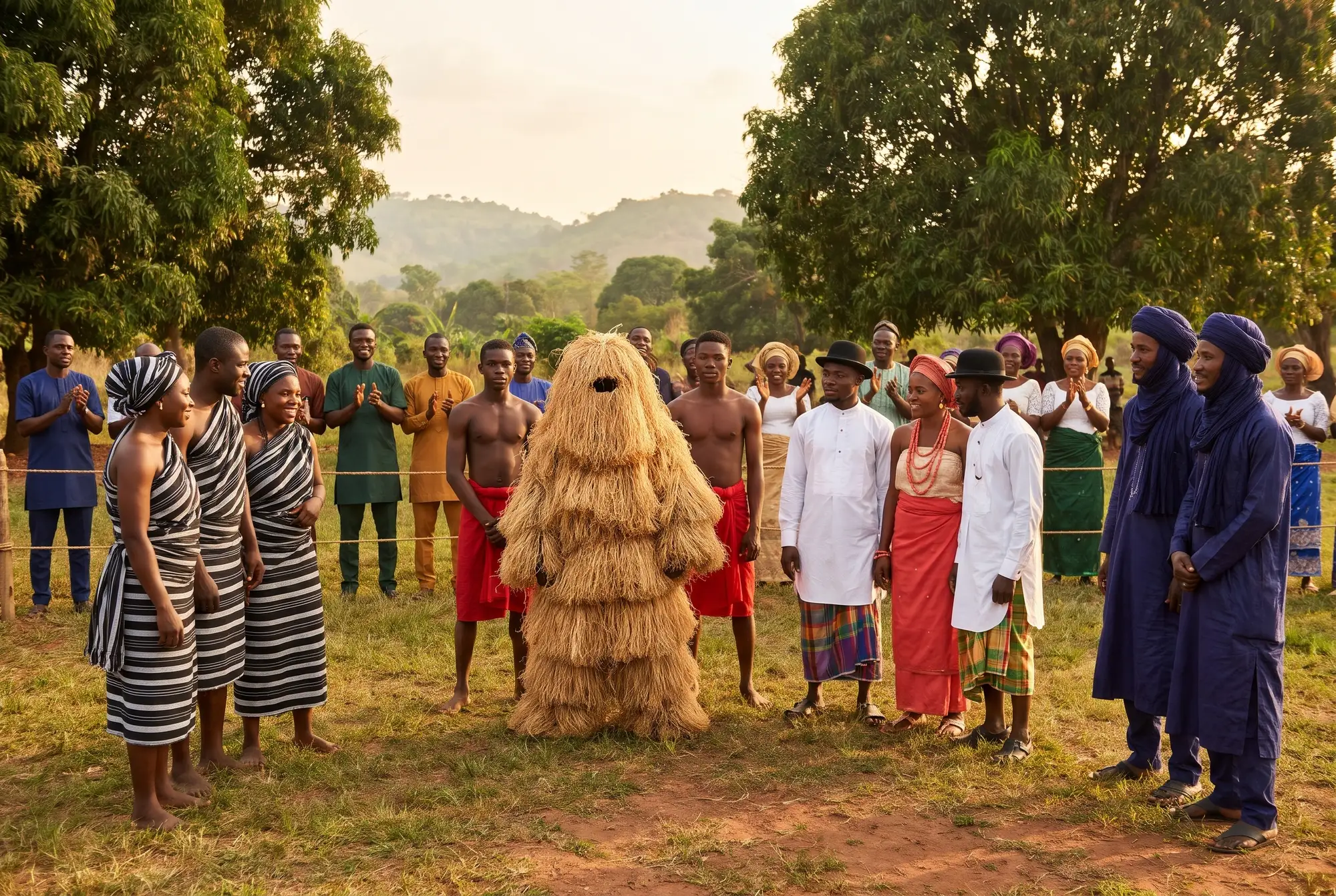
Picture a crowd at a cultural festival in Enugu: Tiv dancers in black and white striped A’nger cloth, Igbo masquerades in raffia, Fulani riders in turbans and Ijaw troupes in wrapper and bowler hats, all waiting their turn in the same afternoon sun. That scene is what the numbers below are trying, imperfectly, to capture.
How Africa’s Most Diverse Countries Compare on the Main Diversity Indices
| Country | Alesina ethnic score (2003) | Alesina linguistic score (2003) | Fearon ethnic score (2003) | Fearon cultural score (2003) | Living indigenous languages (Ethnologue, approx.) |
|---|---|---|---|---|---|
| Uganda | 0.930 | 0.923 | 0.930 | 0.647 | 41 |
| Liberia | 0.908 | 0.904 | 0.899 | 0.644 | 31 |
| Madagascar | 0.879 | 0.020 | 0.861 | 0.192 | 12 |
| DR Congo | 0.875 | 0.871 | 0.933 | 0.628 | 210 |
| Cameroon | 0.864 | 0.890 | 0.887 | 0.733 | 275 |
| Chad | 0.862 | 0.864 | 0.772 | 0.727 | 130 |
| Nigeria | 0.851 | 0.832 | 0.805 | 0.660 | 520 |
| Tanzania | 0.735 | 0.898 | 0.953 | 0.564 | 125 |
| South Africa | 0.752 | 0.865 | 0.880 | 0.530 | 30 |
The table shows that Uganda and Tanzania lead on the probability measures, Cameroon and Chad lead on cultural distance, and Nigeria leads by a huge margin on the sheer number of languages. No country wins every column, so any article that names one winner without saying which measure it used is only telling you half the story.
What Are the Top 3 African Countries, and Does Size Equal Diversity?
When people ask for Africa’s “top 3” countries, they usually mean one of two things: the biggest by population or the biggest by economy. Both lists are worth knowing, because they help explain why Nigeria’s diversity feels so much larger than its index score suggests.
By population, the top three are clear. The United Nations’ World Population Prospects estimates put Nigeria at about 237.5 million people in 2025, Ethiopia at about 135.5 million and Egypt at about 118.4 million, with the DR Congo close behind at about 112.8 million. By economy, the IMF’s October 2026 projections rank South Africa first (about $489 billion), Egypt second (about $443 billion) and Nigeria third (about $387 billion), helped by the 2025 rebasing of our GDP figures.
So does being big make a country diverse? Not automatically.
Egypt is the perfect counterexample. It has more than 118 million people, yet Arabic is the language of almost every home, and the country scores low on every fractionalisation index. Ethiopia sits in the middle, with more than 80 ethnic groups but two large blocs, the Oromo and the Amhara, making up a big share of the population.
Nigeria is the only country that appears in the top three for population, the top three for economy and near the top of every diversity measure. That combination is what makes us unusual. Uganda may beat us on the probability score, but Uganda’s 41 indigenous languages would fit comfortably inside a single Nigerian geopolitical zone (the North Central alone could probably match it).
Here is a thought experiment I often use with friends abroad. Imagine every person in Uganda, Liberia and Cameroon put together. That is roughly 85 to 90 million people speaking perhaps 350 languages between them. Nigeria has more than double the people and more languages than all three combined, inside one set of borders and one passport. Rather like a wardrobe that holds more clothes than three neighbours’ wardrobes together, the quantity becomes its own kind of quality.
Size also brings a harder truth. Managing that much variety is difficult, and countries have tried very different approaches. In a thought-provoking piece for this newspaper, Okoroafor’s argument about putting nation before tribe points to Tanzania, where Julius Nyerere inherited more than 120 ethnic groups and used Swahili as a common language to soften ethnic divisions. That partly explains why Tanzania can top Fearon’s ethnic list while scoring only middling on cultural distance: most Tanzanians now share a national language on top of their own.
Nigeria never chose a single indigenous national language. English (and, in the markets, Pidgin) quietly took that job instead, which is a story I come back to further down.
So, What Is the Most Diverse Country in Africa? The Straight Answer
Right, no more hedging. Here is the clearest answer I can give after all that research.
The most diverse country in Africa depends on the measure, but four countries share the title: Uganda is the most ethnically fractionalised country in Africa on Alesina’s index (0.930), Tanzania is the most ethnically fractionalised on Fearon’s index (0.953), Chad is the most culturally diverse in Africa and the world on the Gören measure reported by Pew Research, and Nigeria is the most diverse in absolute terms, with about 520 living indigenous languages (third in the world after Papua New Guinea and Indonesia) and between 250 and 370 ethnic groups, the largest count in Africa on most estimates. If you want one name for a pub quiz, say Uganda for ethnic fractionalisation, but if you mean the African country with the greatest number of distinct peoples and languages, the honest answer is Nigeria. The closely related entities you will meet in any serious discussion of this question are:
- Uganda, the top scorer on Alesina’s ethnic and linguistic indices
- Tanzania, the top African scorer on Fearon’s ethnic index
- Chad, the world leader on cultural diversity in the Gören study
- Cameroon, “Africa in miniature”, strong on every measure
- The DR Congo, with more than 200 ethnic groups and about 210 languages
- Nigeria, the leader on the number of languages and peoples
Which one you choose to call “most diverse” says more about what you value than about the countries themselves.
My own view, for what it is worth? Probability scores tell you how often two strangers will differ. Counts tell you how much human variety a country actually holds. For a Nigerian reader, and for anyone planning to live, work or travel here, the count matters more, because you will meet that variety at the market, in your NYSC posting and across the aisle at every wedding.
Which Country in Africa Speaks the Most English Amid All This Diversity?
Diversity and English are more closely linked than most people realise.
When a country has hundreds of languages and no single dominant one, it needs a neutral tongue that does not favour any group. In Nigeria that role went to English (and, unofficially, to Pidgin). The result is that Nigeria has more English speakers than any other country in Africa, with most estimates placing the number of Nigerians who speak at least some English at well over 110 million.
Uganda is an interesting comparison again. With 41 indigenous languages and no majority language, English became the language of school, government and inter-ethnic conversation, and one widely quoted estimate puts the number of Ugandans who speak it at around 29 million. Liberia, second only to Uganda on Alesina’s ethnic list, uses Liberian English as its everyday common language across 16 or so indigenous groups.
Tanzania shows the opposite path. Because Swahili spread so widely after independence, English is used far less in daily life there than in Nigeria, Uganda or Kenya, despite Tanzania’s extraordinary ethnic diversity. Cameroon, meanwhile, splits between French in eight regions and English in two, with Pidgin binding much of the country together.
If you have ever wondered why a Hausa trader in Kano and an Ijaw fisherman in Yenagoa can do business without an interpreter, this is why. Our diversity forced us to build bridges, and English and Pidgin became the planks. I explored how our English compares with that of our neighbours in my guide to which country speaks English like Nigeria, and the global picture is covered in my piece on the most spoken language in the world, where Nigerian Pidgin now features in the global top 20.
A practical tip for visitors: in the big southern cities, English will get you almost everywhere, but a few words of Pidgin (“How far?”, “Wetin dey happen?”) will get you better prices and warmer smiles. In the north, a simple “Sannu” goes a long way.
What Is the Most Civilised Country in Africa, and Is That Even the Right Question?
This question pops up often in Google’s “People also ask” box, and I want to treat it with care.
The word “civilised” has an uncomfortable history on our continent. European travellers and colonial officials used it to rank African peoples against a European yardstick, usually to justify conquest. As I explained in my article on where African stereotypes came from, much of what the world “knows” about Africa was written by outsiders with something to gain.
If we read the question as “which African country has the oldest or most celebrated civilisations?”, the answer is genuinely rich. Egypt’s pharaonic state emerged more than 5,000 years ago. Sudan’s Kingdom of Kush built more pyramids than Egypt, at sites such as Meroë. Ethiopia’s Kingdom of Aksum minted its own coins and adopted Christianity in the fourth century. Mali’s medieval empire made Timbuktu a centre of scholarship, and the stone city of Great Zimbabwe still stands as a monument to southern African engineering.
And Nigeria? We are no small part of that story.
The Nok culture of central Nigeria produced terracotta sculptures more than 2,000 years ago. Igbo-Ukwu’s bronzes, cast around the ninth and tenth centuries, are so intricate that metallurgists still marvel at them. Ife’s bronze and terracotta heads rank among the finest naturalistic sculptures ever made, the Kingdom of Benin built earthworks that ran for thousands of kilometres, and the Kanem-Bornu empire lasted roughly a thousand years.
Here is the link to our main question. Many of Africa’s most diverse countries are diverse precisely because so many old kingdoms, city-states and trading peoples developed side by side. Nigeria did not inherit one civilisation; it inherited dozens. Diversity, in that sense, is not the opposite of civilisation. It is the evidence of it.
How to Experience Africa’s Diversity, Starting Right Here in Nigeria
Reading about diversity is one thing. Feeling it is another, and you do not need a passport to start. Here is the plan I give friends and readers who ask me where to begin.
- Learn ten greetings from groups outside your own, starting with your neighbours, colleagues or your NYSC host community, because a greeting in someone’s mother tongue opens doors faster than any business card.
- Plan a trip to NAFEST in Enugu between 21 and 28 November 2026, budgeting roughly ₦50,000 to ₦80,000 for a return luxury bus from Lagos or Abuja and ₦35,000 to ₦70,000 a night for a mid-range hotel.
- Spend a weekend in a Middle Belt state such as Plateau, Taraba or Benue, where dozens of ethnic groups live within a few hours’ drive of each other.
- Eat your way across the zones by trying one dish a week from a group you know little about, such as Tiv yam pottage, Efik edikang ikong, Kanuri masa or Urhobo banga soup, usually for ₦3,000 to ₦8,000 a plate at a good buka.
- Watch films and listen to music from beyond your own corner, mixing Nollywood with Kannywood, Yoruba epics and Igbo highlife, so your ear starts to catch the different rhythms of our languages.
- Visit one of our neighbours, such as Cameroon or Benin, remembering that Cameroon is outside ECOWAS, so Nigerians need a visa, and checking current fees with the embassy before you budget.
- Keep a simple diversity journal for your children, noting each new group, food, festival and greeting you learn together, so the next generation grows up curious rather than suspicious.
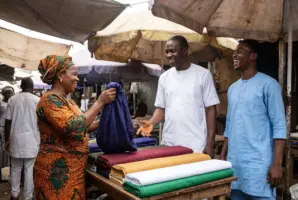
A word on style, because how you present yourself at cultural events matters. When you attend a festival or a friend’s traditional ceremony, wearing a fabric from their region is a lovely gesture. An adire shirt from Abeokuta, a Tiv A’nger wrapper, an Akwete cloth from Abia or a Kano-embroidered kaftan all signal respect (expect to pay from about ₦10,000 for a couple of yards of adire up to ₦150,000 or more for hand-woven aso-oke). Keep colours modest at religious events, ask before photographing masquerades, and follow the host’s lead on whether shoes come off.
For your home, a “Unity in Diversity” corner is one of my favourite decorating ideas. Frame small swatches of four or five regional fabrics in matching black frames, add a calabash or a piece of Ilorin pottery, and you have a conversation starter that tells guests exactly who you are as a Nigerian.
These small acts add up. In his piece on harnessing the gains in our diversity, public affairs analyst Egwu Ben Obasi points to schools, the NYSC scheme, the public service and intermarriage as places where our differences already work in our favour. And this year’s festival promises more than dances: the report on NAFEST’s new competitions, gaming and concerts by Ajuluchukwu Brown describes delegations from all 36 states and the FCT, Jollof War, Dance Off Naija and masterclasses for young creatives. Rather like a family reunion with better music, it is the closest thing we have to a national living room.
Final Thoughts on the Most Diverse Country in Africa
So, what is the most diverse country in Africa? If you measure the chance that two strangers belong to different groups, Uganda or Tanzania takes the prize. If you measure cultural distance between languages, Chad leads the world, with Cameroon close behind. And if you measure the sheer number of peoples and languages living under one flag, Nigeria stands alone, with about 520 indigenous languages and somewhere between 250 and 370 ethnic groups.
The deeper lesson is that diversity is not a trophy. Every country on this list has had to work out how to hold its peoples together, whether through Swahili in Tanzania, bilingualism in Cameroon or English, Pidgin and “Unity in Diversity” here at home. None of them has found a perfect formula, but all of them show that variety and nationhood can live side by side.
For us, the challenge and the opportunity are the same. A country with this much human variety has more ideas, more food, more music and more ways of solving problems than almost anywhere on Earth. The task is to treat that variety as a shared inheritance rather than a source of suspicion.
- When you read a “most diverse country” ranking online, check which index it used before you share it or argue about it.
- Correct anyone who calls Nigeria’s ethnic groups “tribes of a few people”, because several of our groups are larger than entire European countries.
- Prepare a two-minute answer, with real figures, for the next time someone abroad talks about “African culture” as if it were one thing.
Related Articles
If this piece left you wanting to understand the roots of our variety, my article on why Nigeria is culturally diverse traces it back through trade routes, ancient kingdoms and centuries of migration. And if you are curious about the exact numbers behind the “250 or 371” debate, my guide to how many ethnic groups are in Nigeria walks through the competing counts and the states, such as Taraba, with the greatest variety.
Key Takeaways
- Uganda (Alesina) and Tanzania (Fearon) top Africa’s ethnic fractionalisation indices, while Chad leads on cultural diversity.
- Nigeria is Africa’s most diverse country in absolute terms, with about 520 indigenous languages and 250 to 370 ethnic groups.
- Big populations do not guarantee diversity, as Egypt shows, but Nigeria combines top-three size with near-top diversity scores.
Frequently Asked Questions: What Is the Most Diverse Country in Africa?
What is the most diverse country in Africa?
It depends on the measure, because Uganda tops Alesina’s ethnic index, Tanzania tops Fearon’s list for Africa and Chad leads on cultural diversity. In absolute terms, Nigeria is the most diverse, with about 520 indigenous languages and at least 250 ethnic groups.
Which African country has the most languages?
Nigeria has the most, with about 520 living indigenous languages listed by Ethnologue. That places it third in the world after Papua New Guinea and Indonesia, and far ahead of Cameroon and the DR Congo.
Is Nigeria the most diverse country in Africa?
Nigeria is the most diverse by the number of languages and ethnic groups, but not on every index. Its three largest groups make up over half the population, which lowers its probability score compared with Uganda or Tanzania.
Why does Uganda top some diversity rankings?
Uganda has dozens of ethnic groups and no single group forms a majority of the population. As a result, two Ugandans picked at random are very likely to come from different groups, giving a score of about 0.93.
What is the most culturally diverse country in Africa?
Chad is ranked the most culturally diverse country in Africa and the world in a study by economist Erkan Gören, reported by Pew Research. Cameroon, Nigeria, Togo and the DR Congo complete that top five.
What is the most diverse country in the world?
Papua New Guinea is usually ranked the most diverse country in the world, with more than 800 living languages. Its groups are so small and numerous that Fearon’s index gives it a perfect score of 1.
Why is Cameroon called Africa in miniature?
Cameroon has roughly 250 ethnic groups, about 275 languages and landscapes ranging from desert edge to rainforest and mountains. It also uses both English and French officially, so it reflects much of the continent within one country.
How many ethnic groups are there in Africa?
Africa is commonly estimated to have more than 3,000 ethnic groups speaking over 2,000 languages. Nigeria alone accounts for roughly a quarter of the continent’s living languages.
What are the top 3 African countries by population?
Nigeria leads with about 237.5 million people, followed by Ethiopia with about 135.5 million and Egypt with about 118.4 million. The DR Congo is a close fourth with about 112.8 million people.
Which country in Africa speaks the most English?
Nigeria has the largest number of English speakers in Africa, with estimates well above 110 million people. English serves as a neutral common language across our hundreds of ethnic groups, alongside Nigerian Pidgin.
How is ethnic diversity measured?
Researchers use a fractionalisation index that estimates the chance that two randomly chosen people belong to different groups. A score near 0 means one dominant group, while a score near 1 means almost every pair of people differs.
Where can I experience Nigeria’s diversity in one place?
The National Festival of Arts and Culture, NAFEST, brings delegations from all 36 states and the FCT together each year. The 2026 edition runs in Enugu from 21 to 28 November, with dance, music, food and fashion competitions.