
 Get Guardian on Google
Hello, and welcome. If you have ever stood in a Maiduguri motor park at two o’clock on an April afternoon, you already know that heat is more than a number on your phone. So when readers write in asking what is the hottest place on Earth, I understand the question completely. We want to know whether our own blistering afternoons are as bad as it gets. This guide is the conclusion of months of research into the official record books for extreme heat and years of experience writing about Nigerian weather, from Sokoto’s dry-season furnace to the wet-blanket humidity of Lagos.
Here is the twist that surprised me when I first dug into it: there is no single winner.
The answer changes depending on what you measure. Measure the air in the shade, the way every proper weather station does, and Death Valley in California holds the crown with 56.7°C, recorded at Furnace Creek on 10 July 1913. Measure the ground itself from space, and Iran’s Lut Desert wins with a land surface that satellites have clocked at a frightening 80.8°C. Ask instead where it stays hottest all year round, day and night, and the prize goes to Dallol in Ethiopia’s Danakil Depression, where the average annual temperature in the 1960s was about 34.4°C.
And Nigeria? We are not on the podium, but we are closer than most people realise. Yola logged 46.4°C in April 2010, and records for Maiduguri show 47°C in May 1983. That is hotter than the all-time record for most of Europe’s capitals.
Why does any of this matter to someone in Kano or Port Harcourt? Because the same forces that make Death Valley deadly are at work, more gently, in our own backyards. Our weather agency, NiMet, even publishes guidance on how humidity changes the way heat feels on the body, because a humid 34°C in Warri can be harder on you than a dry 40°C in Katsina. I learnt that lesson the hard way, sweating through a cotton shirt in under ten minutes at Oshodi while a friend visiting from Kano laughed that it was “only” 33°C.
So let me take you on a tour of the planet’s hottest corners, then bring it all home to Nigeria, with practical advice for surviving our own hot season.
Is the Sahara Hotter Than Death Valley?
This is the question my nephew asked me over jollof last Christmas, and it started a family argument that lasted well past dessert.
The honest answer is that Death Valley wins on peak heat, while the Sahara wins on sheer size and staying power. Death Valley is a narrow basin that sits below sea level, hemmed in by steep mountains. Hot air sinks into it, gets squeezed and warmed further as it descends, and then has nowhere to escape. It is rather like leaving a pot of egusi on the stove with the lid jammed on: the heat just builds and builds. In July 2018 the average daily temperature at Furnace Creek hit 42.3°C across the whole month, the hottest month ever measured at a single location.
The Sahara is a different beast entirely. It covers about nine million square kilometres, roughly ten times the size of Nigeria, and much of it bakes above 40°C for months on end. Africa’s officially recognised air record belongs to the Sahara, at 55.0°C in Kebili, Tunisia, on 7 July 1931, although many meteorologists now doubt that reading. A more trustworthy modern figure is the 51.3°C measured at Ouargla, Algeria, on 5 July 2018.
There is also a famous ghost in the record books. For ninety years, El Azizia in Libya was said to hold the world record at 58°C, set in 1922. In 2012 the World Meteorological Organization threw it out, after investigators concluded that an inexperienced observer had misread the instrument and that the station sat over a dark, asphalt-like surface. Death Valley quietly inherited the title.
So, on any single afternoon, Death Valley can beat the Sahara. Across a whole year and a whole continent, the Sahara is the bigger, more relentless oven.
What does that mean for us? Northern Nigeria sits on the southern fringe of that oven, in the Sahel and Sudan savannah belts. When NiMet issued its heat stress watch for the northern states in April 2025, maximum temperatures across the north were already close to 40°C, with the worst discomfort expected over Borno, Adamawa, Yobe, Sokoto, Kebbi and the FCT, among others. Climate experts quoted in a Guardian report on rising heat waves across the country point out that the Sahel and Sudan savannah zones now regularly pass 40°C, with longer heat waves and warmer nights. If you want the state-by-state picture, my earlier guide on which state in Nigeria is very hot breaks it down in detail.
A quick personal confession: on my first reporting trip to Damaturu, I packed dark polyester shirts because they “didn’t show sweat”. By lunchtime on day one I had bought two loose white kaftans from a roadside trader for ₦9,000, and I have never looked back. Light colours and natural fabrics are not a style choice up north; they are survival gear (and, frankly, they look far better in photos).
What Are the Top 10 Hottest Places in the World?
Ranking the hottest places on the planet is trickier than it sounds, because the record books mix three different kinds of measurement. Before I give you my list, here is a quick key so you can read it properly.
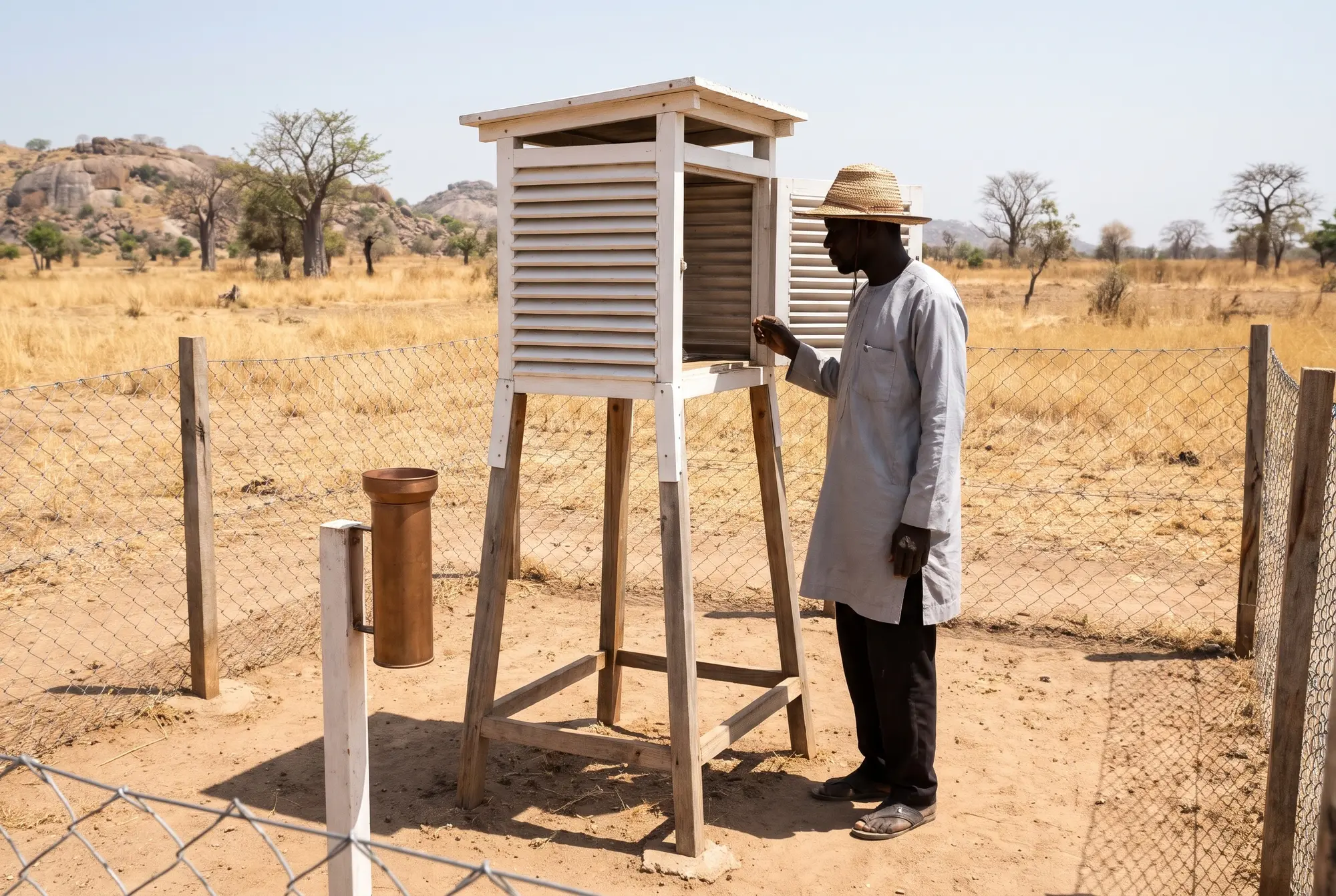
Air temperature is what a thermometer reads in a shaded box about one and a half metres above the ground. This is the figure the World Meteorological Organization uses for official records. Surface temperature is how hot the ground itself gets, measured by satellites from space, and it can run 20°C or more above the air. Annual average temperature tells you how hot a place is across every hour of every day for a whole year, which is the best measure of where life is hardest to bear.
Think of it rather like judging footballers. One striker scores the most spectacular single goal of the season; another scores steadily every week. Both are “the best”, depending on what you value.
Here in Nigeria we tend to think in terms of the afternoon peak, because that is when the NEPA light goes off, the fan stops, and everyone suddenly feels it. Even in the harmattan season our forecasters warn of unusual spikes; in February 2026, for example, NiMet forecast maximum temperatures in the top 10 percent range in several locations, with a raised risk of heat stress and heat-related illness. That kind of warning is exactly why it helps to know how our numbers stack up against the global extremes.
My top ten blends all three measures, with the measurement type shown clearly in the table below, so you are comparing like with like. Furnace Creek takes first place for the official air record, the Lut and Sonoran deserts share the ground record, and the continental air records of Africa, Asia, Oceania and Europe fill most of the remaining spots. Dallol earns its place because nowhere else on Earth stays so hot, on average, for so long. I have added Yola at the bottom so you can see exactly how Nigeria compares.
Record Temperatures at the World’s Hottest Places Compared With Nigeria
| Rank | Place | Country | Highest reading | Type of measurement | Date or period |
|---|---|---|---|---|---|
| 1 | Furnace Creek, Death Valley | USA | 56.7°C | Air (official WMO record) | 10 July 1913 |
| 2 | Lut Desert | Iran | 80.8°C | Land surface (satellite) | 2003 to 2018 data |
| 3 | Sonoran Desert | Mexico and USA | 80.8°C | Land surface (satellite) | 2003 to 2018 data |
| 4 | Kebili | Tunisia | 55.0°C | Air (WMO Africa record, disputed) | 7 July 1931 |
| 5 | Mitribah | Kuwait | 53.9°C | Air (WMO verified) | 21 July 2016 |
| 6 | Turbat | Pakistan | 53.7°C | Air (WMO verified) | 28 May 2017 |
| 7 | Ouargla | Algeria | 51.3°C | Air | 5 July 2018 |
| 8 | Oodnadatta | Australia | 50.7°C | Air (Oceania record) | 2 January 1960 |
| 9 | Dallol | Ethiopia | 34.4°C | Annual average (daily highs about 41°C) | 1960 to 1966 |
| 10 | Sicily | Italy | 48.8°C | Air (Europe record) | 11 August 2021 |
| For comparison | Yola, Adamawa | Nigeria | 46.4°C | Air (national high) | April 2010 |
The table shows that Nigeria’s hottest days sit roughly 10°C below the world air record, but within a few degrees of Europe’s. The bigger lesson is that the “hottest place” title depends entirely on whether you measure air, ground or the yearly average.
A note on Death Valley’s own newer readings: Furnace Creek hit 54.4°C in August 2020 and again in July 2021. Many climatologists regard these as the highest reliably measured air temperatures in modern history, but the World Meteorological Organization was still reviewing them at the time of writing.
And the Flaming Mountains of China, which you may have seen on travel videos? They are fiercely hot at ground level, but they do not hold an official air record, so they missed my top ten (sorry, Sun Wukong fans).
So, What Is the Hottest Place on Earth? The Short Answer
If you only remember one paragraph from this article, make it this one. The hottest place on Earth, according to the official record books, is Furnace Creek in Death Valley, California, where the air reached 56.7°C on 10 July 1913, a figure the World Meteorological Organization still recognises as the world record, even though some experts question it. If you measure the ground rather than the air, the hottest place on Earth is Iran’s Lut Desert, which shares a satellite-measured land surface record of 80.8°C with the Sonoran Desert on the border of Mexico and the United States. If you mean the place that stays hottest all year round, it is Dallol in Ethiopia’s Danakil Depression, with an average annual temperature of about 34.4°C. Closely related record holders include Kebili in Tunisia, Africa’s official air record at 55.0°C, and Mitribah in Kuwait at 53.9°C, the highest verified reading in Asia. Nigeria’s own peak, around 46 to 47°C in Yola and Maiduguri, keeps us out of the global top ten but firmly in the world’s hot belt.
That is the answer in a nutshell.
Why do these places get so hot? The recipe is surprisingly similar everywhere. You need low elevation (Death Valley and Dallol both sit below sea level), a basin shape that traps air, almost no moisture to absorb the sun’s energy, dark rock or sand that soaks up heat, and clear skies with relentless sunshine. The Lut Desert adds black volcanic gravel to the mix, which is rather like painting the ground with charcoal and placing it under a magnifying glass.
Do people live there? Remarkably, yes. A small community of park workers and Timbisha Shoshone families lives in Death Valley year round, and Afar salt miners still work the flats near Dallol, cutting slabs by hand in temperatures that would send most of us running for the nearest cold Maltina.
Which Are the Top 10 Hottest Countries in the World, and Where Does Nigeria Rank?
Here is where things get personal for West Africa. If you rank whole countries by their average annual temperature, our region dominates the list.
Using World Bank climate data averaged over 1991 to 2020, the ten hottest countries are Mali (28.83°C), Burkina Faso (28.71°C), Senegal (28.65°C), Tuvalu (28.45°C), Djibouti (28.38°C), Mauritania (28.34°C), Bahrain (28.23°C), Palau (28.04°C), Qatar (28.02°C) and The Gambia (27.97°C). Notice something? Five of the top ten are in West Africa, and three of them share a border with Mali.
Nigeria comes in at roughly 27.24°C, which places us around 30th in the world. Our northern neighbour Niger, at 27.83°C, sits around 13th. Different datasets shuffle the order slightly (some put Burkina Faso first, others the United Arab Emirates), but the West African Sahel always appears near the top.
Why doesn’t Nigeria rank higher, given how hot Maiduguri feels in April? Two reasons. First, our southern half is cooled by rainfall and cloud cover for much of the year. Second, the Jos Plateau, the Mambilla Plateau and the Obudu highlands pull the national average down. A country average is rather like a family’s average height: one very tall uncle and one very short cousin can hide a lot of variety. I explored this balancing act in more depth when I asked whether Nigeria is hotter than other African countries, and the answer is that we sit comfortably in the middle of Africa’s range rather than at the extreme.
But averages can mislead you in a dangerous way. A 27°C yearly average hides afternoons above 40°C across the north and humid nights in the south that never drop below 25°C. For a family with no reliable power, those nights are the real problem. Kingsley Jeremiah’s reporting on how power failure and fuel costs are turning heat into a household crisis captures this well: families are spending a growing share of their income on generators, fuel and cooling devices just to sleep through the night.
I see it in my own circle. A cousin in Ilorin told me she now budgets around ₦40,000 a month extra in the hot season for petrol to run the generator at night, purely so her children can sleep under a fan. That is the hidden cost of heat that no world ranking captures.
Styling and home design can help more than you might think. Across the north, traditional mud-walled homes with thick walls and small windows stay noticeably cooler than modern block houses with zinc roofs. If you are building or renovating, consider a light-coloured or reflective roof, deep eaves that shade the walls, and windows on opposite sides of each room for cross-ventilation. Inside, swap heavy velvet curtains for light cotton or linen in pale shades, and keep a few large potted plants by windows; they cool the air slightly and look lovely too.
Can a Human Survive 40°C Heat, and How Do Nigerians Cope?
Yes, a healthy human can survive 40°C air, and millions of Nigerians do it every dry season. The catch is that survival depends on two things: humidity and how long you are exposed.
Your body cools itself by sweating. As sweat evaporates from your skin, it carries heat away. In dry heat, like Kano in March, sweat evaporates quickly, so your body copes reasonably well at 40°C as long as you drink enough water. In humid heat, like Lagos or Calabar in the rainy season, sweat clings to your skin and cannot evaporate, so your body loses its main cooling system.
Scientists capture this with a measure called the wet-bulb temperature, which combines heat and humidity. For years, researchers believed a wet-bulb temperature of 35°C was the absolute limit of human survival. More recent laboratory work at Penn State University found that even young, healthy adults begin to overheat at a wet-bulb temperature of about 31°C, which is a lower threshold than anyone expected. For older people, the safe limit is likely lower still.
Your core body temperature normally sits at about 37°C. Once it climbs past 40°C, you are in heatstroke territory, which is a medical emergency that can damage the brain, heart and kidneys within hours.
That is why the Guardian’s editorial board has argued that Nigeria urgently needs a coordinated national response to extreme heat, including cooling centres in schools and community halls. Until those arrive, here is the routine I follow and recommend to friends and family during the hot season.
- Check the forecast and heat index every morning. NiMet posts daily outlooks and heat stress warnings, and a “feels like” figure above 40°C is your signal to change your plans for the day.
- Drink before you feel thirsty. Aim for at least 2.5 to 3 litres of water a day in the hot season, more if you work outdoors; a bag of 20 pure water sachets costs roughly ₦500 to ₦800 in most cities, which is cheap insurance.
- Avoid strenuous work between noon and 3pm. Move errands, market runs and exercise to early morning or after 5pm, when temperatures drop by several degrees.
- Dress for airflow, not fashion. Choose loose cotton, linen or adire in white, cream or pale blue, and add a wide-brimmed straw hat (₦2,000 to ₦5,000 at most markets).
- Replace salts as well as water. If you sweat heavily, oral rehydration salts at ₦200 to ₦500 a sachet, or a pinch of salt and sugar in water, help prevent cramps and dizziness.
- Cool your sleeping space. Open windows on opposite walls after sunset, hang a damp cotton cloth in front of a fan, and if power is unreliable, a rechargeable fan (roughly ₦50,000 to ₦120,000) can make the difference between rest and a sleepless night.
- Know the danger signs and act fast. Confusion, slurred speech, hot dry skin, fainting or a very high temperature mean heatstroke; move the person into shade, cool them with wet cloths and fanning, and get them to a hospital immediately.
One more piece of advice from experience: check on your elderly neighbours. During the 2024 heat wave, an elderly man on my street in Abuja fainted in his sitting room because he did not want to “waste” his prepaid units running the fan. A daily knock on the door costs nothing.
Is it possible to grow used to the heat? Partly. Your body acclimatises over about one to two weeks, sweating earlier and more efficiently. That is why visitors from Jos often struggle more in Maiduguri than people who have lived there all their lives. But acclimatisation has limits, and nobody is immune to heatstroke.
Final Thoughts on the Hottest Place on Earth
So, the next time someone at a family gathering asks what the hottest place on Earth is, you can settle the argument properly. Death Valley holds the official air record at 56.7°C, the Lut and Sonoran deserts hold the ground record at 80.8°C, and Dallol in Ethiopia is the hottest place to live, on average, all year round. Africa features heavily in every version of the list, and West Africa dominates the ranking of the hottest countries.
Nigeria is not the hottest place on the planet, but our northern states sit on the edge of the world’s great heat belt, and our southern cities face the quieter danger of humid heat. Understanding the difference between air temperature, surface temperature and the heat index is not just trivia; it is the knowledge that helps you plan your day, protect your family and spot trouble early.
Here are three things worth doing this hot season:
- Save NiMet’s official channels on your phone so you see heat warnings the day they are issued, not after the fact.
- Have a family conversation about who in your household or street is most at risk, such as grandparents, babies or anyone with heart trouble, and agree who checks on them.
- If you are building, renovating or even repainting, choose lighter roofs, wider eaves and cross-ventilation now, because a cooler home will save you money on fuel for years.
Stay cool, stay curious, and look after one another.
Related Articles
If this tour of the world’s hottest places has you wondering how Nigeria’s own map compares, start with my state-by-state guide to which state in Nigeria is very hot, where I look at why Borno, Yobe and Sokoto top the list and what that means for daily life. For the continental picture, my analysis of whether Nigeria is hotter than other African countries compares our average temperatures with those of Mali, Niger, Kenya and others, and explains why humidity makes our south feel hotter than the numbers suggest.
Key Takeaways
- Death Valley holds the official air temperature record at 56.7°C, while Iran’s Lut Desert and the Sonoran Desert hold the satellite ground record at 80.8°C.
- Five of the world’s ten hottest countries by average temperature are in West Africa, with Nigeria sitting around 30th at roughly 27.24°C.
- Humidity matters as much as heat, because a wet-bulb temperature of about 31°C can overwhelm even healthy adults.
Frequently Asked Questions
What is the hottest place on Earth?
The hottest place on Earth by official air temperature is Furnace Creek in Death Valley, California, which recorded 56.7°C on 10 July 1913. By ground temperature, the record belongs to Iran’s Lut Desert and the Sonoran Desert, both measured at 80.8°C by satellite.
What is currently the hottest place on Earth?
Death Valley still holds the official world record, and it recorded 54.4°C in both August 2020 and July 2021, the highest reliably measured air temperatures in modern times. Those newer readings were still under review by the World Meteorological Organization at the time of writing.
Is the Sahara hotter than Death Valley?
Death Valley reaches higher peak temperatures, with a record of 56.7°C compared with the Sahara’s official 55.0°C in Kebili, Tunisia. The Sahara is far larger and stays above 40°C across huge areas for months, so it is hotter overall as a region.
What is the hottest inhabited place on Earth?
Dallol in Ethiopia’s Danakil Depression holds the record for the highest average annual temperature, about 34.4°C between 1960 and 1966. Afar salt miners still work in the surrounding area despite average daily highs of around 41°C.
What is the hottest place in Africa?
Africa’s official air temperature record is 55.0°C, set in Kebili, Tunisia, on 7 July 1931, although many meteorologists question that reading. Dallol in Ethiopia is the hottest African location on average across the whole year.
What is the hottest country in the world?
Using World Bank data averaged over 1991 to 2020, Mali is the hottest country, with an average annual temperature of about 28.83°C. Burkina Faso and Senegal follow closely, and some datasets place Burkina Faso first.
Where does Nigeria rank among the hottest countries in the world?
Nigeria’s average annual temperature is about 27.24°C, which places it roughly 30th in the world. Our cooler plateaus and rainy south pull the national average below that of Sahel neighbours such as Mali and Niger.
What is the highest temperature ever recorded in Nigeria?
Weather station records show Yola reaching 46.4°C in April 2010, and Maiduguri’s climate records list 47°C in May 1983. Either way, Nigeria’s peak heat sits about 10°C below the world record.
Which is the hottest state in Nigeria?
Borno, Yobe, Sokoto, Kebbi and Adamawa regularly record the highest temperatures in Nigeria, often passing 40°C between March and May. Borno is most often named the hottest, with Maiduguri among the country’s hottest cities.
Can a human survive 40°C?
A healthy person can survive 40°C air temperature if they stay hydrated, rest in shade and the air is reasonably dry. High humidity at the same temperature is far more dangerous because sweat cannot evaporate to cool the body.
What is the difference between air temperature and surface temperature?
Air temperature is measured in a shaded box about one and a half metres above the ground, and it is the figure used for official records. Surface temperature measures how hot the ground itself becomes in direct sunlight, which can be 20°C or more higher.
Why is Death Valley so hot?
Death Valley sits below sea level in a narrow basin surrounded by steep mountains that trap hot air. Sinking air warms further as it is compressed, and the dry desert floor has almost no moisture to absorb the sun’s heat.