
 Get Guardian on Google
Welcome, and thank you for joining me for a conversation that many Nigerians would rather have in whispers. What are the stereotypes of Fulani people, where did they come from, and how much truth does any of them carry? This article is the conclusion of months of research through genetic studies, government records and decades of newspaper coverage, built on years of experience living, working and eating alongside one of the most widely spread peoples in West Africa. I will not pretend the subject is comfortable, and I will not pretend it is simple.
Let me start with a calabash.
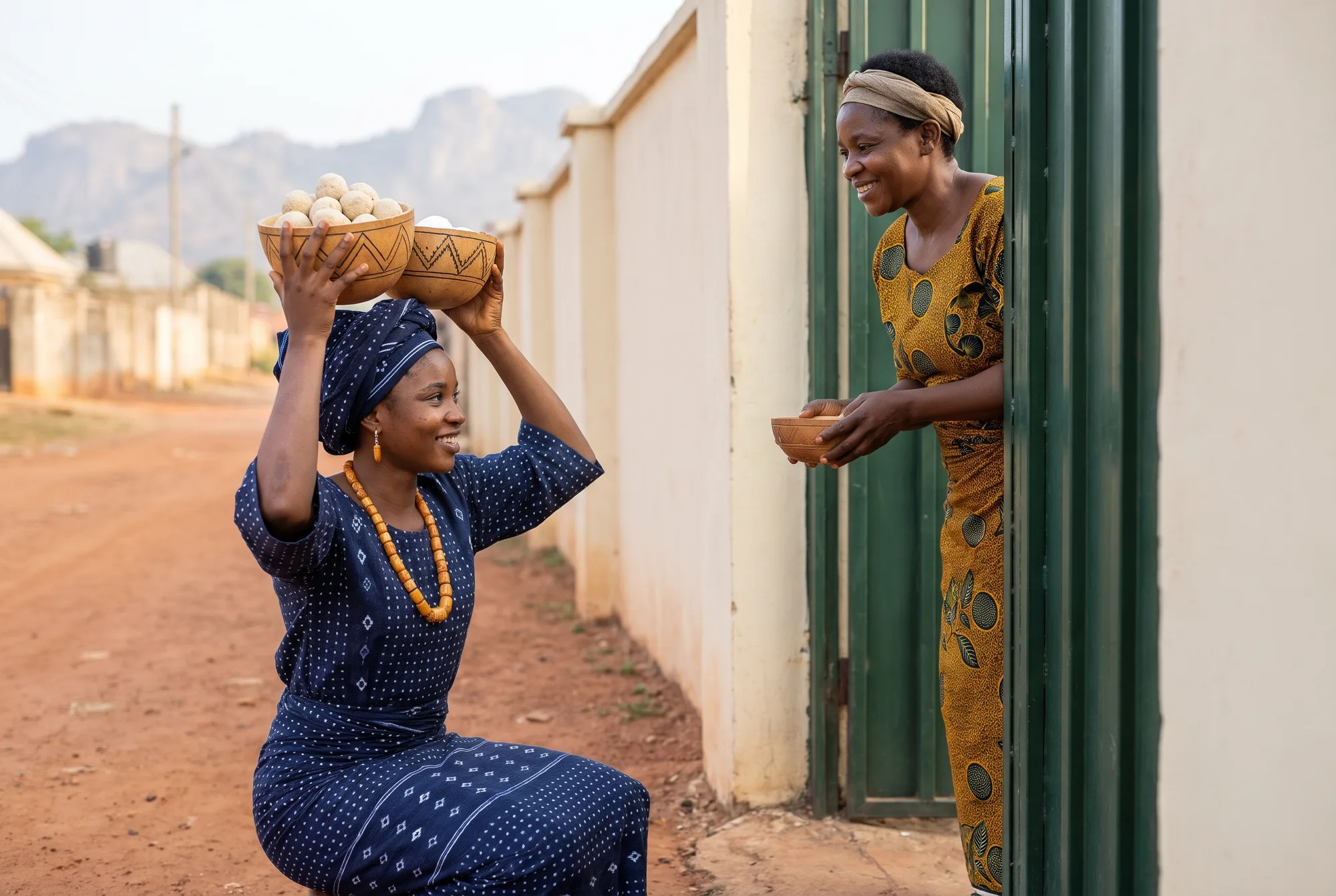
For most of a year I lived in Jos, and every morning a young Fulani woman walked past my gate with fura da nono balanced on her head, the millet balls in one bowl and the fermented milk in another. She greeted my landlady in Hausa, haggled with the mechanic next door in Pidgin and sang to herself in Fulfulde. Within a fortnight I knew her name, her mother’s village outside Bokkos and the exact number of cows her family had lost to rustlers the previous dry season (eleven, if you were wondering). What I never heard, in all those mornings, was anything that matched the picture my friends down south carried in their heads whenever the word “Fulani” came up.
That gap, between the woman at my gate and the figure in the headlines, is what this piece is about.
Nigerians are hardly alone in worrying about it. In April 2026, security chiefs, lawmakers, diplomats and journalists spent two days at the National Counter Terrorism Centre in Abuja, and they closed by warning that lazy ethnic labels in security talk were damaging national unity itself. The organisers produced a toolkit and a policy brief on non-stigmatising language, which tells you how seriously the problem is now taken at the top.
So over the next few thousand words, we will look at who the Fulani actually are, the three broad ways of Fulani life, what the Fulani are genuinely known for, the stereotypes themselves (set against the evidence in a single table), the vexed question of what Fulani people “look like”, and a practical seven-step guide for anyone who wants to stop passing these ideas along. Shall we?

Are Fulani People a Tribe, or Something Bigger?
The short answer is that the Fulani are an ethnic group, and a very large one, but the word “tribe” undersells them badly.
The Fulani call themselves Fulɓe (a single person is a Pullo), and their language is Fulfulde in the east of West Africa and Pulaar in the west. “Fulani” is actually the Hausa name for them, which is why it dominates in Nigeria, while French speakers say Peul and Gambians and Guineans often say Fula. One people, half a dozen names. If that sounds confusing, imagine trying to explain to a visitor that Lagosians, Ijebu people and Egba people are all Yoruba, and then imagine the Yoruba spread across seventeen countries.
Because that is roughly the Fulani situation. Researchers put the total Fulani population at somewhere between 25 and 40 million people, living in a long belt that runs from Senegal and Guinea on the Atlantic, through Mali, Burkina Faso, Niger, Nigeria, Cameroon and Chad, all the way to Sudan. They are commonly described as the largest nomadic pastoral community in the world, although (and this matters enormously, as you will see) most Fulani are not nomads at all.
In Nigeria, the most widely quoted estimate is that Fulani people make up about 6 per cent of the population, which works out at somewhere between 13 and 15 million people. That figure comes with the usual Nigerian health warning: no census has asked about ethnicity since 1963, so every number you read is an estimate. Fulani communities are concentrated in Sokoto, Kebbi, Katsina, Kano, Zamfara, Gombe, Bauchi, Adamawa and Taraba, but you will find Fulani settlements in Oyo, Ogun, Kwara, Enugu and almost every other state.
Then there is the “Hausa-Fulani” question.
Many southern Nigerians use “Hausa-Fulani” or simply “Hausa” for anyone from the far north, and many northerners will gently (or not so gently) correct them. The Hausa and Fulani are distinct peoples with different languages and origins. Centuries of intermarriage, particularly after the Fulani-led jihad of 1804 put Fulani emirs on Hausa thrones, produced a merged elite in cities such as Kano, Katsina and Zaria, where many families are Fulani by descent but Hausa by language. Out in the grazing lands, though, millions of Fulani still speak Fulfulde at home and keep a way of life that has little in common with Hausa urban society.
So are the Fulani a tribe? They are a people, rather like a family whose members have settled in every house along a very long street, kept the same surname and grown up with quite different habits.
What Are the Three Types of Fulani in Nigeria?
Here is where the first great misunderstanding begins, because most stereotypes about the Fulani are really stereotypes about one type of Fulani.
Scholars and Fulani people themselves usually describe three broad groups, based on how they settle.
The first are the fully nomadic pastoralists, often called Mbororo or Bororo’en. They move with their cattle throughout the year and rarely stay in one place for longer than two to four months, following rain, grass and water along routes their grandparents walked. Their homes are light, portable shelters, their wealth walks on four legs, and their children have historically had the least access to schooling of any group in Nigeria. When southern Nigerians picture “a Fulani”, this is nearly always the person they picture, even though it describes a minority.
The second are the semi-nomadic or semi-settled Fulani, sometimes called Fulɓe Na’i, which roughly means “cattle Fulani”. These families keep a fixed homestead, farm a little millet, sorghum or maize, and send their young men and part of the herd on seasonal journeys while the elders, women and small children stay put. This is the largest group, and it is the group most squeezed by the current pressures on land.
The third are the settled or “town” Fulani, known in Fulfulde as Fulɓe Wuro and in Hausa as Fulanin gida (home Fulani). Many have not herded cattle for generations. They are civil servants, emirs, Islamic scholars, traders, lecturers and bankers in Sokoto, Gombe, Yola, Kano and Abuja, and some no longer speak fluent Fulfulde at all.
Around a third of the world’s Fulani, perhaps 7 to 10 million people, are pastoralists in the full sense. The rest are semi-settled or settled. Hold that number in your head, because it quietly demolishes the most common stereotype before we even reach it.
The government has recognised these differences for decades. The National Commission for Nomadic Education was set up in 1989 specifically to reach nomads, pastoralists, migrant fishing families and other mobile communities, and in recent years it has added skills centres teaching dairy production, phone repair, money transfer work and conflict management to young pastoralists. Early studies of nomadic pastoralists recorded literacy rates as low as 0.2 to 2.9 per cent, a figure that tells you less about Fulani intelligence than about how hard it is to run a classroom that moves every few months.
The pastoral way of life is also changing under our feet. At the July 2026 national conference of the Miyetti Allah Cattle Breeders Association of Nigeria in Abuja, the Minister of Livestock Development urged herders to adopt modern production methods and announced a national system for tagging and tracing cattle, sheep and goats. MACBAN’s own president listed the pressures his members face (drought, desertification, shrinking pasture and farmland swallowing grazing reserves and stock routes) and, in the same breath, condemned banditry, kidnapping and rustling and said crime should never be tied to any ethnic group, religion or occupation.
I find that last point telling. The body most often accused of shielding Fulani criminals was publicly asking the country not to judge Fulani people by them.
What Are the Fulani People Known For?
Cattle, obviously. But not in the way most people think.
To a pastoral Fulani family, cattle are not stock to be sold for profit so much as the family’s bank account, insurance policy, inheritance and social standing rolled into one. A herd is built over generations, and a man who sells cows casually is thought foolish. A thoughtful letter in this newspaper, The other side of Fulani herdsmen, made exactly this case years ago, arguing that the Fulani regard their animals as a store of value and a measure of standing rather than ordinary commercial goods, and warning against the ethnic profiling that followed every clash. It reads as freshly today as it did then.
Fulani herders also bred some of the best-known cattle in West Africa. The White Fulani (Bunaji), with its lyre-shaped horns and pale coat, and the Red Bororo (Rahaji), with its deep red colour and even longer horns, are the animals you see on the Kaduna to Abuja road and in every major cattle market. Nigeria’s national herd is now enormous: in late October 2026 the Minister of Livestock Development put it at about 58 million cattle, alongside 124 million goats and 70 million sheep. A large share of the beef in your pepper soup and the leather in your sandals started life in a Fulani herd.
Then there is the dairy, which I would argue is the Fulani’s most underrated gift to Nigerian life. Fura da nono (millet balls in fermented milk), man shanu (cow butter), and the soft white cheese that Yoruba markets call wara, all come from Fulani kitchens and, overwhelmingly, from Fulani women. These women are among the most entrepreneurial traders in the country, walking long distances every morning to sell milk products in towns and villages, keeping their own earnings and managing their own customer lists. If you have ever bought wara from a roadside seller in Oyo or Kwara, you have done business with a Fulani businesswoman, whether you knew it or not.
The Fulani are also known for scholarship and statecraft. In 1804, the Fulani scholar Usman dan Fodio launched the jihad that created the Sokoto Caliphate, one of the largest states in nineteenth-century Africa, and his descendants still hold the Sultanate of Sokoto today. (I traced how that movement shaped northern Islam in an earlier piece on who brought Islam to Nigeria, if you would like the longer story.) Fulani families also produced several of Nigeria’s heads of government, including Sir Ahmadu Bello, Premier of the Northern Region, and Presidents Shehu Shagari, Umaru Musa Yar’Adua and Muhammadu Buhari.
And then there is culture. Fulani life is guided by a code of conduct called pulaaku, usually summed up as semteende (modesty and reserve), munyal (patience and self-control) and hakkille (wisdom and forethought), with courage and hard work often added. It explains a great deal about Fulani manners, including the quietness that outsiders sometimes mistake for coldness. The most famous Fulani ritual, Sharo, tests young men’s endurance with public flogging before they may marry, and it is held around harvest time and after Eid. Guardian Life writer Azeez Kareem described the Sharo festival and its marriage rites in vivid detail, and it remains one of the most photographed and least understood traditions in the north.
Add the conical straw hats, the facial markings, the amber beads, the long braids and the flute music of the cattle camps, and you have a culture of real beauty. Very little of it appears in the stories most Nigerians tell about the Fulani.
So, What Are the Stereotypes of Fulani People?
Right. Here is the direct answer.
The stereotypes of Fulani people are a set of generalisations that treat 13 to 15 million Nigerians (and many more across West Africa) as if they were one person: an armed, nomadic herdsman who is violent, foreign, uneducated, secretly powerful and part of a religious plot. They grew out of real events, chiefly the deadly farmer-herder conflicts in the Middle Belt and banditry in the north-west, and out of older history, including the 1804 jihad and the prominence of Fulani families in northern politics. The main ones are these:
- “All Fulani are herdsmen”, which ignores the settled majority and the millions who have never owned a cow.
- “Fulani are violent”, the kidnapper, bandit or “Fulani herdsmen” label attached to any attack in a forest or on a highway.
- “Fulani are foreigners”, the claim that Fulani in Nigeria are recent arrivals from Niger, Mali or Chad rather than citizens.
- “Fulanisation”, the idea of a coordinated plan to seize land and Islamise the country.
- “Fulani are born to rule”, the image of a privileged Fulani oligarchy holding power in Abuja.
- “Fulani are primitive”, the picture of uneducated bush people who cannot adapt to modern life.
- “Fulani are not really Black”, the fixation on light skin, slim build and fine features, including the cliché that Fulani women are the most beautiful in Nigeria.
- “Fulani are proud and cold”, a misreading of the reserve that pulaaku teaches.
Now, honesty requires me to say something clearly. The violence behind several of these stereotypes is real. Thousands of Nigerians, many of them farmers in Benue, Plateau, Southern Kaduna and elsewhere, have been killed in attacks involving armed herders, and some of those attackers were Fulani. Communities in the Middle Belt carry genuine grief and genuine fear, and nobody should ask them to pretend otherwise.
But a crime committed by some members of a group is not a description of the group.
The same north-west bandits who are labelled “Fulani” have killed huge numbers of Fulani herders and stolen their cattle, and much of the rustling that drives young pastoralists into the forest has been carried out against Fulani families. Researchers who studied Nigerian press coverage of the herder-farmer conflict found Fulani herders were routinely framed as warlike, savage invaders, while farmers appeared almost entirely as victims, whatever the facts of a given clash. Rather like a referee who only ever blows the whistle on one team, the coverage shaped the result before the facts were in.
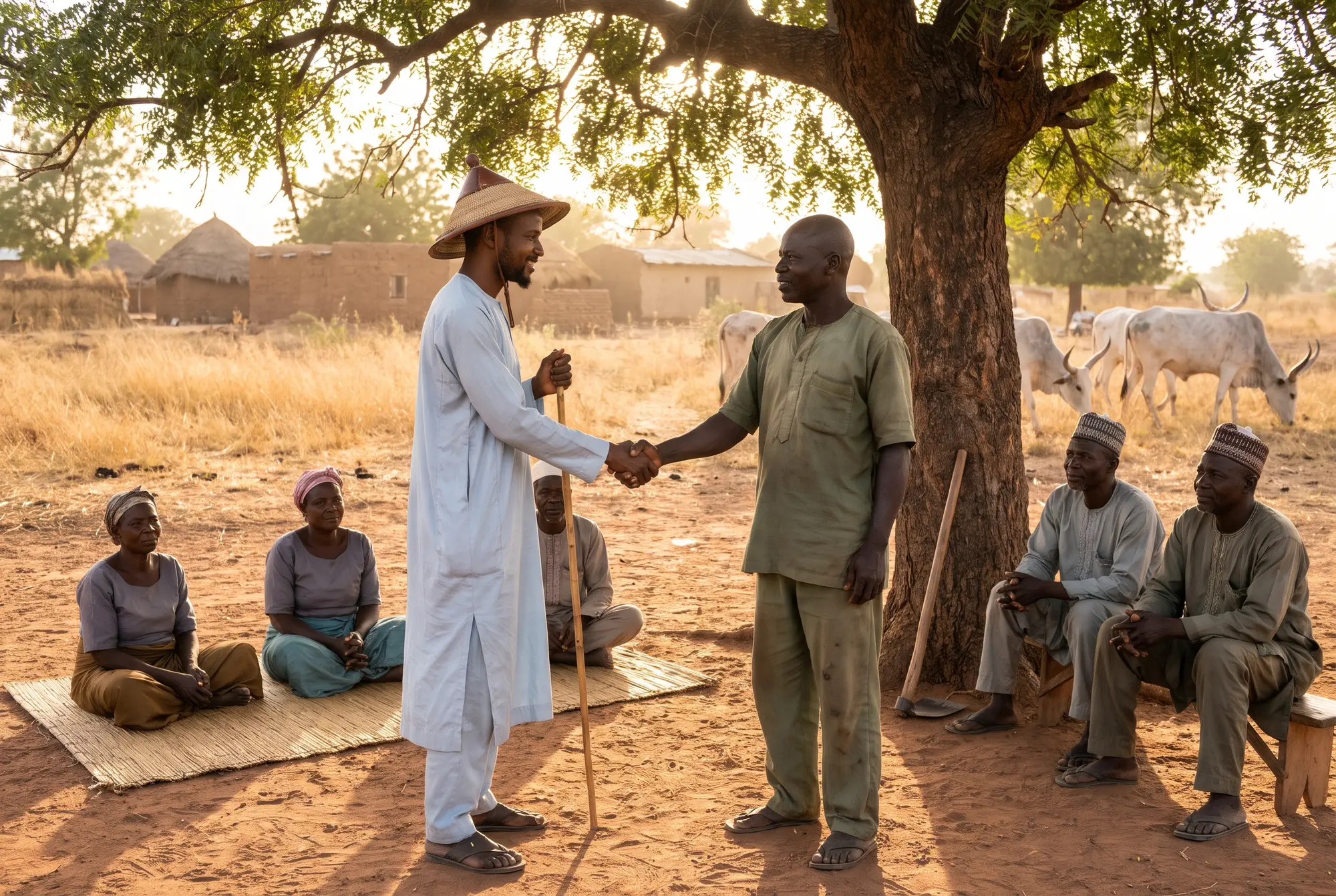
That is why the stakeholders who met in Abuja this year went further than the April conference and endorsed draft national frameworks against ethnic profiling in security and media work, calling for neutral, factual language in reporting incidents. It is also why I keep returning to a simple test. Would we accept “Igbo fraudsters” as a headline? Would Yoruba readers accept “Yoruba ritualists”? (I wrote about the stereotypes all of us carry abroad in my piece on what people assume about Nigerians, and the parallels are uncomfortable.)
Fulani Stereotypes Set Against the Evidence
| Stereotype | What the evidence shows | Key figure | Source type |
|---|---|---|---|
| All Fulani are herders | Most Fulani are semi-settled or fully settled | About one third of Fulani worldwide (7 to 10 million) are pastoralists | Ethnographic population estimates |
| Fulani are foreigners | Fulani have lived in Nigeria for centuries and founded the Sokoto Caliphate | About 6% of Nigerians, roughly 13 to 15 million people | 2018 population estimate |
| Fulani are not really Black | Genome studies place Fulani firmly within West African ancestry, with some North African input | 74.5% West African ancestry in one 2019 sample of 53 pastoralists | Peer-reviewed genetic study |
| Fulani herders are rich cattle barons | Most pastoral households hold wealth in animals and face rustling, drought and land loss | Nigeria’s herd put at about 58 million cattle in October 2026 | Ministerial estimate |
| Fulani are primitive and uneducated | Low schooling reflects mobility, and a federal commission has served nomads since 1989 | Early literacy estimates for nomads of 0.2% to 2.9% | Nomadic education research |
| Fulani are criminals | Pastoralist leaders condemn banditry and security experts call ethnic labels harmful | National anti-profiling toolkit drafted in 2026 | Conference and policy records |
The pattern is clear: every stereotype in the table takes a real fact about some Fulani and stretches it over all of them. The figures do not deny the problems, but they show that the problems belong to circumstances, minorities within the group or history, not to Fulani identity itself.
What Do Fulani People Look Like, Beyond the Stereotype?
This is the question Google tells me people ask most often, and it is the one I approach with the most care.
The popular image is specific: tall, slender, lighter brown skin, narrow nose, long hair worn in braids, and perhaps facial markings at the corners of the mouth or across the cheeks. Plenty of Fulani, especially among the pastoral Bororo’en, do look like that. But plenty do not. Town Fulani in Kano or Katsina, after two centuries of intermarriage, are often indistinguishable from their Hausa neighbours, and Fulani families in Adamawa, Gombe or Oyo reflect their own local histories. One Nigerian columnist described a stranger deciding he must be Fulani because of “the hair and the height”, and that is precisely the problem. A whole people reduced to two physical traits is a people nobody has bothered to look at properly.
So where did the light-skin story come from?
Partly from genuine genetic history. Two major studies help here. A 2019 study of 53 Fulani pastoralists in Burkina Faso found about 74.5 per cent West African ancestry, around 21 per cent ancestry related to European and North African populations, and a small East African share. A much larger study published in 2025, covering 460 people from 18 Fulani communities across the Sahel, found a shared Fulani genetic signature with traces of ancient North African ancestry, and a cline from west to east as Fulani mixed with local peoples. The same research explains one of the Fulani’s quiet biological advantages: a high rate of the gene that lets adults digest milk, which suits a dairy-based life perfectly.
And partly from colonial nonsense. Nineteenth-century European writers, eager to explain why Fulani states were so well organised, invented theories that the Fulani were “really” from the Middle East or North Africa, and some even claimed descent from a lost tribe of Israel. Those theories served colonial ideas about race far more than they served the truth. The Fulani language, Fulfulde, belongs to the Atlantic branch of the Niger-Congo family, the same great family as Yoruba and Igbo. The Fulani are West Africans, full stop.
As for “Fulani women are the most beautiful”, I understand it is meant kindly. It still reduces women who run dairy businesses, raise families on the move and walk twenty kilometres a day to a compliment about their faces.
If you love Fulani style (and many of us do), wear it with knowledge. The conical malafa hat, woven from grass and finished with leather, usually sells for somewhere around ₦8,000 to ₦25,000 depending on size and finishing, and buying one directly from a Fulani craftsman at a northern market puts the money where the culture lives. Fulani women’s amber and brass jewellery, henna patterns and indigo wrappers have inspired designers from Lagos to Dakar. Pair a single statement piece, such as a beaded necklace or an embroidered cap, with plain modern clothes rather than assembling a full “costume”, and you will honour the style rather than parody it.
How to Challenge Fulani Stereotypes in Everyday Life: A Seven-Step Guide
Stereotypes survive in small moments: a joke at a wedding, a forwarded video, a sigh in a bus. Here is a practical routine that has worked for me.
- Name the act, not the ethnicity. When you retell a security story, say “armed men”, “kidnappers” or “bandits” unless the police or courts have actually identified a suspect, and even then ask whether the ethnicity adds anything. Give yourself a three-second pause before you speak to make the swap.
- Wait thirty minutes before forwarding any viral clip about “Fulani attacks”. In that time, check the date, the location and whether two established news outlets report the same event, because recycled footage from other countries and other years circulates constantly.
- Ask “which Fulani?” when someone generalises. Is the speaker talking about nomadic herders, settled farmers or town professionals? The question alone usually shrinks a sweeping claim to its real size.
- Learn two lines of Fulfulde. Greet with “Jam na?” (is there peace?) and expect “Jam tan” (peace only) in reply. A greeting in someone’s own language changes the temperature of any conversation, and it costs nothing.
- Buy dairy directly from Fulani women sellers. A calabash of fura da nono typically costs ₦500 to ₦1,000 in most northern towns in 2026, and a block of wara around ₦300 to ₦700, so a weekly purchase of under ₦2,000 supports a family business and gives you a real relationship in place of a rumour.
- Attend one Fulani cultural event in the next year, whether a Sharo gathering, an Eid celebration or a naming ceremony you are invited to. Budget roughly ₦60,000 to ₦150,000 for transport and two nights’ lodging if you are travelling from Abuja or Lagos to Gombe, Bauchi or Sokoto, and go with a host who can explain what you are seeing.
- Correct friends and relatives with one fact and one question, and keep it under two minutes. “Most Fulani are not herders, did you know? Would you accept a headline about your own people written like that?” A short, warm challenge works far better than a lecture.
None of these steps asks you to deny real crimes or real grief. They simply ask you to keep the guilty and the innocent in separate columns.
Final Thoughts on the Stereotypes of Fulani People
We began with a calabash at a gate in Jos, and I hope you can now see why it stayed with me. The stereotypes of Fulani people (the violent herdsman, the foreign invader, the secret ruler, the primitive nomad, the light-skinned stranger) each start from a sliver of fact and stretch it over 13 to 15 million Nigerians and tens of millions more across the Sahel. The truth is far richer: a people of three ways of life, of cattle and dairy and scholarship, of pulaaku and Sharo, of West African ancestry with a long history of movement, and of families who suffer from banditry and rustling as much as anyone.
Taking that truth seriously does not mean excusing anybody. It means insisting that criminals are named as criminals and that farmers, herders and their children are all treated as Nigerians first. That is a standard every one of us would want applied to our own people, and it is a standard Nigeria can meet if enough of us practise it in ordinary conversations.
You have more power over this than you think. A few things to try:
- Read one book or long essay by a Fulani writer or scholar this year, so that your picture of the Fulani includes their own voices and not only reports about them.
- For one week, keep a quiet tally of how often you hear the word “Fulani” used as shorthand for crime around you, and notice who says it and when.
- Ask your state assembly member what your state is doing about grazing reserves, ranching and local peace committees, because fair policy on land does more to end the conflict than any slogan.
Related Articles
If this piece has you thinking about where the Fulani fit among Nigeria’s hundreds of peoples, my guide to the largest ethnic group in Nigeria explains how the Hausa and Fulani are counted, why the “Hausa-Fulani” bloc reaches about a third of the country and why every ethnic figure we have is an estimate. And if the genetic history above caught your interest, my longer piece on who Nigerians are descended from follows the migrations and origin stories behind all of our peoples, from the Nok culture to the city-states of the north.
Key Takeaways
- The stereotypes of Fulani people paint 13 to 15 million Nigerians as violent, foreign, uneducated herdsmen, yet most Fulani are settled or semi-settled and only about a third of Fulani worldwide are true pastoralists.
- Herder-farmer violence and banditry are real and deadly, but they are crimes by individuals and armed groups, and many of their victims are Fulani herders too.
- Fulani identity rests on a West African language and ancestry, the pulaaku code, cattle and dairy traditions and centuries of scholarship, none of which appears in the stereotype.
Frequently Asked Questions About the Stereotypes of Fulani People
What are the stereotypes of Fulani people?
The most common stereotypes of Fulani people are that they are all violent herdsmen, foreigners, uneducated nomads, secretly powerful rulers or part of a plot to Islamise Nigeria. Others focus on appearance and manners, picturing every Fulani as light-skinned, slender, proud and cold.
Are Fulani people a tribe?
The Fulani are an ethnic group of roughly 25 to 40 million people spread across around 17 countries from Senegal to Sudan, so “tribe” is a casual and rather small word for them. In Nigeria they make up about 6 per cent of the population and are distinct from the Hausa, although centuries of intermarriage created the merged Hausa-Fulani identity of the far north.
What are the three types of Fulani?
The three types are the fully nomadic pastoralists (Mbororo), the semi-nomadic Fulani who keep a home base and move part of the herd seasonally, and the settled or town Fulani who have left herding behind. Only about a third of Fulani worldwide are full pastoralists, which is why the herdsman image misses most of them.
What are the Fulani people known for?
The Fulani are known for cattle herding, dairy foods such as fura da nono and wara, and the pulaaku code of modesty, patience and wisdom. They are also known for Islamic scholarship and statecraft, including Usman dan Fodio’s 1804 jihad and the Sokoto Caliphate it created.
What do Fulani people look like?
Many pastoral Fulani are tall and slender with lighter brown skin, long braided hair and sometimes facial markings, but Fulani appearance varies widely by region and history. Town Fulani in places such as Kano or Katsina often look much like their Hausa neighbours after generations of intermarriage.
What is the DNA of Fulani?
Genetic studies show that the Fulani are mainly of West African ancestry, with one 2019 study of Burkinabe pastoralists finding about 74.5 per cent West African ancestry and the rest largely linked to North African and European populations. A larger 2025 study of 460 people found a shared Fulani genetic signature, traces of ancient North African ancestry and a high rate of the gene that lets adults digest milk.
What is “I love you” in Fulani?
In Fulfulde, the language of the Fulani, “I love you” is usually rendered as “Mi yiɗi ma”, often written “Mi yidi ma” without the special letter. Spelling and pronunciation shift slightly between dialects, so a Fulani friend from Sokoto may say it a little differently from one in Adamawa.
Are all Fulani herdsmen?
No, most Fulani are not herdsmen, and many town Fulani in Nigeria are civil servants, traders, scholars and professionals who have never herded cattle. Not all herders are Fulani either, since Shuwa Arabs, Kanuri and other groups also keep livestock.
Are the Hausa and Fulani the same people?
The Hausa and Fulani are separate peoples with different languages, as Hausa is a Chadic language and Fulfulde belongs to the Atlantic branch of the Niger-Congo family. After the 1804 jihad, Fulani rulers took over many Hausa states and the two elites intermarried, which is why many northern families are described as Hausa-Fulani.
What religion are the Fulani?
The great majority of Fulani are Muslim, and Fulani scholars played a leading part in spreading Islam across the West African savannah. Small Christian Fulani communities exist in Nigeria and Cameroon, and some pastoral groups keep older customs alongside their Islamic faith.
What is pulaaku?
Pulaaku is the Fulani code of conduct, usually summed up as semteende (modesty and reserve), munyal (patience and self-control) and hakkille (wisdom and forethought), with courage and hard work often added. It shapes Fulani manners deeply, and its emphasis on emotional restraint is often misread by outsiders as pride or coldness.
What is one problem with stereotyping people?
One major problem with stereotyping is that it lets real criminals hide behind a group label while innocent members of that group carry the blame and suspicion. In Nigeria, security experts warned in 2026 that ethnic labelling also damages trust between communities and the authorities who need their cooperation.