 Get Guardian on Google
Welcome, and thank you for stopping by. What country has the most Muslims? It is one of those questions that sounds simple until you ask it at a Nigerian dinner table, where someone will shout “Saudi Arabia!”, someone else will insist it is Nigeria, and an uncle will produce a figure from a WhatsApp forward with total confidence, ignoring every country-by-country breakdown of the faith ever compiled. This guide is the conclusion of months of research into global religious data and years of experience writing about faith and identity in Nigeria, so I want to give you the answer properly, with the numbers, the caveats and the Nigerian angle.
Here is the short version before we go any further.
The answer is not Saudi Arabia, and it is not anywhere in the Arab world at all. It is a nation of more than 17,000 islands in South-East Asia, and the runner-up is catching up quickly. Nigeria, meanwhile, sits higher on the global list than most of us realise (I certainly did not know our exact rank until I sat down with the data), and the way we arrive at our own figure says a great deal about how Nigeria handles the touchy business of counting believers.
So pour yourself some zobo, and let us work through it together.
Why Counting the World’s Muslims Is Trickier Than It Sounds
Before we name names, a confession. When I first started writing about religion in Nigeria, I assumed there was a single, official global register of Muslims somewhere, rather like a church membership roll, and that every journalist simply looked it up. There is no such thing.
What we have instead is a patchwork. Some countries ask about religion in their census, some ask in large household surveys, and some refuse to ask at all. The most widely cited global figures come from the Pew-Templeton Global Religious Futures project, whose June 2025 report pulled together more than 2,700 censuses and surveys to estimate the religious make-up of 201 countries and territories as of 2020. Pew is not a government, and its numbers are estimates, but they are the closest thing the world has to a common yardstick, and I use them throughout this guide.

Nigeria is a perfect example of why the yardstick matters.
Our national censuses have steered clear of religion for decades, because the question is politically explosive (every census since independence has carried the weight of power-sharing, revenue allocation and regional pride on its back). The last census whose religion figures were actually published dates from 1963. So where do today’s Nigerian figures come from? Mostly from the Nigeria Demographic and Health Survey, a large household study that asks respondents about their faith. The National Population Commission began fieldwork for its latest demographic and health survey in all 36 states and the FCT in December 2023, and Pew’s Nigerian estimates are built on earlier rounds of that same survey series.
That gives a 2020 split of roughly 56.1 per cent Muslim and 43.4 per cent Christian, with traditional worshippers and others making up the small remainder. I explored the internal picture in more depth when I wrote about which religion is more popular in Nigeria, and I would gently point out that the figure is fiercely debated. Christian and Muslim bodies have both challenged survey estimates over the years, and when a recent Guardian report built on Statisense data ranked Nigeria fourth in the world for Christians, it landed in the middle of exactly that tug of war.
Why does this matter for a global ranking? Because every country’s number carries a margin of error. When two countries sit close together on the list, the honest answer is “roughly level”, not “definitely ahead”. Keep that in mind as we look at the top five.
Which Are the Top 5 Countries With the Most Muslims?
Right, the big reveal. According to Pew’s 2020 estimates, the five countries with the largest Muslim populations are Indonesia, Pakistan, India, Bangladesh and Nigeria. Together they hold about 950 million Muslims, which is close to half of the roughly 2 billion Muslims on earth.
Let me take them one at a time, because each one tells a different story.
Indonesia leads with about 239 million Muslims, around 87 per cent of its population and roughly 12 per cent of all the Muslims in the world. Most people outside Asia are surprised by this, rather like learning that the biggest Yoruba-speaking city in the world is not in Oyo State. Islam spread through the archipelago mainly through traders and Sufi teachers rather than armies, which partly explains its distinctive, gentle local flavour. Nigeria and Indonesia also have a closer relationship than many realise. When the information minister led Nigeria’s delegation to the second Indonesia-Africa Forum in Bali in September 2024, the government noted that Indonesia had named Nigeria its African investment destination for 2022 to 2026. Culturally, there are echoes too. In Itoro Oladokun’s tour of Ramadan customs, Indonesia’s padusan purification bath sits alongside our own Durbar processions, two very different ways of marking the same holy month.
Pakistan comes second with about 227 million Muslims, a remarkable 96.5 per cent of its people. The gap with Indonesia is only about 12 million, and Pakistan’s population is growing faster, so the top spot is genuinely up for grabs in the coming decades.
India is third, with roughly 213 million Muslims. Here is the twist that catches people out: Muslims make up only about 15 per cent of India’s population. India is a Hindu-majority nation that also happens to host one of the three largest Muslim communities on the planet, simply because its total population is so vast.
Bangladesh is fourth, with about 151 million Muslims, around 91 per cent of the country.
And then there is us.
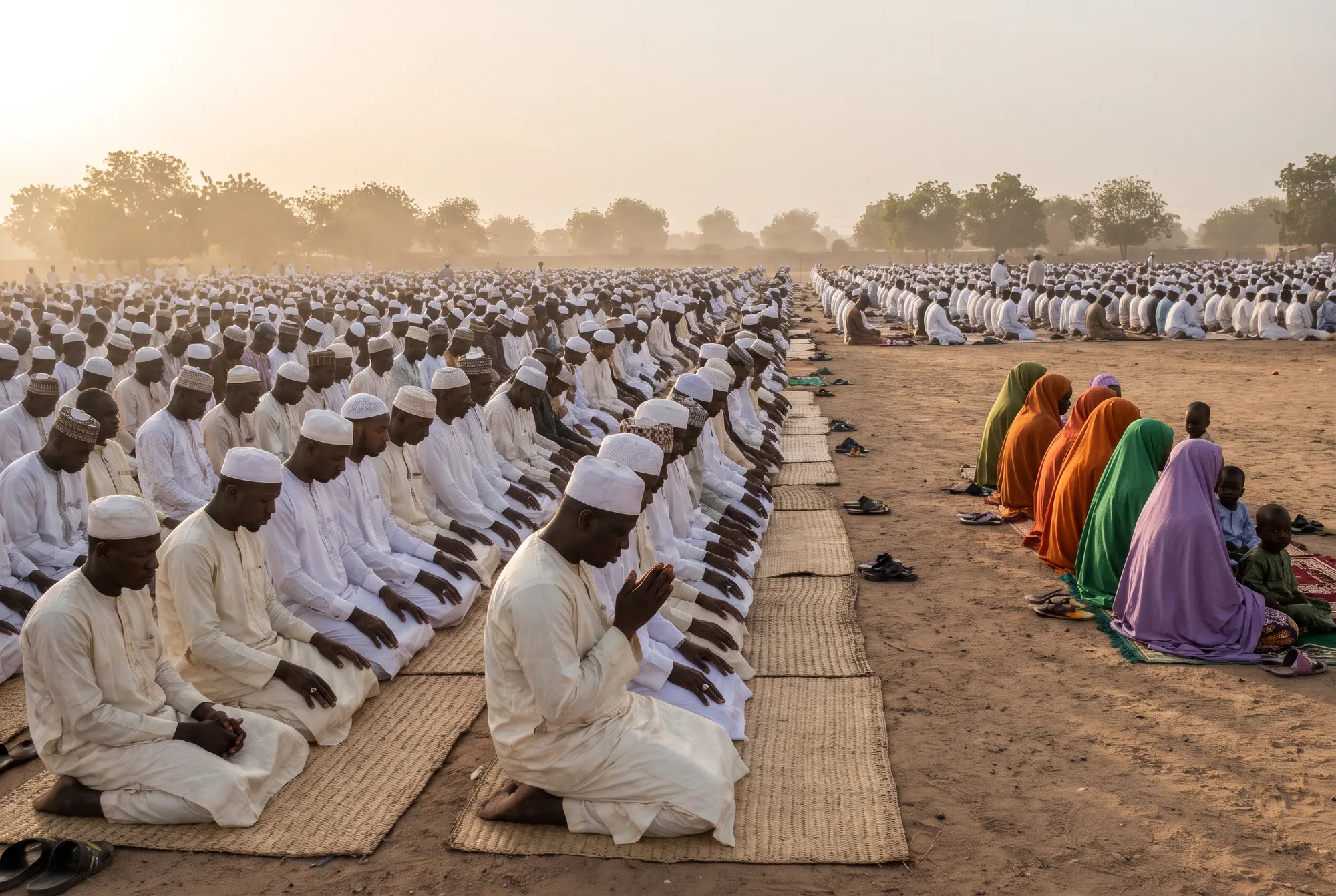
Nigeria ranks fifth in the world, with about 120 million Muslims in 2020 by Pew’s estimate. That makes Nigeria home to the largest Muslim population in Africa, larger than Egypt’s, larger than Iran’s or Turkey’s, and roughly four times the size of Saudi Arabia’s. Roughly one in three of sub-Saharan Africa’s 369 million Muslims is Nigerian. I remember sharing that last figure with a friend in Kaduna over a plate of masa, and he put his spoon down. “One in three?” he said. “Then why does everyone think Islam is an Arab thing?”
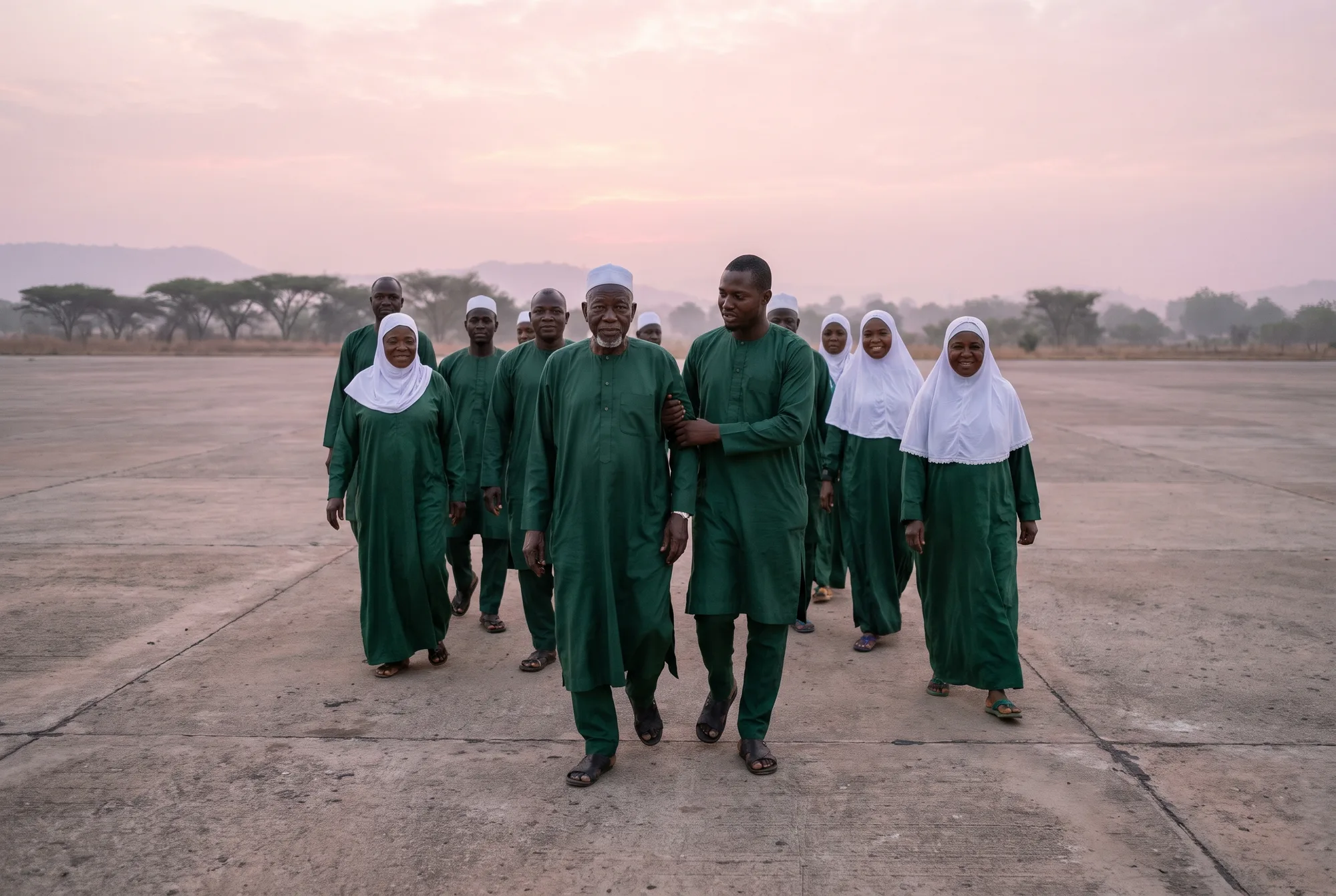
It is a fair question, and the Hajj quota shows the size of our community in a very practical way. Saudi Arabia has long used a rule of thumb, agreed by Muslim-majority states in 1987, of roughly one pilgrim per 1,000 Muslims. On that basis Nigeria would expect well over 100,000 seats a year, yet Saudi authorities cut Nigeria’s allocation from 95,000 to 66,910 for 2026 after slots went unused, and Nigeria has now secured 60,000 seats for the 2027 pilgrimage after an extra 10,000 were added to an initial 50,000. Money is part of the story. The approved 2027 fare for pilgrims departing from the southern zone is ₦7,882,822, which, for perspective, is more than many Nigerian families earn in several years.
Below is the full top 10, so you can see how the rest of the list shapes up.
Top 10 Countries by Muslim Population (Pew 2020 Estimates)
| Rank | Country | Muslims in 2020 (millions) | Share of population | Continent | Change since 2010 (millions) |
|---|---|---|---|---|---|
| 1 | Indonesia | 239.1 | 87.0% | Asia | +23.6 |
| 2 | Pakistan | 226.8 | 96.5% | Asia | +34.1 |
| 3 | India | 213.2 | 15.2% | Asia | +35.4 |
| 4 | Bangladesh | 151.5 | 91.1% | Asia | +13.9 |
| 5 | Nigeria | 120.0 | 56.1% | Africa | +29.1 |
| 6 | Egypt | 104.1 | 95.2% | Africa | +19.4 |
| 7 | Iran | 87.5 | 99.8% | Asia | +10.4 |
| 8 | Turkey | 83.6 | 97.1% | Asia and Europe | +11.3 |
| 9 | Sudan | 46.3 | 98.9% | Africa | +11.0 |
| 10 | Algeria | 43.3 | 98.4% | Africa | +7.7 |
Counts are calculated from Pew’s published country populations and Muslim shares, so treat the decimals as estimates. Two things jump out: four African countries make the top 10, and Nigeria added more Muslims between 2010 and 2020 (about 29 million) than Indonesia did (about 24 million).
In Which Country Is Islam Growing the Fastest?
This is where things get genuinely interesting, and where Nigeria’s story moves from the middle of the table to the front of the queue.
Between 2010 and 2020, the world’s Muslim population grew by 347 million, more than all other religions combined, and the Muslim share of humanity rose from 23.9 to 25.6 per cent. But “fastest growing” can mean three different things, and each points to a different place.
If you mean growth by region, the answer is North America, where the Muslim population jumped 52 per cent to 5.9 million (largely through migration), followed by sub-Saharan Africa, up 34 per cent to 369 million. Africa’s growth is the one that really moves the global needle, because the base is so much larger.
If you mean the biggest rise in the Muslim share of a country, Pew highlights Kazakhstan and Benin, each up about 8 percentage points, and Lebanon, up about 5 points as Syrian refugees arrived. Benin is our next-door neighbour, and its Muslim share rose from about 24 to 31 per cent in a single decade (although Pew cautions that some sources suggest more modest growth there).
If you mean raw numbers, the decade’s biggest additions came from India and Pakistan, at roughly 35 million and 34 million respectively. Nigeria came third, adding about 29 million Muslims, more than Indonesia, Bangladesh or Egypt.
And the fastest growth rate among the big Muslim populations? Look just north of Sokoto. Niger’s Muslim population grew by roughly 43 per cent over the decade, the highest rate of any country with more than 20 million Muslims.
Why Niger and Nigeria? The honest answer is babies, not converts.
Pew’s projections put Muslim fertility in the 2010 to 2015 period at about 6.9 children per woman in Niger and 6.5 in Nigeria, among the highest in the world, compared with about 2.0 in Indonesia. Sub-Saharan Muslim populations are also very young, so even if family sizes start falling, the momentum carries on for decades (rather like a danfo that keeps rolling after the driver lifts his foot off the accelerator). Anyone who has watched a Kano naming ceremony spill out into the street will not need a demographer to explain this.
What about conversion? People often ask which country is converting to Islam the most, and the data is underwhelming. Pew’s 2025 study of religious switching across 13 countries found that only 3 per cent of adults or fewer had either joined or left Islam, so conversion barely moves the totals in either direction. In Nigeria, conversion tends to happen through marriage and family ties rather than mass movements, and it flows both ways.
Look ahead, and the picture shifts again. Pew’s long-range projections place India first by 2050 with about 311 million Muslims, Pakistan second with about 273 million, Indonesia third with about 257 million, and Nigeria fourth with about 231 million. The same projections expect Nigeria’s Muslim share to reach roughly 59 per cent by mid-century. Projections are not prophecies, of course, but the direction is clear: Nigeria is on course to become one of the three or four great centres of the Muslim world by population.
What Country Has the Most Muslims? The Short Answer
With the present and the future both on the table, let me answer the question head on.
Indonesia is the country with the most Muslims in the world, with roughly 239 million in 2020, about 12 per cent of the global total of around 2 billion. Pakistan (about 227 million) and India (about 213 million) follow closely, and together these three countries hold about a third of all Muslims. Bangladesh is fourth and Nigeria fifth, making Nigeria the African country with the most Muslims. Separate “most Muslims” from “most Muslim”, though, because the answer changes depending on what you measure:
- By number: Indonesia, with about 239 million Muslims.
- By share of population: Afghanistan and Yemen, where Muslims make up about 99.9 per cent of residents.
- In Africa: Nigeria, with about 120 million Muslims.
- In the Arab world: Egypt, with about 104 million Muslims.
- By 2050: India, which Pew projects will have around 311 million Muslims and take the top spot.
Five different measures, five different winners, and every one of them correct.
Notice what is missing from that list? Saudi Arabia. The birthplace of Islam, home to Mecca and Medina, has about 29 million Muslims, which would not even get it into the global top 15. Holiness and headcount are two very different things, rather like how Abeokuta’s history punches far above its population. The faith’s spiritual centre and its demographic centre sit thousands of kilometres apart, and the demographic centre has shifted firmly towards Asia and, increasingly, Africa.
Which Country Has the Fewest Muslims?
Flip the question around, and the answers are just as revealing.
Is there any country completely free of Muslims? Practically none. Students, traders, diplomats and migrant workers now carry the faith into almost every corner of the map. The closest candidate is Vatican City, a walled state of a few hundred residents who are overwhelmingly Catholic clergy, staff and Swiss Guards, but it is so small that Pew’s global study does not even cover it.
Among countries Pew does measure (those with at least 100,000 people), many report Muslim shares below 0.1 per cent. They cluster in three regions:
Latin America and the Caribbean, where Muslims make up only about 0.1 per cent of the population overall. Bolivia, Paraguay, Honduras, Colombia and Mexico all sit below that line.
East and South-East Asia’s Buddhist and secular belt, including Laos, Vietnam and North Korea, along with Papua New Guinea in the Pacific.
Parts of Europe, notably Poland, Lithuania and Slovakia. Slovakia is a curious case. It is often described as the only European Union member without an officially recognised mosque, and in 2016 it tightened the rules for registering a religion in a way that effectively shut Islam out of official status, yet a small Muslim community of a few thousand still gathers in prayer rooms.
What about Africa? Southern Africa is the continent’s least Muslim corner. Pew puts the Muslim share at about 0.1 per cent in Namibia and Eswatini, 0.2 per cent in Lesotho and 0.5 per cent in Zambia and Zimbabwe. Compare that with Niger at 98.1 per cent, and you can see how sharply religion maps onto the old trans-Saharan trade routes. I once explained this to a group of visiting students from Windhoek, and one of them laughed and said she had seen more mosques on her first afternoon in Kano than in her entire life at home.
A useful reminder, I think, that “Africa” is never one thing.
Which Religion Is Declining Fastest as Islam Grows?
If Islam is growing fastest, who is shrinking? The answer is not quite what most people expect.
Buddhism was the only major religion whose numbers actually fell between 2010 and 2020, dropping by about 19 million to 324 million, mainly because many people in East Asia raised as Buddhists no longer identify with any religion. Its share of the world’s population slipped from 4.9 to 4.1 per cent.
Christianity is a different story. Christians grew by 122 million to about 2.3 billion and remain the world’s largest religious group, but their share of humanity fell from 30.6 to 28.8 per cent, because their numbers grew more slowly than the global population. Most of that relative decline happened in Europe, the Americas and Oceania, where many people raised Christian now tick “no religion”. The religiously unaffiliated, sometimes called “nones”, climbed to 24.2 per cent of the world.
So the honest summary is this: Buddhism is declining in absolute numbers, Christianity is declining as a share, and Islam and the “nones” are the two groups growing as a share of the world.
Nigeria bucks the global Christian trend, by the way. According to Pew’s estimates, Nigeria’s Christians grew from about 74 million in 2010 to about 93 million in 2020, while Muslims grew from about 91 million to about 120 million. The group that genuinely shrank here was the small “all other religions” category, which fell from about 1.8 million to about 1.3 million as traditional worship continued its long fade from census-style labels (even if, as anyone who has attended an Ifa festival or an Igbo masquerade knows, traditional practice is far from gone). For a wider continental view, my piece on Africa’s largest religion maps how Christianity and Islam divide the continent between them.
How to Check a Muslim Population Claim in Seven Steps
Over the years I have watched dozens of shaky religion statistics race around WhatsApp groups, and I have fallen for a few myself. These days I run every claim through the same simple routine. It takes about five minutes, and it will save you from repeating nonsense at the next family gathering.
- Find the year behind the figure. A 2010 number, a 2020 estimate and a 2050 projection can differ by tens of millions, so always ask “which year?” before you ask “which country?”.
- Work out whether the claim is a count or a share. “Most Muslims” is about the count (Indonesia), while “most Muslim” is about the share (Afghanistan and Yemen, at about 99.9 per cent), and many arguments are really two people talking about different measures.
- Check the method behind the number. Is it a census, a household survey or a projection? For Nigeria it is almost always a survey, because the census has not published religion figures since 1963, so treat any Nigerian percentage as an estimate with a margin of a few points either way.
- Do the multiplication yourself. Take the share and multiply it by the population for the same year: 56.1 per cent of Nigeria’s estimated 237.5 million people in 2025 (the United Nations mid-year figure) gives roughly 133 million Muslims, assuming the 2020 share still holds. If a claim is wildly above or below your own sum, ask why.
- Use the Hajj quota as a rough cross-check, never as a count. The one-per-1,000 guide means a country with 120 million Muslims would expect about 120,000 slots, so Nigeria’s 60,000 tells you the quota is shaped by Saudi capacity and past usage, not by a fresh headcount.
- Compare at least two sources and accept a range. If Pew, the national survey and another reputable database disagree by four or five points, the truth probably sits somewhere in between, and saying “around half” is more honest than quoting a decimal.
- Present the numbers fairly when you share them. Put the count and the share side by side, round counts to the nearest million and shares to one decimal place, use a simple bar chart rather than a pie chart for rankings, and label every estimate as an estimate (your readers will trust you more for it).
Step seven is the one I care about most as a writer. A clean table with sensible rounding persuades far better than a dramatic headline figure with no source.
Final Thoughts on What Country Has the Most Muslims
We started with a dinner-table argument, so let me finish with the answer you can take back to that table. Indonesia has the most Muslims in the world, Pakistan and India are close behind, and Nigeria sits fifth globally and first in Africa, with roughly 120 million Muslims in Pew’s 2020 estimates. The centre of the Muslim world, by population, lies in South Asia and South-East Asia today, and it is drifting steadily towards Africa, carried by young populations and large families rather than by waves of converts.
I hope this guide has also shown you that the question hides a few smaller ones. “Most Muslims” and “most Muslim” are different contests. Fastest growth depends on whether you count regions, shares or raw numbers. And Nigeria’s own figure rests on careful surveys rather than a census, which is precisely why it deserves to be quoted with a little humility.
If you take one habit away from all of this, let it be curiosity. The next time a confident figure lands in your family WhatsApp group, you will know which questions to ask.
- Share the top 10 table the next time the “Saudi Arabia has the most Muslims” myth turns up in your family WhatsApp group.
- Follow the National Population Commission’s survey releases, because they feed every serious estimate of Nigeria’s religious make-up.
- Revisit the question around 2030, when Pakistan may be within touching distance of overtaking Indonesia.
Related Articles
If this piece has sparked your curiosity about Islam’s journey on our own soil, the natural next read is my history of who brought Islam to Nigeria, which follows the faith from Kanem-Borno’s royal court in the eleventh century through the Hausa city-states to the Sokoto Caliphate. And if the size of the northern Muslim population has you wondering how faith shapes the law in those states, my explainer on whether Nigeria has sharia law walks through the twelve states that adopted Islamic penal codes and what that means for Muslims and non-Muslims alike.
Key Takeaways
- Indonesia has the most Muslims of any country, with about 239 million, followed by Pakistan, India, Bangladesh and Nigeria.
- Nigeria ranks fifth worldwide and first in Africa, and it added about 29 million Muslims between 2010 and 2020, more than Indonesia did.
- Treat every religious population figure as an estimate, and check its year, method and whether it describes a count or a share before you repeat it.
Frequently Asked Questions About What Country Has the Most Muslims
What country has the most Muslims?
Indonesia has the most Muslims of any country, with roughly 240 million in Pew’s 2020 estimates, about 12 per cent of the world’s Muslims. Pakistan follows closely with about 227 million, and India is third with about 213 million.
Which are the top 5 countries with the most Muslims?
The top five are Indonesia, Pakistan, India, Bangladesh and Nigeria, in that order, according to Pew’s 2020 figures. Together they hold about 950 million Muslims, close to half of the global total.
Where does Nigeria rank for Muslim population?
Nigeria ranks fifth in the world and first in Africa, with about 120 million Muslims in 2020 by Pew’s estimate. That is more Muslims than Egypt, Iran or Turkey, and roughly four times as many as Saudi Arabia.
Which country has the highest percentage of Muslims?
Afghanistan and Yemen top the share ranking, with Muslims making up about 99.9 per cent of each population. Iran and Somalia follow closely at about 99.8 per cent.
In which country is Islam growing the fastest?
Among countries with more than 20 million Muslims, Niger recorded the fastest growth between 2010 and 2020, with its Muslim population rising by roughly 43 per cent. By region, North America grew fastest at 52 per cent, followed by sub-Saharan Africa at 34 per cent.
Which country will have the most Muslims by 2050?
Pew projects that India will overtake Indonesia by 2050, with around 311 million Muslims. Nigeria is forecast to climb to fourth place globally with roughly 231 million.
Which country has the fewest Muslims?
Vatican City, a tiny state of a few hundred mostly Catholic residents, is the usual answer, although it is too small for Pew’s global study. Among larger countries, Laos, Vietnam, North Korea, Papua New Guinea and much of Latin America report Muslim shares below 0.1 per cent.
Is any country completely free of Muslims?
Almost none, because Muslim students, traders and migrant workers now live in practically every country on earth. Slovakia is often mentioned because it has no officially recognised mosque, yet it still has a small Muslim community of a few thousand.
Which country is converting to Islam the most?
No reliable data shows a single country leading the world in conversions to Islam. Pew’s 2025 study across 13 countries found that only 3 per cent of adults or fewer had joined or left Islam, so growth comes mainly from young populations and higher birth rates.
Which religion is declining fastest?
Buddhism is the only major religion whose numbers fell between 2010 and 2020, dropping by about 19 million to roughly 324 million. Christianity still grew in numbers but slipped as a share of the world’s population, from 30.6 to 28.8 per cent.
Why does Nigeria not have an official count of Muslims?
Nigeria’s censuses have avoided asking about religion for decades because the question is politically sensitive, and the last census with published religion figures dates from 1963. Today’s estimates come from large household surveys run by the National Population Commission.
How many Hajj slots does Nigeria get?
Saudi Arabia has allocated Nigeria 60,000 slots for the 2027 Hajj, after adding 10,000 to an initial 50,000. That is well below the long-standing guide of about one pilgrim per 1,000 Muslims, which would point to more than 100,000 seats for Nigeria.