
 Get Guardian on Google
Welcome, and thank you for stopping by. What is the biggest religion in the world? It sounds like a quiz-night question with a one-word answer, yet this article is the conclusion of months of research into global faith data and years of experience writing about belief in Nigeria, and I promise the full story is far more interesting than one word. Before we start counting, it helps to understand how scholars group the world’s many faiths into broad families, because the answer changes depending on what you decide to count.
Let me tell you how this question landed on my desk.
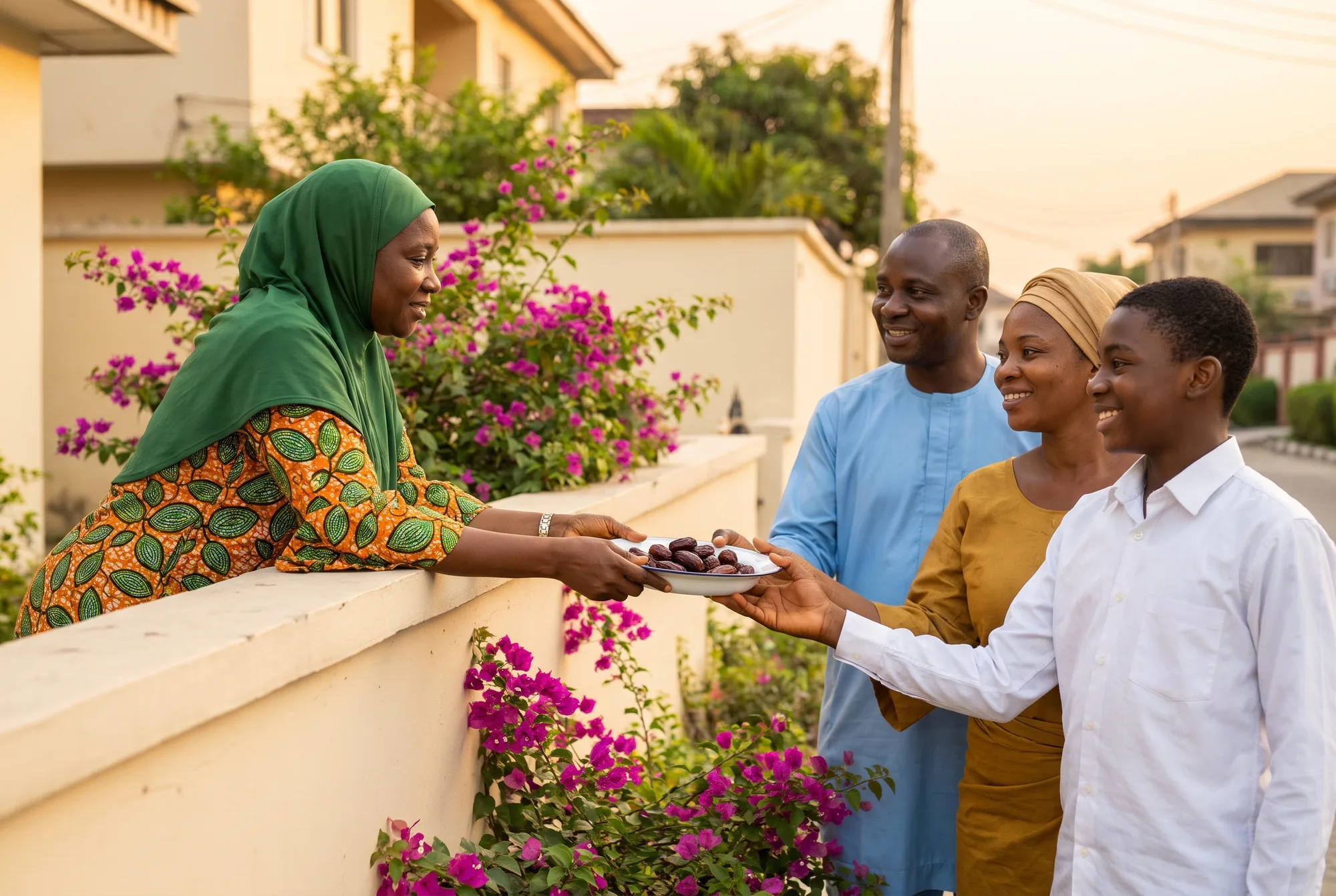
On 18 February 2026, Ramadan and Lent began on the same day. In my street, that meant something lovely and slightly chaotic: my Muslim neighbour was waking at four for suhoor while the Catholic family opposite had given up meat, sugar and, in one brave teenager’s case, mobile data. By the second week, we were swapping plates of dates and moi moi over the fence at sunset. Then, at one of those shared evening meals, a young cousin asked the question that has followed me ever since. “Uncle, which religion is the biggest in the whole world?”
Half the table said Christianity. The other half said Islam. One uncle (there is always one uncle) insisted it was “obviously” whichever one he belonged to, and the jollof went cold while everybody argued.
Here is the thing. Both halves of that table were partly right, and both were partly wrong, depending on whether you are standing in Kano, in Enugu or looking down at the whole planet. So let us do this properly, with real numbers, honest caveats and a little Nigerian perspective along the way.
What Are the Top 5 Biggest Religions in the World?
First, a confession about counting. Measuring religion is rather like counting the supporters of a Premier League club in Lagos: do you count the man who owns the jersey, the man who watches every match at the viewing centre, or only the one who has actually been to the stadium? Researchers face exactly that problem.

The most widely cited global count comes from Pew, the Washington-based research group whose June 2025 report pulled together more than 2,700 censuses and surveys from 201 countries and territories. Pew counts people by self-identification. If you tell a census taker you are a Christian, you are counted as one, whether you attend church every Sunday or only at Christmas and burials. The Vatican, by contrast, counts baptisms, and other databases use membership rolls. Different yardsticks, different totals.
With that in mind, here is how the world looked in 2020, the latest year for which a full global count exists.
Christianity leads, with about 2.3 billion followers, or 28.8 per cent of humanity. It grew by 122 million people between 2010 and 2020, but because the world’s population grew faster, its share actually slipped by 1.8 percentage points. Christianity is also the most widely spread faith on earth: Christians remained a majority in 120 countries and territories in 2020. Nigerians feel that global reach in very practical ways. Every year thousands travel to the Holy Land on state-supported pilgrimages, and in February a batch of Lagos pilgrims completed their Jerusalem Pilgrim journey in Israel under the Nigerian Christian Pilgrim Commission. The faith’s institutional reach shows up at the very top of government too, where the President received a senior Vatican envoy in July 2026 to mark fifty years of diplomatic relations between Nigeria and the Holy See.
Islam is second, with about 2 billion followers, or 25.6 per cent of the world. It was the fastest-growing religious group of the decade, adding 347 million people, which is more than all other religions combined.
Hinduism is third, with about 1.2 billion followers, roughly 14.9 per cent of the world. Its share held perfectly steady, because Hindus grew at almost exactly the same pace as the global population. The overwhelming majority live in India, which is why Hinduism can feel distant to many Nigerians even though it is the world’s third-largest faith.
Buddhism is fourth, with about 324 million followers, or 4.1 per cent. It was the only major group to shrink over the decade, which I unpacked in more detail when I looked at which country has the most Muslims and why some faiths are growing while others decline.
And fifth? This is where people start arguing.
On Pew’s list of separately counted religions, fifth place goes to Judaism, with about 14.8 million people, around 0.2 per cent of the world. Yet that is not the whole picture. Sikhism has somewhere in the region of 25 to 30 million followers, and the many folk and traditional religions of the world (Chinese folk religion, African traditional religions, indigenous faiths in the Americas and the Pacific) together far outnumber both. Pew groups these into an “other religions” category that holds steady at about 2.2 per cent of the planet.
That category matters to us. Nigeria’s own traditional religion is alive and visible, not a museum piece. The Osun-Osogbo Sacred Grove, a UNESCO World Heritage Site since 2005, still hosts worship and an annual festival to the Yoruba goddess Osun every August. The first time I walked under that canopy, with its shrines and sculptures half hidden by the forest, I understood why statisticians struggle to put a number on faiths that live in groves, rivers and family compounds rather than in registered congregations.
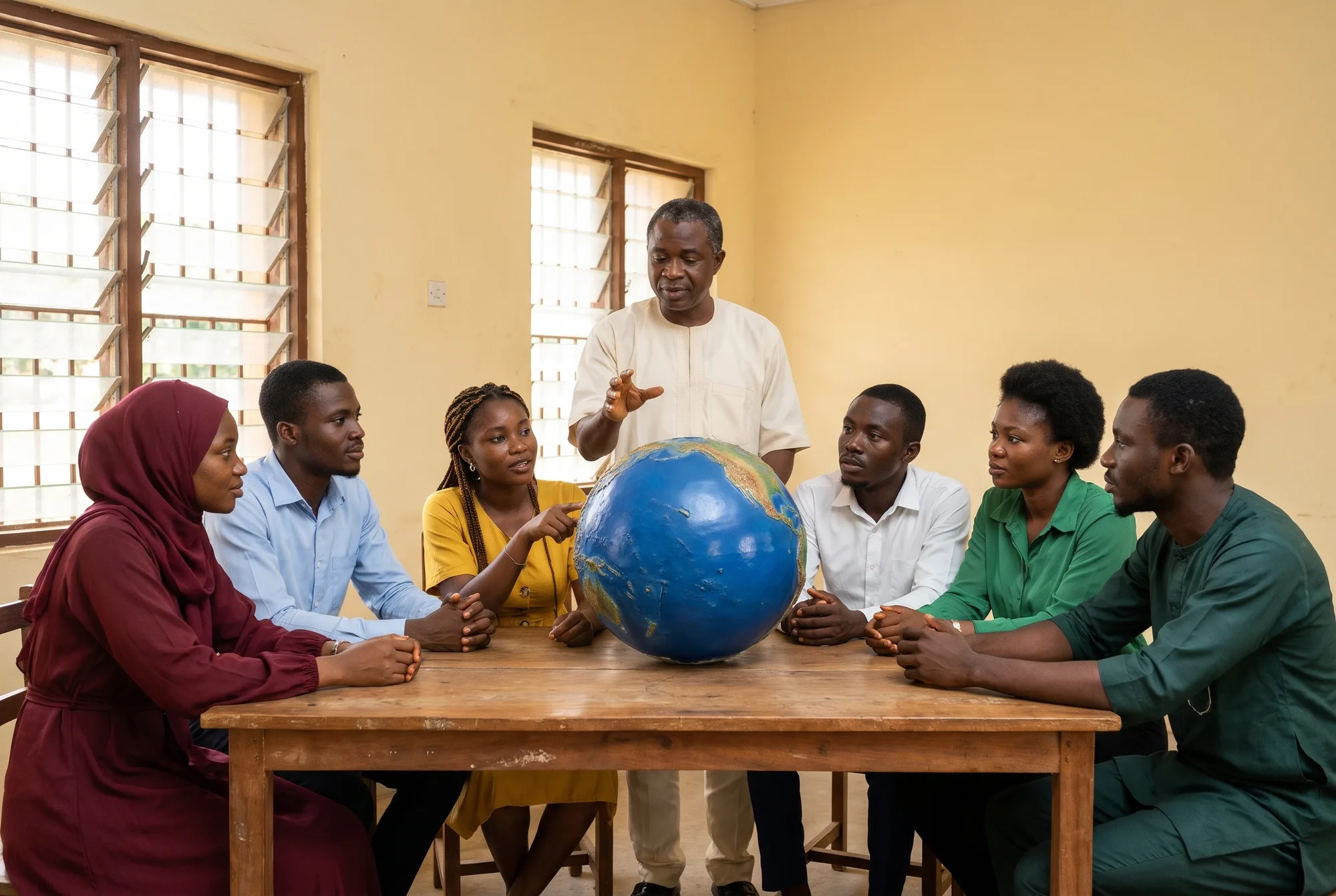
One more group deserves a mention, because it often sneaks into “top five” lists. About 1.9 billion people, or 24.2 per cent of the world, are religiously unaffiliated: atheists, agnostics and those who simply say “nothing in particular”. If they were a religion, they would rank third. They are not, of course, which is the whole point of them.
The World’s Biggest Religions by Followers in 2020
| Rank | Religious group | Followers (2020) | Share of world | Change since 2010 | The picture in Nigeria |
|---|---|---|---|---|---|
| 1 | Christianity | About 2.3 billion | 28.8% | Up 122 million | About 43% of Nigerians, more than 90 million people |
| 2 | Islam | About 2.0 billion | 25.6% | Up 347 million | About 56% of Nigerians, roughly 120 million people |
| 3 | Hinduism | About 1.2 billion | 14.9% | Up 126 million | Small community, mostly Indian families in Lagos |
| 4 | Buddhism | About 324 million | 4.1% | Down 19 million | Very small presence |
| 5 | Judaism | About 14.8 million | 0.2% | Up about 0.9 million | Very small presence |
| Not a religion | Religiously unaffiliated | About 1.9 billion | 24.2% | Up 270 million | Rare; most Nigerians name a faith |
| Grouped | Other religions, including folk and traditional faiths | About 172 million | 2.2% | Grew with world population | Traditional worship is often practised alongside Islam or Christianity |
The table makes two things plain. Christianity and Islam together account for more than half of humanity, and Nigeria is unusual because it sits near the top of the global tables for both faiths at once.
(A quick note on the Nigerian column: the national shares come from Pew’s 2020 estimates, and the headcounts are my own arithmetic from those shares, so treat them as rounded estimates rather than census figures.)
Which Is Bigger, Christianity or Islam, and Where Does Nigeria Fit?
Globally, Christianity is bigger, by roughly 300 million people in Pew’s 2020 count.
That gap sounds enormous until you watch how quickly it is closing. Over the decade to 2020, Islam added 347 million people while Christianity added 122 million. Rather like two danfo buses on the Third Mainland Bridge, one is still clearly ahead, but the one behind is driving with the window down and the conductor shouting, and it is gaining fast.
Why the difference? Two reasons, mostly. The first is age and fertility. Muslims are, on average, the youngest of the major religious groups, and an earlier Pew study found Muslim women had an average of 3.1 children against 2.7 for Christian women. The second is what researchers call religious switching. Christianity loses far more people to “no religion” than it gains from conversion, especially in Europe, North America and Australia. Islam, by contrast, gains and loses relatively few adults through switching, so its growth comes almost entirely from births.
There is also a geographical twist that makes this personal for us. Between 2010 and 2020, sub-Saharan Africa overtook Europe as the region with the most Christians. By 2020, about 30.7 per cent of the world’s Christians lived in our part of Africa, compared with 22.3 per cent in Europe. The centre of gravity of global Christianity is no longer Rome or Canterbury. It is somewhere between Kinshasa, Lagos and Addis Ababa.
The Catholic Church illustrates this beautifully. As a recent Guardian editorial on Pope Leo XIV’s African journey pointed out, Africa’s 281 million Catholics now make up about a fifth of the global total, and Nigeria alone has around 35 million, the second-largest Catholic population on the continent after the Democratic Republic of the Congo. The Vatican’s own statistics put worldwide Catholic membership at just over 1.42 billion at the end of 2024, which makes Catholicism by far the largest single church on earth. (For context on how the many churches here are organised, my piece on who is the head of Christianity in Nigeria maps the leadership blocs.)
Islam has its own internal map. Sunni Muslims make up the large majority worldwide, with Shia Muslims a significant minority concentrated in Iran, Iraq and parts of the Gulf and South Asia, and Nigeria’s Muslims are overwhelmingly Sunni.
So where does Nigeria fit?
Nigeria flips the global order. On Pew’s 2020 estimates, about 56.1 per cent of Nigerians are Muslim and 43.4 per cent are Christian, which makes us the country with the fifth-largest Muslim population in the world and one of the ten largest Christian populations at the same time. Very few countries can say that. I would be dishonest, though, if I did not add the caveat I always add: no Nigerian census has published religion figures since 1963, so every split you see is a survey-based estimate, and both Christian and Muslim bodies dispute them. I went through the competing figures in detail when I asked which religion is more popular in Nigeria, and the honest summary is “roughly level, with Muslims probably slightly ahead”.
What strikes me most, after years of reporting on faith in this country, is how much the two communities share. The Nigeria Inter-Religious Council has brought Christian and Muslim leaders to the same table since 1999, and as Nkechi Onyedika-Ugoeze reported from a World Interfaith Harmony Week event in Abuja, the CAN president has argued that religious literacy is the surest route to peace. Knowing who the world’s biggest faiths actually are, and how close they sit to each other, is a small part of that literacy.
What Is the Biggest Religion in the World? The Direct Answer
Christianity is the biggest religion in the world, with about 2.3 billion followers, or 28.8 per cent of the global population, according to Pew’s 2020 count of more than 2,700 censuses and surveys, and it is followed by Islam with about 2 billion followers (25.6 per cent), which is the fastest-growing major religion and is projected to draw level with Christianity later this century. Within Christianity, the Catholic Church is the largest single denomination, with about 1.42 billion baptised members by the Vatican’s count. The closely related answers people usually want are these:
- Biggest religion overall: Christianity, about 2.3 billion followers (2020).
- Biggest single church: the Catholic Church, about 1.42 billion baptised members (2024).
- Second-biggest religion: Islam, about 2 billion followers, and the fastest growing.
- Third-biggest religion: Hinduism, about 1.2 billion followers, almost all in India.
- Biggest religion in Africa: Christianity, with Islam a close second; I covered the continent in my piece on what Africa’s largest religion is.
- Biggest religion in Nigeria: Islam, narrowly, at about 56 per cent on Pew’s estimate.
- Biggest group without a religion: the unaffiliated, about 1.9 billion people, most of them in China.
That is the answer, and it is solid.
But if you take one thing from this section, let it be the date. These are 2020 figures, published in 2025, because global religious counts take years to assemble. When somebody on a WhatsApp group posts a brand-new “biggest religion” chart with suspiciously precise 2026 numbers, ask where they came from. Nine times out of ten, they are projections dressed up as counts.
Will Islam Overtake Christianity as the World’s Biggest Religion?
Probably, eventually, if current trends hold. But “if current trends hold” is doing a great deal of work in that sentence.
Pew’s major projection study, published in 2015, forecast that by 2050 there would be about 2.92 billion Christians (31.4 per cent of the world) and about 2.76 billion Muslims (29.7 per cent). That is near parity, possibly for the first time in history. Extending those trends further, Pew estimated that the two faiths would be roughly equal in number around 2070, with Muslims slightly the larger group after that.
The drivers are the ones we have already met. Muslims are younger and, on average, have more children. Christians, meanwhile, are losing adherents to secularism in wealthy countries.
Now for my own reading of the newer data, and please treat it as analysis rather than prophecy. The 2015 projections assumed Christianity’s share would hold steady at about 31 per cent. The 2025 count shows it had already fallen to 28.8 per cent by 2020, largely because so many people raised as Christians, particularly in Europe, the Americas and Australia, now describe themselves as having no religion. If that trend continues, the crossover could arrive earlier than 2070. Pew has not yet published updated long-range projections, though, so nobody can give you a confident new date.
What could change the picture? Quite a lot, actually.
China is the great unknown. It has about 1.3 billion religiously unaffiliated people, and even a modest religious revival there (in any direction) would shift the global totals more than anything happening in Africa. Fertility is falling across most of the world, including in parts of Nigeria, and as Muslim-majority countries follow that path, Islam’s growth will slow too. Wars, migration and economic change all play their part, and the Pew demographers themselves are careful to say their numbers are projections, not predictions.
Nigeria sits right in the middle of this story. An earlier Pew projection suggested that by 2060 Nigeria could hold the third-largest Muslim population and the third-largest Christian population in the world, the only country near the top of both lists. Think about that for a moment. Whatever the global headline says in 2070, a good share of the world’s believers, of both faiths, will be speaking Hausa, Yoruba, Igbo and Pidgin. That is a responsibility as much as a statistic.
Is the World’s Biggest Religion Also the Oldest?
No, and the gap is wider than most people expect.
Christianity, the biggest, is about 2,000 years old, dating from the life and ministry of Jesus in the first century. Islam is younger, beginning with the revelations to the Prophet Muhammad in Arabia from 610 onwards. Buddhism goes back to the teaching of the Buddha in northern India around the fifth century before Christ. Judaism is older still, with roots that reach back roughly 3,000 years.
The title of oldest major living religion usually goes to Hinduism. Its earliest scriptures, the Vedas, were composed more than 3,000 years ago, and many of its practices are older than the texts. Interestingly, you do not need a passport to see Hinduism in action. Lagos has a small but long-established Indian community, and Guardian Arts covered their Dussehra celebration at Geeta Ashram, where an effigy of the demon king Ravana was burnt to mark the victory of good over evil, with students from a Surulere girls’ school performing a Nigerian dance alongside the classical Indian items. I love that detail. It says more about Lagos than any census ever could.
And then there is the answer that most global rankings leave out.
Indigenous religions are older than all of the above. They rarely have founders, written scriptures or a single date of birth, which is exactly why they are hard to count and easy to overlook. Here in Nigeria, the evidence of ancient spiritual life reaches back to the Nok culture’s terracotta figures, which date to roughly 1500 years before Christ in the oldest estimates. I traced that story in full when I asked which religion was first in Nigeria, and the short version is that the orisa, the alusi, the ancestors and the earth deities were here thousands of years before either of the two faiths that now dominate our national conversation.
So size and age run in almost opposite directions. The biggest religion is relatively young, the oldest major religion is third in size, and the oldest traditions of all barely register in the global tables. Rather like a family where the youngest child has become the loudest voice at the table, while the grandmother in the corner quietly remembers everything.
How to Experience the World’s Biggest Religions Without Leaving Nigeria
Numbers only go so far. If this subject has caught your curiosity, the best education is respectful, first-hand experience, and Nigeria offers more of it than most countries. Here is the approach I recommend to friends, with rough costs and timings from my own visits (prices are 2026 estimates and will vary by city).
- Attend one Catholic Mass in your area, ideally a Sunday morning service, and allow about 90 minutes. Dress modestly, follow the congregation’s lead on standing and sitting, and keep ₦500 to ₦1,000 ready if you would like to give during the offering, though nobody will expect it from a visitor.
- Visit a central mosque outside prayer times, after asking permission at the gate or the office, and allow about 45 minutes. Remove your shoes at the entrance, wear long sleeves and trousers, and women should bring a scarf to cover their hair; in Abuja, the National Mosque and the National Christian Centre are a short drive apart, so you can see both landmarks in a single afternoon.
- Make the day trip to Badagry, about 60 kilometres west of central Lagos, to see where Christian missionaries first preached in 1842 and the first storey building, completed in 1845. Budget roughly ₦15,000 to ₦25,000 for transport, a guide’s tip and lunch, and leave early to beat the Mile 2 traffic.
- Travel to the Osun-Osogbo Sacred Grove, about 250 kilometres from Lagos, to see traditional religion as a living practice. The grove covers roughly 75 hectares, so wear comfortable shoes, hire a local guide (agree the fee in advance, often ₦5,000 to ₦10,000), and ask before photographing any shrine or worshipper.
- Join a Hindu festival when the Indian community opens its doors, usually around Diwali or Dussehra in October and November. Contact one of the community associations in Lagos a few weeks ahead, bring a small gift of sweets, and expect a shared vegetarian meal.
- Be honest about the gaps. Buddhism has only a tiny footprint in Nigeria, so start with a well-reviewed introductory book or a recorded lecture, set aside 20 minutes a day for a week, and note how its ideas compare with the faith you grew up in.
- Mark the United Nations World Interfaith Harmony Week in the first week of February by attending one event or hosting a simple meal for neighbours of another faith. One evening and a pot of rice is enough to start, and in my experience the conversations last far longer than the food.
Will seven visits make you an expert? Of course not. But you will never again hear “which religion is the biggest?” as a competition, because you will have met the people behind the numbers.
Final Thoughts: So, What Is the Biggest Religion in the World?
So, what is the biggest religion in the world? Christianity, with about 2.3 billion followers, followed closely by Islam with about 2 billion, then Hinduism, Buddhism and, depending on how you count, Judaism or the world’s many folk traditions. Islam is growing fastest, Christianity’s centre has moved to Africa, and the two faiths may well draw level later this century.
For Nigeria, the global ranking is turned upside down, with Muslims narrowly ahead at home and Nigeria sitting near the top of the world tables for both faiths. That gives us an unusual place in this story, and, I would argue, an unusual opportunity to show the world how the two largest religions on earth can share a street, a market and a dinner table.
Remember that cousin and the cold jollof? I went back to her with the answer a few weeks later. She listened carefully, then asked, “So everybody at the table was a little bit right?” Exactly that.
- Before you argue about which faith is “winning”, agree first on the yardstick: self-identification, baptism records and regular practice all give different totals.
- Check the year on any religious statistic you share, because the most recent complete global count is for 2020 and anything newer is a projection.
- When you forward a religion chart on WhatsApp or in a church or mosque group, add its source, so the conversation starts from facts rather than feelings.
Related Articles
If the Muslim side of this story caught your interest, the natural next read is my piece on what country has the most Muslims, which explains why Indonesia leads the world, why India is expected to take the top spot by 2050, and how Nigeria came to rank fifth and first in Africa.
And if you would like to bring the global picture home, my guide to what religions are practised in Nigeria walks through Islam, Christianity, traditional worship and the smaller faith communities you will find from Sokoto to Calabar.
Key Takeaways
- Christianity is the biggest religion in the world, with about 2.3 billion followers in 2020, while Islam is second with about 2 billion and growing faster.
- Nigeria reverses the global order, with Muslims narrowly ahead, and ranks among the top countries in the world for both Christians and Muslims.
- Pew’s projections point to near parity between Christians and Muslims around 2070, but treat any date as a forecast that births, switching and events in China could change.
Frequently Asked Questions About the Biggest Religion in the World
What is the biggest religion in the world?
Christianity is the biggest religion in the world, with about 2.3 billion followers, or 28.8 per cent of the global population, in Pew’s 2020 count. Islam is second, with about 2 billion followers, or 25.6 per cent.
What are the top 5 biggest religions in the world?
On Pew’s separately counted categories, the top five are Christianity, Islam, Hinduism, Buddhism and Judaism. Folk and traditional religions taken together outnumber Judaism, and the 1.9 billion people with no religion would rank third if they were counted as a group.
Which is bigger, Christianity or Islam?
Christianity is bigger, with roughly 300 million more followers than Islam in 2020. The gap is narrowing, because Islam added 347 million people between 2010 and 2020 while Christianity added 122 million.
Will Islam overtake Christianity?
Pew’s projections suggest the two faiths will be roughly equal around 2070, with Muslims slightly more numerous after that if current trends continue. These are forecasts rather than certainties, because fertility, religious switching and change in China could all alter the timing.
What is the fastest-growing religion in the world?
Islam is the fastest-growing major religion, adding 347 million followers between 2010 and 2020 and raising its share of the world to 25.6 per cent. That growth comes mainly from a young population and higher birth rates rather than from conversions.
What is the oldest religion in the world?
Hinduism is usually described as the oldest of the major living religions, with scriptures composed more than 3,000 years ago. Indigenous religions, including Nigeria’s own traditional faiths, are older still, although they have no single founder or written scripture.
What is the biggest religion in Nigeria?
Islam is narrowly the biggest religion in Nigeria, at about 56 per cent of the population against about 43 per cent Christian on Pew’s 2020 estimates. No Nigerian census has published religion figures since 1963, so these shares remain survey-based estimates that are often disputed.
What is the biggest Christian denomination in the world?
The Catholic Church is the biggest Christian denomination, with just over 1.42 billion baptised members at the end of 2024 according to Vatican statistics. Nigeria has around 35 million Catholics, the second-largest Catholic population in Africa after the Democratic Republic of the Congo.
Which region of the world has the most Christians?
Sub-Saharan Africa has the most Christians, having overtaken Europe between 2010 and 2020. By 2020, about 31 per cent of the world’s Christians lived in sub-Saharan Africa, compared with about 22 per cent in Europe.
Is the number of people with no religion growing?
Yes, the religiously unaffiliated grew by 270 million between 2010 and 2020 to reach about 1.9 billion people, or 24.2 per cent of the world. Most of them live in China, and the trend is far weaker in Nigeria, where almost everyone identifies with a faith.
Which religion believes in God but not Jesus?
Judaism is the clearest answer, because it worships one God but does not accept Jesus as the Messiah. Islam also worships one God and honours Jesus, known as Isa, as a great prophet, but it does not regard him as divine or as the Son of God.
Where does Nigeria rank among the world’s biggest religious populations?
Nigeria has the fifth-largest Muslim population in the world and one of the ten largest Christian populations, a rare double. Pew’s earlier projections suggest that by 2060 Nigeria could hold the third-largest population of both faiths.