 Follow Us on Google News


 Follow Us on Google Discover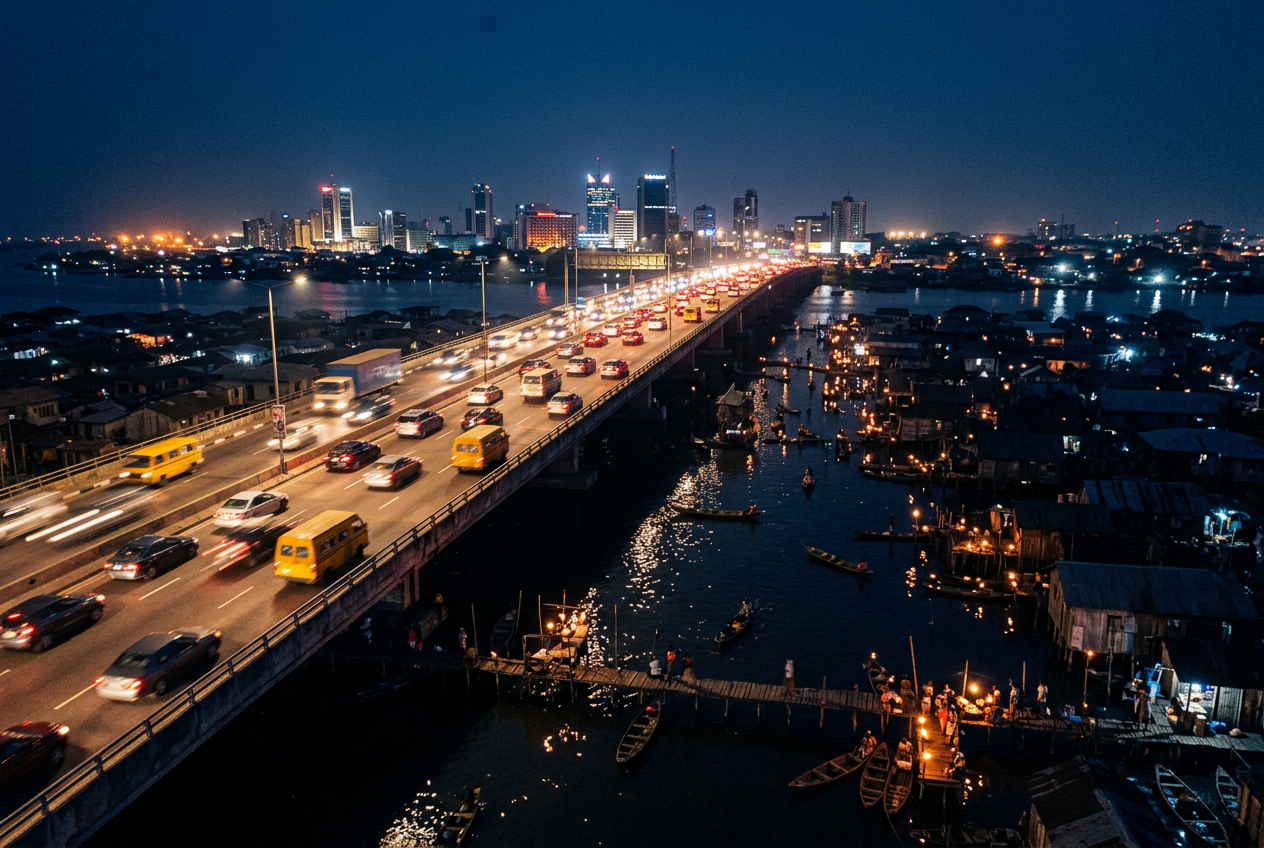
Welcome, and pull up a chair (a plastic one, if we are doing this properly at a roadside buka close to midnight). Which city never sleeps in Nigeria? The phrase is borrowed, of course, from a nickname American newspapers first pinned on New York more than a century ago, and it has since been claimed by cities from Cairo to Mumbai. I have heard our own version argued over pepper soup in Surulere at 1am, over suya in Kano, and once on a stalled danfo on Third Mainland Bridge, where the driver insisted his hometown of Onitsha deserved the crown.
This article is the conclusion of months of research into how Nigerian cities behave after dark, and it draws on years of experience writing about urban life across this country. Some of that experience was gathered the hard way, by missing the last bus home more times than I care to admit.
But the question hiding inside the question is more interesting. Which of our cities keeps trading, cooking, driving and dancing while everyone else is asleep? And what does that tell us about the rest of the map?
That is what this guide is about.
Along the way we will visit Jos, where the night arrives with a jumper, weigh up Uyo, Calabar and Abuja in the long-running cleanliness argument, and walk (carefully and respectfully) through the parts of Lagos where the lights stay on because people cannot afford to stop working. By the end you will have a straight answer, a practical plan for enjoying a Nigerian night safely, and a clearer picture of what a sleepless city costs the people who keep it running.
Which City Never Sleeps Around the World?
Let us start with the original.

New York has worn the title for well over a hundred years. Newspapers in the early 1900s were already describing Manhattan as a place that kept its lights, its trains and its post offices running long after dark, and the city’s subway still operates through the night. The label was sealed in popular culture by the theme from the 1977 film New York, New York, which Frank Sinatra later made his own.
Yet New York does not have a monopoly. Cairo, Mumbai, Bangkok, Madrid, Tokyo, Dubai, Buenos Aires and Las Vegas have all been handed the same nickname at one time or another, usually by tourism boards with something to sell. So has Lagos.
So what actually makes a city sleepless? After years of asking this in different places, I have settled on three simple tests.
The first is transport. Can you get from one side of the city to the other at 2am without a private car and a prayer? The second is food. Can you buy a hot meal from a real kitchen, not just a petrol station fridge, in the middle of the night? The third is commerce. Are people still earning a living, loading lorries, unloading ships and haggling over prices while the rest of the country dreams?
A friend from Brooklyn visited me a few years ago, fully expecting to be unimpressed. By 1am on a Saturday we had eaten asun on Victoria Island, watched a live band in Ikeja, and been stuck in a traffic jam (a traffic jam, at 1am!) near Obalende. He turned to me and said, rather sheepishly, that his city had competition.
He was not wrong. International rankings back him up. Time Out named Lagos the sixth best city in the world for nightlife in 2024, ahead of Rotterdam and Manchester, and the Lagos State Government publicised a further international nightlife recognition in 2025, crediting improved security and the tourism pull of Detty December. In Time Out’s 2025 list, Lagos placed 14th worldwide and second in Africa, with 79 per cent of residents rating its nightlife positively. When the 2024 ranking landed, the state’s information commissioner was quick to tell this paper that the city’s after-dark reputation owed a great deal to security and tourism investment.
Rankings are not everything, of course. They measure fun, not endurance.
And endurance is the real test. A city that parties until dawn is lively. A city where fishermen launch canoes at 4am, where lorries queue at the ports through the night and where market traders sleep under their stalls so they can open at first light is something else entirely. It is sleepless rather like a hospital is sleepless: not because it wants to be, but because it has no choice.
Keep that distinction in mind. It matters a great deal later on.
Which City in Nigeria Is the Coldest When the Sun Goes Down?
Before we crown the city that never sleeps, it helps to look at the city that most wants to go to bed early.
Jos, the capital of Plateau State, is the coldest major city in Nigeria. It sits on the Jos Plateau at roughly 1,200 metres above sea level, and that altitude does most of the work. Air temperature typically falls by about 6.5°C for every 1,000 metres you climb, which leaves Jos around 7 to 8°C cooler than a lowland city at the same latitude.
In practice, that means pleasant days and genuinely chilly nights. During harmattan, from roughly late November to February, night-time temperatures in Jos commonly settle around 12 to 15°C, and on exceptional nights they have been reported far lower. Compare that with Lagos, where the ocean keeps even the coldest harmattan nights around 20 to 22°C, and you begin to understand why a Lagosian landing in Jos in December looks so betrayed.
I remember my first December morning there very clearly. I had packed exactly one long-sleeved shirt, reasoning that this was Nigeria and how cold could it possibly be. By 6am I was wearing that shirt, a borrowed cardigan and a wrapper around my shoulders, drinking tea with the concentration of a man defusing a bomb.
Is Jos the coldest place in the country, full stop? Not quite.
The Mambilla Plateau in Taraba State rises above 1,600 metres in places and can be colder still, and the Obudu Plateau in Cross River, home to the Obudu Mountain Resort, enjoys similarly cool nights. Neither is a major city, though. Mambilla is a highland region of small towns such as Gembu, so when people ask about the coldest city, Jos keeps the title.
A word of caution for anyone planning around old weather memories. The Nigerian Meteorological Agency’s 2026 Seasonal Climate Prediction forecast that both daytime and night-time temperatures would run warmer than the long-term average across most of the country in January, February, March and May 2026. The cold months are getting a little less cold, even on the plateau.
So how does the cold shape the night? Quite dramatically.
Jos winds down earlier than any southern city of comparable size. Street food still thrives in the evening (roasted Irish potatoes and hot tea are practically a local ritual), but by 10pm on a harmattan weeknight most streets are quiet, and families gather indoors rather than on verandas. You will still find chimneys on a few older colonial-era homes, a reminder that the plateau was once a hill station for administrators escaping the lowland heat.
If you are visiting, dress for it. My practical rules for a Jos harmattan trip are simple:
Pack in layers rather than one heavy coat. A thin cotton base, a mid-weight fleece or cardigan and a light windproof jacket will cover a 25°C afternoon and a 12°C night without a suitcase full of wool. Add a beanie or a warm scarf, because the wind across the plateau bites hardest at the ears and neck. For evening outings, a long-sleeved ankara top under a denim jacket looks sharp and keeps you comfortable, and closed shoes beat sandals once the dust and the chill arrive together.
For your room, ask for a heavier duvet or a second blanket before you check in, since many guesthouses only bring them out on request. A small humidifier, or even a bowl of water near the bed, helps with the dry harmattan air that leaves lips cracked and throats scratchy by morning.
Cold, in other words, is not a reason to avoid Jos. It is one of the best reasons to go.
Which Is the Cleanest City in Nigeria, Day and Night?
This is where I have to be honest with you from the start. There is no official, independently audited national ranking of city cleanliness in Nigeria. Every list you have seen is built on reputation, visitor impressions and the visible state of the streets.
That said, reputation is not nothing. And one name keeps rising to the top.
Uyo, the capital of Akwa Ibom State, is the city most often described as Nigeria’s cleanest. Wide dual carriageways, landscaped roundabouts, well-lit streets and consistent sweeping give the city an orderly look that surprises first-time visitors. When I drove into Uyo for the first time, I genuinely slowed down to check whether I had taken a wrong turn into a private estate.
Calabar deserves its own paragraph. For years the Cross River capital was the undisputed champion, and many Nigerians still call it the cleanest city in the country. Its tidy streets, strong tourism culture and the enormous annual carnival (which somehow leaves the city presentable the following week) have kept that reputation alive. Recent lists tend to place it just behind Uyo, but it remains firmly in the top tier.
Abuja is the third contender, and in some ways the most structural one. A planned capital with wide roads, zoned districts and dedicated environmental agencies starts with enormous advantages, and central districts such as Maitama, Asokoro and the Central Business District look consistently well kept. Travel to the satellite towns, however, and the picture changes quickly.
What about Lagos? Honestly, it depends on the street.
Parts of Ikoyi, Victoria Island and planned estates in Lekki are spotless, swept before dawn by workers most residents never see. Other districts struggle with blocked drains, market refuse and the sheer volume of waste produced by so many millions of people. A sleepless city is also a city that generates rubbish at every hour, rather like a restaurant kitchen that never closes, and cleaning up after it is a job without end.
So what makes a city clean in practice? From what I have seen across the country, four things matter most: regular collection that households can rely on, visible street sweeping, drainage that is cleared before the rains, and a civic culture where residents take ownership of the pavement outside their own gate.
That last point is where you and I come in. If you are setting up a home anywhere in Nigeria, a few habits make a real difference. Use a lidded outdoor bin of around 120 litres for a family of four, and line it so collection day is quick. Separate plastic bottles and cans into a second bag, since informal recyclers will often collect them for free. During harmattan, dust hard floors daily with a damp microfibre mop rather than a broom, which simply lifts the dust back into the air. And for a design touch that also keeps the home cleaner, choose washable cotton throws and cushion covers in deep indigo or terracotta, colours that hide the red harmattan dust far better than cream.
My verdict? Uyo is the cleanest city in Nigeria by reputation today, with Calabar and Abuja close behind. If a properly audited ranking ever arrives, I would happily be proven wrong, but I would be surprised.
So, Which City Never Sleeps in Nigeria?
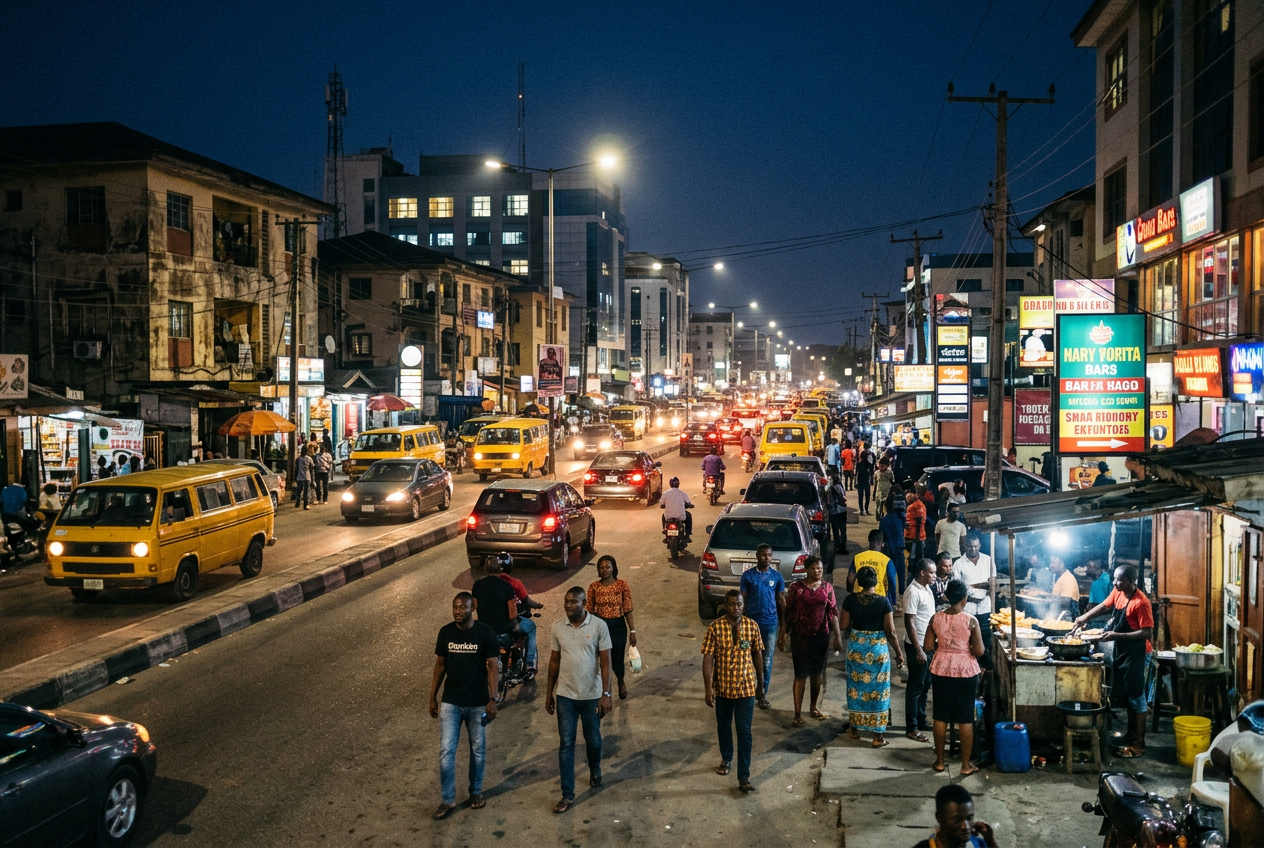
Here is the straight answer. Lagos is the city that never sleeps in Nigeria. No other Nigerian city runs so much trade, transport, port activity, entertainment and informal work through the night, across so many neighbourhoods at once, and none comes close to its scale. The metropolitan population is commonly estimated at between 17 and 21 million people, the Apapa and Tin Can Island ports handle cargo around the clock, Murtala Muhammed International Airport receives late-night international flights, and the city’s motto, Èkó ò ní bàjẹ́, has become a kind of promise that Lagos keeps going regardless. The places that keep Lagos awake, and that most Nigerians think of when they hear the phrase, include:
- Oshodi and Obalende, the transport interchanges where buses and danfos load passengers late into the night and again before dawn
- Mile 12 market and Oyingbo, where foodstuff trading starts in the dark hours as lorries arrive from the north
- Balogun and the Lagos Island markets, where traders prepare stock long before the gates open
- Victoria Island, Lekki and Ikoyi, home to the lounges, clubs and restaurants that drive the city’s nightlife ranking
- Ikeja, especially the Allen Avenue and Opebi corridors, busy with bars, live music and late-night food
- Third Mainland Bridge, which carries traffic between the mainland and the island at almost every hour
Which cities come close? Port Harcourt has a lively nightlife and oil industry shift work, Kano’s older commercial districts and the Sabon Gari area stay busy into the evening, Abuja’s Wuse 2 comes alive at weekends, and Onitsha and Aba are ferociously commercial by day. But each of them, eventually, goes quiet. Lagos never fully does.
Now for the part that the tourism rankings leave out.
A great deal of the round-the-clock activity in Lagos is not leisure at all. It is survival. The night shift is worked by security guards, bus conductors, bakers, fishermen, truck drivers, market porters and food sellers, many of whom earn far below what their daytime customers do. The National Bureau of Statistics’ 2022 national measure of multidimensional poverty found that 63 per cent of Nigerians were multidimensionally poor. Lagos scored 0.101 on that index, among the best in the country, and yet that still meant roughly 4.22 million multidimensionally poor people living in the state.
That number stays with me whenever someone describes Lagos nightlife as glamorous. For some people it is. For millions of others, the city never sleeps because they cannot afford to.
Then there is the soundtrack. Anyone who has lived in Lagos knows that the night is not silent even when the streets are empty, because the generators never stop. Electricity is the missing piece of a true 24-hour economy, and the state is trying to fix it. When the Lagos State Electricity Regulatory Commission board was inaugurated in March 2026, the governor tied the new power framework directly to the goal of a round-the-clock economy. If that works, the sleepless city might finally become a quieter one (and my neighbours’ generators would finally get some rest).
One venture capital estimate has put the value of the Lagos nightlife economy at nearly ₦1.5 trillion, counting clubs, events and concerts. Whatever the exact figure, the money is real, and so are the risks for anyone heading out unprepared.
So here is how I recommend enjoying a Lagos night properly, based on years of getting it right and a few memorable occasions of getting it wrong.
- Set a budget before you leave home and carry it in two places. A comfortable evening with food, drinks and ride-hailing runs roughly ₦30,000 to ₦60,000 per person, while premium lounges on Victoria Island can pass ₦150,000, so keep a separate ₦5,000 to ₦10,000 in cash for emergencies.
- Plan your transport both ways before the first drink. Book a trusted ride-hailing service, share your trip with a friend, and expect late-night surge fares of 1.5 to 2 times the daytime price on busy weekends.
- Leave early or leave late, never in between. Traffic between the mainland and the island can still crawl at 10pm on a Friday, so either set off before 8pm or plan to head home after 1am when the roads clear.
- Dress for heat and humidity, not for the photographs you saw online. Lagos nights rarely drop below 22°C outside harmattan, so choose breathable cotton or linen, a light ankara shirt or dress, and comfortable shoes you can walk 500 metres in without regret.
- Eat properly before the music starts. A plate of amala, jollof or asun at a busy spot is cheaper than lounge food, and a full stomach keeps the night pleasant rather than regrettable.
- Keep your phone charged and your valuables quiet. Carry a small power bank of at least 10,000mAh, keep your phone in a front pocket, and leave expensive jewellery at home.
- Choose busy, well-lit venues and stay with your group. If a place feels wrong, trust the feeling, settle the bill and leave together, because no playlist is worth a bad ending.
How Nigeria’s Major Cities Compare After Dark
The table below brings together the cities that come up most often in this conversation, comparing their night-time character, typical harmattan night temperatures and cleanliness reputation. Temperatures are broad guides for typical harmattan nights rather than record lows.
| City | State | After-dark character | Typical harmattan night low | Cleanliness reputation | Best for |
|---|---|---|---|---|---|
| Lagos | Lagos | Busy around the clock, markets, ports and nightlife | 20 to 22°C | Mixed, varies sharply by district | Nightlife, work and late food |
| Abuja | FCT | Lively in Wuse 2 at weekends, calm elsewhere | 15 to 18°C | Strong, planned city | Orderly evenings out |
| Port Harcourt | Rivers | Energetic nightlife, oil sector shift work | 21 to 23°C | Moderate | Weekend nightlife |
| Kano | Kano | Busy evenings, quieter after midnight | 10 to 14°C | Moderate | Evening markets and street food |
| Uyo | Akwa Ibom | Relaxed, modest nightlife | 21 to 23°C | Among the highest in Nigeria | Quiet, tidy living |
| Jos | Plateau | Early nights, especially in harmattan | 12 to 15°C | Moderate to good | Cool weather and rest |
The pattern is clear: Lagos stands alone for round-the-clock activity, while the calmer and cooler cities, particularly Uyo and Jos, trade late nights for tidiness, quiet and rest. Abuja sits in between, offering organised evenings without the full Lagos intensity.
What Is the Poorest Area in Lagos, the City That Never Sleeps?
We come now to the hardest part of this guide, and I want to approach it with care, because these are real communities full of real people, not scenery.
The community most often identified as the poorest area in Lagos is Makoko, the waterfront settlement beside Third Mainland Bridge where homes stand on stilts over the lagoon and canoes serve as the main means of transport. For generations it has been a fishing community, and many families have lived there for decades.
The evidence goes beyond impressions. A study of 400 residents across five Lagos slums, namely Makoko, Iwaya, Ilaje, Ijora Badia and Amukoko, found that Makoko and Iwaya recorded the highest multidimensional poverty scores, above the 0.50 threshold that the researchers treated as severe poverty. Both communities were especially deprived in schooling, sanitation and nutrition. Ilaje and Ijora Badia sat close to that severe threshold, while Amukoko recorded the lowest score of the five.
Ajegunle deserves mention too. Its name loosely means that wealth has arrived, a promise the area has rarely been able to keep. It sits within Ajeromi-Ifelodun Local Government Area, one of the most densely populated places in the country, with density figures commonly put at around 80,000 people per square kilometre. It lies right beside Apapa and Tin Can Island, two of the busiest ports in West Africa, yet very little of that wealth settles in its streets.
Here is the connection to everything we discussed earlier.
Many of the people who keep Lagos awake at night come from exactly these communities. The fishermen of Makoko launch before sunrise. The porters, bus conductors and market workers of Ajegunle and Ijora Badia start their day while the lounges on Victoria Island are still closing. The sleepless city is powered, in no small part, by the sleepless poor.
Their homes are also among the most insecure in the state. In 2017, the waterfront community of Otodo-Gbame near Lekki was razed, and around 30,000 people reportedly lost their homes. In December 2025, the Lagos State Government began demolishing what it described as illegal structures in Makoko and neighbouring waterfront settlements around Third Mainland Bridge, citing safety concerns including buildings under high-tension power lines. Residents protested and petitioned the state assembly, and in March 2026 the Lagos State House of Assembly recommended relocating displaced residents of Makoko, Oko-Agbon and Sogunro to a proposed low-cost housing estate in Agbowa, Epe.
That recommendation has not settled the argument. This paper’s editorial board warned that moving waterfront families far from their livelihoods risks deepening the very poverty the plans claim to address, calling for fair compensation, livelihood support and access to schools and clinics. For a fishing family, a new house two hours from the lagoon is not quite a solution.
Makoko has also shown what imagination can do. Its famous floating school, designed by the Nigerian architect Kunlé Adeyemi, drew international attention to the community before it collapsed in a storm in 2016. The idea remains a reminder that waterfront living can be designed for, rather than simply cleared.
So, what is the poorest area in Lagos? Based on the best available evidence, Makoko, closely followed by Iwaya, with Ajegunle, Ijora Badia and Ilaje among the other most deprived communities. None of them is a place to gawp at. All of them are part of the answer to why Lagos never sleeps.
Final Thoughts on Which City Never Sleeps in Nigeria
After all the rankings, statistics and late nights, the answer is clear: Lagos is the city that never sleeps in Nigeria. New York may own the original nickname, and cities from Cairo to Mumbai share it, but in this country only Lagos keeps its markets, ports, roads and nightlife running at every hour. Jos, our coldest major city, sits at the other end of the scale, winding down early under cool plateau skies. Uyo carries the strongest reputation for cleanliness, with Calabar and Abuja close behind, while Makoko, Iwaya and Ajegunle remind us that much of the sleepless city is kept awake by people with very little.
I hope this guide leaves you both curious and clear-eyed. Enjoy the Lagos night, pack properly for Jos, admire the tidy streets of Uyo, and remember the fisherman launching his canoe at 4am while the rest of us are heading home.
Here is where I would start:
- Plan your next Lagos night out with a fixed budget, pre-booked transport both ways and a departure time that avoids the 8pm to 11pm traffic.
- If you are heading to Jos between November and February, pack three light layers, a warm scarf and closed shoes rather than one heavy coat.
- Support the people behind the city’s night economy by buying from local night vendors, tipping fairly and following credible reporting on waterfront communities such as Makoko.
Related Articles
If the economics behind the Lagos night caught your attention, my earlier piece on the industries that power Nigeria’s commercial capital explains where the jobs, salaries and trade come from, and why so much of that activity refuses to stop at sunset. It pairs naturally with the section above on who keeps the city awake.
And if this guide has you weighing Lagos against calmer, cooler or tidier cities, my guide to choosing where to settle across Nigeria compares Abuja, Ibadan, Enugu, Uyo and others on earning power, safety and rent, which is the practical next step once you know what kind of nights you want.
Key Takeaways
- Lagos is the city that never sleeps in Nigeria, with markets, ports, transport and nightlife running through the night, while New York holds the original global nickname.
- Jos is Nigeria’s coldest major city at around 1,200 metres above sea level, and Uyo is most widely regarded as the cleanest, with Calabar and Abuja close behind.
- Makoko and Iwaya recorded the highest poverty scores in a study of five Lagos slums, and many of the workers who keep Lagos awake at night come from such communities.
Frequently Asked Questions About Which City Never Sleeps in Nigeria
Which city never sleeps in Nigeria?
Lagos is the city that never sleeps in Nigeria, with markets, transport, ports and nightlife running through the night across areas such as Oshodi, Obalende, Victoria Island and Lekki. No other Nigerian city matches its scale of round-the-clock activity, although Port Harcourt, Kano and Abuja keep lively late hours in certain districts.
Which city does never sleep in the world?
New York is the original city that never sleeps, a nickname newspapers attached to it in the early twentieth century and one its all-night subway still supports. Cairo, Mumbai, Bangkok, Madrid, Tokyo, Las Vegas and Lagos are also regularly given the title.
Why is Lagos called the city that never sleeps?
Lagos earns the name because trade, transport, entertainment and port work continue long after dark, driven by a metropolitan population estimated at 17 to 21 million people. Many residents also work night shifts or travel before dawn to beat traffic, so the streets are rarely empty.
Which city in Nigeria is the coldest?
Jos in Plateau State is the coldest major city in Nigeria, sitting roughly 1,200 metres above sea level. Harmattan nights there commonly fall to around 12 to 15°C, and occasionally much lower.
Is the Mambilla Plateau colder than Jos?
Yes, parts of the Mambilla Plateau in Taraba State rise above 1,600 metres and can record lower temperatures than Jos during harmattan. It is a highland region of small towns such as Gembu rather than a major city, which is why Jos usually takes the coldest city title.
Which is the cleanest city in Nigeria?
Uyo in Akwa Ibom State is the city most often named as Nigeria’s cleanest, thanks to wide roads, landscaped roundabouts and consistent street sanitation. Calabar and Abuja are close contenders, although no official audited national cleanliness ranking currently exists.
Is Calabar still the cleanest city in Nigeria?
Calabar built a strong cleanliness reputation over many years and remains one of the tidiest cities in the country. Many recent lists now place Uyo slightly ahead, so Calabar is best described as firmly in the top tier rather than alone at the top.
What is the poorest area in Lagos?
Makoko, the waterfront community beside Third Mainland Bridge, is widely regarded as the poorest area in Lagos, and a study of five Lagos slums found it had the highest multidimensional poverty alongside Iwaya. Ajegunle, Ijora Badia and Ilaje are also among the most deprived communities in the state.
How many poor people live in Lagos State?
The National Bureau of Statistics 2022 Multidimensional Poverty Index recorded about 4.22 million multidimensionally poor people in Lagos State. Lagos still had one of the lowest poverty scores in the country, at 0.101, because that number is spread across a very large population.
What happened to Makoko in 2026?
The Lagos State Government began demolishing structures in Makoko and neighbouring waterfront settlements in December 2025, displacing many residents. In March 2026 the Lagos State House of Assembly recommended relocating affected residents to a proposed low-cost housing estate in Agbowa, Epe.
Is it safe to go out at night in Lagos?
Many parts of Lagos, including Victoria Island, Lekki, Ikoyi and Ikeja, are busy and reasonably safe at night if you plan your transport and stay alert. Use trusted ride-hailing services, avoid isolated roads after midnight and keep valuables out of sight.
How much does a night out in Lagos cost?
A modest night out with food, drinks and ride-hailing can cost roughly ₦30,000 to ₦60,000 per person, depending on the area and venue. Premium lounges on Victoria Island or in Lekki can easily push that figure past ₦150,000 before the night is over.

